What a Belt Conveyor Guide Idler Does
A belt conveyor guide idler is a rotating roller assembly that keeps the conveyor belt centred as it travels along the carrying or return side of the structure. Unlike a standard carrying idler that simply supports the belt and the material load, a guide idler is positioned and shaped to correct small lateral drift before it becomes a serious mistracking problem. In everyday workshop language, people also call this component a training idler or a self-aligning idler roller, and the two names describe the same function.
The guide idler does not replace the drive pulley, the tail pulley, or a bend pulley. Those are completely different components that transmit power or change the belt path. A guide idler works alongside them, usually mounted on a conveyor bracket that allows the roller frame to pivot slightly. When the belt edge contacts the roller, the resulting force nudges the frame, and the frame in turn steers the belt back toward the centre line.
How the Assembly Is Built
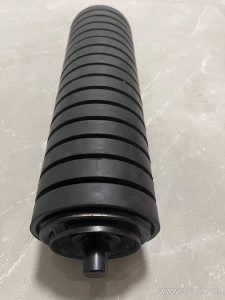
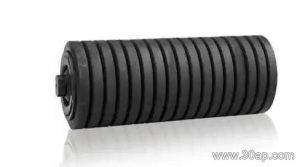
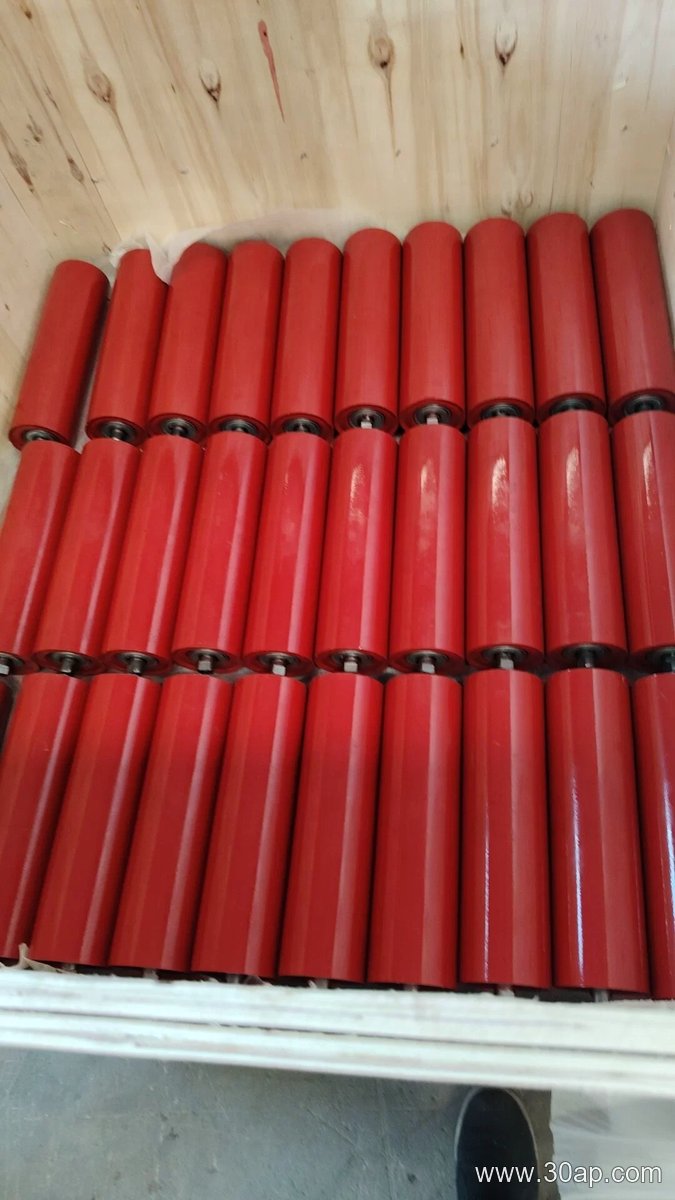
A typical unit is made of a steel tube shell, a shaft, sealed bearings, and a set of end caps or bearing housings. The shell surface may be plain steel, nylon coated, ceramic lagged, or fitted with rubber rings, depending on the duty. Rubber rings are common on impact or dirty sections because they grip the belt edge without polishing it. The bearing seat is usually machined to take a deep groove ball bearing such as 6204, 6205, 6305, 6306, 6308, or 6310. The bearing size is matched to the shaft and load, not to the belt width alone, so several bearing options can appear on the same roller diameter.
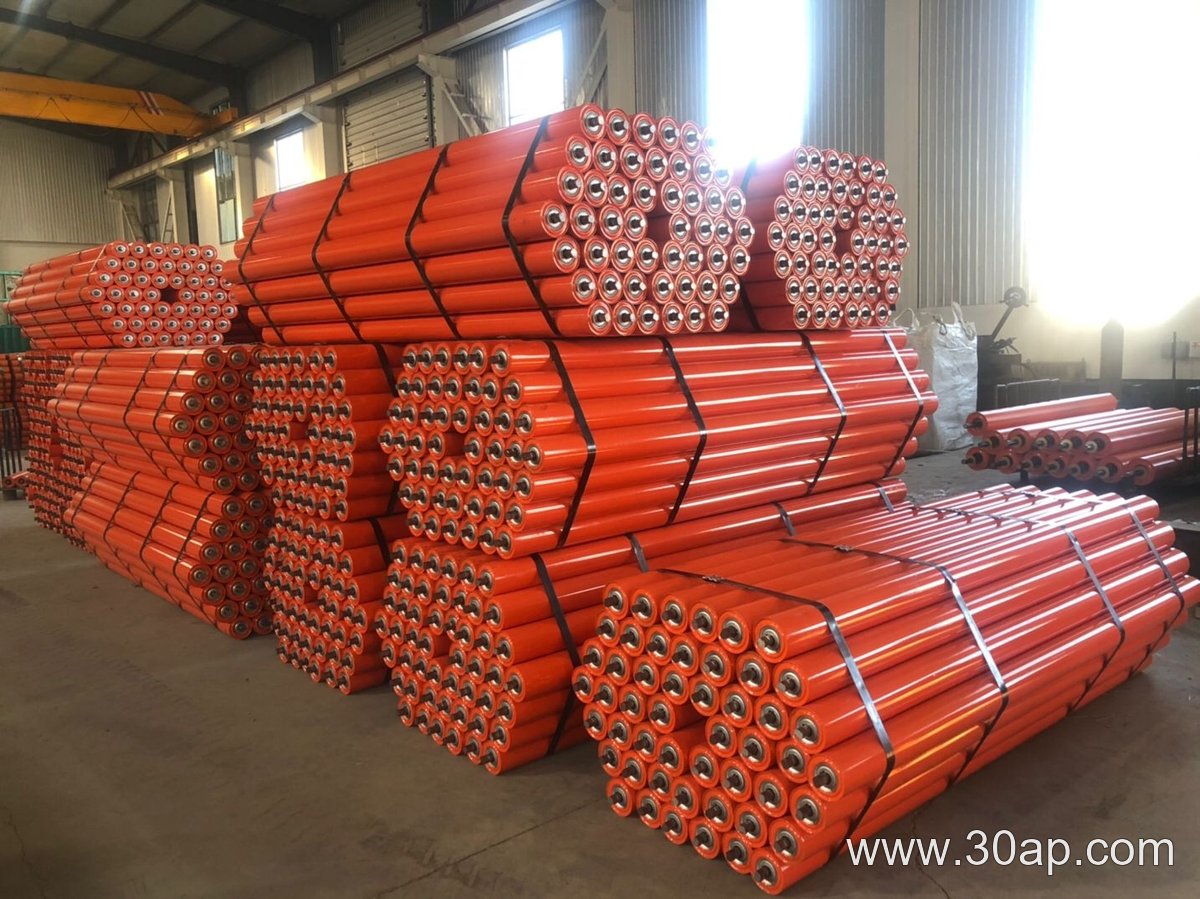
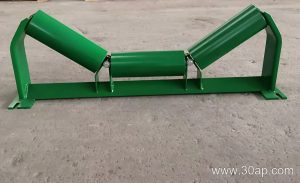
Common roller diameters for guide duty include Ø63, Ø76, Ø89, Ø102, Ø108, Ø127, Ø133, Ø159, Ø178, Ø194, and Ø219 mm. A larger diameter generally gives a lower rotational speed and better resistance to shock, while a smaller one saves space. The roller length is set by the belt width, the trough angle, and the number of rollers in the group. For a three-roll troughing set, a rough field reference is about 200 mm for B500, 250 mm for B650, 315 mm for B800, 380 mm for B1000, 465 mm for B1200, 530 mm for B1400, 600 mm for B1600, 670 mm for B1800, and 750 mm for B2000. These are common examples only; the centre roller and the side rollers often differ, and the final length is confirmed by the conveyor design.
Where Guide Idlers Are Used
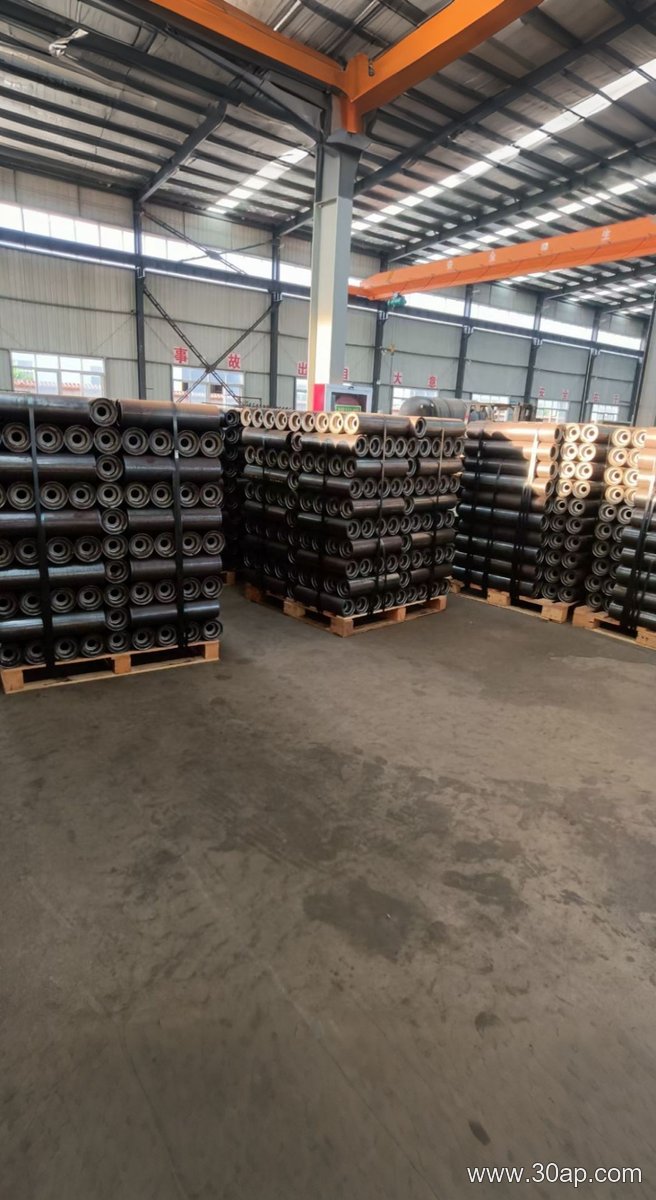
Mistracking is a universal problem, so guide idlers appear in many industries. In a quarry or a limestone mine, a self-aligning idler is often placed just after the loading point, where an uneven feed can push the belt sideways. In a coal handling plant or a power station coal yard, a friction self-aligning idler with rubber rings is a frequent choice on the return strand because it copes with dust and fine spillage. A concrete batching plant may use a smaller guide roller on a short inclined belt, while a tunnel muck removal line may prefer a heavy tapered self-aligning idler to handle shock and lumps.
On the carrying side, the guide idler usually shares the same trough angle as the neighbouring troughing idlers, such as 20, 30, 35, or 45 degrees. On the return side, it may be a flat return idler or a V-shaped return idler. A forward tilt of about 1.5 to 2 degrees is sometimes built into the side rollers of a training station; this small tilt helps the belt track, but it is a design feature of the training set, not a rule for every idler on the line.
Selection Points for Buyers
Before ordering, confirm the belt width, the trough angle, the roller diameter, the shaft end type, and the mounting bracket dimensions. Check whether the guide idler is for the carrying side or the return side, because the frame shape and the roller arrangement change. Ask about the bearing seal: a labyrinth seal or a multi-stage lip seal is common in dusty service, while a simple contact seal may be enough in a clean, dry location. The shell material also matters. A steel shell is the general-purpose choice, a nylon shell reduces weight and noise, a ceramic surface resists abrasive wear, and a rubber ring surface adds grip and impact cushioning.
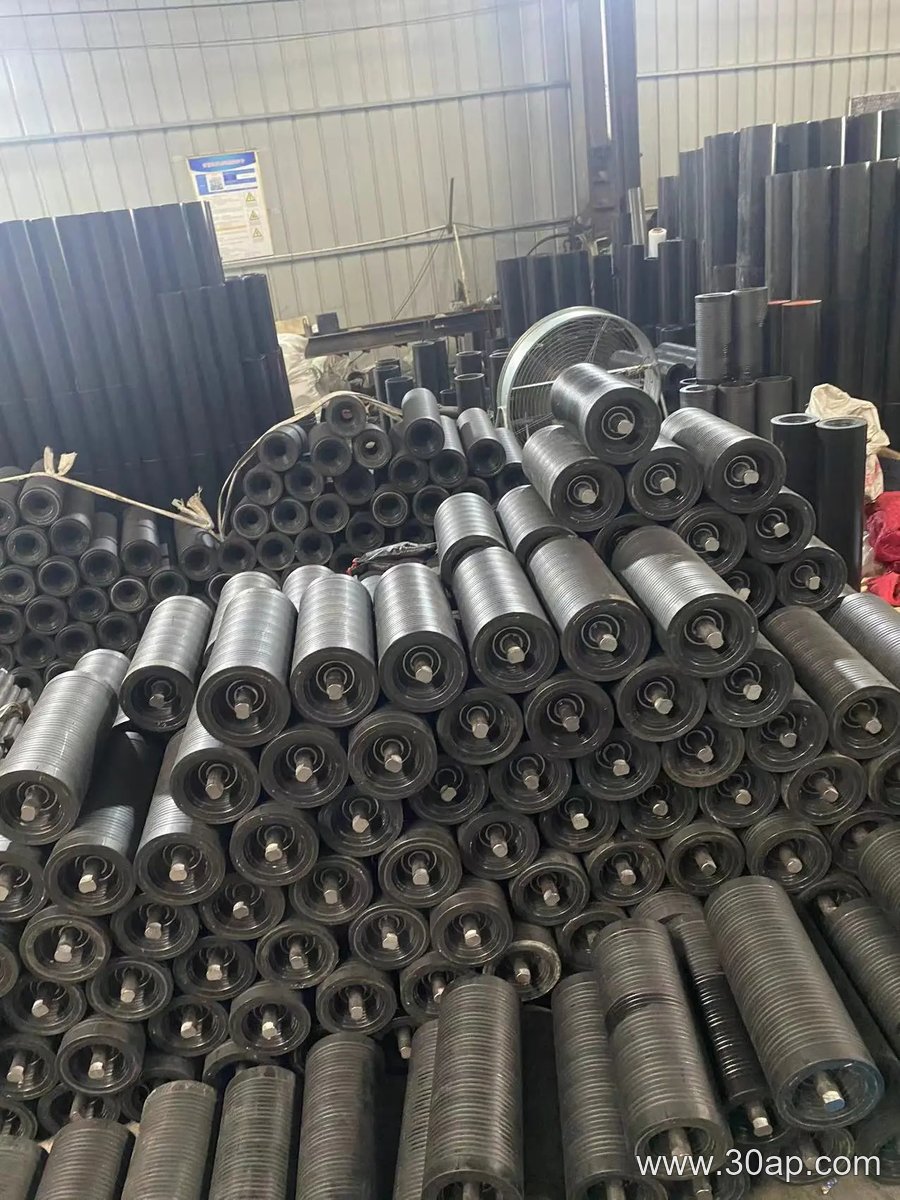
Do not assume that one belt width can only match one pulley diameter or one shaft diameter. The same B1000 belt may run with different roller diameters depending on load, speed, and the space available in the bracket. Likewise, the bearing number is not fixed by the belt width. A buyer should give the supplier the full duty data: belt speed, material density, lump size, ambient conditions, and the existing mounting pattern. If the guide idler is meant to replace an existing unit, measure the shaft ends, the bracket hole spacing, and the roller length before confirming the order.
Installation and Maintenance Notes
- Mount the guide idler square to the belt centre line; a skewed frame will fight the belt instead of guiding it.
- Leave enough clearance for the pivoting frame to move. A training idler needs a small amount of free travel to work.
- Check that the roller spins freely by hand. A dragging roller can polish the belt edge and cause wear.
- Inspect seals and rubber rings at regular intervals; replace them when they harden, crack, or lose grip.
- Keep the belt cleaner and the loading chute centred, because a guide idler corrects drift but does not cure a badly loaded belt.
Used correctly, a belt conveyor guide idler is a low-cost way to reduce edge damage, spillage, and belt replacement frequency. It works best as part of a complete tracking plan that includes proper pulley alignment, well-adjusted brackets, and a straight conveyor structure.