What a Ceramic Rubber-Lined Pulley Is and Why It Exists
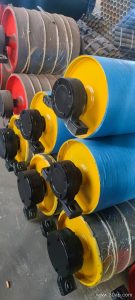
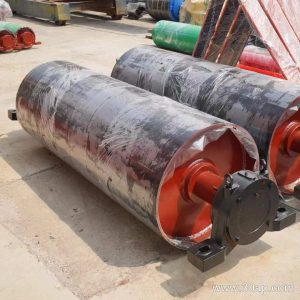
A ceramic rubber-lined pulley is a conveyor pulley whose outer surface is covered with a rubber compound that contains embedded ceramic tiles. This ceramic rubber lagging is bonded to the pulley shell to create a high-friction, wear-resistant drive surface. The product is also known as a ceramic lagged pulley or ceramic rubber lagging pulley. It is not a replacement for a drive pulley, tail pulley, or bend pulley; rather, it is a surface treatment applied to those pulleys when slip and abrasion become costly problems.
On a standard drive pulley, the smooth steel shell can lose grip when the conveyor belt carries heavy loads, runs wet, or handles fine abrasive material. Rubber lagging alone improves friction, but ceramic chips add hard, protruding points that bite into the belt cover without cutting it. The result is a pulley that transmits torque more reliably and lasts longer in punishing conditions.
How the Ceramic Rubber-Lined Pulley Is Built
The construction starts with a steel pulley shell, typically machined to a slight crown or left flat depending on belt tracking requirements. A layer of rubber, usually 8 to 20 mm thick, is applied by hot vulcanization or cold bonding. Ceramic tiles—often small squares or rectangles with raised dimples—are embedded in the rubber before curing. The tiles sit slightly above the rubber surface, creating a pattern that grips the belt while allowing the rubber to flex and absorb shock.
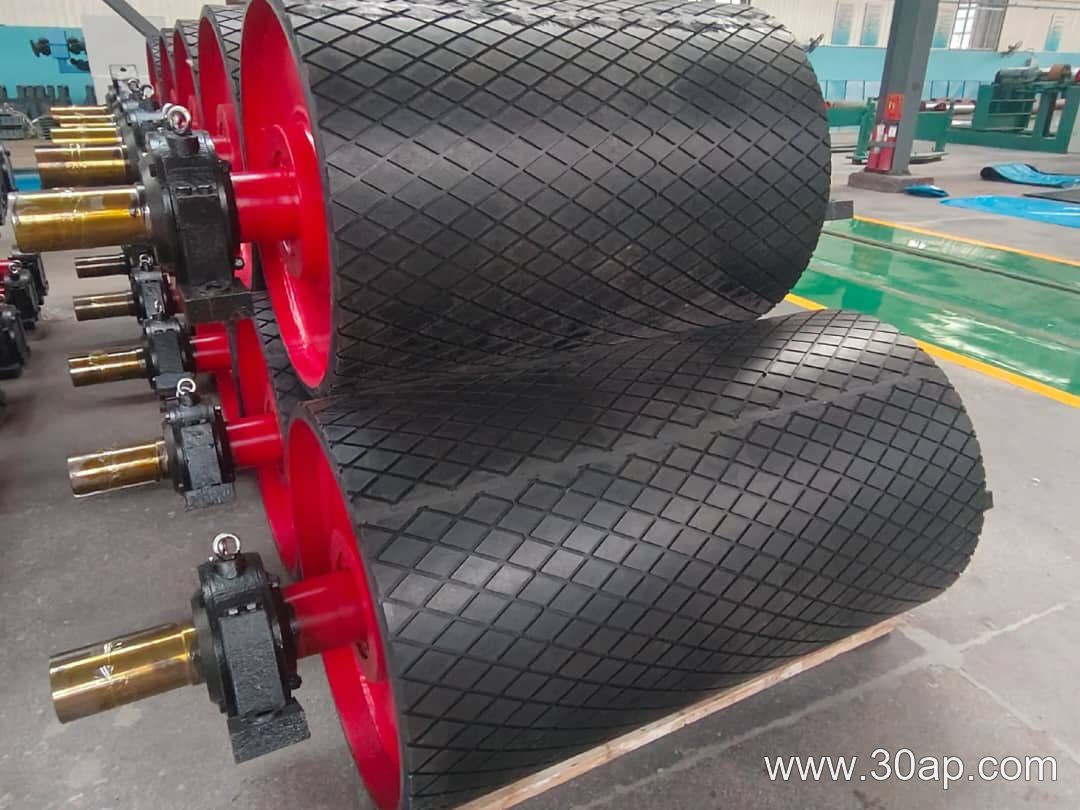
Key build details a buyer should recognize:
- Tile shape and height: Ceramic chips may be flat, dimpled, or studded. Higher protrusion gives more grip but can wear the belt cover faster if misapplied.
- Rubber hardness: Softer rubber conforms to belt irregularities; harder rubber resists gouging. The choice depends on material and belt tension.
- Bonding method: Hot vulcanization generally produces a stronger bond than cold vulcanization. Both are common, but hot bonding is preferred for high-torque drives.
- Edge treatment: Chamfered or rounded edges reduce the chance of lagging peeling away during belt tracking.
These pulleys are frequently supplied as drive pulleys, head pulleys, or sometimes as bend pulleys when extra traction is needed. They are not interchangeable with tail pulleys or tension pulleys, which serve different positions and load directions.
Where Ceramic Rubber-Lined Pulleys Are Used
This lagging is chosen for conveyors that carry abrasive, wet, or oily bulk materials. Two typical settings are a limestone quarry and a coal preparation plant. In a limestone quarry, a drive pulley with ceramic rubber lining keeps the belt moving even when rain or dust reduces friction. In a coal preparation plant, the pulley handles fine coal slurry and sharp particles that would quickly polish a plain rubber surface.
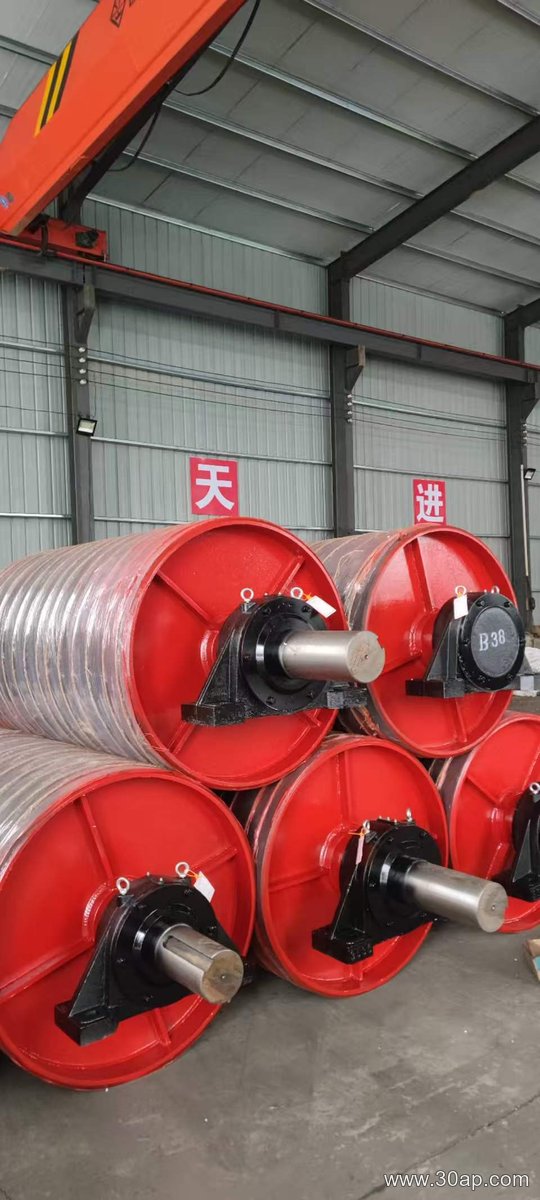
Other applications include cement clinker lines, port bulk terminals, and power plant coal handling. In each case, the ceramic rubber-lined pulley is installed where the belt must transmit high torque without slipping. It may also appear on a conveyor pulley at a transfer point or on a high-tension bend pulley, but the primary role remains traction and wear resistance.
When the conveyor belt is thick and heavy, the pulley diameter and shaft size must be selected by torque and load, not by belt width alone. For example, a B1200 belt might use a pulley around Ø1000, while a B800 belt could use a Ø500 pulley in a lighter duty. These are common reference combinations, not fixed rules. A larger diameter reduces belt stress and improves lagging life, but it also requires more space and a stronger shaft.
Selection Factors for Buyers
Before specifying a ceramic rubber-lined pulley, gather the following information:
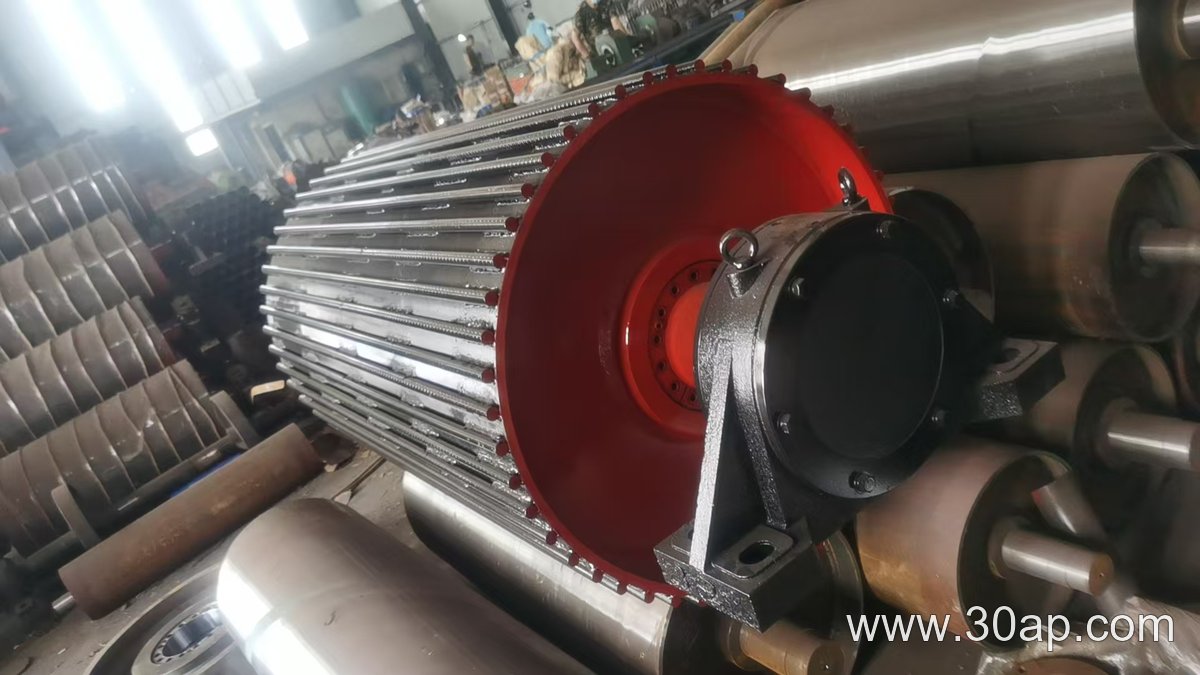
- Belt width and pulley face width: The pulley face is usually wider than the belt. For instance, a B650 belt often matches a face width near 750 mm, and a B1000 belt near 1150 mm. These are typical, not mandatory.
- Belt speed and torque: Higher torque demands thicker lagging and stronger ceramic bonding. Shaft diameter is determined by torsional and bending loads, not by a simple belt-width lookup.
- Material characteristics: Sharp, abrasive, or sticky materials favor ceramic lagging. Oily materials may require a different rubber compound.
- Environmental conditions: Wet, dusty, or outdoor conveyors benefit from ceramic’s slip resistance. Very cold climates may need low-temperature rubber.
- Pulley position: Drive and head pulleys see the highest tension and are the most common candidates. Tail and bend pulleys may use ceramic lagging only if slip is observed.
Do not assume one belt width can only match one pulley diameter. A B1400 belt could run on a Ø800 pulley in one conveyor and a Ø1250 pulley in another, depending on speed, tension, and available space. Likewise, shaft diameter is not derived from belt width alone; it comes from the actual torque and load calculations.
Maintenance and Compatibility Notes
Ceramic rubber-lined pulleys are durable but not indestructible. Over time, ceramic tiles can chip or fall out if the bonding fails or if the belt carries large tramp metal. Inspect the lagging regularly for missing tiles, rubber cracking, or belt mistracking. Replace or repair the lagging before the steel shell is exposed, because metal-to-belt contact will damage the conveyor belt quickly.
Compatibility with the rest of the conveyor matters. The pulley should align with the conveyor bracket and the idler roller positions. If the belt has a rough or highly textured cover, ceramic lagging may wear it faster; discuss belt cover grade with the pulley supplier. For very high-tension drives, a ceramic rubber-lined pulley may be combined with a properly sized shaft and bearing assembly.
In summary, a ceramic rubber-lined pulley is a specialized drive component for conveyors that demand grip and abrasion resistance. It is built with embedded ceramic tiles in a rubber layer, used mainly on drive and head pulleys, and selected by torque, belt width, and material conditions. Buyers should treat any diameter or face width combination as a design choice, not a fixed catalog rule.