Interpreting Engineering Standards for a Conveyor Pulley
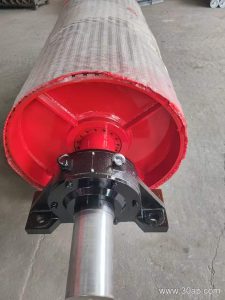
A conveyor pulley relies on recognized structural standards to establish design baselines for shell thickness, shaft deflection, and weld integrity. When engineers draft technical specifications for heavy material handling systems, these standards provide a shared vocabulary and a rigorous framework for calculating mechanical limits without substituting for custom site evaluations.
Consider a wet outdoor conveyor operating in open-air aggregate yards, where moisture, wind loads, and thermal fluctuations combine with high belt tensions. Under these challenging conditions, a conveyor pulley must be designed to withstand complex multi-axial stresses. Standards help engineers define acceptable safety margins for shell bending and torsional shear, ensuring that rotating components do not experience premature fatigue.
Purpose and Scope of Recognized Frameworks
Published standards by organizations such as ISO, CEMA, and DIN serve distinct purposes across the industrial equipment lifecycle:
- Defining standardized nomenclature for dimensional tolerances, face widths, and mounting dimensions.
- Establishing baseline calculation methods for maximum allowable radial and axial loads on the shaft.
- Guiding the selection of welding procedures, non-destructive testing requirements, and material grades for steel plates.
- Providing a standardized basis for evaluating bearing life, locking assembly torque capacities, and shell deflection limits.
It is important to recognize that these documents outline general engineering principles and testing methodologies rather than universal operational rules. They do not replace detailed finite element analysis or empirical data collected from specific site environments.
Applying Standardized Limits in System Design
When translating standard guidelines into practical layouts, designers must account for the actual operating context. For instance, if a conveyor pulley operates outdoors in a wet climate, standard corrosion allowances and protective coating specifications must be integrated into the final design parameters. Relying strictly on nominal load tables without factoring in environmental degradation can lead to localized stress concentrations and reduced component service life.
Ultimately, standards act as a reliable baseline to verify that a conveyor pulley meets fundamental mechanical expectations. By understanding the intended scope and limitations of these reference documents, engineering teams can specify robust components that perform reliably under demanding industrial duties.