What Standards and Grades Actually Govern an Idler Roller
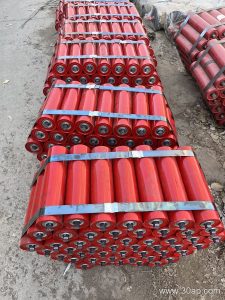
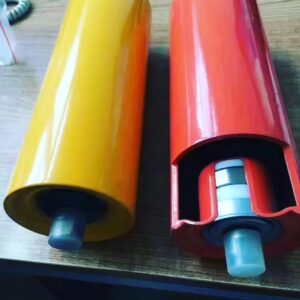
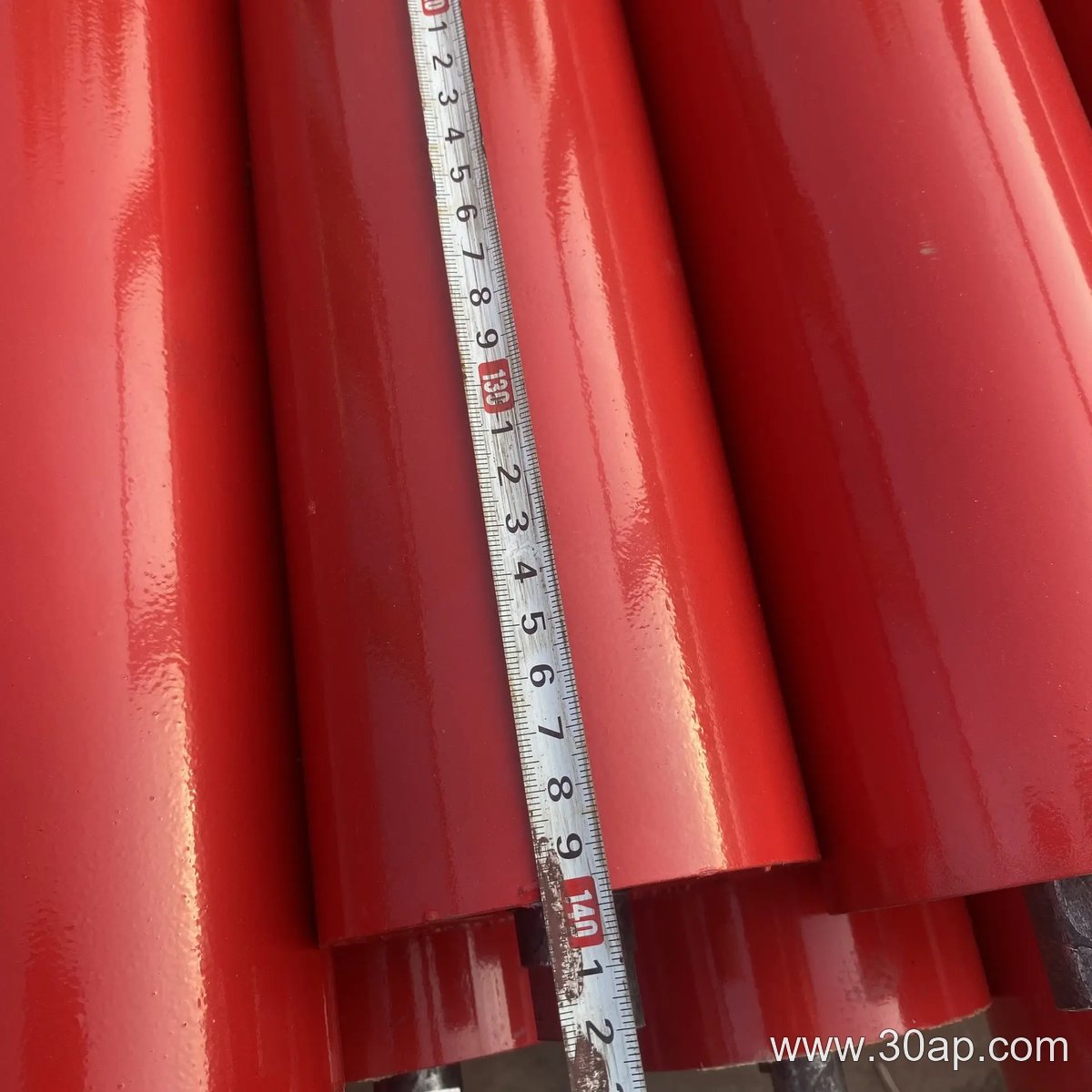
Standards for an idler roller usually define test methods, dimensional interchangeability and marking rather than promising performance. Grades describe bearing class, seal type and shell finish. On a wet outdoor conveyor, these choices decide whether water and fines reach the bearing.
What to Check Before Accepting a Grade
- Confirm the standard’s scope covers the intended test, not the whole roller.
- Match bearing clearance and seal grade to the wet duty.
- Ask for the manufacturer’s declared rating basis, not an assumed one.
Compliance with a standard is not certification of the idler roller in service; it shows the agreed method was followed.
Conveyor Pulley Diameter and Belt Wear Mechanism
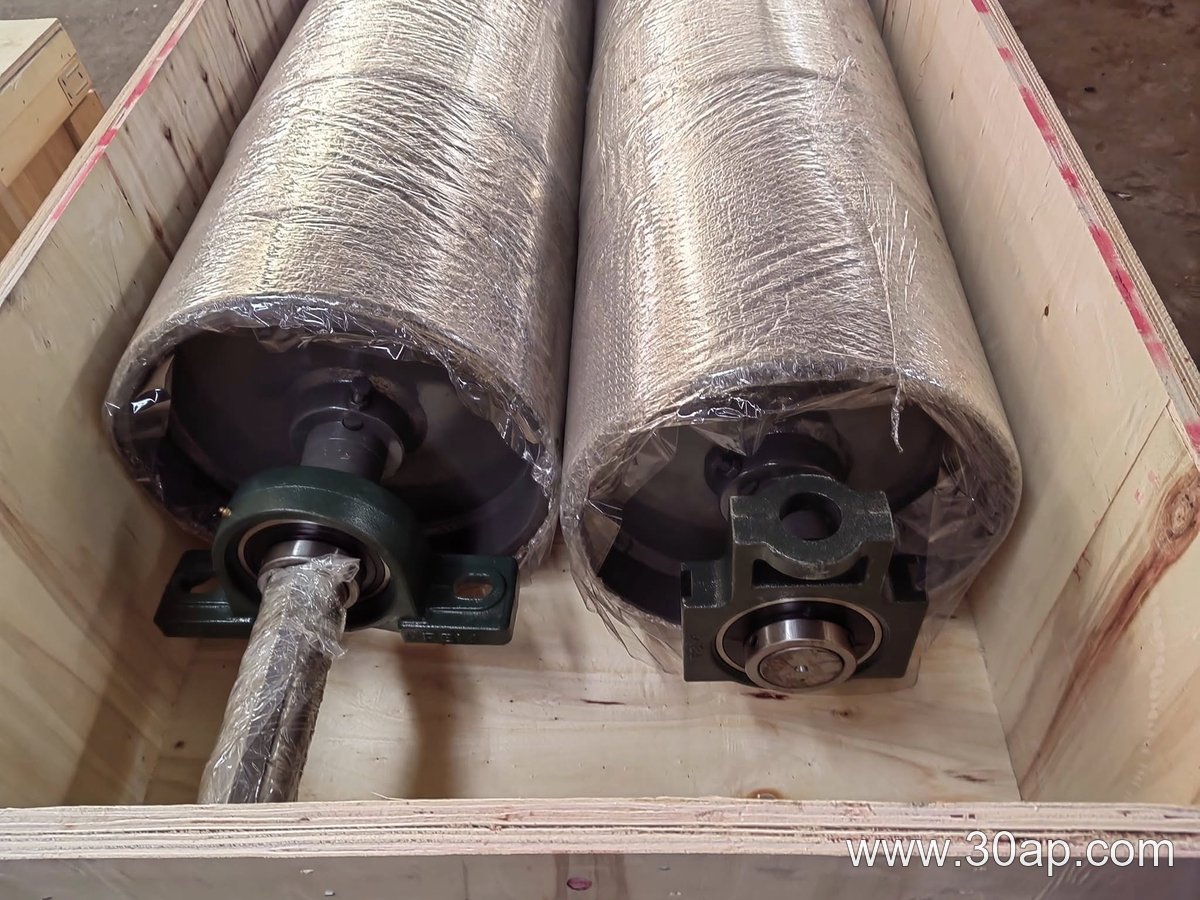
Selecting a conveyor pulley with the right shell diameter influences belt life in bulk-material port terminals. A larger diameter reduces bending stress on the belt carcass, but increases pulley mass and required torque.
Engineering Trade-Offs
- Smaller diameter: higher belt strain, increased wear
- Larger diameter: lower strain, greater cost and space
Matching diameter to minimum bend radius for the belt is a key check.
What troughing angle means for a conveyor bracket
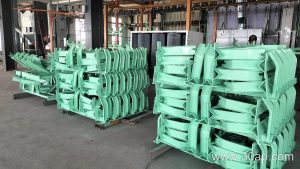
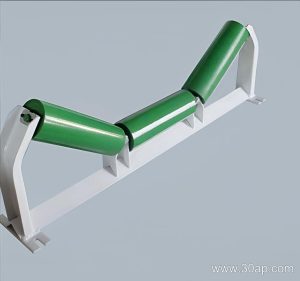
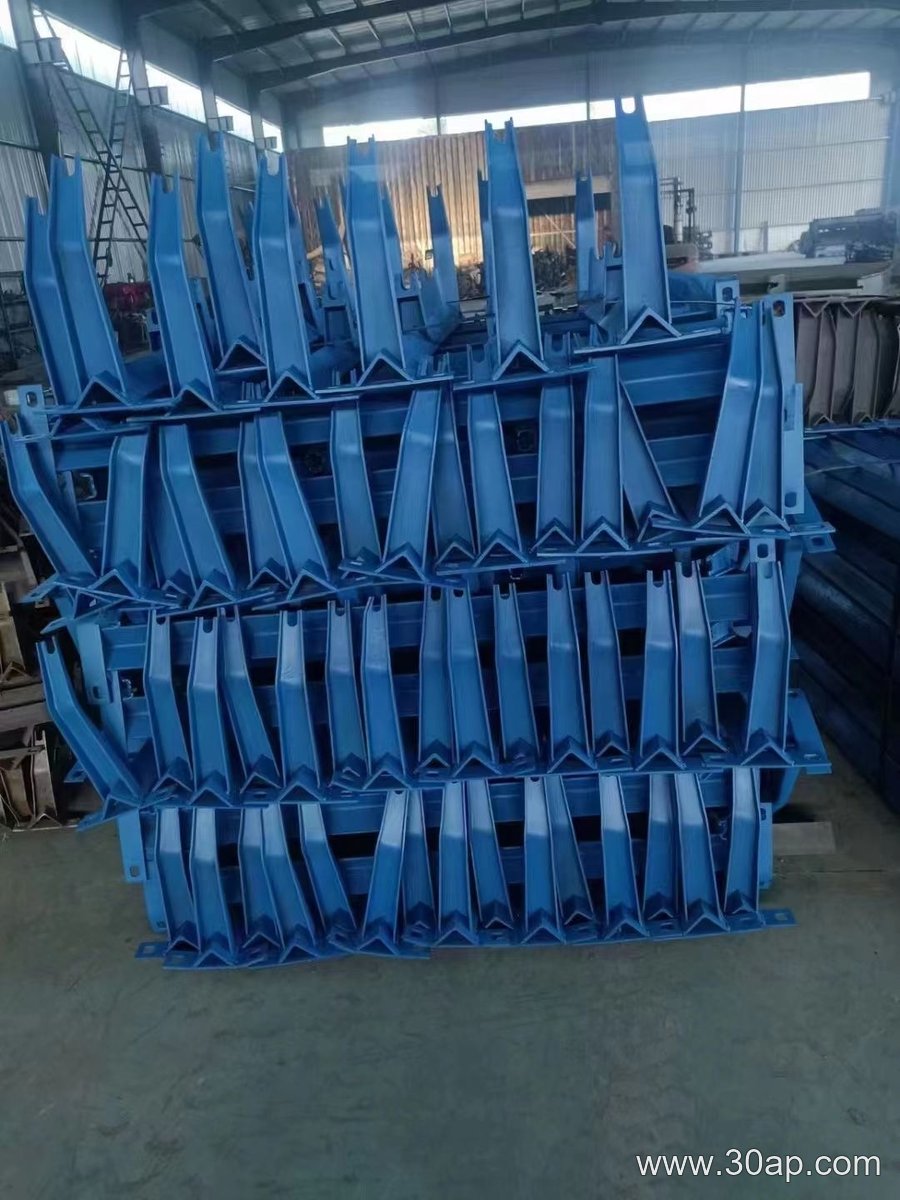
In a bulk port terminal, the troughing angle is the angle at which the wing idlers are inclined to form the belt’s trough. This angle directly determines the vertical and lateral load components that a conveyor bracket must resist.
Why the bracket’s load capacity changes
As the troughing angle increases, the horizontal component of the material load rises, increasing bending stress on the bracket arms. A bracket rated for a 20° trough may be under-designed for a 45° trough unless its section modulus and weld size are increased accordingly. For a hypothetical 1,200 mm belt carrying 3,000 t/h of iron ore, a 35° trough can raise the bracket’s design load by roughly 25% compared to a 20° trough, assuming equal belt tension and material density.
How to check a bracket for a given angle
- Calculate the vertical load per idler station from belt and material weight.
- Resolve that load into components normal to the wing idler plane.
- Compare the resulting bending moment against the bracket’s allowable stress.
- Increase plate thickness or add a gusset if the margin is insufficient.
This check ensures the conveyor bracket performs reliably at the specified troughing angle without overbuilding the entire support structure.
Why does a conveyor belt need transverse rigidity on a narrow transfer?
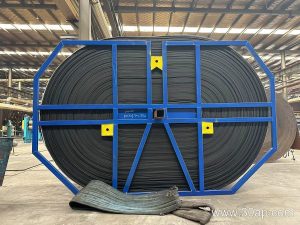
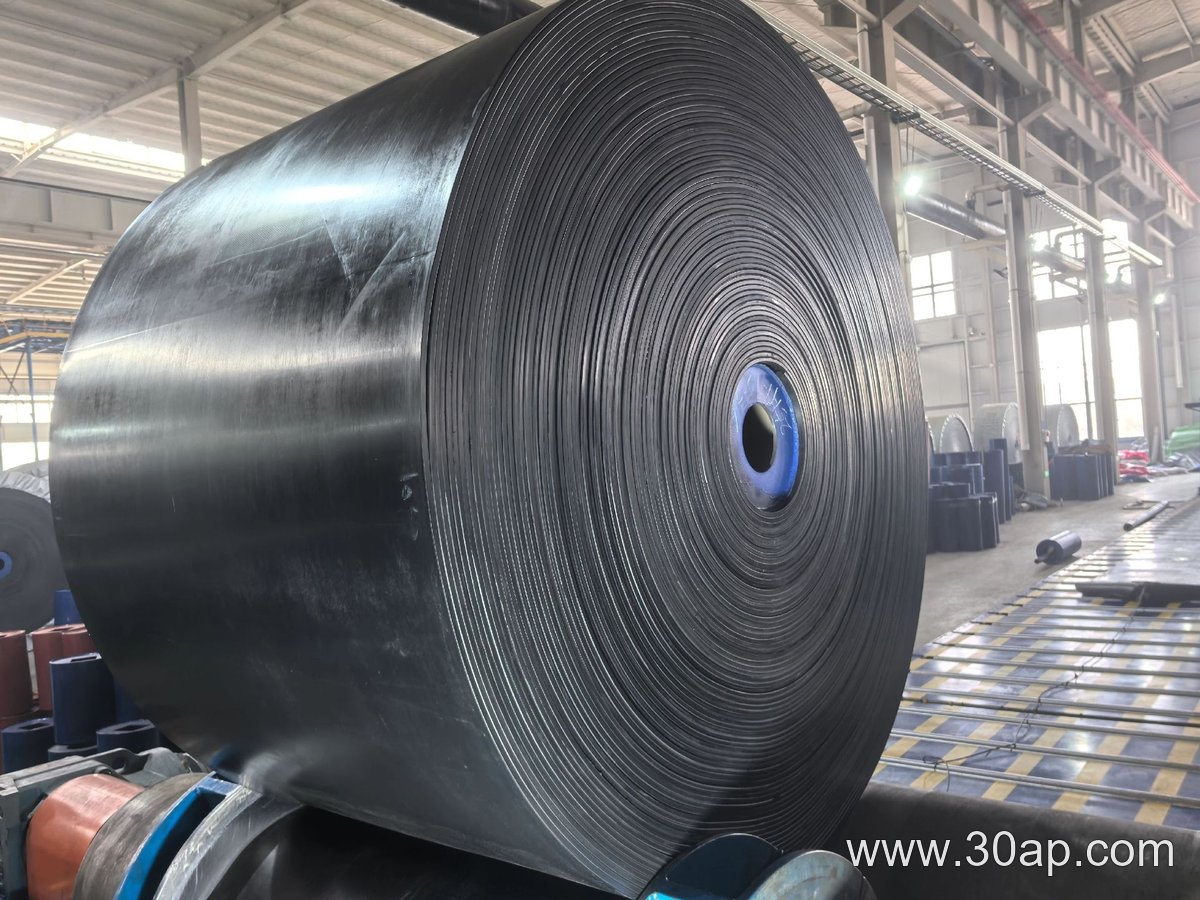
On a hypothetical general manufacturing line, a 600 mm wide conveyor belt must bridge a 900 mm gap between two pulleys. Without sufficient transverse rigidity, the belt sags, misaligns, and spills small parts. Assume a 2-ply EP carcass and a 3 mm top cover.
Check the belt’s flexural modulus and troughability. A stiffer belt resists edge buckling but needs larger pulleys. For this project, verify that the belt can span the gap with less than 5 mm deflection under a 10 kg point load.
Practical check
- Measure unsupported span and load.
- Compare candidate belts’ transverse stiffness data.
- Confirm pulley diameters suit the chosen belt.
If deflection exceeds the limit, increase ply count or add a breaker fabric. This decision balances belt life against drive power.