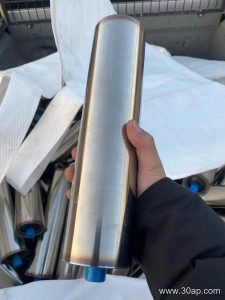
What a Plain Lagged Pulley Is
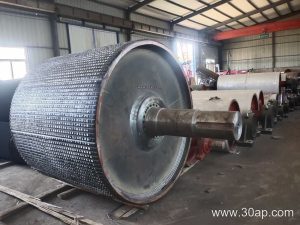
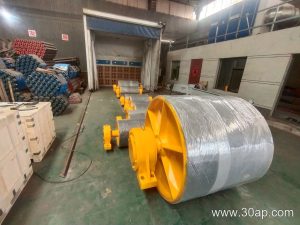
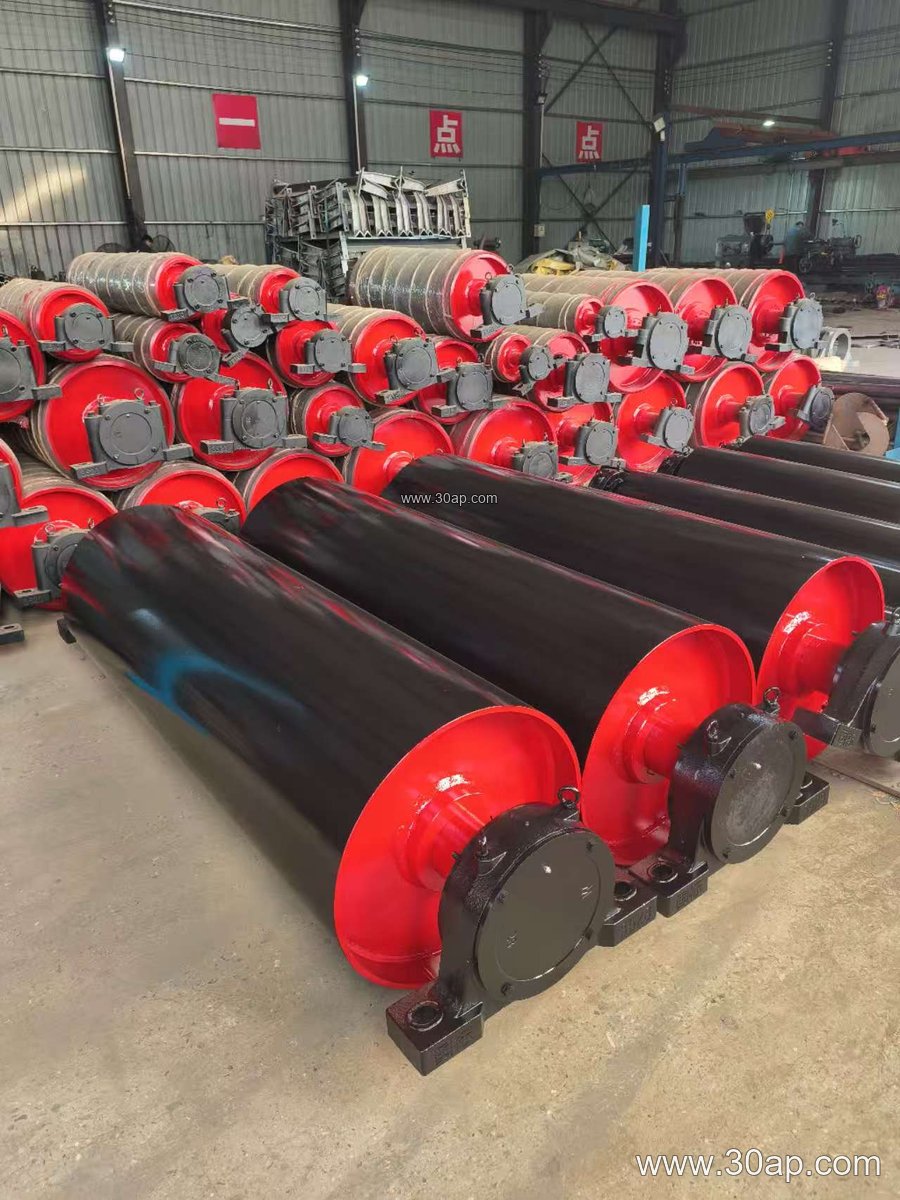
A plain lagged pulley is a conveyor pulley whose cylindrical shell carries a smooth rubber or elastomer lagging without any groove, diamond, or chevron pattern. In the trade it is also called a smooth lagged pulley or flat rubber lagged pulley. It is a surface form of the conveyor pulley family, not a separate position type, so a plain lagged pulley can serve as a head pulley, tail pulley, or tension pulley depending on where the designer places it. The smooth cover is the defining feature: it raises friction between the shell and the conveyor belt while keeping the contact face continuous across the full face width.
Because the lagging has no pattern, cleaning is simple and material build-up is easy to see and remove. That matters in dusty circuits such as a quarry, a limestone mine, or a cement plant clinker line, where fine powder can pack into grooves and change the friction balance.
Construction and Surface Details
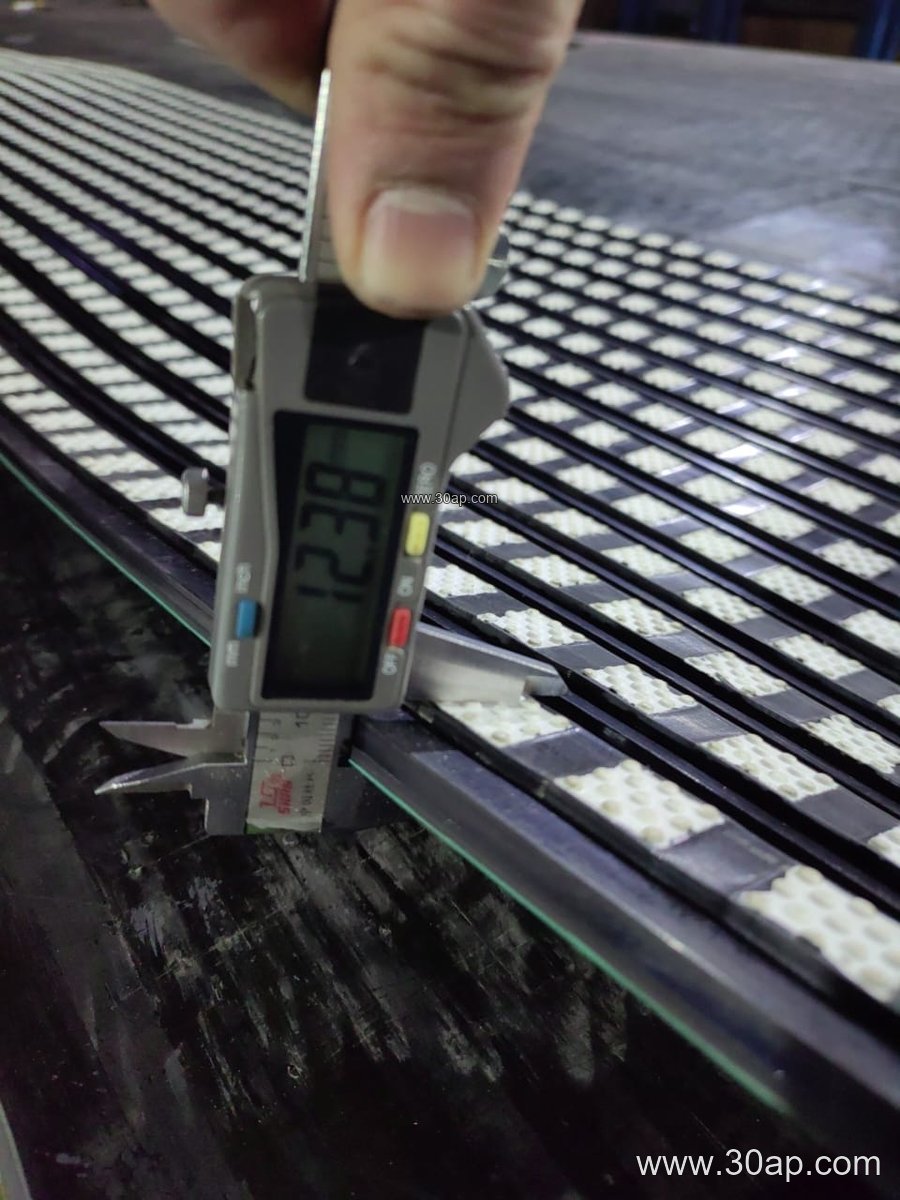
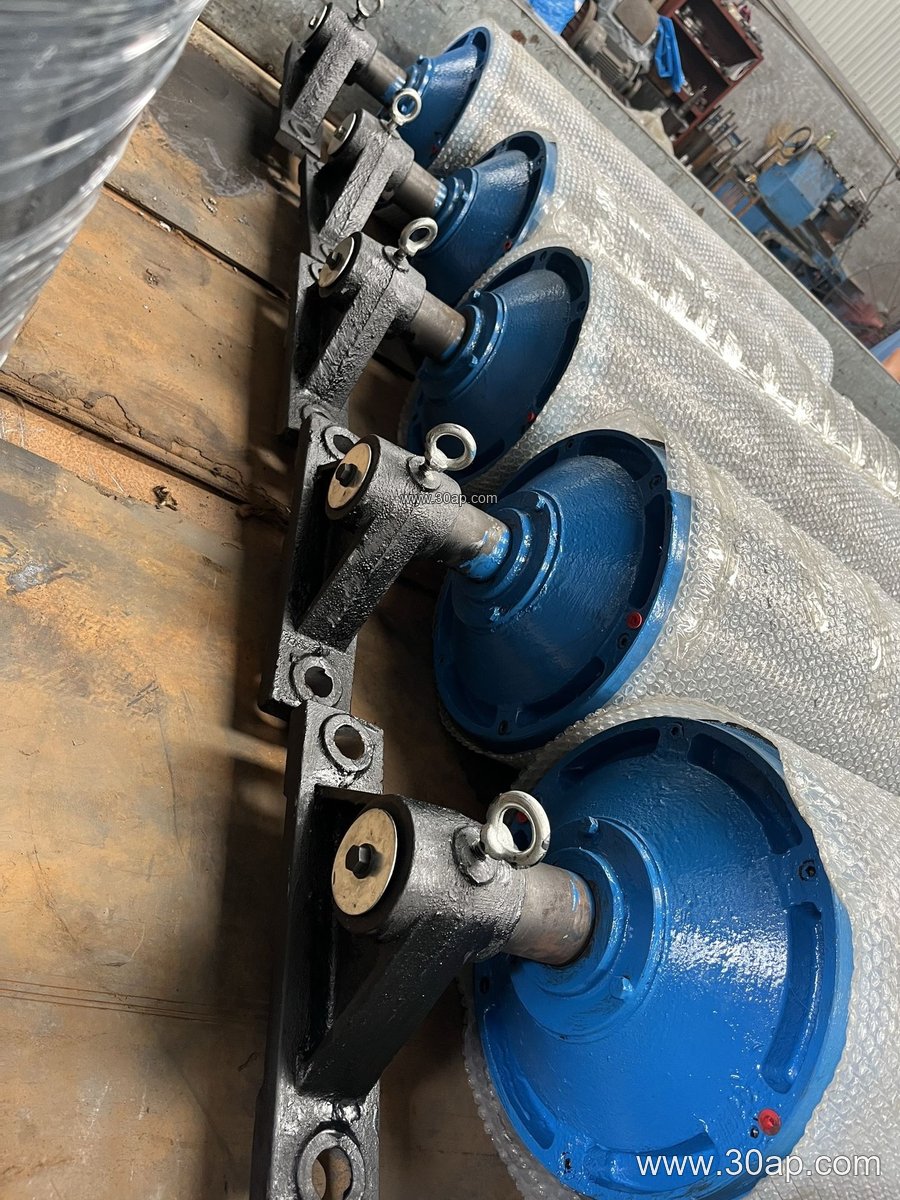
The pulley body is usually a welded steel drum with end discs and a shaft, balanced for the intended belt speed. Lagging is applied in one of several ways: cold bonded rubber sheet, hot vulcanized rubber, or cast rubber. Plain lagging is commonly supplied in thicknesses of 8, 10, 12, 15, or 20 mm, and the cover is ground or left smooth according to the buyer’s requirement.
The shell face is normally wider than the belt. Typical reference values include roughly 500 mm face for B400, 750 mm for B650, 950 mm for B800, 1150 mm for B1000, and 1400 mm for B1200. These are common proportions, not fixed pairings. A plain lagged pulley can also be specified as B800 x Ø500 or B1200 x Ø1000 when the duty calls for it, and larger diameters such as Ø1250 or Ø1400 appear on high-tension drives.
Common reference envelope
| Item | Typical reference values |
|---|---|
| Belt width | B400, B500, B650, B800, B1000, B1200, B1400, B1600, B1800 |
| Pulley diameter | Ø200, Ø250, Ø315, Ø400, Ø500, Ø630, Ø800, Ø1000, Ø1250 |
| Lagging thickness | 8, 10, 12, 15, 20 mm |
| Shaft diameter | Ø50, Ø60, Ø80, Ø100, Ø120, Ø160, Ø200 (by torque and load) |
Shaft size is set by torque, bending load, and bearing selection, not by belt width alone. A wide, slow pulley and a narrow, fast one can carry very different shafts.
Where It Fits on the Conveyor
On a drive or head position, plain lagging gives steady grip without the aggressive bite of patterned covers, which suits medium-tension belts and cleaner cargo. At the tail, a smooth lagged pulley helps the belt track without the self-cleaning problems that grooves can create in wet or sticky service. Tension pulleys also benefit from a plain surface when the belt wraps a long arc and the designer wants even pressure across the face.
Patterned lagging such as diamond or chevron is often chosen where water, oil, or fine slurry reduces friction. A plain lagged pulley remains the better answer where the belt back is smooth, the material is dry, and the priority is uniform contact and easy inspection. Do not treat drive, tail, and bend pulleys as interchangeable positions; the same smooth cover behaves differently at each station because wrap angle and belt tension change.
Applications Across Bulk Handling
Plain lagged pulleys appear in sand and aggregate lines feeding a crusher, in power plant coal handling, in fertilizer and grain silo conveyors, and in tunnel muck removal. In a copper or iron ore concentrator they may sit on medium-duty belts where the rubber conveyor belt back is clean and the drive does not need extra bite. In a coal washing plant, a flame retardant belt is often paired with a smooth lagged tail pulley to keep tracking stable.
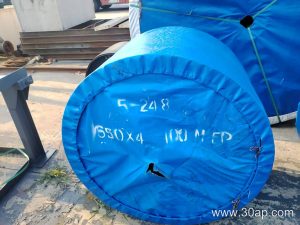
Where the belt itself carries heavy impact or sharp rock, an abrasion resistant cover on the belt matters more than the pulley pattern; the pulley only needs enough friction to transmit power without slip. Matching a plain lagged pulley to an EP or steel cord belt should follow the belt manufacturer’s recommended minimum pulley diameter.
Buyer Checklist
- Confirm the mounting position: drive, tail, tension, or snub, since wrap angle changes the friction requirement.
- State belt width and the required face width, allowing the usual margin over the belt.
- Give the belt type and tension so the shaft and diameter can be sized correctly.
- Choose lagging thickness and bond method for the environment; 10 to 15 mm plain lagging is common in general bulk service.
- Ask for balance grade, bearing type, and bracket interface, and check that the conveyor bracket matches the bearing housing.
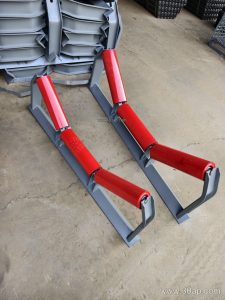
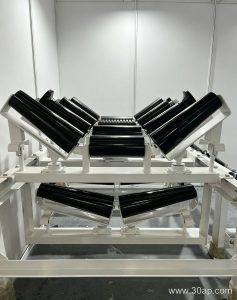
- Review the conveyor pulley drawing together with the idler roller layout so belt line height and take-up travel stay consistent.
Plain lagging is not a universal answer. On wet, oily, or very dusty belts a patterned cover may grip better, and on high-tension long conveyors a larger diameter and heavier shaft are usually needed. The practical rule is to specify the smooth cover when clean contact and easy maintenance matter, and to verify every dimension against the actual conveyor design rather than a catalogue default.