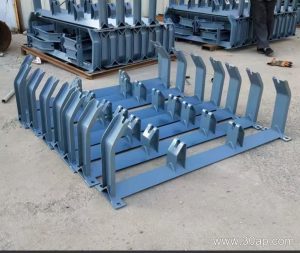
Can a conveyor bracket stop belt wander without frequent adjustments at a bulk port?
Yes, but only when the bracket is treated as part of a controlled support system. A conveyor bracket that holds an idler roll in a fixed position will not correct belt wander if the structure itself shifts or if the roll sits at the wrong angle. The solution is a bracket that maintains stable alignment under load and allows precise, repeatable setup. At a bulk-material port terminal, salt air, abrasive dust, and heavy surge loads make this stability critical.
Why a stable bracket matters more than a stronger bracket
Belt wander usually begins at a single support. A conveyor bracket that flexes, corrodes, or loosens lets the idler roll tilt. The belt then climbs the roll face. Workers may adjust the bracket repeatedly, but the root cause remains: the bracket does not hold its geometry. A better bracket resists deflection, keeps the roll axis square to the belt path, and maintains that position after impact from lump material.
Integrating an adjustable conveyor bracket into the line
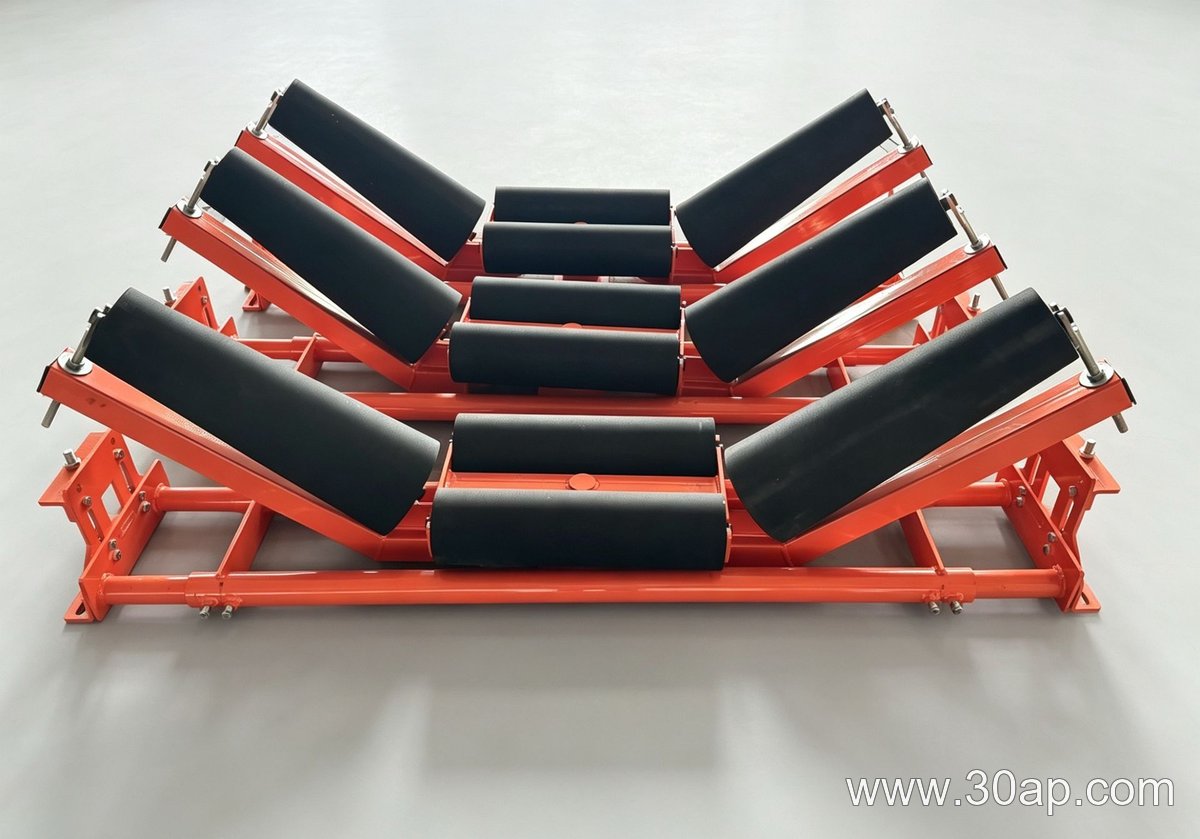
An adjustable conveyor bracket supports correction without constant rework. In a hypothetical port terminal upgrade, engineers might replace fixed brackets on the carrying side with adjustable units at selected stations. The bracket still carries the idler load, but slots or shims allow small lateral and angular changes. After the belt is tracked, the bracket is locked and the setting is recorded. Maintenance then checks the bracket rather than guessing at the roll position.
- Mount the bracket on a rigid, flat surface so adjustment remains meaningful.
- Use corrosion-resistant hardware suitable for salt-laden air.
- Lock adjustments after tracking and mark the reference position.
- Inspect brackets after major impact events or abnormal loading.
What to check before specifying the bracket
Confirm the idler diameter, belt width, and load per station. Check whether the bracket is welded or bolted to the conveyor frame. Review the dust and moisture exposure. A bracket that is accurate on a protected indoor line may still be the wrong choice for an outdoor port terminal if its adjustment features seize. The goal is not the heaviest bracket, but the one that keeps the idler roll aligned and serviceable.
Does a conveyor belt always need the strongest cover?
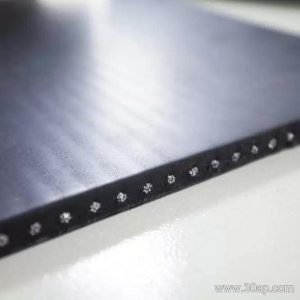
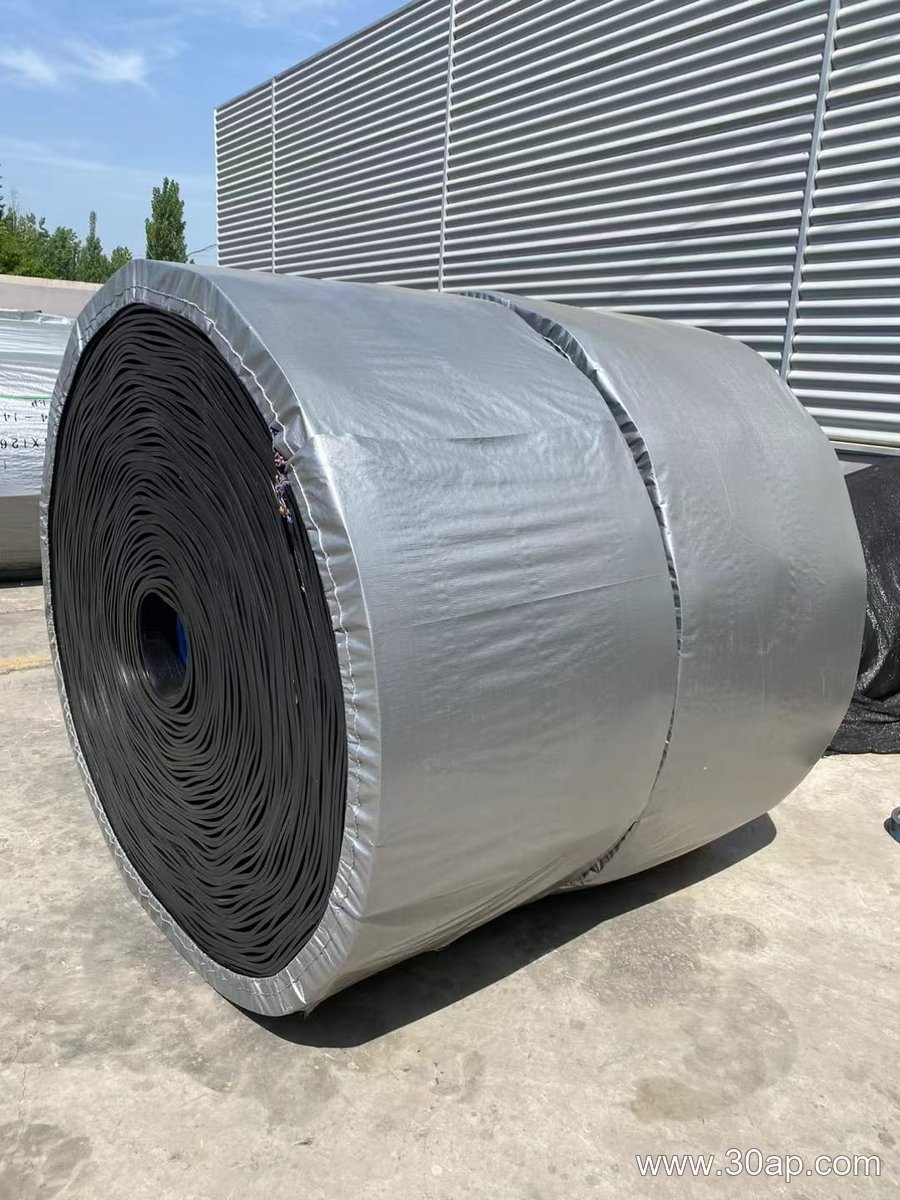
No. Specifying a conveyor belt with the highest abrasion, cut, or tear resistance available is not automatically the best engineering decision. On a general manufacturing line handling mixed cartons, metal parts, and occasional granules, an over-specified belt can increase weight, reduce flexibility, complicate splicing, and raise energy consumption without a proportional gain in service life. The more productive question is: which belt construction matches the actual duty, and where does extra strength stop paying back?
Technology directions that shift the trade-offs
Three broad industry developments influence how engineers balance belt choice:
- Fabric core evolution. EP fabric core conveyor belts (polyester warp, nylon weft) have become a common baseline because they offer low stretch under load and good troughability. The trade-off is that very high-tension applications may still favor steel cord, which resists elongation better but demands larger pulleys and stiffer splices.
- Cover compounding. Rubber covers are increasingly tailored rather than generic: abrasion-resistant grades, oil-resistant grades, and heat-resistant grades each trade some performance in other areas. A cover that resists oily chips may have lower tear strength; a cover that resists sharp scrap may run hotter under high speed.
- Energy and idler interaction. Lower rolling resistance belts reduce power draw, but they often depend on precise loading and alignment. If a general line has frequent stoppages or uneven loading, the theoretical energy saving may not materialize.
Engineering trade-offs on a general manufacturing line
Consider a hypothetical line moving 20 kg cartons and small steel components at 0.8 m/s over a 15 m center distance. A common mistake is to choose a heavy EP belt with a thick abrasion-resistant cover. The belt may last longer against the steel edges, but it also weighs more, requires more drive torque, and may mistrack on smaller pulleys. A lighter belt with moderate cover thickness often performs better because the line is not abrasive enough to justify the extra mass.
Another trade-off is splice type. Mechanical fasteners simplify installation but can catch on product or wear idlers. Vulcanized splices run smoother and stronger but require more downtime and skill. On a line that changes product mix weekly, the faster splice may be worth more than the theoretical belt strength.
Where over-specification costs more than it saves
Over-specification is not free. A stiffer belt needs larger pulleys, which increases frame size and cost. A thicker cover reduces flexibility and may require more take-up travel. A heavier belt increases startup torque, which can force a larger gearbox or soft-start control. None of these consequences appear on a belt data sheet, but they affect the whole conveyor.
The practical rule is to match belt to duty, not to an abstract maximum. If the line handles occasional sharp scrap but mostly light cartons, a moderate cover with a strong fabric core is usually sufficient. If the line runs continuous abrasive sand, a thicker cover or a different belt subtype may be justified. The decision should come from measured loading, speed, and pulley geometry, not from a default preference for the strongest available belt.
What does an idler roller do on a wet outdoor conveyor?
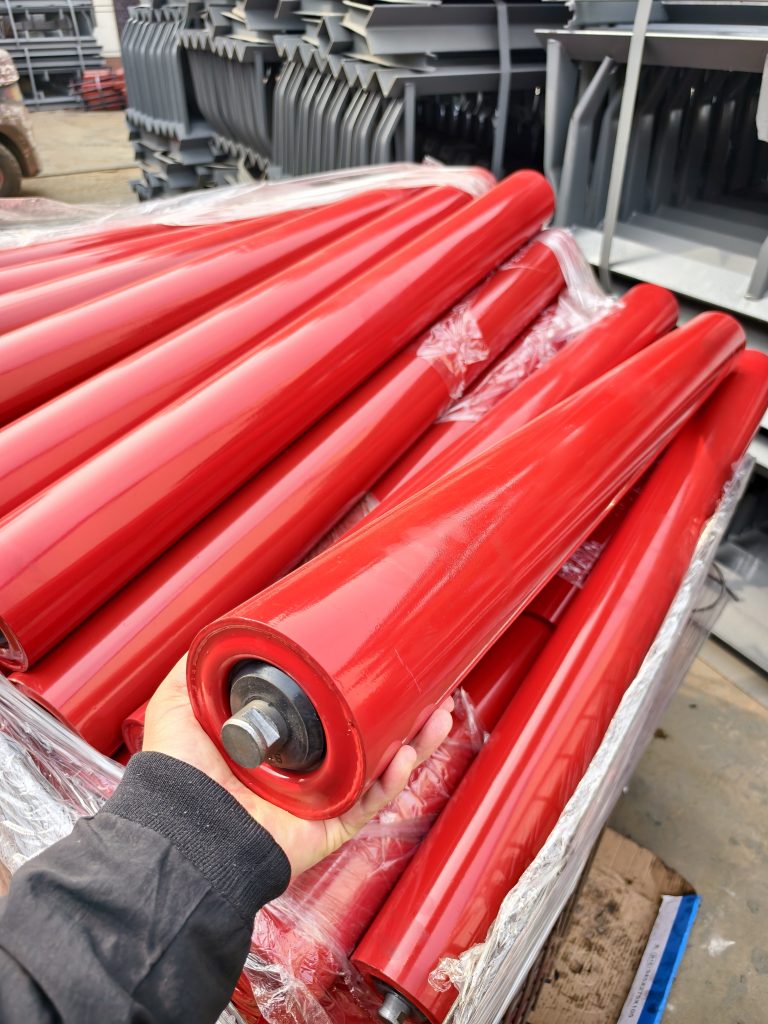
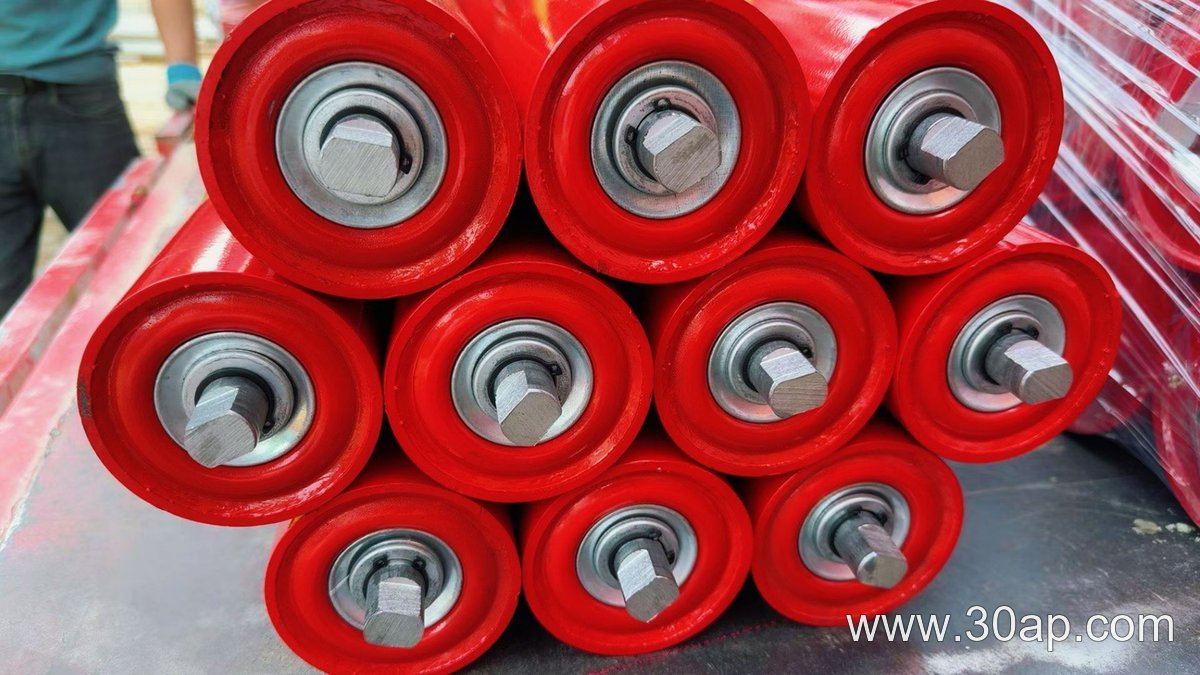
On a wet outdoor conveyor, an idler roller supports the belt and its load while allowing the belt to move with minimal resistance. Rain, washdown water, and fine grit change the operating environment, so the roller’s sealing and bearing protection matter as much as its load rating. A standard roller may perform well indoors yet fail quickly when water carries abrasive particles into the bearing cavity.
How often should idler rollers be checked in wet conditions?
Inspect idler rollers more frequently after heavy rain or washdown. A practical routine is to walk the conveyor and listen for changes in sound, then check for wobble by hand where safe. For example, a quarry conveyor that runs outdoors through autumn rain might need weekly checks, while a covered port conveyor might need only monthly attention. The goal is to catch a rough or seized idler roller before it damages the belt edge.
Can water alone ruin an idler roller?
Water alone is rarely the main problem. The combination of water and fine grit is more damaging because the grit forms a grinding paste inside the bearing. In a wet outdoor setting, a roller with a labyrinth seal and a grease-filled bearing cavity is often a better choice than a simple contact seal. Note that seal performance varies by manufacturer; always confirm the seal type and operating temperature range rather than assuming a universal rating.
When does an idler roller need replacement instead of greasing?
Replace the idler roller when it no longer turns freely by hand, when the shell is worn through, or when the bearing has visible play. Greasing can extend service life only if the bearing is still smooth and the seal is intact. A hypothetical example: a 500 mm diameter roller on a wet outdoor conveyor may last several years if the seal keeps grit out, but only months if the seal is damaged. There is no universal replacement interval; base the decision on inspection findings.
Should I choose a parallel idler or a different type for wet outdoor use?
A parallel idler roller is a common choice for the carrying side because it supports the belt uniformly. In wet conditions, the main decision is not the roller orientation but the bearing housing and seal design. If the conveyor carries sticky wet material, a self-cleaning or spiral return roller can reduce buildup. Match the roller to the belt width, load, and speed using the manufacturer’s selection data, and treat any project-specific dimensions as hypothetical until confirmed by engineering review.
Start With the Conveyor Pulley, Not the Idlers
When a belt wanders off-center in a mineral-processing plant, maintenance crews often adjust every idler except the one component that may be causing the problem: the conveyor pulley. Mistracking at the head or tail pulley produces a distinctive wear pattern and cannot be corrected by training idlers alone. The following troubleshooting sequence focuses on the conveyor pulley as the primary suspect.
Step 1: Confirm the Symptom Is Pulley-Related
Walk the conveyor and note where the belt first leaves its centered path. If the belt is centered at the loading point but drifts only as it approaches the discharge, the head conveyor pulley is likely misaligned or its lagging is worn unevenly. If drift begins immediately after the tail, inspect the tail conveyor pulley and its take-up system.
Step 2: Check Pulley Squareness and Level
Use a laser or string line to verify that the conveyor pulley shaft is perpendicular to the belt centerline. A pulley that is out of square by even a small amount will steer the belt continuously. Also check that the pulley is level across its face; a tilted pulley acts like a steering roller.
Step 3: Inspect Lagging and Shell Condition
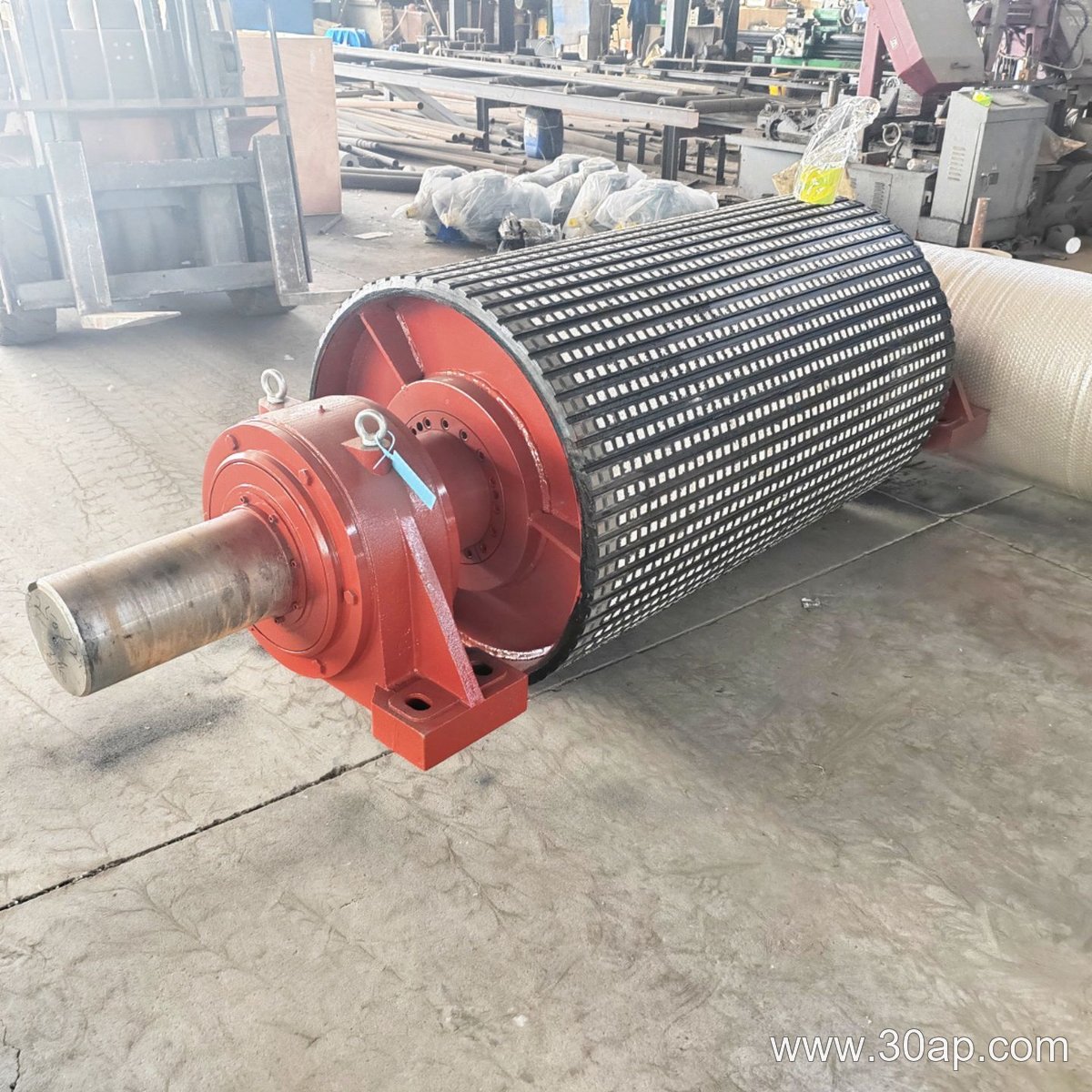
Uneven lagging wear, missing lagging strips, or a build-up of sticky material on one side of the conveyor pulley creates a diameter difference that pulls the belt toward the larger effective diameter. Clean the shell, then measure lagging thickness at several points. If wear is uneven, the pulley may need re-lagging or replacement.
Step 4: Verify Take-Up and Tension
Insufficient belt tension allows the belt to slip and wander on the conveyor pulley. Check that the take-up system is free to move and that tension is within the range recommended for the application. In a mineral-processing plant, abrasive slurry or dust can jam take-up carriages, causing tension to drop silently.
Step 5: Re-check After Correction
After aligning, cleaning, or re-lagging the conveyor pulley, run the belt empty for several minutes. Observe tracking at the pulley. If drift persists, repeat the squareness check, because the pulley may have shifted during maintenance.
This sequence treats the conveyor pulley as the first suspect, not the last. In many mineral-processing plants, that single change in troubleshooting order saves hours of idler adjustment.