Start With the Material on the Belt, Not the Pulley Catalog
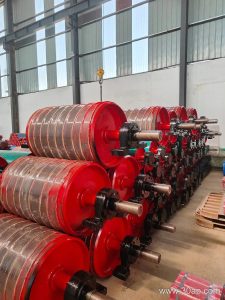
A common misconception is that a conveyor pulley can be chosen from a simple diameter-and-shaft table. In a bulk-material port terminal, where the same conveyor may handle damp iron ore fines, dusty coal or abrasive aggregate, the pulley is a loaded rotating beam exposed to corrosion, impact and belt slip. The material being carried therefore sets the first constraint: it determines the required lagging grip, the shell thickness, and whether the pulley needs protection against buildup or chemical attack.
Work Through Four Decisions in Order
1. Material and Lagging
For dry, abrasive aggregate, plain or grooved rubber lagging usually provides enough friction without trapping fines. For wet or oily cargo, ceramic or diamond-grooved lagging improves grip but must be matched to belt tension so it does not over-stress the belt cover. If the cargo is corrosive, specify a coated or stainless-steel shell rather than assuming standard carbon steel is adequate.
2. Belt Speed
Higher belt speeds increase the dynamic load on the pulley and amplify the effect of any imbalance or runout. Above roughly 3 to 4 m/s, a fabricated pulley with a machined rim and dynamic balancing is generally preferred over a standard welded drum. In a port terminal, variable-speed drives make this check more important, because the pulley must remain stable across the full operating range.
3. Temperature
Ambient conditions at a port are usually moderate, but cargo temperature can vary. Hot material such as freshly processed sinter or clinker requires heat-resistant lagging and attention to bearing clearance and lubricant choice. Cold, wet conditions favor sealed bearings and corrosion-resistant finishes.
4. Operating Conditions and Duty
Continuous ship-unloading duty favors larger shafts, heavier bearings and replaceable lagging. Intermittent or reversing service calls for a symmetrical pulley design and secure lagging attachment. In all cases, confirm the pulley diameter against the belt’s minimum bending radius and check the shaft against the actual torque and radial load.
Practical Checks Before Ordering
- Confirm belt width and required face width, including any extra for tracking.
- Match lagging type to wet, dry or oily conditions.
- Verify shaft and bearing life for the stated duty cycle.
- Specify balancing class and runout for high-speed pulleys.
- State the inspection and relagging plan for the terminal’s maintenance window.
None of these values are universal; they should be calculated or confirmed by the pulley manufacturer for the specific conveyor. The decision path above keeps the material, speed, temperature and duty conditions in the correct order, so a conveyor pulley is selected for the terminal rather than for a catalog page.
Why Does a Conveyor Bracket Crack on a General Manufacturing Line?
A cracked conveyor bracket is rarely a simple material defect. On a general manufacturing line, the bracket may be a welded support for idler rolls or a bolted assembly that ties a frame to a support leg. The failure often begins as a loose bolt or a small fatigue crack and progresses until the bracket no longer holds alignment. Understanding the likely cause prevents repeat failures.
Symptom: Cracks Near Weld Toes or Bolt Holes
If cracks appear at weld toes or around bolt holes, the conveyor bracket is experiencing repeated stress. Three plausible causes are common:
- Fatigue from cyclic loading. The bracket flexes each time material drops onto the belt. Over many cycles, a small notch at a weld or hole becomes a crack.
- Over-tightened or undersized fasteners. A bolt that is too small or torqued unevenly can crush the bracket surface, creating a stress concentration.
- Misalignment. If the bracket is forced into position during installation, it carries a permanent bending load that accelerates cracking.
Symptom: Bracket Loosens or Moves After Weeks of Operation
A conveyor bracket that shifts is not always a cracked bracket. Vibration can loosen bolts, especially on a line with intermittent starts and stops. In other cases, the bracket was never designed for the lateral load caused by a mis-tracking belt. Distinguish between a fastener problem and a structural problem by checking for elongation of bolt holes and for shiny wear marks around the mounting surface.
Symptom: Bracket Corrodes or Deforms Without Cracking
Corrosion usually points to an environment issue, such as washdown chemicals or humid air. Deformation without cracks often indicates an overload from a jammed product or a belt that was tensioned beyond the bracket’s design limit. In a general manufacturing line, a galvanized conveyor bracket may resist corrosion but still deform if the load exceeds its capacity.
How to Narrow the Cause
Inspect the failed conveyor bracket in place before removal. Note the crack direction, the condition of fasteners, and any belt misalignment. Compare the failed bracket to adjacent brackets that still function. If only one bracket fails, look for a local cause such as a bent frame or a missing support. If several fail, review the load and cycle count. A simple load calculation, using the idler weight, belt tension, and material weight per bracket spacing, can show whether the bracket was undersized. Mark any project values as hypothetical until verified.
What Is a Quarry Conveyor Belt?
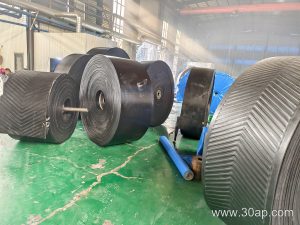
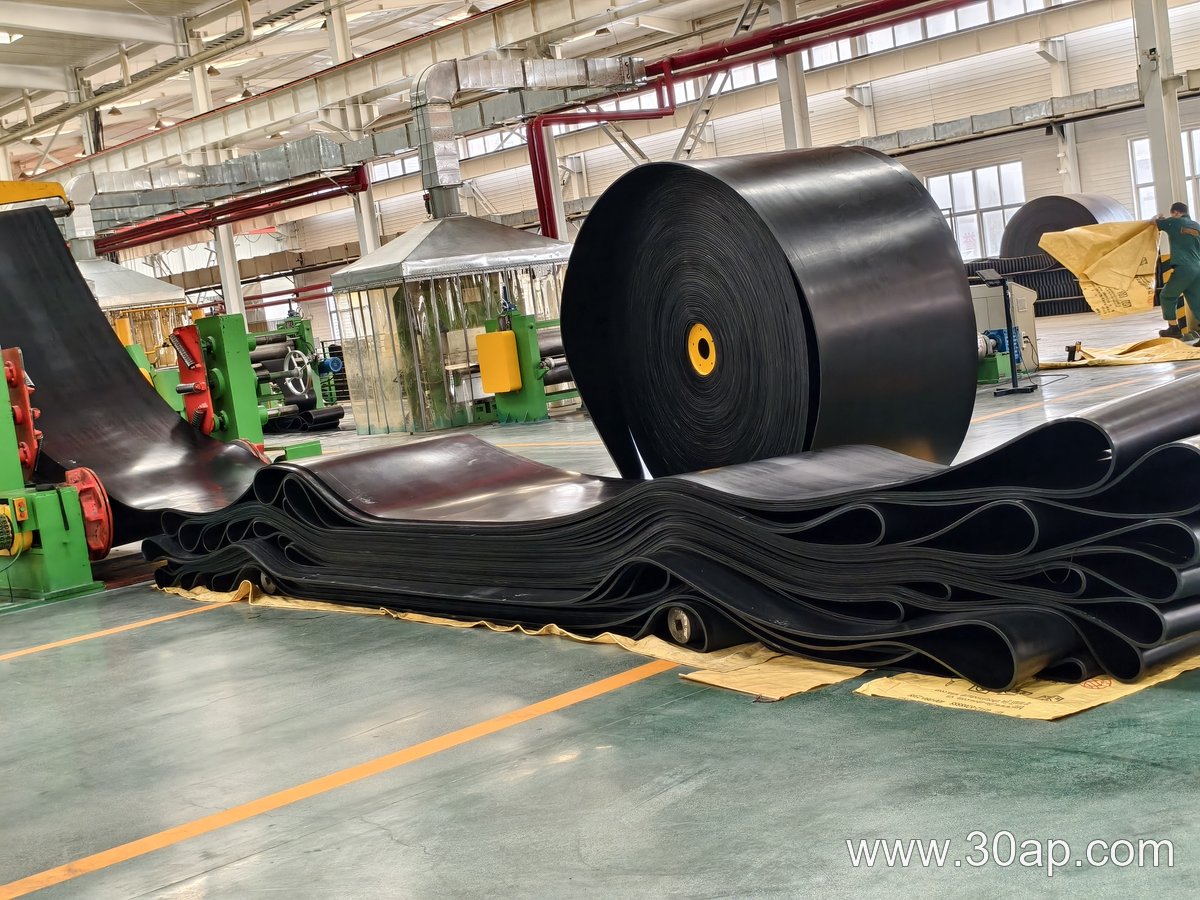
A common misconception is that any heavy rubber belt can serve in a quarry or port terminal. In reality, a quarry conveyor belt is a specific subtype engineered for high-impact, abrasive bulk materials. It is not a single product but a class defined by its construction and duty. This article explains what a quarry conveyor belt is, how it is built, its key features, and how it is used in a bulk-material port terminal.
Construction of a Quarry Conveyor Belt
The construction of a quarry conveyor belt typically includes three main components:
- Carcass: The strength member, usually multiple plies of fabric (such as polyester-nylon) or steel cords. Fabric plies offer flexibility; steel cords provide high tensile strength for long hauls. The carcass resists stretching and carries the load.
- Covers: Top and bottom rubber layers protect the carcass. The top cover faces the material and must resist abrasion, cuts, and gouging. The bottom cover protects against wear from idlers and pulleys. Cover compounds are selected for abrasion resistance, heat, or oil resistance as needed.
- Edges: The belt edges are often reinforced or sealed to prevent fraying and moisture ingress.
In a quarry conveyor belt, the carcass and covers are bonded through vulcanization to form a single, durable unit.
Features of a Quarry Conveyor Belt
Quarry conveyor belts are designed with features that address the harsh conditions of quarries and port terminals:
- High abrasion resistance: The top cover resists wear from sharp, dry rocks and aggregates.
- Impact resistance: The belt withstands the impact of large lumps at loading points, often aided by breaker ply or cushion rubber.
- Troughability: The belt flexes to form a trough shape, keeping material centered and preventing spillage.
- Long splice life: Splices are made strong and durable to match belt life, often using vulcanized joints.
- Moisture and rot resistance: Fabric plies are treated to resist hydrolysis and rot in damp conditions.
These features make the quarry conveyor belt suitable for continuous operation in demanding environments.
Uses in a Bulk-Material Port Terminal
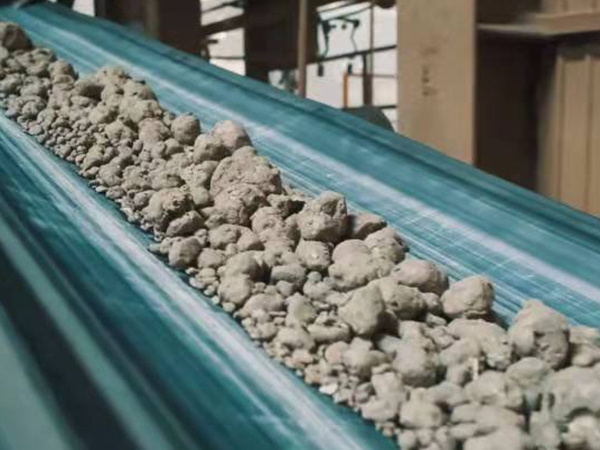
In a bulk-material port terminal, a quarry conveyor belt is used to move materials such as crushed stone, gravel, sand, and ores from ship unloaders or stockpiles to storage or loading points. The belt must handle high tonnages, variable weather, and frequent starts and stops. Typical applications include:
- Ship-to-shore conveying: moving material from the quay to the yard.
- Stockyard stacking and reclaiming: building and retrieving piles.
- Train or truck loading: transferring material to outbound transport.
Because port terminals often operate continuously, the quarry conveyor belt must be reliable and easy to maintain. Its construction allows it to resist the abrasive and impact forces of bulk cargo while maintaining a consistent flow.
FAQ
Is a quarry conveyor belt the same as a general-purpose belt?
No. A quarry conveyor belt is specifically designed for high-impact, abrasive materials. General-purpose belts may not have the same cover thickness or carcass strength.
Can a quarry conveyor belt be used in a port terminal?
Yes, it is commonly used in bulk-material port terminals where similar demands exist: heavy loads, abrasive materials, and continuous operation.
What is the most important feature to consider?
The top cover’s abrasion resistance and the carcass tensile strength are critical. The choice depends on material size, weight, and throughput.
How are quarry conveyor belts joined?
They are usually joined by vulcanized splicing, which provides a strong, smooth joint. Mechanical fasteners may be used for temporary repairs.
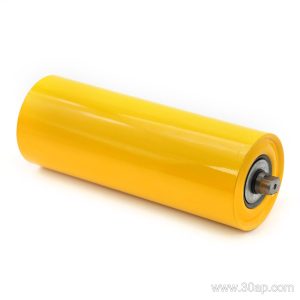
Many operators blame the belt when a conveyor drifts. In reality, the idler roller is often the culprit. A roller that is misaligned, worn unevenly, or mounted on a skewed frame will steer the belt sideways, even if the belt itself is perfectly straight. The mechanism is simple: the belt moves toward the side where it first contacts a roller. A roller that is not perpendicular to the belt path creates a small sideways force that accumulates over distance.
Diagnose Idler Roller Tracking Problems Step by Step
Before adjusting anything, stop the line and lock out power. Then follow this sequence to isolate the cause.
1. Check for a skewed idler roller
Use a string line or laser to verify that each idler roller is perpendicular to the belt centerline. A roller that is off by even a small angle will push the belt to one side. If a roller is skewed, loosen its mounting bolts and tap it into alignment. Do not rely on the belt’s self-centering ability to overcome a badly skewed roller.
2. Inspect roller condition and diameter
Worn or seized bearings can make one idler roller turn slower than its neighbors. That drag creates a steering effect. Also check for uneven diameter—buildup of material on one side, or a flat spot—which changes the contact geometry. Replace any roller that does not spin freely or shows visible runout.
3. Verify mounting height and frame level
If one idler roller sits higher than the next, the belt will climb toward the high side. Use a level or survey instrument to confirm that all rollers in the affected zone share the same elevation. Correct any low or high mounts by shimming or repairing the frame.
4. Examine loading and belt condition
Off-center loading pushes the belt against one side of the idler roller. Adjust the chute or feeder so material lands in the middle. Also check for a curved or damaged belt splice, which can mimic a roller problem.
Corrective Actions That Work
- Align every idler roller in the problem zone to the same perpendicular reference.
- Replace rollers with rough, seized, or unevenly worn bearings.
- Level the mounting frames and shim as needed.
- Center the material load on the belt.
After adjustments, run the conveyor empty and watch the belt for several minutes. If tracking improves but does not stay centered, repeat the check on the next group of idler rollers upstream. In most general manufacturing lines, a single misaligned or worn idler roller is the root cause—not the belt.