What IoT Conveyor Belt Monitoring Really Means
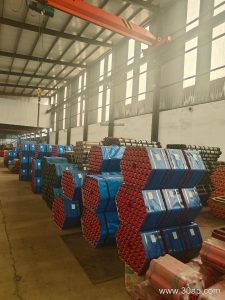
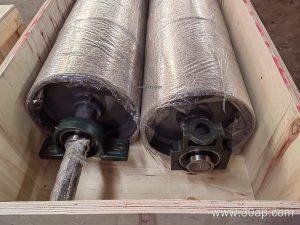
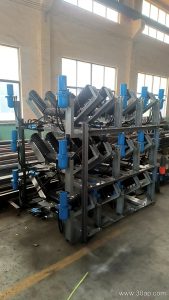
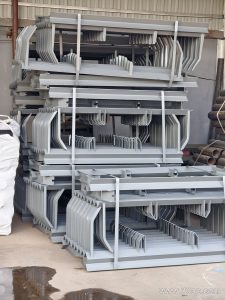
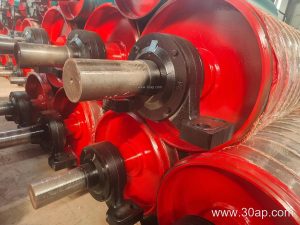
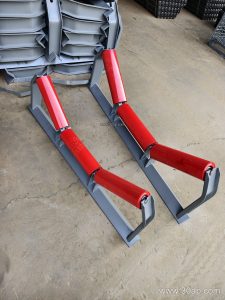
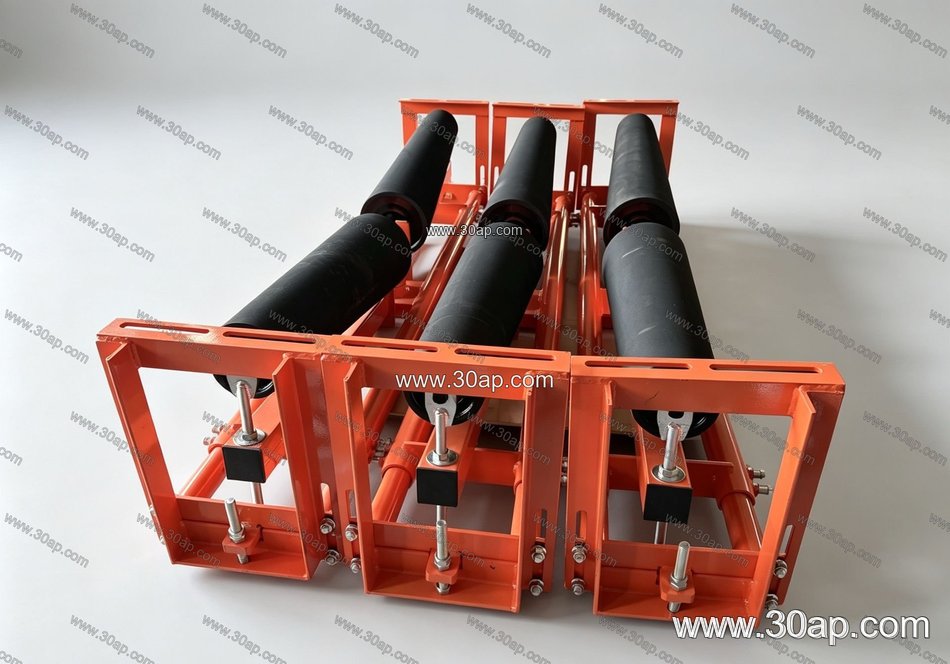
IoT Conveyor Belt Monitoring is the practice of instrumenting a belt conveyor with sensors, edge gateways and software so that its condition and performance can be watched continuously rather than guessed at during occasional walk-arounds. The monitoring layer sits on top of the mechanical system, not inside it. The belt still runs on idler rollers, turns over a conveyor pulley at the drive, tail and bend positions, and is held in line by the frame and conveyor bracket arrangement. What changes is that data about speed, belt wander, pulley temperature, motor load and roller condition becomes visible in a dashboard or historian.
The aim is simple: catch a developing problem before it becomes a stoppage. A drift in belt tracking, a warming bearing on a pulley, or a roller that stops turning usually gives warning. IoT monitoring is about hearing that warning early.
How a Monitoring System Is Built
A typical installation has four layers.
- Sensors – belt speed and slip detectors, belt edge position sensors for tracking, non-contact temperature probes at drive and tail pulleys, vibration or rotation sensors on idler rollers, motor current and torque signals, and belt damage or rip detectors where the risk justifies them.
- Edge devices and gateways – industrial controllers that collect local signals, filter noise and forward only useful data. In dusty plants, enclosures and ingress protection matter as much as the sensor specification.
- Communication – wired Industrial Ethernet, or wireless where cable routing across a long conveyor is impractical. Coverage and latency should be checked against the actual layout, including transfer towers and bends.
- Software – trending, alarms, maintenance records and reports. The best systems turn raw signals into a clear action, such as inspecting a specific pulley or re-tensioning a belt.
Sensors are not limited to the belt itself. Drive, tail and bend pulleys each have their own duty and their own failure modes, and each may need its own measurement point. A temperature probe on a drive pulley answers a different question from one on a bend pulley, and neither answers a question about a tail pulley bearing. The same logic applies to idler rollers along the carrying and return strands.
Where It Fits in Real Plants
The technology is used wherever a stopped belt is expensive. In a coal mining conveyor belt or underground coal mining conveyor belt system, monitoring supports early warning of roller seizure and belt tracking problems in areas that are hard to inspect. In cement plants and power plant coal yards, it helps coordinate maintenance across long conveying routes. Quarry and aggregate conveyor belts, crusher conveyor belts and iron ore or copper ore lines benefit where impact, dust and heavy loads shorten component life.
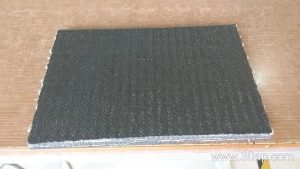
Material type shapes the sensor choice. A heat resistant conveyor belt carrying clinker, or a flame retardant conveyor belt in a coal handling area, may call for temperature monitoring with specific alarm thresholds agreed with the belt supplier. A steel cord conveyor belt on a long overland route often justifies rip detection, while an EP conveyor belt on a shorter transfer may not. Abrasion resistant conveyor belts in a stone crushing line may mainly need roller and tracking data.
Parameters a Buyer Should Gather First
Specifications should come from the actual project, not from a catalogue headline. The table below shows the kind of reference data a buyer may already hold, and the monitoring questions it raises.
| Reference item | Example values | What it affects in monitoring |
|---|
Because tables render inconsistently across themes, treat the following as a checklist rather than a fixed specification.
- Belt width: 650mm conveyor belt, 800mm conveyor belt, 1000mm conveyor belt, 1200mm conveyor belt, 1400mm conveyor belt, 1800mm conveyor belt, 2000mm conveyor belt – wider belts may need more tracking sensor positions and more roller monitoring points.
- Belt construction: multi-ply fabric core conveyor belt, EP200 conveyor belt or EP630 conveyor belt, NN conveyor belt, steel cord conveyor belt such as ST1600 conveyor belt – rip detection and tension monitoring needs differ by construction.
- Pulley and roller details: diameters, bearing types, shaft sizes and mounting dimensions from the drawings – these determine which temperature or vibration sensors will fit.
- Operating data: belt speed, tonnage, start/stop frequency, incline and environmental conditions.
Do not assume that one belt width fixes a pulley diameter or shaft size; those come from the conveyor design, not the belt alone.
Practical Advice Before You Buy
Start with the failure history of the specific conveyor. If belt misalignment is the recurring issue, a 输送带纠偏器 combined with edge position monitoring may be more valuable than a broad sensor package. If pulley bearings fail, focus there first. Ask for a clear description of how alarms are prioritised, how data is retained, and how the system integrates with existing control and maintenance software. Check that sensor enclosures suit the dust, moisture and temperature of the site, and confirm who will maintain calibration.
Finally, plan the installation around safe practice: isolate and lock out the conveyor before mounting sensors near pulleys or rollers, and never inspect moving parts from close range while the belt is running. A well-planned IoT Conveyor Belt Monitoring system pays back through fewer unplanned stops and better-informed maintenance decisions, but only when the measurements match the real risks on that conveyor.