What a Ø127 Conveyor Idler Is
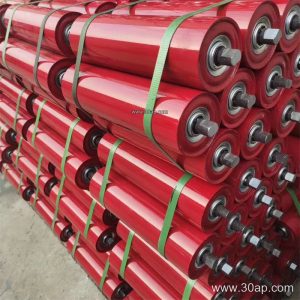
A Ø127 conveyor idler is a carrying or return roller with a shell diameter of 127 mm, used to support the conveyor belt along its path. In many plants it is simply called a 127 mm idler roller or a Ø127 carrying roller, and it sits between the loading point and the discharge pulley. The diameter is a common middle-to-heavy size, so it appears on medium and large belt conveyors in quarries, cement plants, coal handling systems and power station coal yards.
The idler is not a drive component. It rotates freely and lets the belt run with low resistance while keeping the belt profile stable. Drive pulleys, tail pulleys and bend pulleys do different work and are not interchangeable with an idler roller, even when the diameter looks similar.
How the Roller Is Built
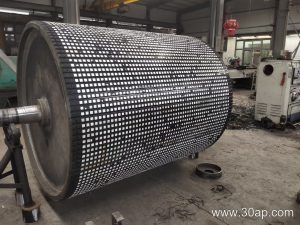
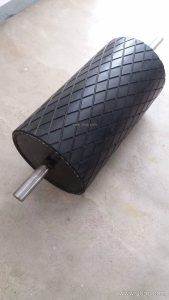
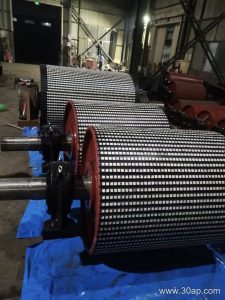
A typical Ø127 idler uses a steel tube shell, a shaft, bearing housings, sealed bearings and a protective finish. The shell can be plain steel, nylon coated, ceramic coated or fitted with rubber rings for impact absorption. Bearing size is chosen by load and speed rather than by diameter alone, so 6205, 6305, 6306, 6308 and 6310 are all seen in this size class depending on the design.
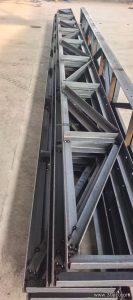
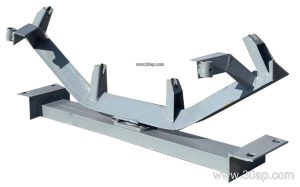
Sealing matters as much as the tube. Dust, water and fine grit shorten bearing life quickly, so labyrinth seals and grease retention are worth checking on any quotation. The idler is mounted in a conveyor bracket or frame, and the bracket type must match the shaft end and the frame spacing.
Where It Fits on the Conveyor
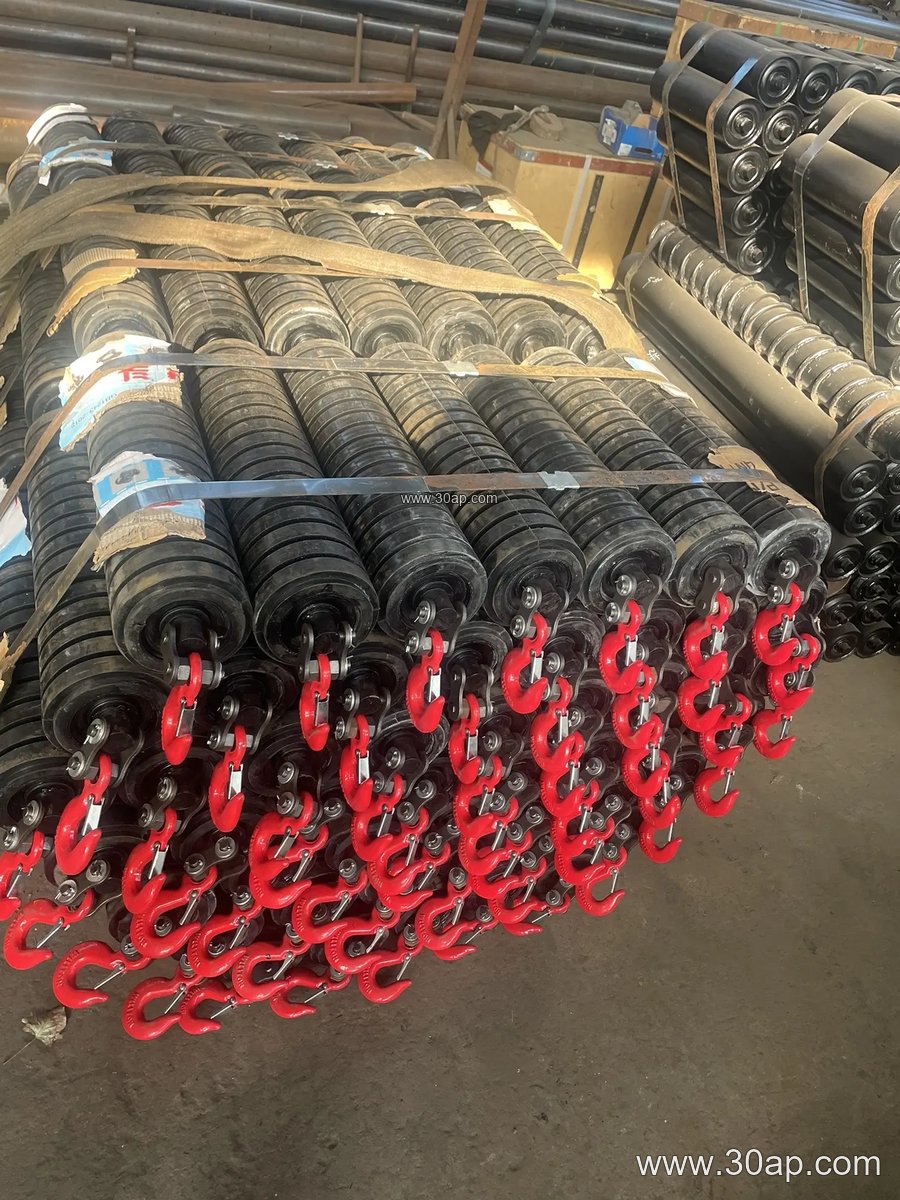
On the carrying side, three-roll troughing sets are common. A Ø127 troughing idler may be used as the centre roll or side roll, and the trough angle is usually 20, 30, 35 or 45 degrees. On the return side, flat return rollers or V-return sets support the empty belt. Transition idlers near the pulley help the belt change from troughed to flat without stressing the edges.
Impact zones under a crusher or transfer chute may use impact idlers with rubber rings, while self-aligning idlers are used where the belt tends to wander. These are different jobs, and a standard troughing roller should not be expected to do them all.
Common Sizes and Matching Belt Widths
Roller length changes with belt width, trough angle and roll position. The values below are common examples, not fixed rules; side rolls and centre rolls often differ, and final length is set by the conveyor design.
| Belt width | Typical roll length, three-roll trough | Common idler diameter |
|---|---|---|
| B500 | about 200 mm | Ø89 to Ø127 |
| B650 | about 250 mm | Ø89 to Ø127 |
| B800 | about 315 mm | Ø102 to Ø127 |
| B1000 | about 380 mm | Ø108 to Ø133 |
| B1200 | about 465 mm | Ø127 to Ø159 |
| B1400 | about 530 mm | Ø127 to Ø159 |
| B1600 | about 600 mm | Ø133 to Ø178 |
| B1800 | about 670 mm | Ø133 to Ø178 |
| B2000 | about 750 mm | Ø159 to Ø194 |
The table shows reference ranges only. A B1200 conveyor does not have to use one fixed diameter, and a Ø127 roller can appear on several belt widths when the load, speed and frame design allow it. Shaft diameter is set by the bracket and load calculation, not by belt width alone.
Applications Across Industries
In a limestone quarry or aggregate line, Ø127 idlers carry crushed rock and screened stone on long inclined conveyors. In a cement plant they support clinker and raw material belts, where abrasion and dust are constant concerns. Coal handling at a power station and wash plants also use this size, often with flame retardant and anti-static belting such as PVG800S or a flame retardant conveyor belt.
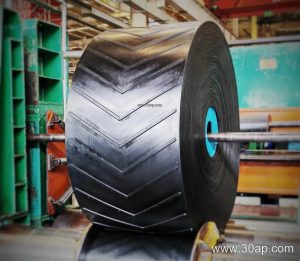
The belt itself affects idler choice. An abrasion resistant conveyor belt with a heavy cover runs well on robust rollers, while a steel cord conveyor belt on a high-capacity trunk line may call for larger diameters and closer spacing checks. Fabric core belts such as EP or NN constructions are common on medium-duty lines and pair naturally with 127 mm rollers where loads are moderate.
What Buyers Should Check
- Confirm the shaft end and bracket type before ordering, since a conveyor bracket that does not match will stop installation.
- Ask for the bearing number and seal design, not just the shell diameter.
- Check the roll length against the actual trough angle and frame, not only the belt width.
- Match the roller surface to the duty: steel for general service, rubber rings for impact, ceramic or nylon where buildup and wear are issues.
- Review spacing along the line; too much gap causes belt sag and edge stress.
A Ø127 conveyor idler is a straightforward part, but it works best when the diameter, length, bearing and surface are chosen together with the belt and frame. Buyers who treat it as a system component rather than a catalogue number usually get longer service and fewer stoppages.