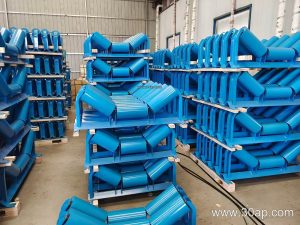
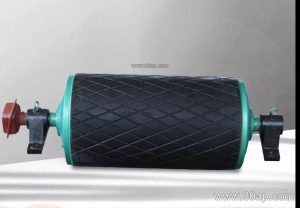
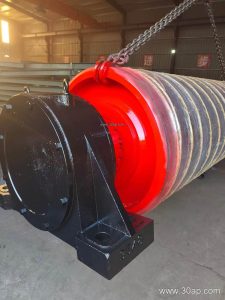
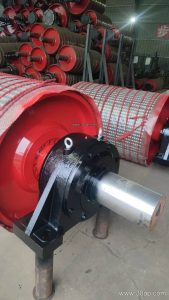
What a Spiral Idler Is
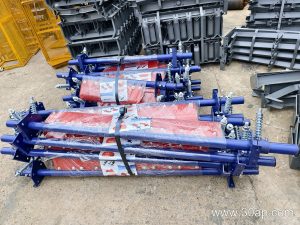
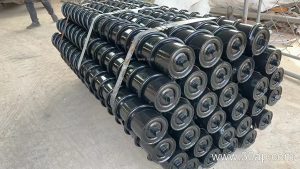
A spiral idler is a return-side roller whose shell carries a continuous helical wrap. Instead of a plain cylindrical surface, the roller presents a raised spiral ridge that turns with the belt. This spiral idler roller is normally installed under the carrying run to support the returning conveyor belt, and the helix helps shed fines that would otherwise pack onto a smooth shell. In dusty circuits such as a limestone quarry, a coal washing plant or a cement grinding line, that self-cleaning action is the main reason engineers specify it.
The product is also called a helical return roller or spiral return idler. These are equivalent names for the same item. It is not a troughing idler, not a buffer idler and not a self-aligning idler, and it should not be confused with a drive pulley, tail pulley or bend pulley, which are drum components rather than rollers.
Construction and Materials
A typical spiral idler is built from a steel tube with a welded helical flight, fitted with bearing housings at both ends and a shaft that locks into the conveyor bracket. The spiral can be formed from a flat strip wound around the shell, or cast as a ribbed profile. Common shell materials are welded steel and, for wet or sticky service, nylon or rubber-covered versions. Seals matter as much as the helix: a labyrinth or triple-lip seal keeps grit out of the bearing, and the bearing seat is usually machined after welding to keep runout low.
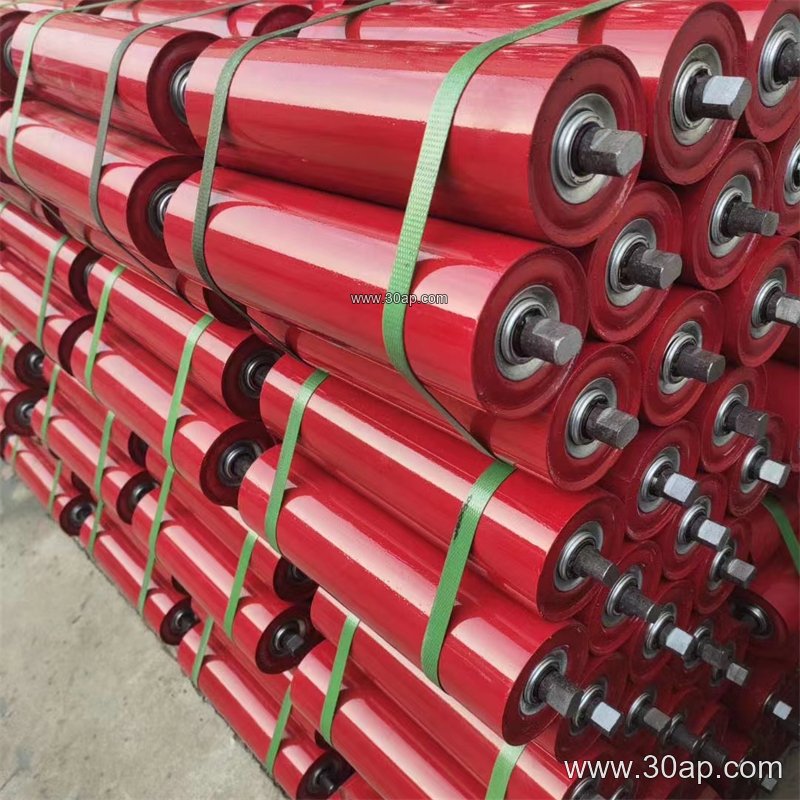
- Shell outside diameter usually follows the return idler range, for example Ø89, Ø108, Ø133, Ø159 or Ø194 mm.
- Bearing sizes commonly used include 6204, 6205, 6305, 6306 and 6308, matched to load and shaft design rather than to one fixed roller diameter.
- Roller length is set by belt width, frame type and the gap needed for the spiral flight.
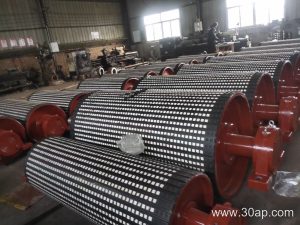
- Surface options include plain steel, nylon, rubber rings and ceramic tiles; the last two are chosen where build-up or wear is severe.
Where the Spiral Return Roller Fits
On a long overland conveyor, the return strand is the usual home for this roller. It is placed at intervals between the head and the tail, often in the same brackets that carry plain flat return rollers. In a power plant coal handling system, a spiral idler under the return belt reduces the labour needed to scrape sticky coal dust from the frame. In an iron ore or copper ore concentrator, the same roller keeps the return run cleaner where fine concentrate falls from the belt. Port bulk terminals handling damp aggregate also use it to limit material carryover.
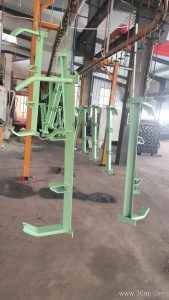
The unit works alongside the conveyor belt, the conveyor pulley at each end, and the conveyor bracket that anchors the shaft. It does not replace a bend pulley or a tail pulley; those are separate drum assemblies. Where belt tracking is the problem, a self-aligning idler or a taper self-aligning idler is the correct choice, and the spiral roller is not a substitute for that function.
Typical Sizes and Matching the Belt
The table below gives common reference values. They are examples, not fixed pairings, and final dimensions should follow the conveyor design.
| Belt width | Common roller length (three-roll trough, for reference) | Typical return roller diameter |
|---|---|---|
| B500 | about 200 mm | Ø89 to Ø108 mm |
| B650 | about 250 mm | Ø89 to Ø108 mm |
| B800 | about 315 mm | Ø108 to Ø133 mm |
| B1000 | about 380 mm | Ø108 to Ø133 mm |
| B1200 | about 465 mm | Ø133 to Ø159 mm |
| B1400 | about 530 mm | Ø133 to Ø159 mm |
| B1600 | about 600 mm | Ø159 to Ø194 mm |
| B1800 | about 670 mm | Ø159 to Ø194 mm |
| B2000 | about 750 mm | Ø178 to Ø219 mm |
The length shown relates to the centre and side rolls of a three-roll troughing set and is only a guide for return roller selection. A wide belt does not force one specific pulley diameter, and a narrow belt does not dictate one shaft size. Shaft diameter should be calculated from load, span and bearing selection. Trough angle, usually 20, 30, 35 or 45 degrees, belongs to the carrying side and does not change the spiral return roller itself.
Buyer Checklist
- Confirm the belt width and the return frame spacing before ordering, since the spiral flight needs clearance.
- Check whether the site needs a nylon or rubber-covered shell for sticky material such as wet sand, clay or coal dust.
- Ask for the seal type and bearing brand, because these decide service life more than the helix pitch does.
- Match the shaft end to the existing conveyor bracket rather than modifying the frame.
- For hot or oily cargo, select the rubber grade of the conveyor belt and the roller covering together; a heat resistant conveyor belt may still need a heat-tolerant roller seal.
- In underground coal mining, specify a flame retardant conveyor belt and confirm the roller’s antistatic properties with the supplier.
Maintenance is simple. Inspect for a seized bearing, a bent flight or a worn shell, and replace the roller before the spiral starts to rub the belt edge. Greasing intervals depend on the sealed-for-life design or the grease nipple fitted. Keeping the return strand clean with a spiral idler usually costs less than repeated belt cleaning and early belt replacement.