What a Head Bend Pulley Does
A head bend pulley is a direction-changing drum mounted near the head of a conveyor, usually close to the drive pulley or the discharge point. Its job is to guide the returning belt around a bend, keep wrap angle on the drive pulley, or route the belt toward a take-up or transfer section. It is a bend pulley in function, not a drive or tail pulley, and the three should never be treated as interchangeable parts in a bill of materials.
In a quarry, cement plant, or power plant coal handling line, the head bend pulley often sits in a tight space where the belt must turn before it reaches the discharge chute. Because it carries belt tension but does not transmit drive torque, its design priorities are stiffness, bearing life, and smooth rotation rather than torque capacity.
Construction and Surface Options
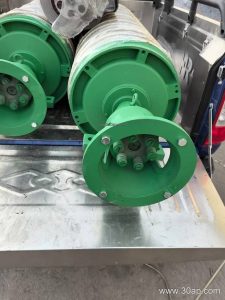
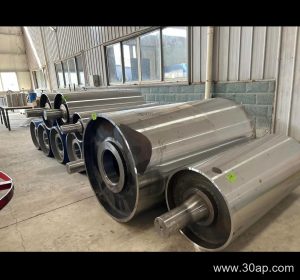
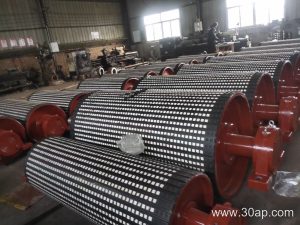
The drum is typically a welded steel shell with a machined face, end discs, and a through shaft or stub shafts. Bearings are housed in plummer blocks or a self-contained bearing housing with sealing suited to dust and fines. Common surface forms include plain finish, hot-vulcanized rubber lagging, cold-bonded rubber, diamond grooving, and ceramic lagging for high-slip or wet conditions. Lagging thickness is often 8, 10, 12, 15, or 20 mm depending on the duty.
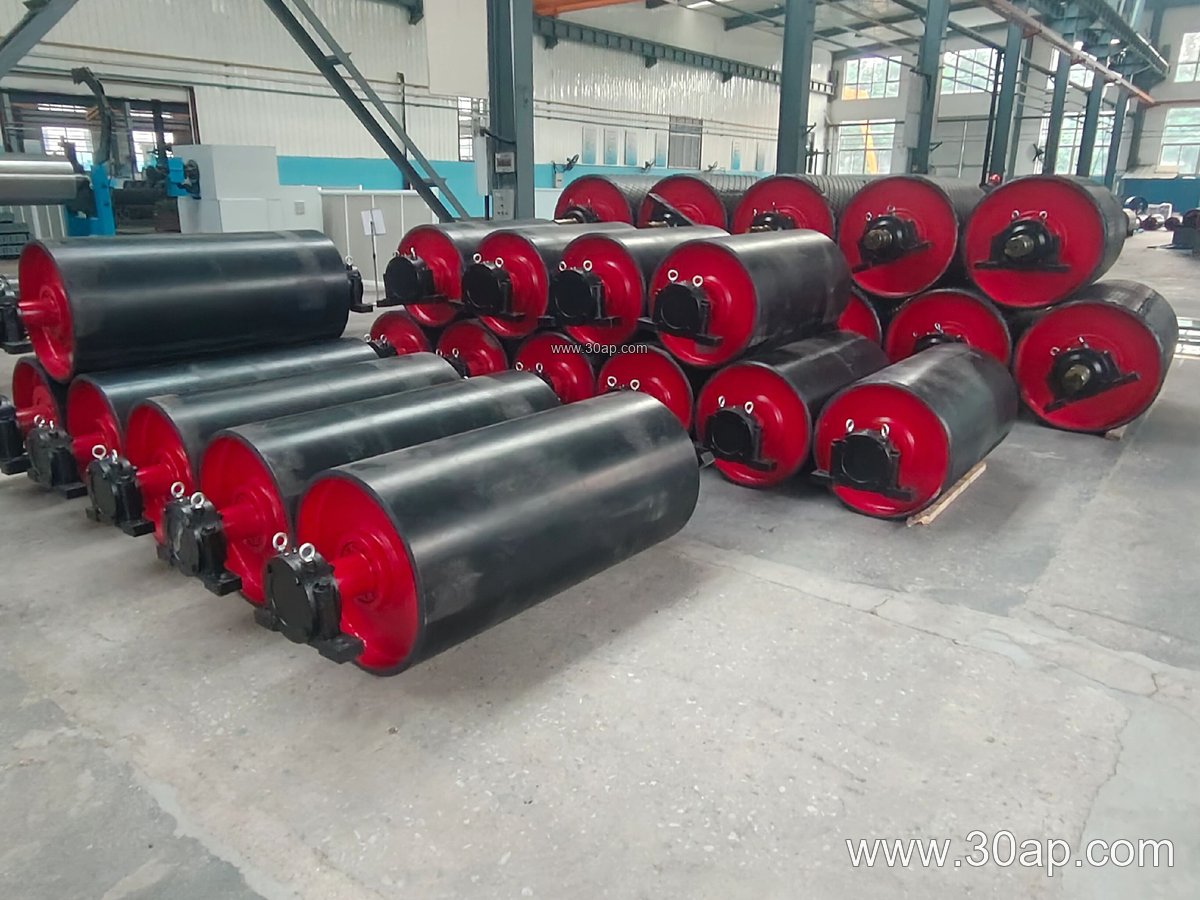
On abrasive circuits, a rubber lagging helps protect the shell and improves friction without the aggressive bite of ceramic. On a coal mining conveyor belt system where fine dust and moisture are present, diamond or grooved lagging can help shed material. The bend pulley does not need the heavy drive-grade lagging of a drive pulley, but it should still be balanced and true-running to avoid belt tracking problems.
Sizing by Belt Width and Diameter
Selection starts with the conveyor belt width and the belt path geometry. The pulley face width is normally wider than the belt so the belt does not run off the edge. Typical reference combinations include B800 with a Ø500 shell, B1200 with a Ø1000 shell, and B1400 with a Ø800 shell, but no single belt width is locked to one diameter. Diameter is chosen from belt tension, bend angle, and allowable belt bending stress.
| Reference belt width | Typical pulley face width | Example diameter range |
|---|---|---|
| B400 | about 500 mm | Ø200 to Ø315 |
| B500 | about 600 mm | Ø250 to Ø400 |
| B650 | about 750 mm | Ø315 to Ø500 |
| B800 | about 950 mm | Ø400 to Ø630 |
| B1000 | about 1150 mm | Ø500 to Ø800 |
| B1200 | about 1400 mm | Ø630 to Ø1000 |
| B1400 | about 1600 mm | Ø800 to Ø1250 |
Shaft diameter is determined by torque and radial load, not by belt width alone. Common shaft sizes run from Ø50 to Ø200, and the final value should come from the pulley manufacturer’s load calculation. A bend pulley near the head end may see high tension on one side and a short wrap on the other, so the bearing and shaft loads deserve a proper check.
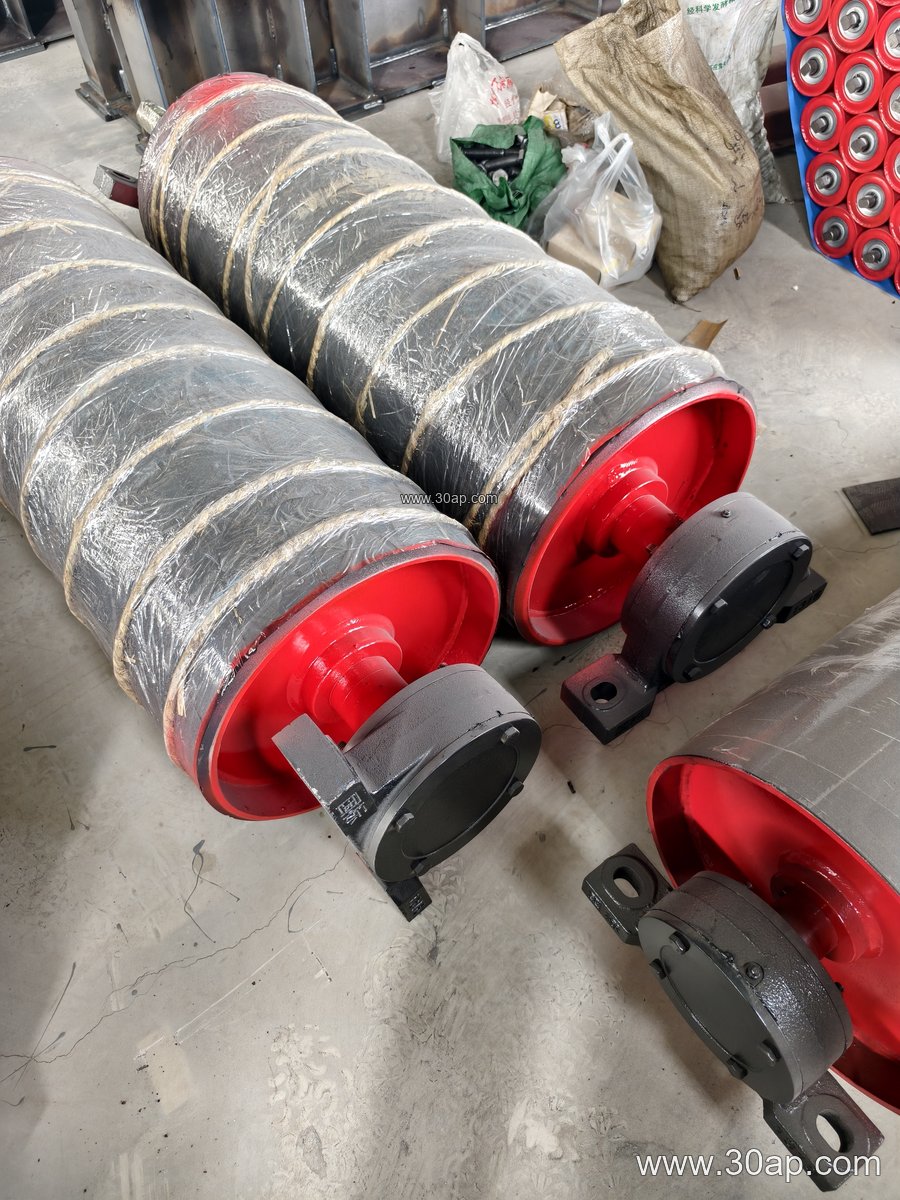
Where It Fits in the Plant
In a limestone quarry or aggregate line, a head bend pulley may redirect the belt after the crusher discharge so the material falls cleanly into the next transfer. In a cement plant clinker circuit, heat-resistant belt grades and a well-sealed bend pulley help cope with warm, dusty air. In a coal washing plant, the bend pulley is often specified with flame retardant conveyor belt in mind, and the pulley itself should be kept free of accumulated coal fines.
The pulley works together with the conveyor belt, idler roller, conveyor bracket, and frame. A misaligned bracket or a worn idler roller near the bend can make a good pulley look faulty, so alignment should be checked before replacing the drum.
Buyer Checklist
- Confirm the function: head bend, take-up bend, or snub, and state it clearly in the inquiry.
- Provide belt width, belt type, and belt tension so the shell and shaft can be sized correctly.
- Choose lagging for the environment: plain for clean dry duty, rubber or diamond for general grip, ceramic where slip is a concern.
- Check bearing sealing against dust, water, and wash-down.
- Ask for balancing and run-out tolerances, plus the shaft and bearing load calculation.
- Match the pulley to the belt grade, whether EP conveyor belt, steel cord conveyor belt, or a flame retardant conveyor belt for underground service.
A head bend pulley is a small part of the conveyor but a critical one. Getting the drum, lagging, and bearing protection right at the inquiry stage avoids tracking problems and unplanned stops later.