What a Return Idler Bracket Does on a Conveying Line
A return idler bracket is the support that holds the lower, carrying-side idlers beneath a conveyor belt. While the upper troughing frames shape the belt into a trough, the return bracket simply keeps the belt’s return run flat, stable and aligned as it travels back toward the tail. In a quarry, a limestone mine or a cement plant, these brackets sit in a dusty, abrasive environment where small alignment errors quickly turn into belt edge wear and tracking problems.
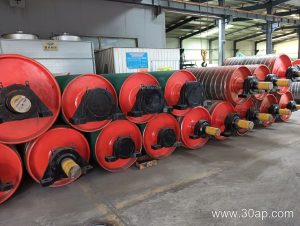
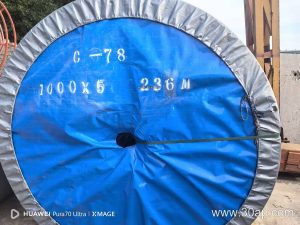
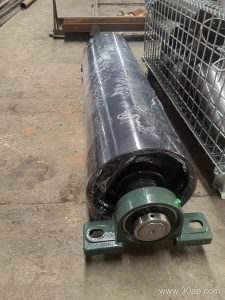
The bracket works together with the conveyor belt, the idler roller and the conveyor pulley. A poorly seated return bracket can cause the belt to ride off-centre, which then loads the bend pulley and tail pulley unevenly. That is why buyers should treat this component as a structural part of the conveyor, not as a disposable accessory.
Construction and Common Materials
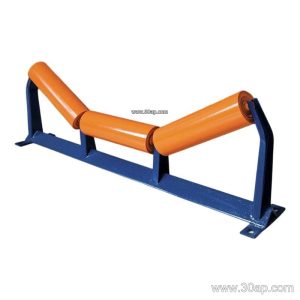
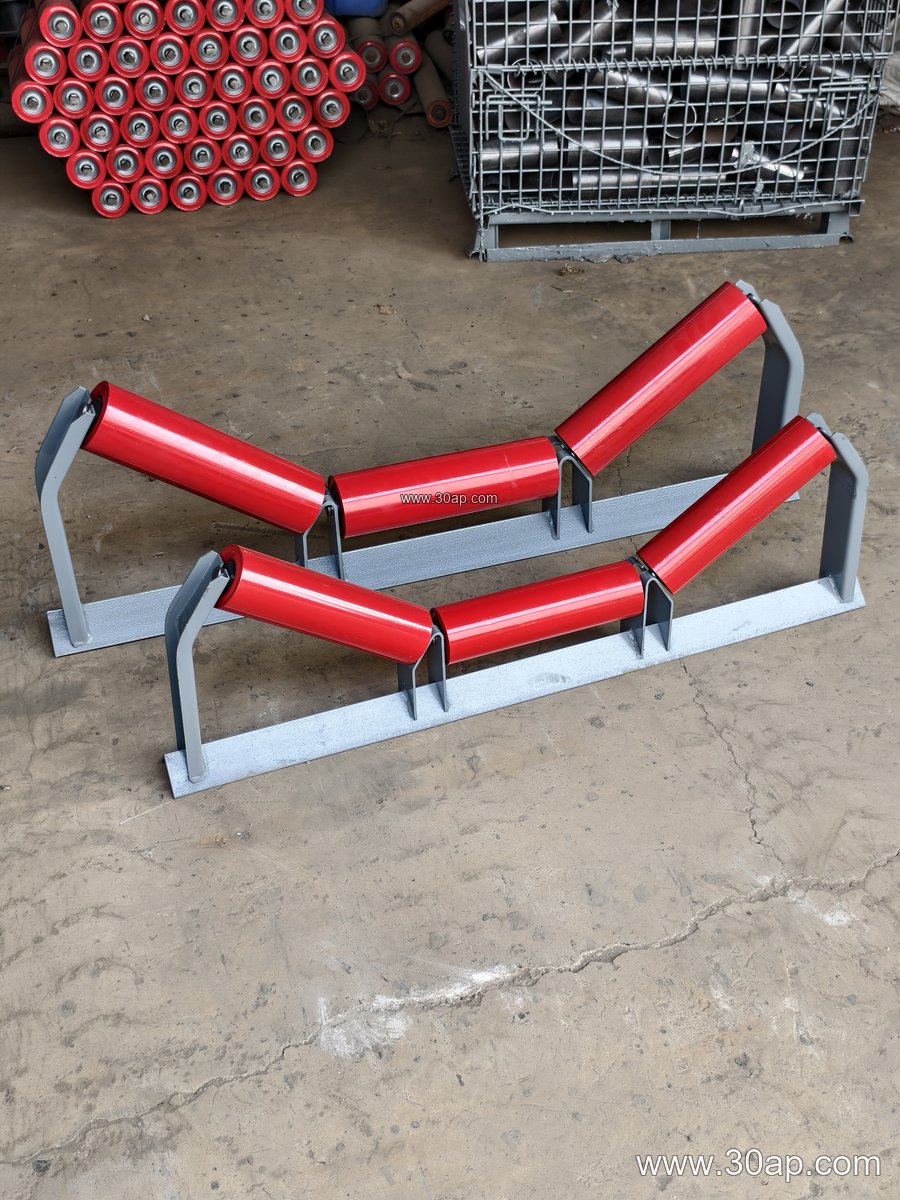
Most return brackets are fabricated from angle steel, channel steel or bent steel plate. The frame is drilled or slotted to accept the idler shaft, and the mounting feet are punched to match the conveyor stringer spacing. A simple flat return bracket carries one idler; a V-shaped return bracket carries two idlers set at an angle to improve self-centring on wider belts.
Because the bracket is often the lowest point of the conveyor structure, it collects spillage. Good designs leave a clearance so material does not pack between the frame and the idler. Hot-dip galvanised or painted finishes are common in port and power plant coal handling, while heavier plate sections suit high-abrasion service in iron ore and sinter plants.
Where It Fits in the Conveyor Layout
Return brackets are installed at regular intervals along the return strand, usually between the head pulley and the tail pulley. Spacing is set by design and depends on belt width, belt tension and the weight of the material carried. Typical applications include:
- Aggregate and sand making lines, where fines fall from the belt
- Coal mining and underground coal mining conveyors, where flame retardant conveyor belt is standard
- Cement plant clinker and raw meal transport
- Power plant coal feeding systems and port ship loading conveyors
- Tunnel muck removal and recycling lines
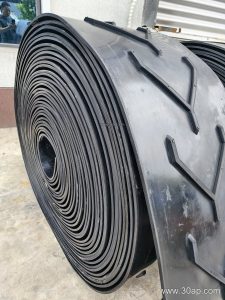
On a long overland conveyor using steel cord conveyor belt, return brackets are often paired with training idlers at intervals to correct drift. In a crusher conveyor line, impact-resistant conveyor belt handles the load, but the return side still needs a stable bracket to keep the belt from rubbing the structure.
Matching Bracket, Belt Width and Idler Diameter
There is no single rule that ties one belt width to one idler diameter or one trough angle. The table below shows reference combinations that appear in common designs; actual values should be confirmed against the conveyor drawing.
| Reference | Belt Width | Idler Diameter | Typical Use |
|---|---|---|---|
| Light duty | B500 to B650 | Ø89 | Small aggregate lines, auxiliary conveyors |
| Medium duty | B800 to B1000 | Ø108 to Ø133 | Cement, power plant, general bulk handling |
| Heavy duty | B1200 to B1400 | Ø133 to Ø159 | Mining conveyor belt systems, port terminals |
| Wide belt | B1600 to B2000 | Ø159 to Ø194 | Steel cord conveyor belt main lines |
Installation hole spacing and crossbeam length change with belt width and bracket type, so they should never be treated as fixed numbers. A B800 return bracket for a 30 degree troughing system is not the same part as a B800 bracket used with a 45 degree upper frame.
Fixed, Adjustable and Training Versions
A fixed return bracket holds the idler at a set height and angle. An adjustable bracket allows the operator to raise or lower the idler so the belt contacts it evenly, which is useful when belt thickness differs across a fleet. Training or self-aligning brackets pivot slightly to steer the belt back to centre; they are often used on quarry conveyor belt runs where loading is uneven.
Compare this with the upper troughing frame: it shapes the belt into 20, 30, 35 or 45 degrees, while the return bracket usually keeps a flat or V profile. The two are not interchangeable, and neither is a substitute for the other.
Buyer Checklist
- Confirm belt width, idler diameter and the required return profile
- Check mounting hole centres against the stringer drawing
- Specify material and finish for the site: dusty, wet, corrosive or high temperature
- Decide between fixed, adjustable and training brackets by belt length and loading pattern
- Review clearance for spillage and access for maintenance
For related components, buyers often source the conveyor bracket, conveyor pulley and idler roller from the same supplier to keep tolerances consistent. A correctly chosen return idler bracket is a small cost item that protects the belt, the pulleys and the whole conveying line.