What an Industrial Conveyor Pulley Does on a Quarry Line
On a quarry or aggregate conveyor, the industrial conveyor pulley is the component that changes the belt’s direction and carries the tension that keeps material moving from the crusher to the screening deck. It is not a passive drum. Each pulley position has its own job: the drive pulley transmits torque from the gearbox into the belt, the tail pulley returns the belt at the loading end, and bend or snub pulleys guide the belt around curves and increase wrap angle on the drive. These positions are not interchangeable, and a pulley ordered for one duty should not be swapped into another without checking the load case.
How the Pulley Is Built
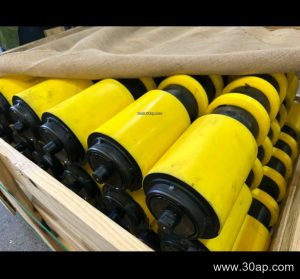
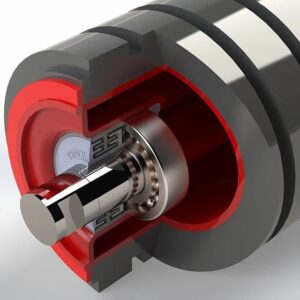
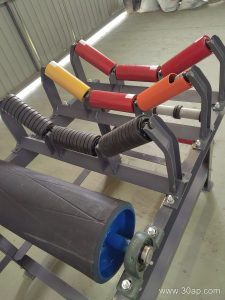
A typical unit consists of a cylindrical shell, two end discs, a shaft, and bearing housings that sit in conveyor bracket assemblies. The shell is usually rolled steel, sometimes with a machined face, and the shaft is sized by torque and radial load rather than by belt width alone. Lagging is applied to the shell to raise friction between pulley and belt; common surface forms include plain, hot-vulcanized rubber, cold-bonded rubber, diamond groove, herringbone, and ceramic tile. Lagging thickness is often 8, 10, 12, 15, or 20 mm depending on the duty.
Balance matters. An unbalanced pulley at speed will vibrate, wear bearings early, and disturb belt tracking. For wider belts and higher speeds, dynamic balancing before shipment is worth specifying.
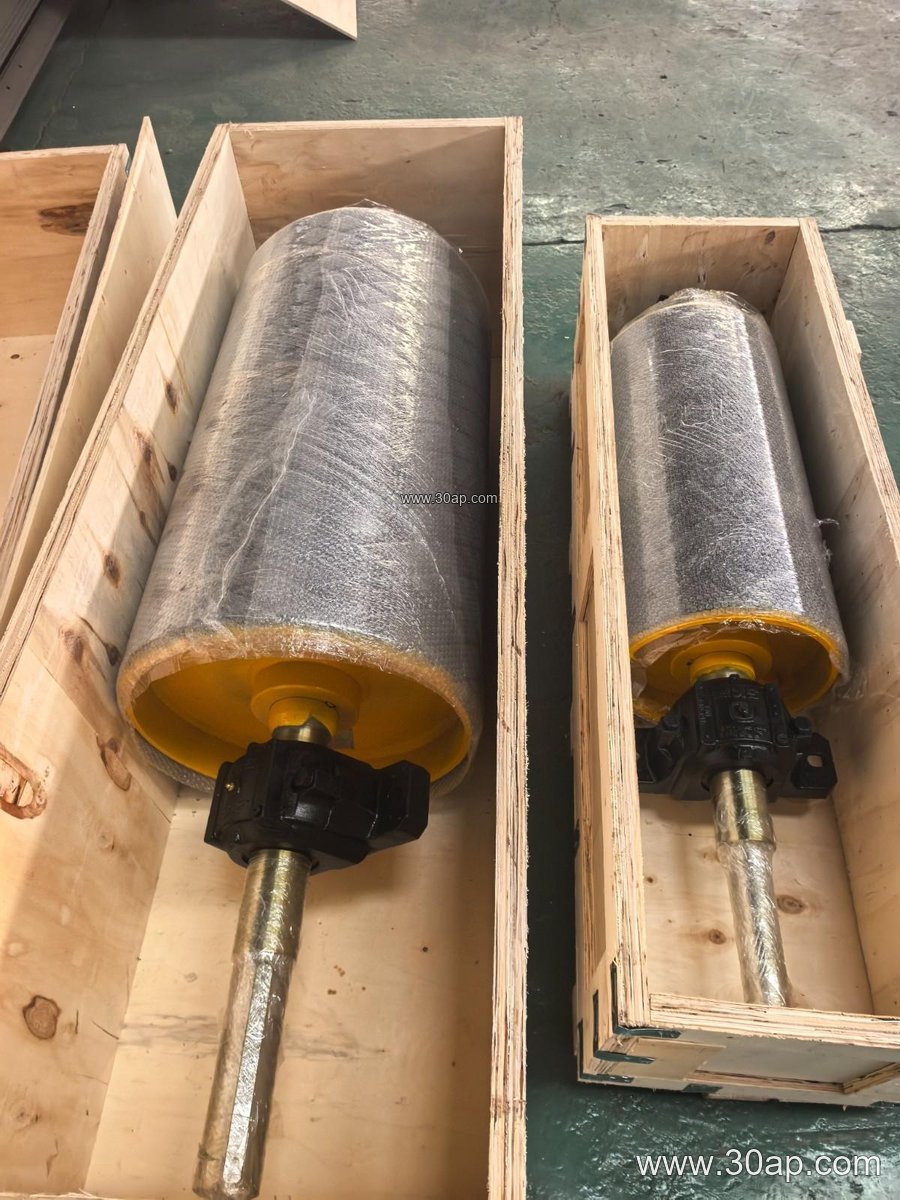
Matching Pulley Size to Belt and Duty
Belt width and pulley diameter are related but not locked together. A wider belt generally needs a wider pulley face, and the face is normally a little wider than the belt, for example B800 with roughly a 950 mm face, or B1200 with about a 1400 mm face. Diameter is chosen from belt tension, wrap angle, belt stiffness, and the minimum bend radius the belt construction allows. Common diameters run from Ø200 up to Ø1800, and combinations such as B800 × Ø500, B1200 × Ø1000, and B1400 × Ø800 all appear in practice. None of these is a fixed rule.
| Belt width | Typical pulley face | Example diameter range |
|---|---|---|
| B400 | about 500 mm | Ø200 – Ø400 |
| B650 | about 750 mm | Ø250 – Ø500 |
| B1000 | about 1150 mm | Ø400 – Ø800 |
| B1400 | about 1600 mm | Ø500 – Ø1000 |
| B1800 | about 2000 mm | Ø630 – Ø1250 |
Shaft diameters such as Ø80, Ø100, Ø120, or Ø160 are determined by the drive torque and bearing load, not by the belt width. A buyer should ask for the calculated shaft size rather than accept a size copied from another conveyor.
Lagging and Surface Choice
Drive pulleys benefit most from lagging because friction is the whole point of the drive position. Diamond or herringbone grooves help shed water and fine dust in wet aggregate service. Ceramic lagging is used where abrasive slurry or sticky material causes slip and rubber wear. Tail and bend pulleys often run plain or with thinner rubber, since their load is guidance rather than traction. On a crusher discharge line, a heavy-duty rubber lagging on the head pulley helps cope with impact and fines carried on the belt return.
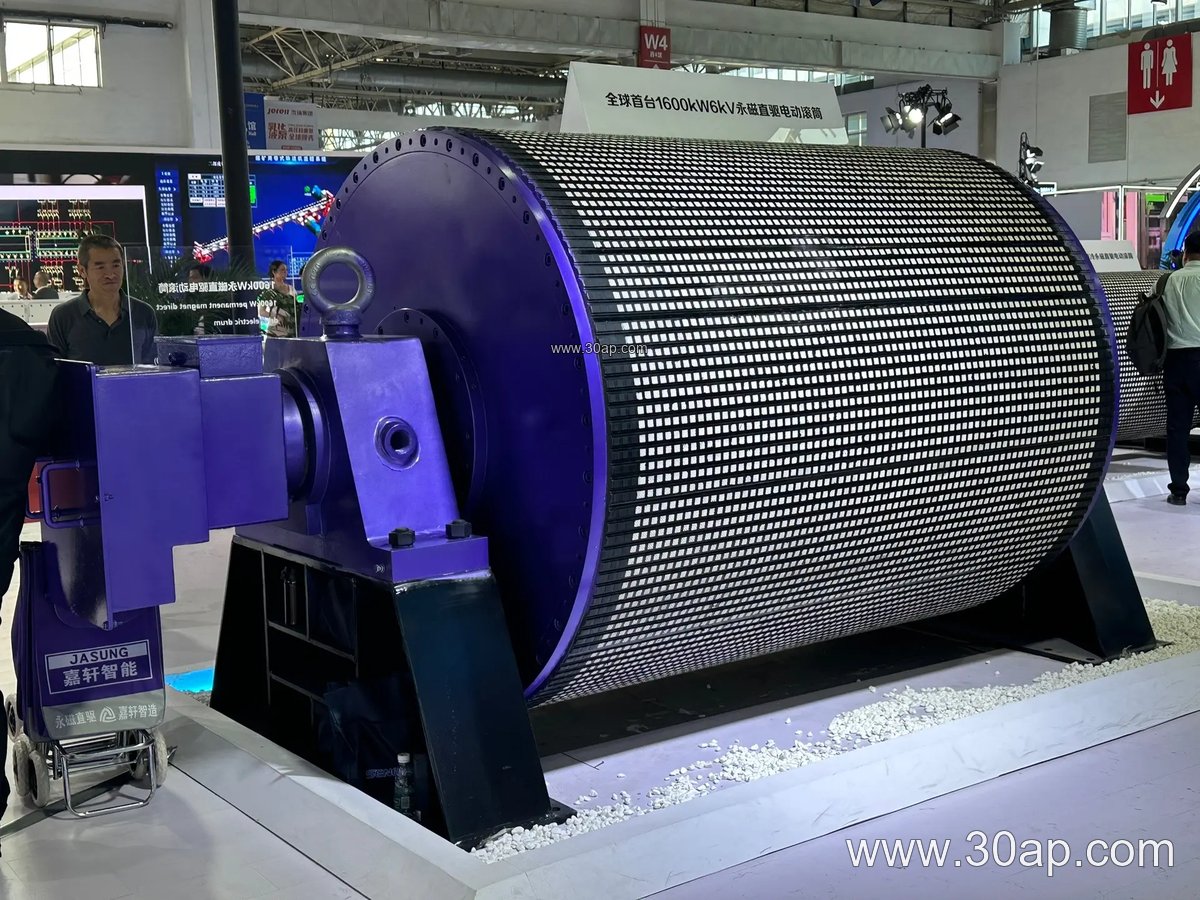
The belt itself matters here. A steel cord conveyor belt is stiffer than a fabric core belt and needs a larger minimum pulley diameter, while an EP conveyor belt or NN conveyor belt can usually run over smaller drums. Abrasion resistant conveyor belt and heat resistant conveyor belt grades also influence how much lagging wear to expect. In a cement plant or power plant coal yard, a flame retardant conveyor belt may be required, and the pulley specification should follow the same duty class.
Where These Pulleys Are Used
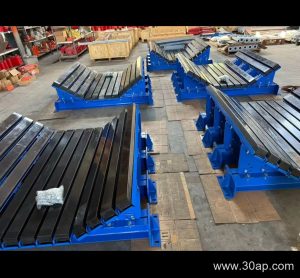
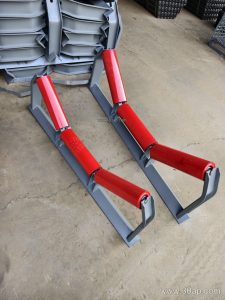
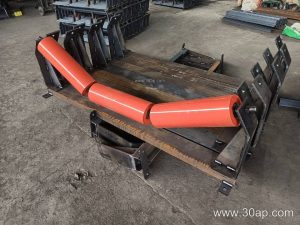
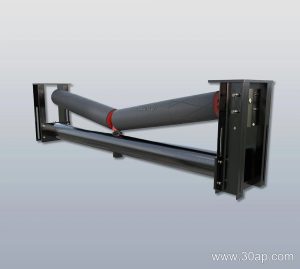
Quarries and sand and gravel plants are heavy users, but the same component appears in limestone mines, iron ore and copper ore handling, coal washing, cement clinker lines, power station coal conveying, port bulk terminals, and tunnel spoil removal. In each case the pulley works with the conveyor belt, idler roller sets, and frame. A pulley that is correctly sized for the head drive may still fail at the tail if the take-up tension is underestimated.
What to Check Before Ordering
- Position and duty: head drive, tail, bend, take-up, or snub.
- Belt width and belt type, including whether it is a fabric core or steel cord construction.
- Required diameter and face width, plus lagging form and thickness.
- Shaft size from a torque calculation, bearing type, and housing fit.
- Environmental factors: dust, water, heat, oil, or corrosive spray.
- Balancing class and inspection records for wide or high-speed pulleys.
For buyers sourcing through www.morningbelt.com, the practical approach is to send the conveyor duty, belt specification, and existing pulley dimensions together, so the replacement matches the frame and the belt’s bend radius. A pulley is a small part of the conveyor capital cost but a large share of unplanned downtime when it is underspecified.