What an Upper Self-Aligning Idler Does
An upper self-aligning idler is a carrying-side roller assembly designed to keep a conveyor belt centered as it travels. Unlike a fixed troughing idler, this unit mounts on a pivot so the roller frame can swing slightly when the belt drifts. The resulting angle change gently steers the belt back toward the center line. In a quarry, cement plant, or power station coal yard, that continuous correction reduces edge damage and spillage without operator intervention.
The same product is also called a self-aligning carrying idler or self-training upper idler. These names refer to the same upper-position tracking roller; they are not interchangeable with return-side or impact idlers. Drive pulleys, tail pulleys, and bend pulleys serve completely different functions and should never be substituted for a tracking idler.
Construction and Key Components
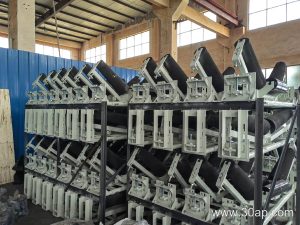
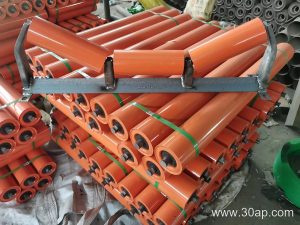
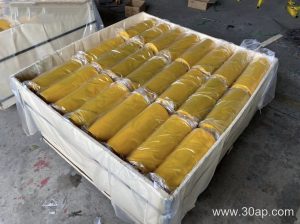
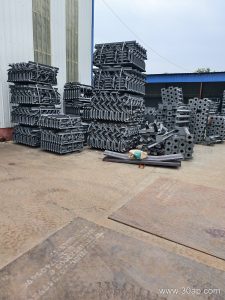
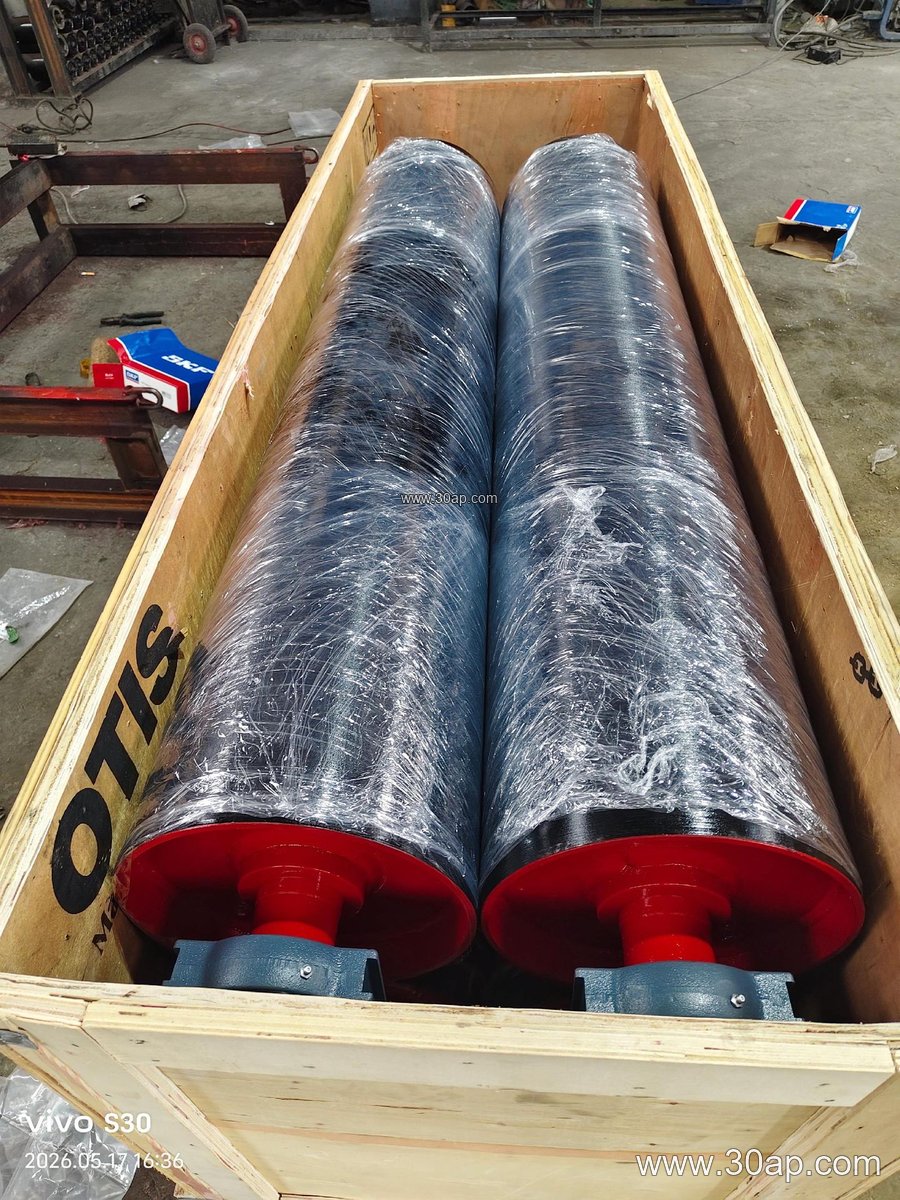
A typical unit combines a sturdy roller frame, one or more idler rollers, a central pivot shaft, and a linkage or friction mechanism that senses belt misalignment. The rollers usually run on sealed ball bearings, and the shell may be plain steel, nylon, rubber-covered, or ceramic-faced depending on the duty. Common bearing sizes include 6204, 6205, 6305, 6306, 6308, and 6310, matched to the roller diameter and load rather than to belt width alone.
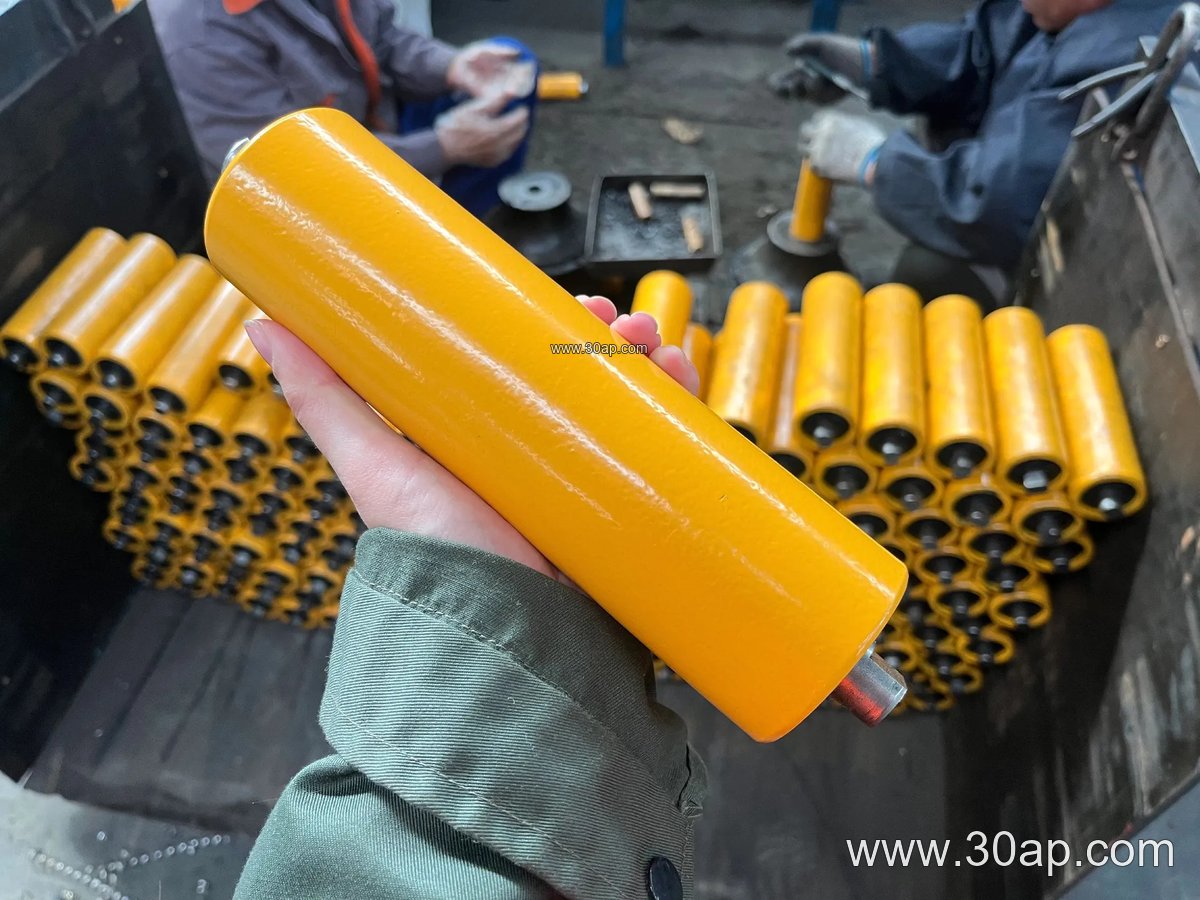
Roller diameters for carrying idlers are commonly Ø63, Ø76, Ø89, Ø102, Ø108, Ø127, Ø133, Ø159, Ø178, Ø194, and Ø219 mm. A self-aligning upper unit often uses a three-roller trough configuration with trough angles of 20, 30, 35, or 45 degrees. Some designs add a slight forward tilt of about 1.5 to 2 degrees to improve tracking response. Roll length varies with belt width, trough angle, and frame type; for example, a three-roll set may use roughly 200 mm rolls at B500, 315 mm at B800, 465 mm at B1200, and 600 mm at B1600. These are common reference values, not fixed pairings, and side rolls can differ from the center roll.
Where It Fits on the Conveyor
The upper self-aligning idler belongs on the carrying run, usually spaced among standard troughing idlers at intervals chosen by the conveyor designer. It is especially useful on long overland conveyors, curved routes, and transfer points where belt wander is likely. In a limestone mine or aggregate crushing line, a few tracking idlers can prevent a heavily loaded belt from rubbing the frame. In a coal-fired power plant or a fertilizer handling system, the same component helps maintain a stable belt path despite uneven loading.
It works alongside the conveyor belt, conveyor pulley, idler roller, and conveyor bracket, but it does not replace them. A bend pulley changes belt direction; a self-aligning upper idler only corrects lateral position. Return-side tracking is handled by a different subtype, such as a V-return or friction self-aligning return idler.
Selection and Maintenance Notes
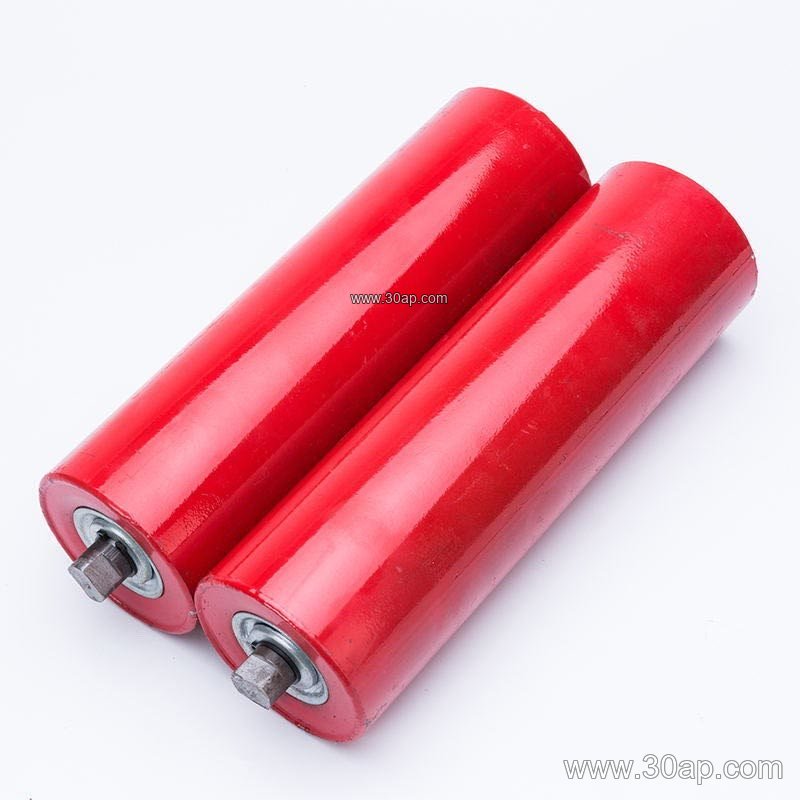
Buyers should match the idler to belt width, trough angle, roller diameter, and the actual load and environment. A 600mm or 800mm belt may use smaller rollers, while a 1200mm or 1400mm wide belt usually calls for larger diameters and heavier frames. Abrasive materials such as iron ore or copper ore favor abrasion resistant roller surfaces, while dusty coal or cement duty puts a premium on bearing seals. Heat resistant and flame retardant conveyor belts are often paired with appropriate idler specifications, but the idler itself must be selected for temperature and contamination.
Inspect pivot freedom, roller rotation, and frame alignment periodically. Seized pivots or worn bearings reduce tracking effectiveness and can damage the belt edge. Keep the belt tension within design limits, because excessive slack makes any self-aligning device less effective. For more information on compatible conveyor components, visit peridler.com or check belt and roller guidance at beltconveyorpro.com.
- Confirm belt width and trough angle before ordering.
- Verify roller diameter and bearing size against the load.
- Check that the pivot mechanism suits the environment.
- Do not confuse upper tracking idlers with return idlers or pulleys.