What a Conveyor Trough Idler Does
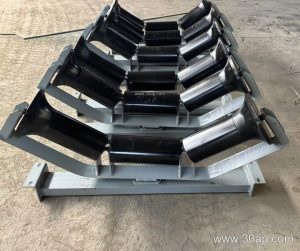
A conveyor trough idler is the set of rollers that supports the carrying run of a conveyor belt and shapes it into a trough. The angled rolls lift the belt edges, so loose material sits in a shallow channel instead of spilling off a flat surface. This is why the troughing idler is the workhorse of bulk handling lines in a quarry, a cement plant, a power station coal yard, or a sand and aggregate circuit. It is a supporting component, not a drive part: the conveyor pulley at the head end pulls the belt, while the trough idlers simply carry the load and let it roll.
The same component is often called a troughing roller or carrying idler. Those names describe the same product, and they should not be confused with return idlers, impact idlers, or self-aligning types, which do different jobs along the conveyor.
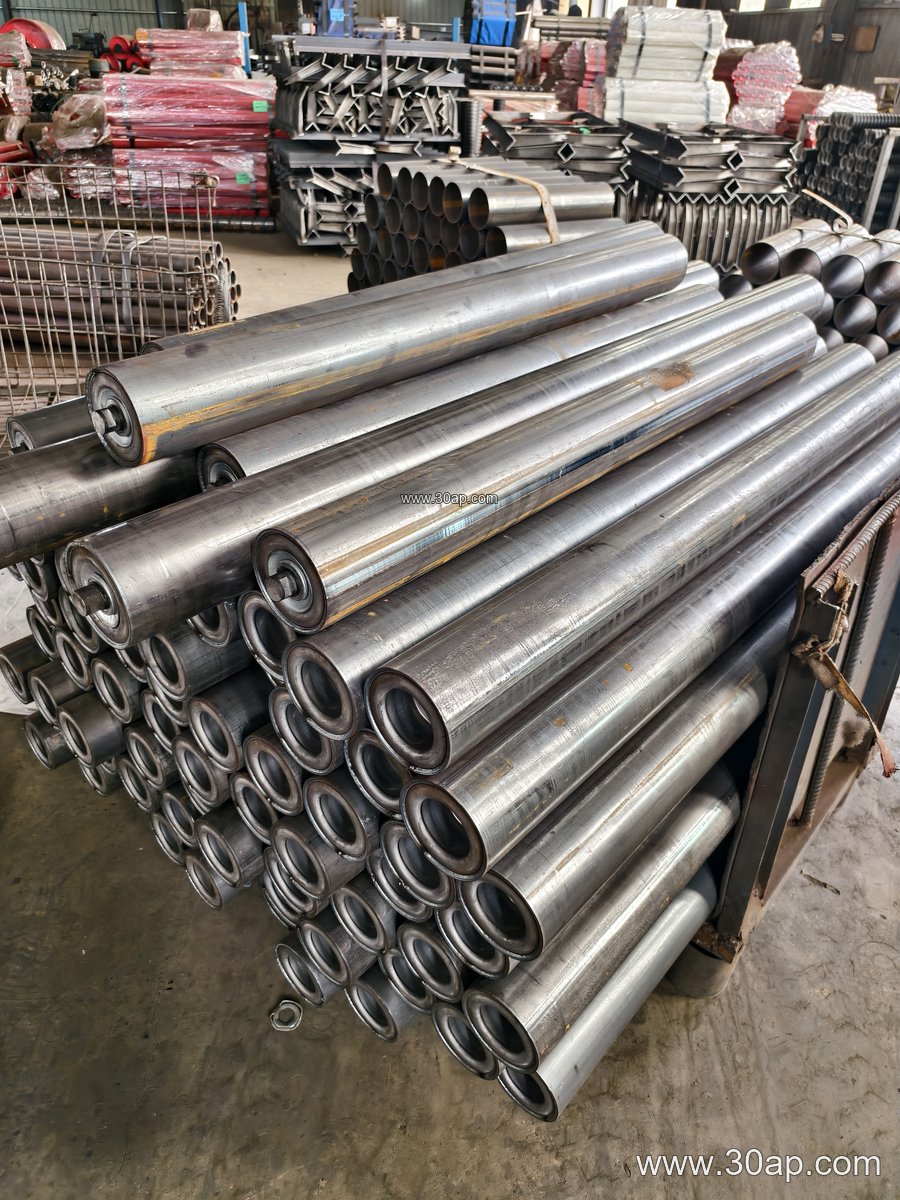
How the Assembly Is Built
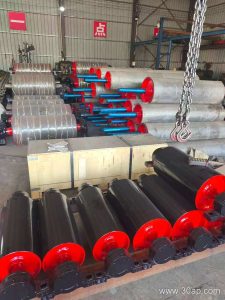
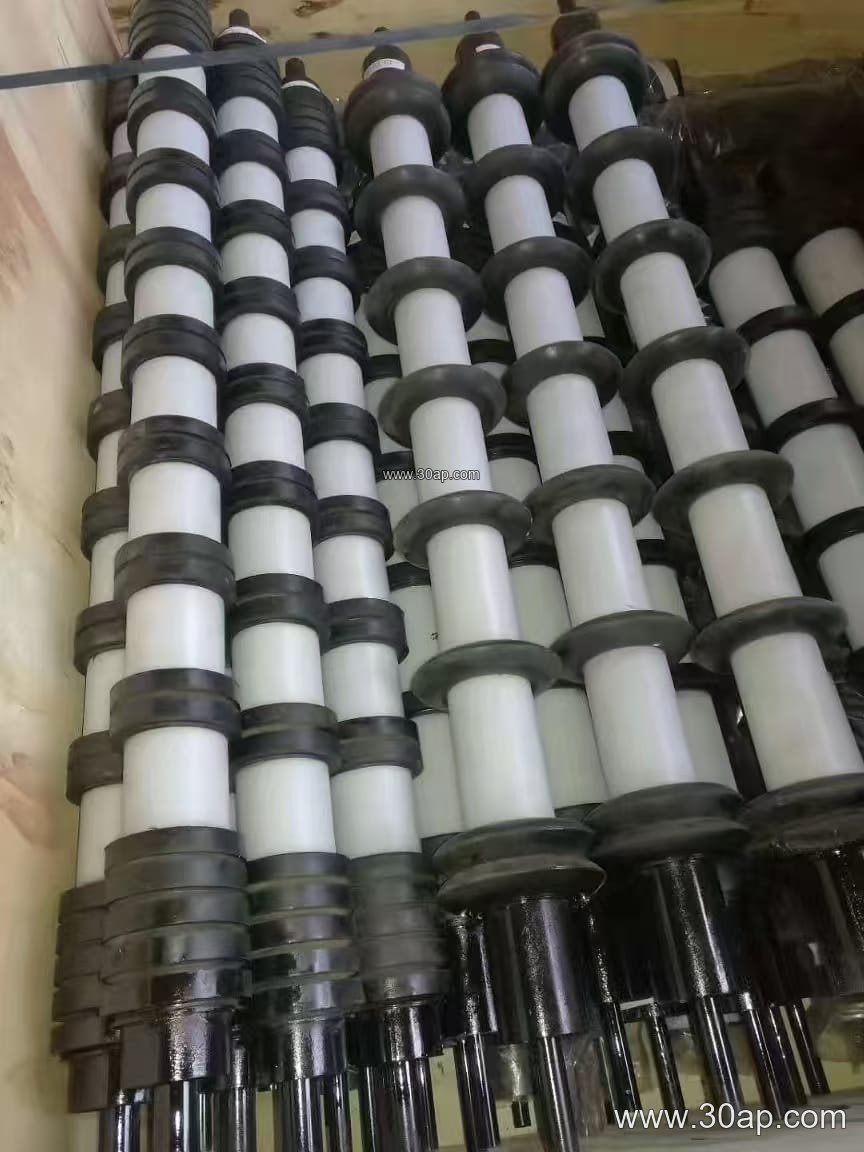
A typical station has two or three rolls mounted in a frame, with the side rolls tilted upward. Three-roll troughing sets are common on wider belts, while two-roll and single-roll designs appear on narrower or special installations. Each roll usually combines a steel tube shell, a shaft, sealed bearings, and end caps. Roller surfaces may be plain steel, nylon, ceramic, or rubber rings, depending on whether the priority is wear life, build-up control, or grip.
Common roll diameters include Ø89, Ø108, Ø127, Ø133, and Ø159 mm, with larger sizes such as Ø178 and Ø194 mm used on heavy-duty lines. Bearing sizes are selected by the idler maker and are not fixed by roll diameter alone; 6205, 6305, and 6308 are frequently seen in medium-duty stations. Trough angles are usually 20, 30, 35, or 45 degrees.
| Item | Common reference values |
|---|---|
| Roll diameter | Ø63, Ø76, Ø89, Ø102, Ø108, Ø127, Ø133, Ø159, Ø178, Ø194, Ø219 mm |
| Belt width | B400, B500, B650, B800, B1000, B1200, B1400, B1600, B1800, B2000, B2200, B2400 |
| Trough angle | 20°, 30°, 35°, 45° |
| Roll length (three-roll example) | About 200 mm at B500, 250 mm at B650, 315 mm at B800, 380 mm at B1000, 465 mm at B1200, 530 mm at B1400, 600 mm at B1600, 670 mm at B1800, 750 mm at B2000 |
These figures are reference examples, not a fixed match. Side rolls and center rolls can differ, and final dimensions are set by the conveyor design. A B800 belt, for instance, may run with different roll diameters depending on load and speed, so a buyer should never assume one belt width dictates one roll size or one shaft diameter.
Where Trough Idlers Are Used
You will find troughing idlers wherever a belt carries loose material. In a limestone quarry they support crushed rock on the way to the screening plant. In a coal-fired power plant they carry coal from the yard to the bunkers. Cement plants use them on clinker and raw meal lines, and sand and gravel operations rely on them through every transfer point. The idler has to suit the belt it supports, whether that belt is a heavy-duty mining conveyor belt, an abrasion resistant conveyor belt, or a heat resistant conveyor belt near a kiln or sinter area.
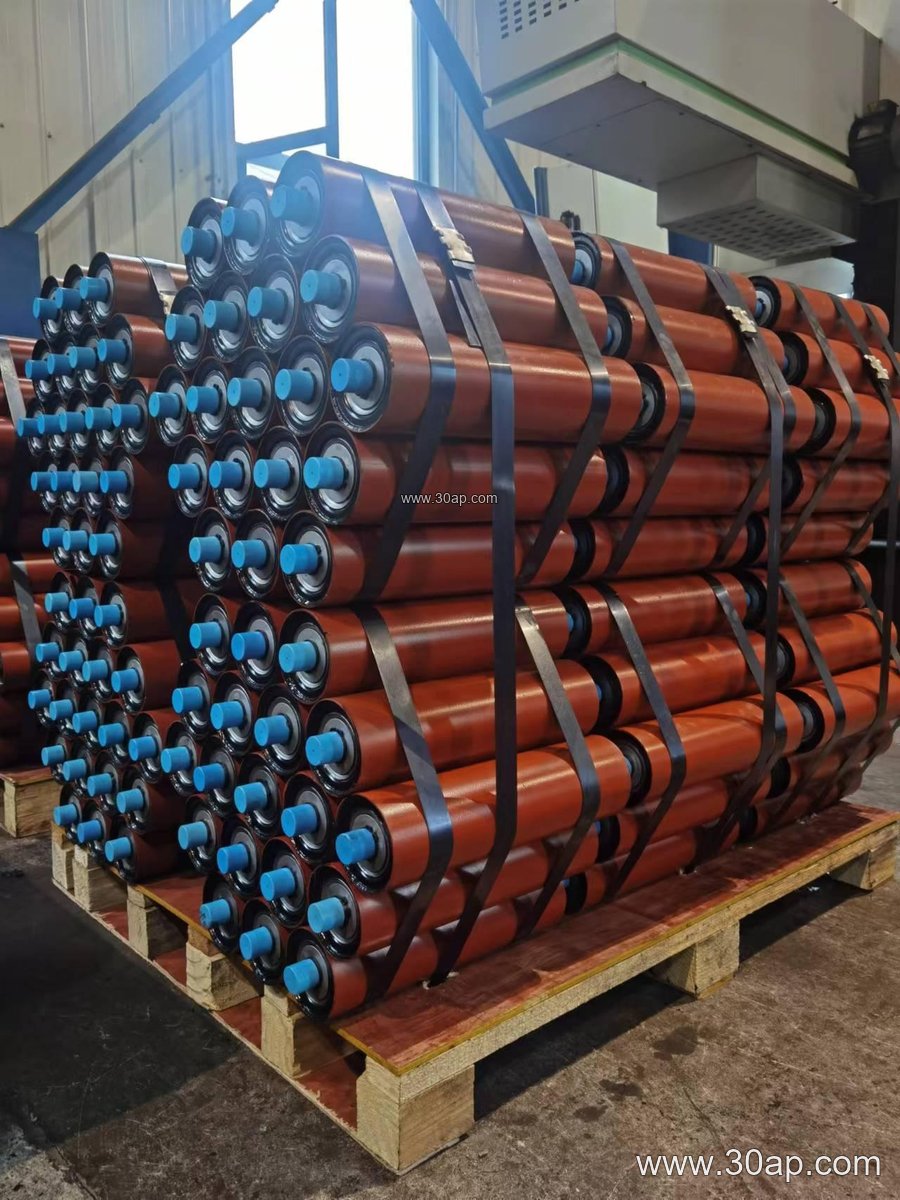
On long overland lines, trough idlers are spaced closely enough to prevent sag between stations. Spacing is a design decision based on belt tension, material weight, and permitted deflection, not a single universal number.
Selection Points for Buyers
- Match the trough angle to the material. Free-flowing, fine material may need a deeper trough; lumpy rock may run better at a moderate angle.
- Check the roll diameter and bearing class against the actual load and belt speed. A larger roll turns more slowly and can suit high-tonnage lines.
- Confirm the frame fits the conveyor bracket and the belt width, and check that the roll length suits the trough geometry.
- For dusty or wet conditions, look at the seal arrangement. Good sealing protects the bearing and extends service life.
- Consider surface options. Rubber rings help at impact zones, while ceramic or nylon covers may reduce wear or material sticking.
Maintenance is mostly about rotation. A seized roll will wear the belt cover quickly, so inspection should include turning each roll by hand and listening for roughness. Replacing a worn troughing roller early is cheaper than repairing a damaged belt.
Keeping the Whole Line in Balance
The trough idler works with the rest of the conveyor: the belt, the drive and tail pulleys, and the supporting structure. A poorly aligned frame or a worn roller can cause belt tracking problems that look like belt faults. When specifying replacements, note the roll diameter, trough angle, frame style, and mounting dimensions, and keep the carrying and return sides separate in your records. For anyone sourcing components for a quarry, coal yard, or cement line, a correctly sized trough idler is a small part that keeps a very large material flow moving.