A Large Pulley Is More Than Just a Big Wheel
In a bulk material handling line, a large pulley is the drum that transfers motion to the conveyor belt and helps determine how much load the system can carry. As the diameter grows, so does the contact arc between the pulley and the belt, which means more grip, lower belt stress, and better tracking on long or heavily loaded runs. That is why a large pulley often appears at the head end of a primary crusher line, in a port shiploading boom, or on the incline of a limestone quarry where tonnage is high and downtime is expensive.
This article looks at the large pulley as a product: how it is built, where it is used, which parameters matter, and what to check before placing an order.
Construction and Surface Options
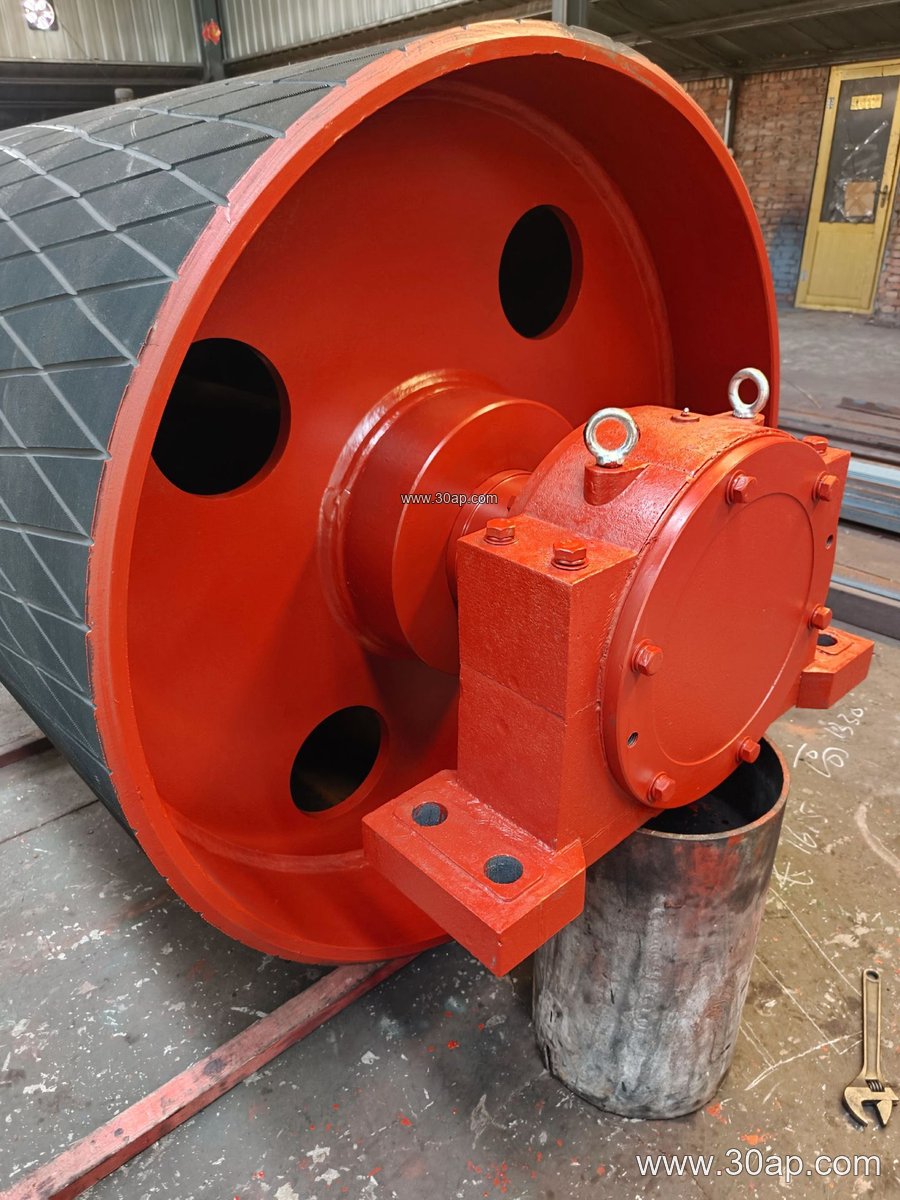
A large pulley usually consists of a cylindrical shell, two or more end discs, a hub, and a shaft. The shell may be seamless tube or rolled plate, and the shaft is sized by torque and radial load, not by belt width alone. Common shaft diameters range from Ø100 to Ø200 for heavier drives, while smaller units may use Ø80 or Ø90.
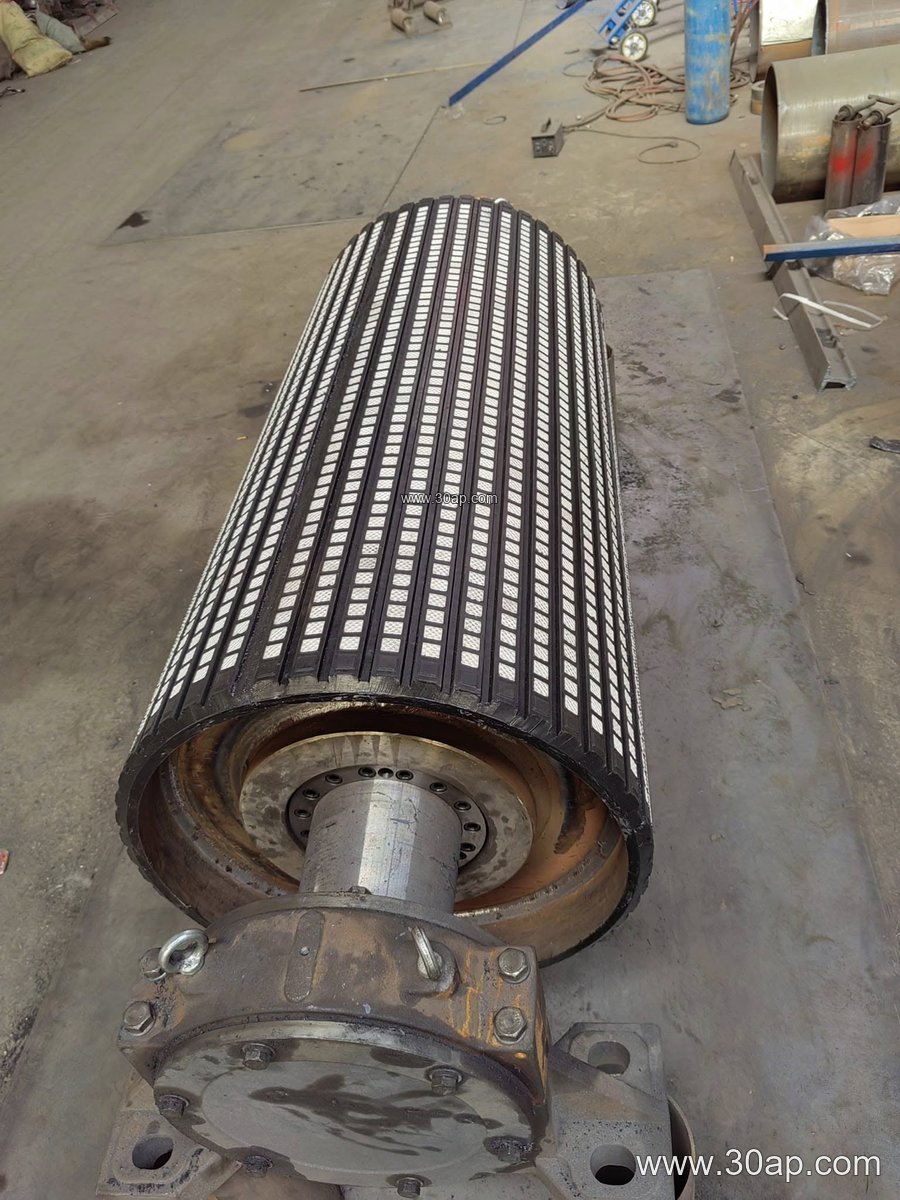
The surface form is where buyers have real choices. A plain (smooth) finish suits light duty and easy cleaning. Rubber lagging — applied by cold bonding or hot vulcanizing — raises friction. Diamond or chevron grooving improves grip in wet conditions and helps shed water. Ceramic lagging is chosen for abrasive, high-slip duty such as a quarry discharge point. Lagging thickness is commonly 8, 10, 12, 15, or 20 mm depending on the duty.
- Shell: rolled steel or seamless tube, welded and machined
- Lagging: plain, cold-bonded rubber, hot-vulcanized rubber, diamond, chevron, or ceramic
- Shaft: sized from torque and load; common values Ø80 to Ø200
- Bearings: pillow block or flange type, matched to shaft and load
Face width normally exceeds belt width so the belt is fully supported. Typical pairs look like this:
| Belt width | Typical face width |
|---|---|
| B800 | about 950 mm |
| B1000 | about 1150 mm |
| B1200 | about 1400 mm |
| B1400 | about 1600 mm |
| B1600 | about 1800 mm |
These are reference values, not fixed combinations. A B1200 system might use a Ø1000 large pulley, while a B800 line could run Ø500. Neither pairing is mandatory.
Where It Sits in the Line
Position matters. At the head end, a large pulley drives the belt and must handle the highest tension. At the tail, a smaller tail pulley is common, but a large one may be used on long overland runs. Bend and take-up positions use large pulleys when the belt wrap angle needs to increase without adding more belt length.
In a coal washing plant, a large pulley with ceramic lagging keeps the belt from slipping when fines and water are present. In a cement plant clinker line, heat-resistant belting is paired with a lagged head pulley to hold grip at elevated temperatures. In a copper ore concentrator, a heavy-duty large pulley on the crusher discharge handles sharp, dense rock. The same component appears in ports, steel plants, and aggregate operations.
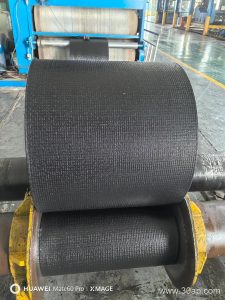
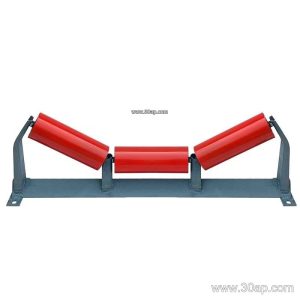
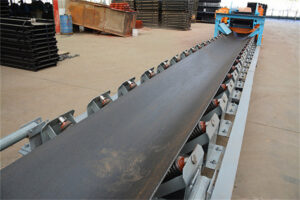
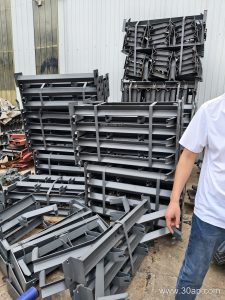
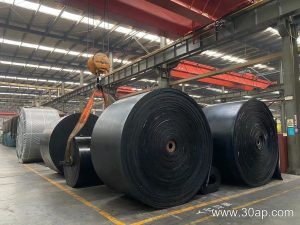
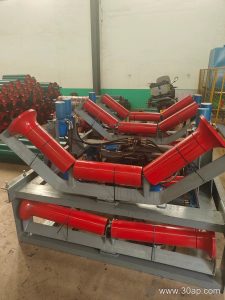
Related parts in these systems include the conveyor belt itself — whether EP, steel cord, or fabric core — the idler roller sets that support the belt, and the conveyor bracket that anchors the bearing housings. A large pulley works best when all of these are matched to the same duty class.
What to Specify Before Ordering
A clear inquiry should include belt width, pulley diameter, face width, shaft diameter, lagging type and thickness, bearing type, and the position in the conveyor (head, tail, bend, take-up). Diameter and shaft size should be confirmed by the conveyor designer, since torque, belt tension, and starting conditions all affect the choice.
Also state the environment: wet, dusty, abrasive, hot, or corrosive. That decides whether a standard rubber lagging is enough or whether ceramic or heat-resistant lagging is needed. Balance quality matters too — an unbalanced large pulley causes vibration and shortens bearing life.
Maintenance Notes
Check lagging wear at the drive position every few months. Worn grooves reduce grip and increase belt slip. Inspect welds and shaft keyways during scheduled shutdowns, and confirm that bearing lubrication matches the ambient temperature. When replacing a large pulley, verify that the new face width and diameter still fit the existing frame and belt path.
For buyers sourcing conveyor components, the large pulley is a long-life item that rewards careful specification up front. Matching it to the belt, the idler roller layout, and the conveyor bracket geometry keeps the whole line running smoothly.