What a Four-Roll Idler Bracket Does
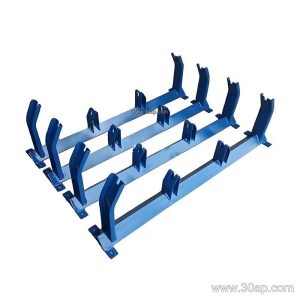
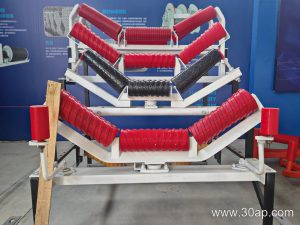
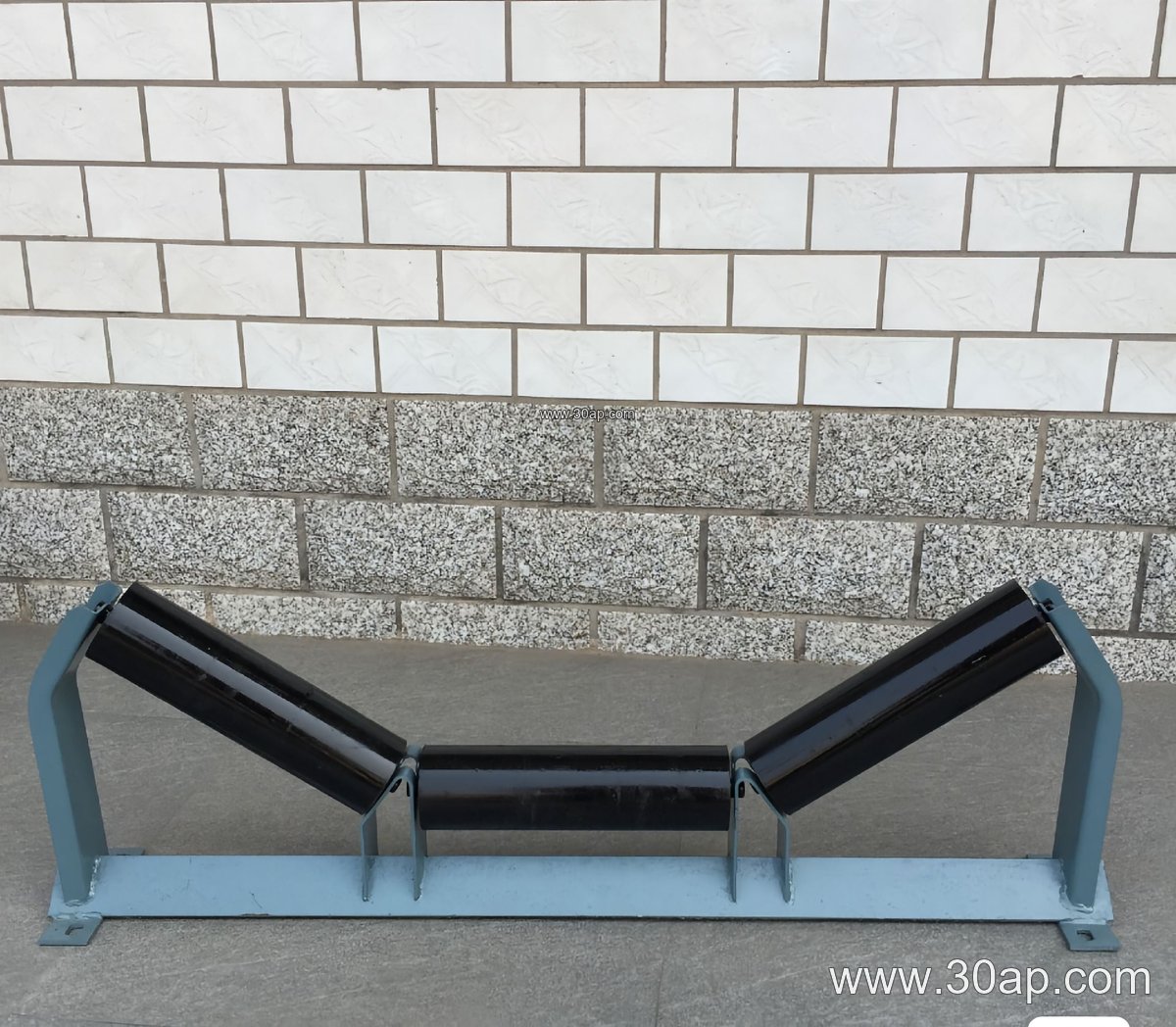
A four-roll idler bracket is a support frame that carries four idler rollers under the belt line, usually arranged as two outer rolls set at a steep trough angle and two shorter centre rolls that form a shallow bottom. It is a subtype of troughing bracket, not a pulley or a drive component. Where a three-roll set forms a simple V or U profile, this four-roll arrangement gives the belt a wider, flatter bottom section, which helps when the belt is wide, the load is heavy, or the material needs a deeper trough for containment.
The bracket is a structural part, so it does not move the belt itself. It positions the idler rollers, and the idler rollers in turn shape the conveyor belt. In a quarry or a limestone crushing line, that shaping decides how well the load stays centred on the strand.
Construction and Mounting Position
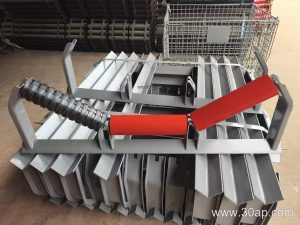
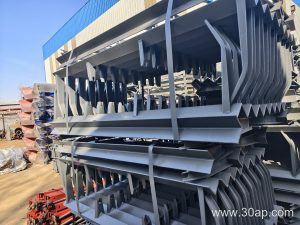
Most four-roll brackets are fabricated from angle steel, channel steel, or folded steel plate. The two side wings are angled to hold the outer rolls, while the centre section carries the two bottom rolls on a flatter plane. Bolt slots rather than round holes are common, so the wings can be adjusted to match the required trough angle before final tightening.
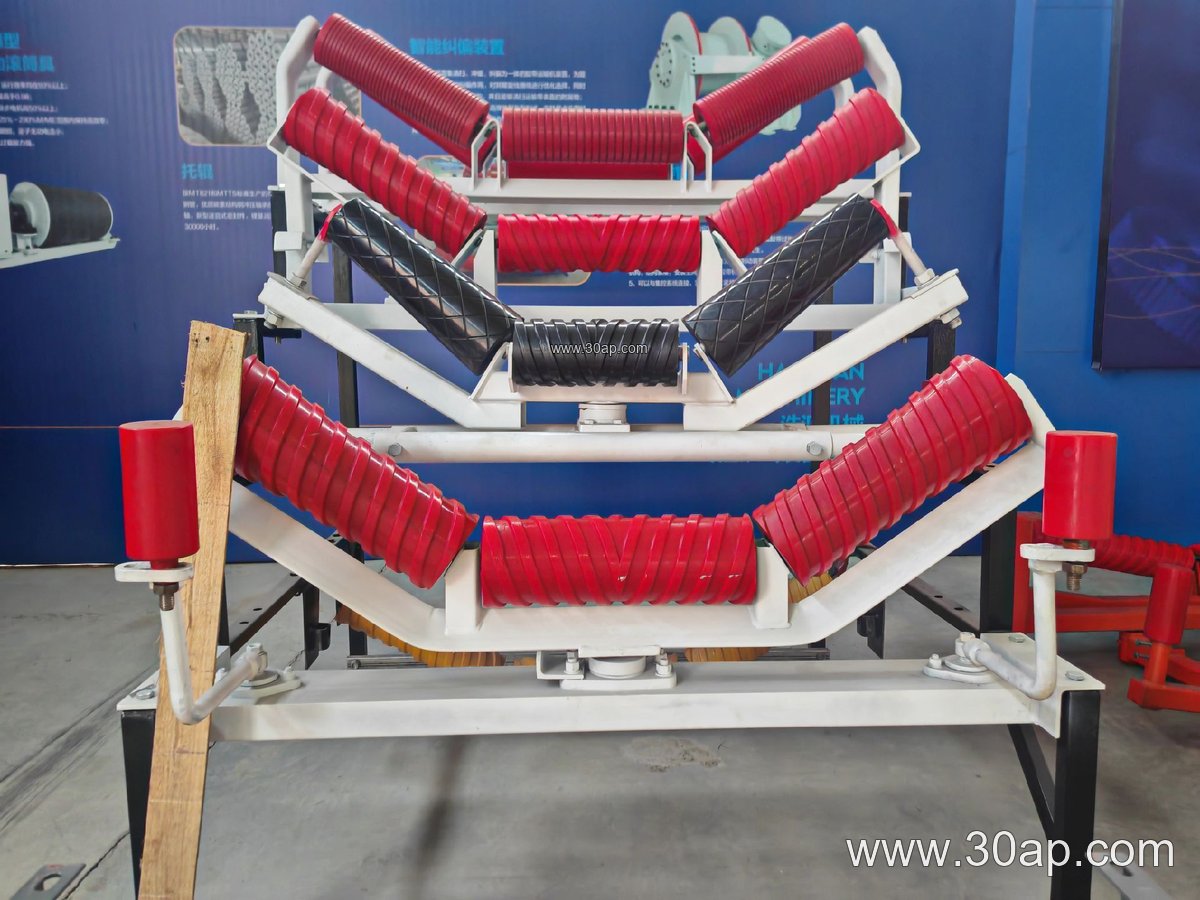
The bracket normally sits on the carrying side of the conveyor, fixed to the stringer or cross beam. It is a fixed bracket in most installations, though adjustable versions let maintenance staff change the trough angle between common values such as 20, 30, 35, and 45 degrees. Installation hole spacing and beam length are not universal; they follow belt width, trough angle, and the roller diameter chosen for the duty.
Where Four-Roll Sets Are Preferred
Wide belts handling abrasive or lumpy material are the usual home for this bracket. In an iron ore or copper ore transfer point, a four-roll trough keeps a broad belt from sagging between the outer rolls. In a coal washing plant or a power station coal yard, the flatter bottom helps reduce spillage when feed is uneven. Cement plants and aggregate lines also use them where a standard three-roll set gives too narrow a bottom for the belt width.
The bracket works alongside the conveyor pulley at the head and tail, but it is not a substitute for either. Drive, tail, and bend pulleys perform different duties and cannot replace a troughing bracket. Likewise, a return bracket or a V-type return bracket supports the empty strand and is a separate item.
Matching Belt Width, Trough Angle, and Roller Diameter
There is no single correct combination. A B800 belt may run at 35 degrees with Ø108 rollers, while a B1200 line might use 45 degrees with Ø133 rollers; both are design choices, not rules. The table below shows reference combinations only, and actual values should be confirmed against the conveyor design.
| Belt width | Common trough angle | Typical roller diameter | Bracket note |
|---|---|---|---|
| B500 | 20–30 degrees | Ø89 | Compact frame, light duty |
| B650 | 30–35 degrees | Ø89 / Ø108 | Fixed or adjustable wings |
| B800 | 35 degrees | Ø108 | Common in aggregate plants |
| B1000 | 35–45 degrees | Ø108 / Ø133 | Wider centre section |
| B1200 | 35–45 degrees | Ø133 | Heavy carrying strand |
| B1400 | 35–45 degrees | Ø133 / Ø159 | Deep trough for lumpy feed |
| B1600 | 35–45 degrees | Ø159 | Mine and port duty |
| B1800 | 35–45 degrees | Ø159 / Ø194 | Wide belt, high load |
| B2000–B2200 | 35–45 degrees | Ø194 | Extra-wide installations |
Note that the four-roll frame uses two short centre rolls; their length depends on the gap left by the outer rolls, which changes with trough angle and roller diameter. A buyer should supply the belt width, the required trough angle, the roller diameter, and the mounting hole pattern of the existing stringer.
Buyer Checklist
- Confirm the bracket type: fixed or adjustable, and whether it is a carrying-side troughing bracket.
- State belt width and trough angle together; neither alone defines the frame.
- Give the idler roller diameter and the shaft end fitting used by the rollers.
- Check material and finish for the environment, such as wet washing plants or dusty transfer towers.
- Ask for the hole spacing and cross beam length, since these follow the conveyor design.
On a well-built conveyor, the four-roll idler bracket is a quiet but important detail. It keeps the belt profile steady, protects the belt edges, and helps the idler roller bearings run true. For wide belts in mining, cement, and power applications, it is often the practical choice over a three-roll set.