What a Custom Conveyor Bracket Really Means
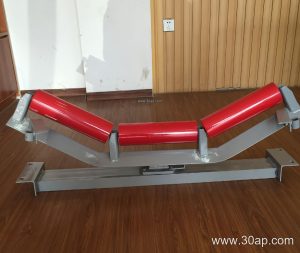
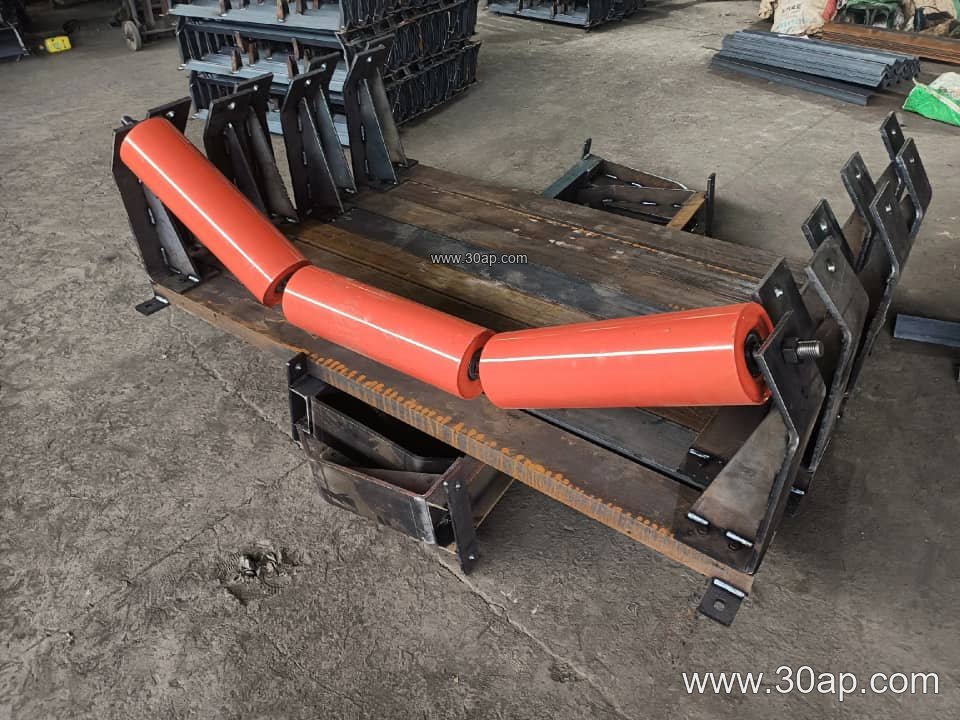
A custom conveyor bracket is a made-to-fit support element that holds idlers, rollers, or related hardware in the exact position your conveyor structure requires. Instead of forcing a standard frame onto an existing line, the bracket is produced to match the belt width, trough angle, roller diameter, and mounting arrangement of a specific installation. In practice, this often means a trough bracket, return bracket, or transition bracket that is fabricated rather than picked from a catalogue.
The value is straightforward. When a conveyor is rebuilt, extended, or adapted to a new duty, the frame and the belt path rarely line up perfectly. A purpose-built bracket closes that gap and keeps the conveyor belt running on a stable, predictable path.
How the Bracket Is Built
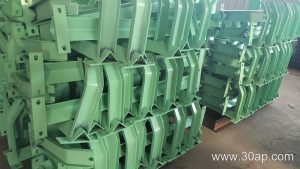
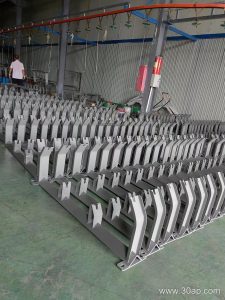
Most units are fabricated from angle steel, channel steel, or folded steel plate. The choice depends on load, span, and the environment. A light-duty bracket on a small aggregate line may use folded plate, while a heavy-duty mining conveyor bracket in an iron ore or coal handling circuit typically uses thicker channel or angle sections.
Typical build steps include cutting, drilling mounting holes, bending the trough profile, welding gussets or stiffeners, and surface treatment such as painting or galvanizing. Hole spacing and crossbeam length are not fixed numbers; they follow the belt width and trough angle, so they are confirmed at design stage.
Common Reference Data
The table below shows typical ranges used when specifying a bracket. These are reference values, not universal rules, and final dimensions are set by the conveyor design.
- Belt width: B500, B650, B800, B1000, B1200, B1400, B1600, B1800, B2000, B2200
- Trough angle: 20, 30, 35, 45 degrees; adjustable brackets can move between these angles
- Roller diameter: Ø89, Ø108, Ø133, Ø159, Ø194
- Forward tilt: commonly about 1.5 to 2 degrees on forward-tilted brackets
Useful combinations appear in real projects, for example B800 with a 35 degree trough and Ø108 rollers, or B1200 with 45 degrees and Ø133. A given belt width does not lock you to one angle or one roller size; the bracket is matched to the load and the belt training requirement.
Where These Brackets Are Used
Custom brackets appear wherever a conveyor has to follow a specific route. In a limestone quarry or a sand and gravel line, trough brackets set the belt profile on the carrying side, while return brackets support the empty strand. In a cement plant or a power plant coal yard, transition brackets ease the belt from a flat pulley into a troughed section without stressing the edges.
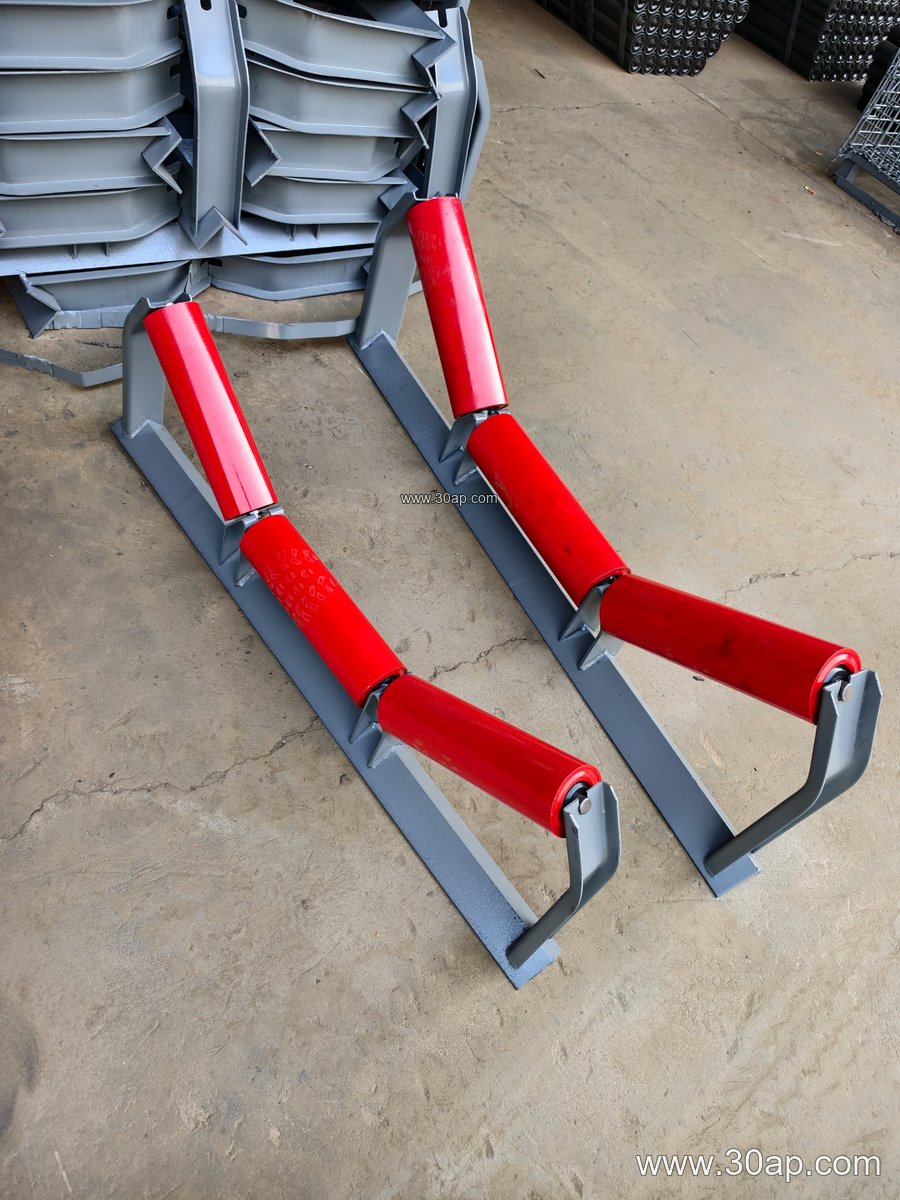
Underground coal mining conveyors and tunneling spoil lines often need compact, low-profile brackets that fit inside restricted frames. Port bulk terminals and steel plant sinter lines use heavy fabricated brackets that resist vibration and impact. In each case, the bracket works together with the conveyor pulley, idler roller, and belt to keep material moving.
Matching the Bracket to the Rest of the Line
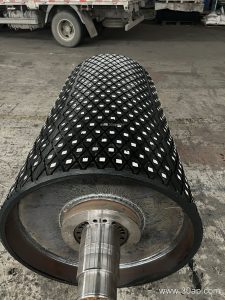
A bracket is only one part of the assembly. The trough angle affects how much material the belt can carry, and the roller diameter affects rolling resistance and bearing life. A transition bracket, for instance, is not the same as a standard carrying bracket, and a V-return bracket is not a replacement for a flat return bracket. Drive, tail, and bend pulleys each have their own support needs, and none of them should be confused with the bracket that holds the idlers.
When the belt is a heavy-duty mining conveyor belt or an abrasion resistant conveyor belt carrying sharp rock, the bracket must handle higher impact and misalignment loads. On a long overland line using a steel cord conveyor belt, smooth transitions matter more, so adjustable brackets are often chosen to fine-tune the trough.
Buyer Checklist
- Confirm belt width, trough angle, and roller diameter before ordering.
- State the mounting hole pattern and crossbeam length required by the existing frame.
- Choose material and finish based on dust, moisture, and corrosion exposure.
- Decide between fixed and adjustable brackets; adjustable types allow angle changes on site.
- Check whether the bracket is for carrying, return, transition, or impact service.
- Ask for drawings showing hole positions rather than relying on nominal sizes.
For a reliable fit, share the conveyor layout, the idler roller schedule, and the belt specification with the fabricator. A well-made custom conveyor bracket keeps the belt centred, reduces edge wear, and extends the service life of the whole conveyor system.