What a Custom Conveyor Pulley Really Is
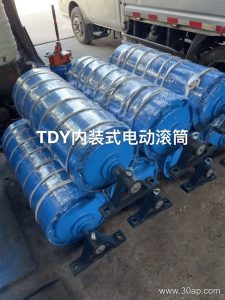
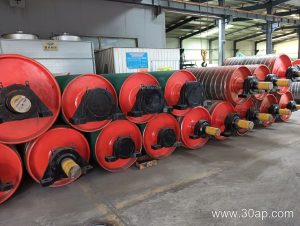
A custom conveyor pulley is a drum assembly built to match a specific conveyor layout rather than pulled from a short list of stock sizes. It is the rotating cylinder that carries the belt, sets its path, and transmits or absorbs tension at a chosen point in the system. Because every conveyor has its own geometry, duty level, and material flow, a made-to-order pulley usually combines a selected drum diameter, a face width that suits the belt, a shaft sized for torque, and a lagging surface chosen for grip and wear.
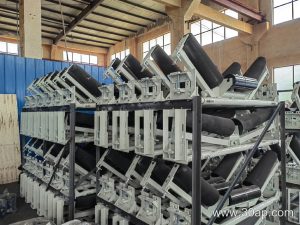
Buyers often use the shorter term conveyor pulley, and the two mean the same item here. Drive, tail, and bend positions are not interchangeable: a drive pulley transmits power, a tail pulley returns the belt, and a bend pulley changes direction. Each position places different demands on the same basic product.
How the Assembly Is Built
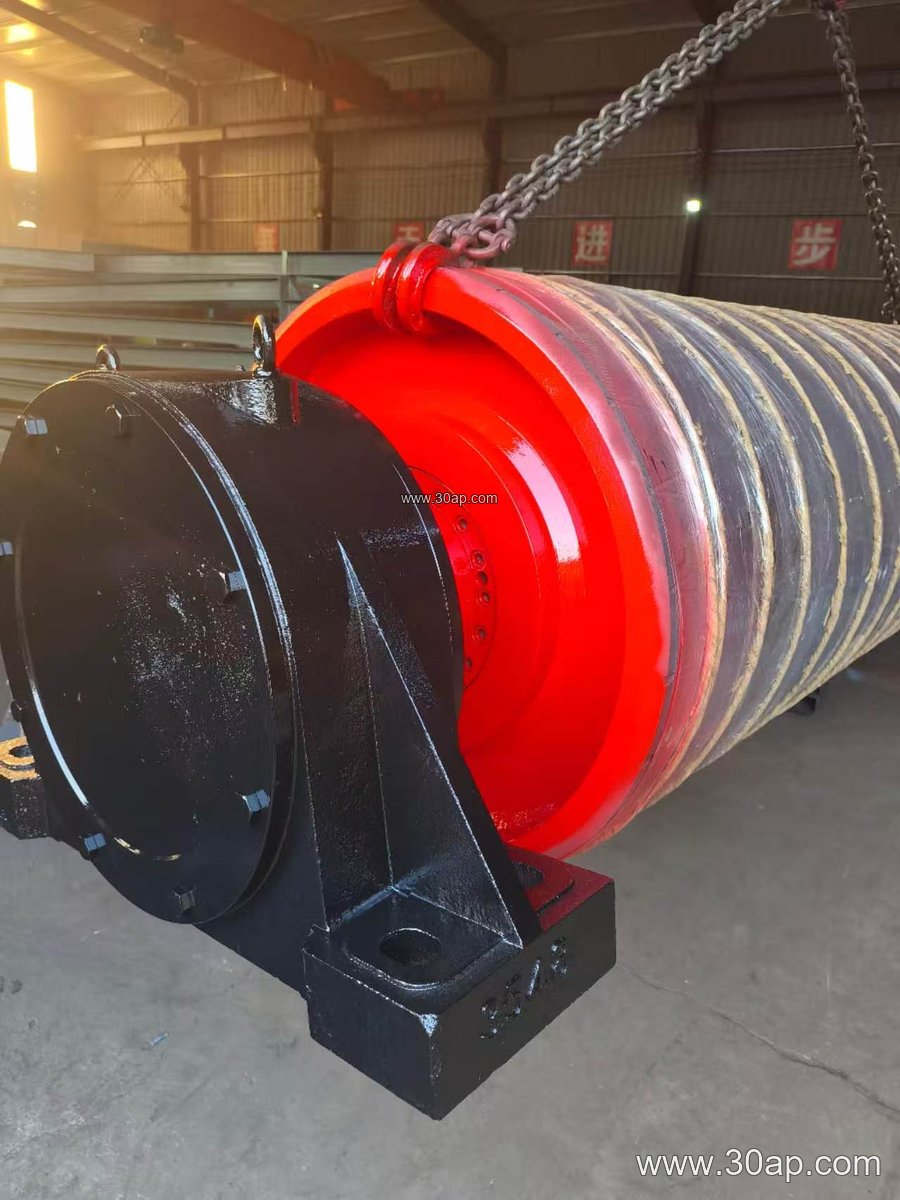
The core is a steel shell, usually machined and balanced, welded to end discs and a hub. The shaft is sized from calculated torque and radial load, not from belt width alone. Common shaft diameters include Ø50, Ø60, Ø70, Ø80, Ø90, Ø100, Ø120, Ø140, Ø160, Ø180, and Ø200 mm, with the final figure confirmed by the conveyor designer.
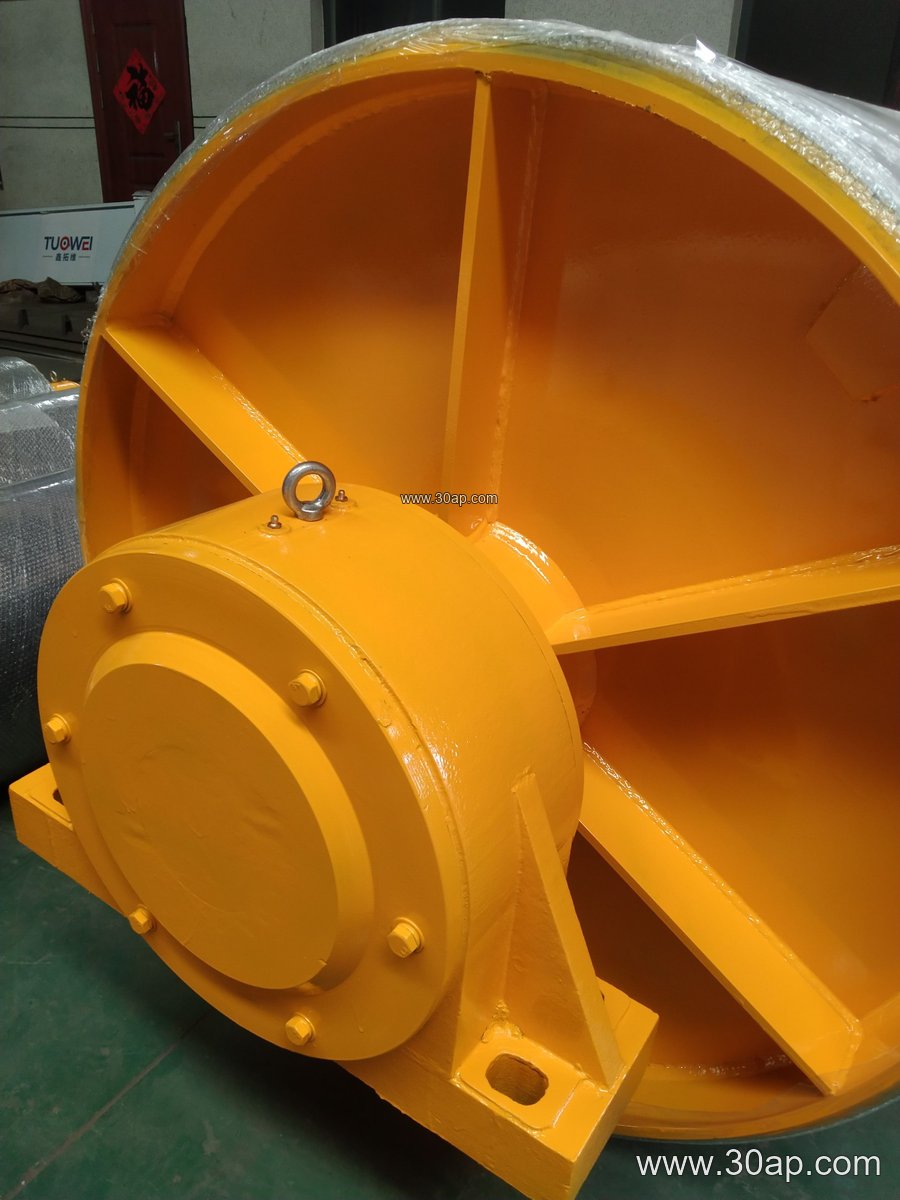
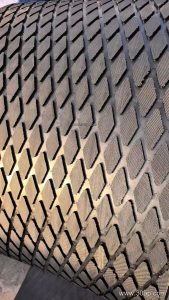
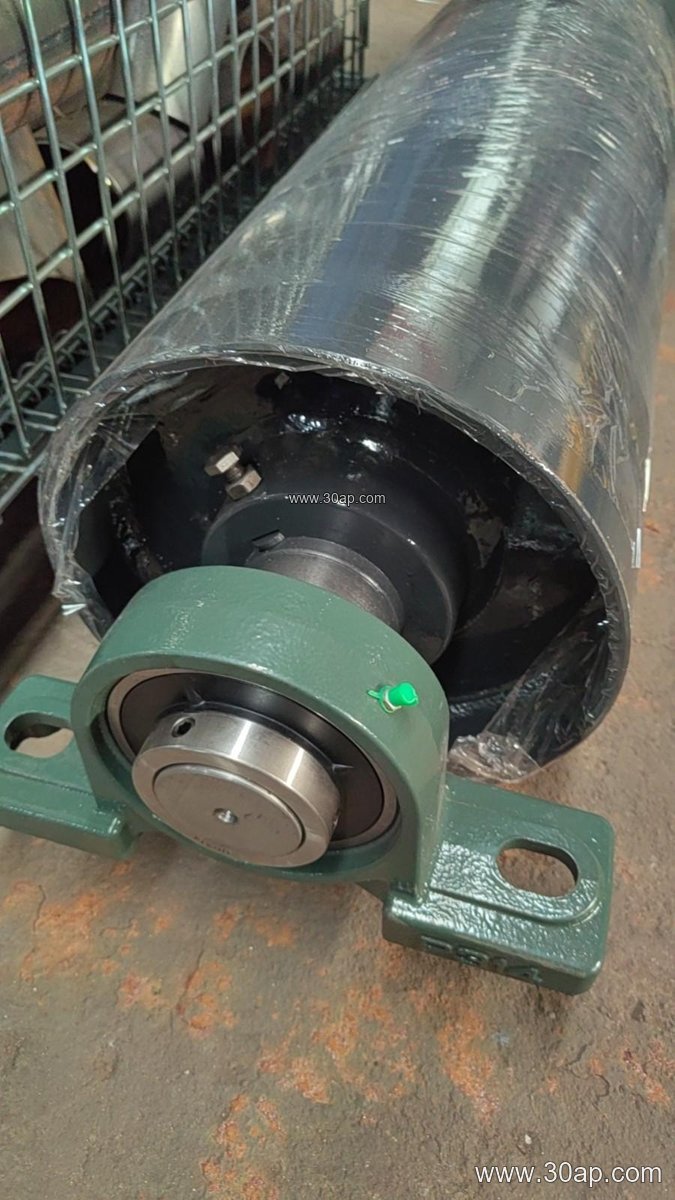
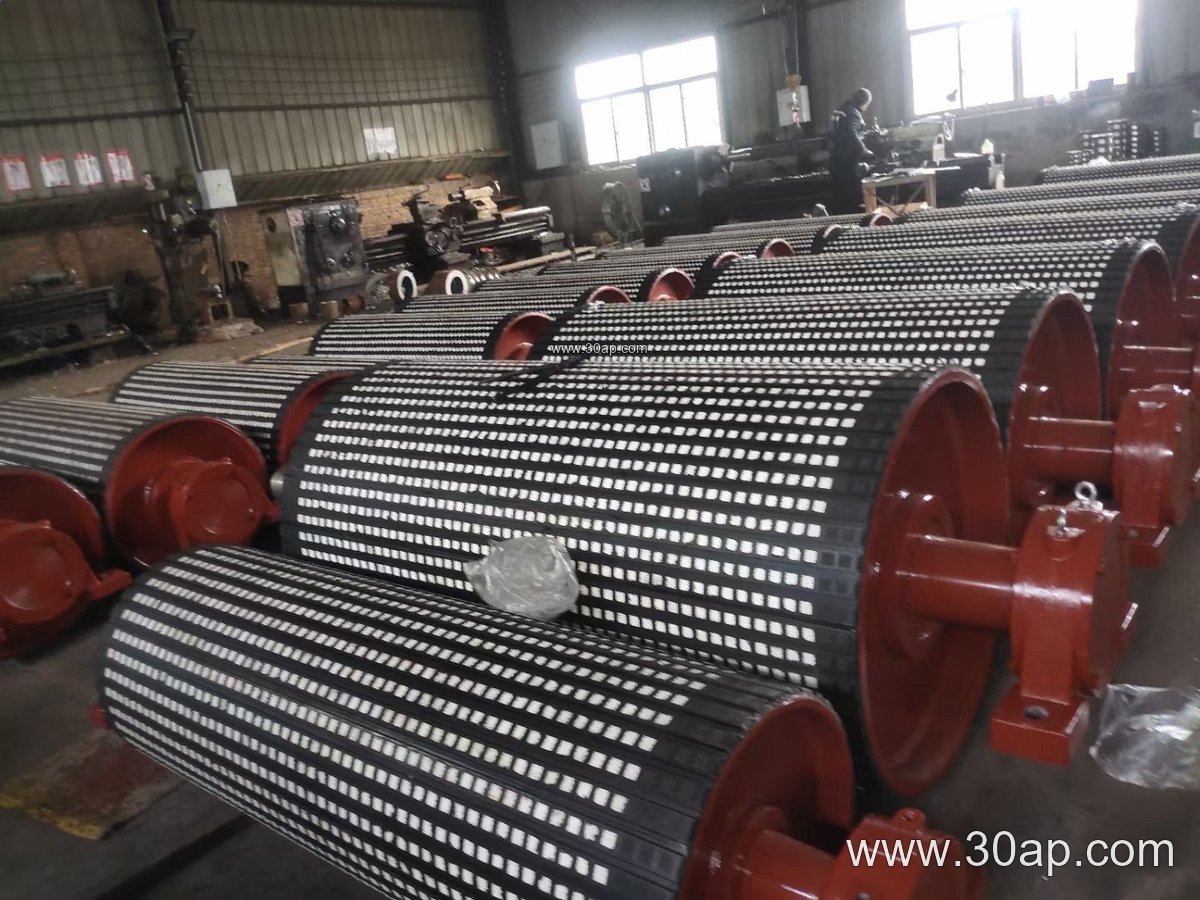
Bearing housings, locking elements, and a conveyor bracket interface complete the unit. Surface treatment matters as much as the steel: plain face, cast rubber, cold-bonded rubber, hot-vulcanized rubber, diamond lagging, herringbone lagging, ceramic lagging, and flat rubber are all available choices. Lagging thickness commonly runs 8, 10, 12, 15, or 20 mm depending on grip and abrasion requirements.
Matching Diameter, Face Width, and Belt
Face width normally exceeds belt width so the belt is fully supported. Typical relationships include B400 with about 500 mm face, B500 with about 600 mm, B650 with about 750 mm, B800 with about 950 mm, B1000 with about 1150 mm, B1200 with about 1400 mm, B1400 with about 1600 mm, B1600 with about 1800 mm, and B1800 with about 2000 mm. Diameters such as Ø200, Ø250, Ø315, Ø400, Ø500, Ø630, Ø800, Ø1000, Ø1250, and Ø1400 mm are common reference points.
No single belt width locks in one diameter. A B800 conveyor might use Ø500 in a short tail position and a larger drum at the drive, while a B1200 × Ø1000 combination is equally normal where wrap angle and belt tension call for it. The correct pairing comes from belt tension, wrap angle, speed, and available space.
Where These Pulleys Work
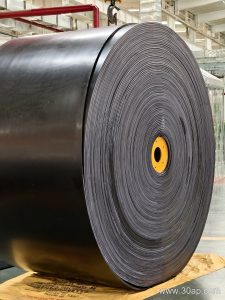
In a limestone quarry or a sand and aggregate line, a custom drum is often specified for the head position where a rubber conveyor belt discharges crushed rock. Abrasion resistance and lagging grip dominate the choice, and an abrasion resistant conveyor belt may run alongside a ceramic-lagged drum to control slip.
In a coal preparation plant or a power plant coal yard, flame retardant and anti-static properties take priority. A flame retardant conveyor belt paired with a properly lagged drive pulley keeps the system safer, while a bend pulley guides the return strand through tight structures.
What to Confirm Before Ordering
- Belt width, belt type, and whether the belt is an EP conveyor belt, steel cord conveyor belt, or multi-ply fabric core design.
- Position in the conveyor: drive, tail, bend, take-up, or snub, since each changes load direction.
- Calculated shaft diameter and bearing size, not a guessed value based on width.
- Lagging form and thickness, plus whether grooving or ceramic tiles are needed for wet or oily conditions.
- Balance grade, runout tolerance, and painting or coating for the site environment.
Maintenance is straightforward when planned: check lagging wear, confirm bearing lubrication intervals, and inspect the conveyor bracket and locking elements for movement. A pulley that is correctly sized for its duty usually outlasts one chosen only by nominal dimensions. For conveyors handling heavy ore, such as an iron ore or copper ore line, a heavy-duty mining conveyor belt and a robustly built drum should be evaluated together rather than separately.
Whether the project is a cement plant clinker route, a port bulk terminal, or a tunnel muck removal system, the same rule applies: define the duty, then let the drum dimensions follow. A custom conveyor pulley is a designed component, and treating it that way is the surest route to reliable belt tracking and long service life.