What a Belt Conveyor Pulley Does on the Line
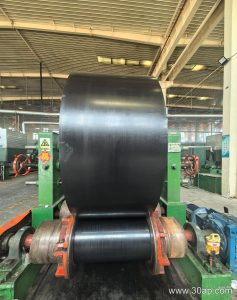
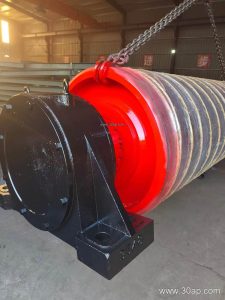
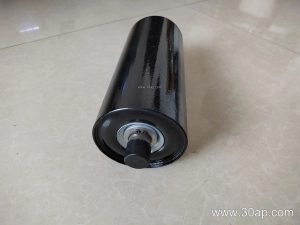
A belt conveyor pulley is the rotating drum that drives, tensions, or redirects the conveyor belt. In a quarry or a coal handling system, it is the component that transfers motion from the drive unit to the belt and keeps the belt tracking under load. Unlike an idler roller, which supports the belt along its carrying run, the pulley carries the full tension of the belt and must be matched to the duty. The term conveyor pulley covers several positions, and each position has its own design priorities. A drive pulley, also called the head pulley, grips the belt to move the load. A tail pulley at the loading end sets the return path. A bend pulley changes direction without driving. These are distinct roles, and they are not interchangeable in a specification.
Construction and Surface Options
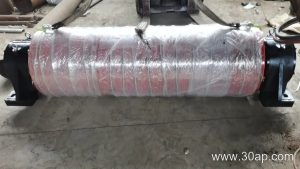
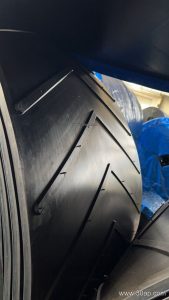
Most industrial pulleys start with a steel shell, welded to end discs and a shaft. The shaft diameter is determined by torque and load, not by belt width alone. Common shaft sizes include Ø80, Ø100, Ø120, Ø140, and Ø160, but a buyer should confirm the calculated torque rather than assume a fixed match. The shell surface can be plain, or it can be covered with rubber, ceramic, or other lagging. Lagging improves grip on the drive pulley and helps shed material in dusty conditions. Common lagging thicknesses are 8, 10, 12, 15, and 20 mm. Surface patterns include diamond and herringbone for water shedding, and plain rubber for general use. For a cement plant or a power plant coal yard, a diamond lagging on the drive pulley is a practical choice for wet or dusty belts.
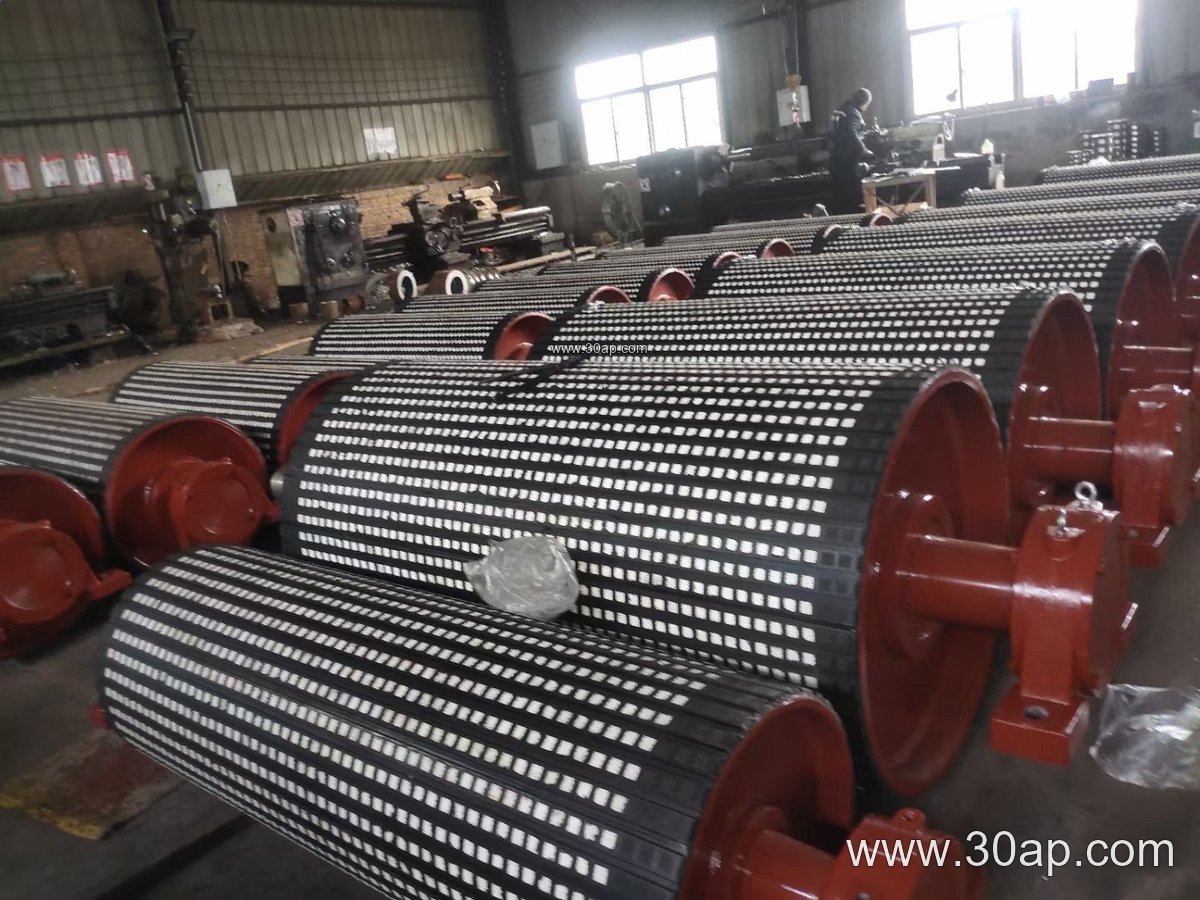
Common Pulley Types and Their Positions
- Drive pulley or head pulley: transmits power to the belt.
- Tail pulley: returns the belt at the loading end.
- Bend pulley: redirects the belt around corners or into a take-up.
- Take-up pulley: maintains tension in the system.
- Wing pulley: used where material build-up is a concern.
These types serve different functions, so a bend pulley cannot simply replace a drive pulley. The drive pulley needs lagging and a robust shaft connection; a bend pulley can often run with a plain surface.
Matching Pulley to Belt and Application
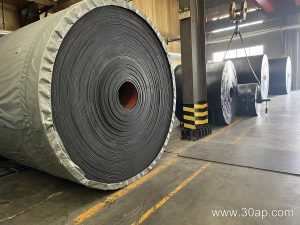
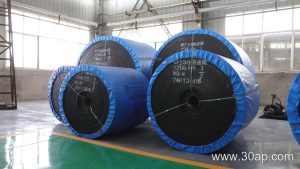
The pulley works with the conveyor belt, the idler roller, and the conveyor bracket to form a complete system. Belt width and pulley diameter are related but not fixed pairs. For example, a B800 belt might run on a Ø500 pulley in one conveyor and a Ø630 pulley in another, depending on belt tension and space. Face width is usually wider than the belt: B650 about 750 mm, B1000 about 1150 mm, B1200 about 1400 mm, and B1400 about 1600 mm. These are common references, not universal rules. In a sand and gravel line, an abrasion resistant conveyor belt may be paired with a pulley that has a plain or lightly lagged surface to avoid material wrap. In an iron ore terminal, a steel cord conveyor belt demands a pulley with a heavy-duty shell and a shaft sized for high tension. For underground coal mining, a flame retardant conveyor belt is standard, and the pulley lagging should be chosen to reduce slip without generating static. A rubber conveyor belt or an EP conveyor belt can run on the same pulley frame with different lagging choices.
What Buyers Should Confirm Before Ordering
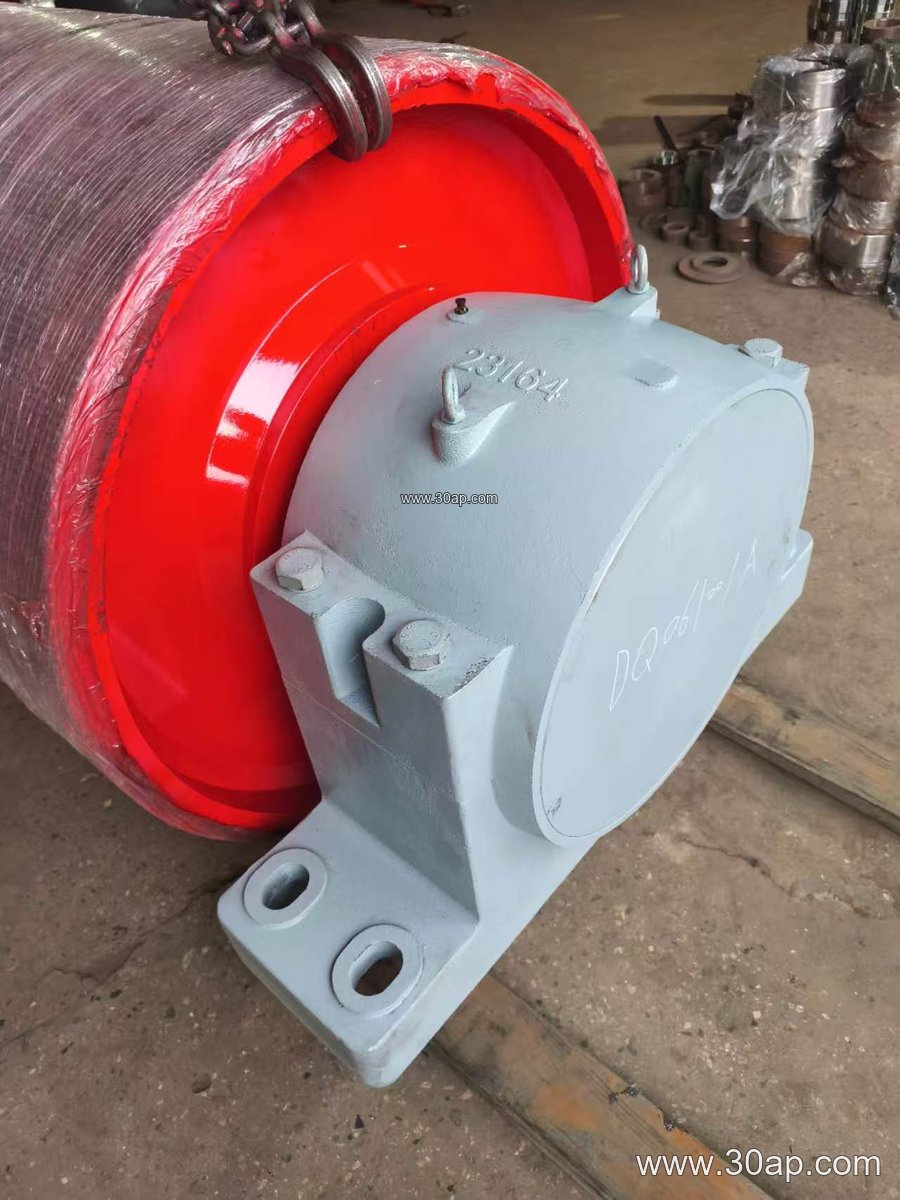
Start with the belt width and the required pulley diameter, then confirm the shaft size from the torque calculation. Check the lagging type and thickness against the environment: oil resistant lagging for a recycling plant, heat resistant lagging near a sinter cooler, or ceramic lagging for a high-slip drive. Ask for the bearing type and the mounting bracket dimensions. A conveyor bracket that does not match the pillow block height will cause alignment problems. Also confirm the pulley face width and whether the shell is plain or crowned. Crowning helps belt tracking on long centers. For a port ship loading conveyor, the drive pulley often needs a robust lagging and a sealed bearing arrangement. For a concrete mixing plant, a smaller pulley with a plain surface may be sufficient. Whatever the duty, the buyer should ask for the calculated shaft load and the allowable bearing life rather than rely on a generic size chart. A belt conveyor pulley is a long-life component, and a small mismatch at the specification stage can lead to belt mistracking or premature bearing failure.
Maintenance and Inspection Notes
Inspect lagging wear at each scheduled shutdown. Worn diamond pattern on a drive pulley reduces grip and can cause belt slip. Check the shaft for runout and the bearings for temperature rise. Keep the pulley face clean; material build-up on a tail pulley can damage the belt edge. On a quarry conveyor belt, impact at the loading point is better handled by idler roller sets and skirting than by the pulley itself. Use the pulley as one part of a well-aligned system, and it will deliver reliable service across mining, cement, power, and aggregate operations.