What an Anti-Static Conveyor Belt Is
An Anti-Static Conveyor Belt is a rubber or fabric-reinforced belt designed to dissipate static electricity that builds up as the belt runs over pulleys and idler rollers. In dusty environments such as coal mines, cement plants, power stations, and aggregate yards, static discharge can damage electronic controls or create a spark risk. The anti-static property is usually achieved by adding conductive carbon black or other conductive fillers to the cover compound, and sometimes by incorporating conductive threads in the carcass. This belt is not the same as a standard Rubber Conveyor Belt; the conductive pathway is engineered into the compound and must be verified by the supplier.
The product is also known as an antistatic conveyor belt or conductive rubber belt. It often combines anti-static behavior with other properties such as flame retardancy or oil resistance, depending on the application.
Construction and Key Components
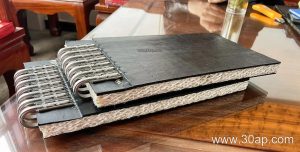
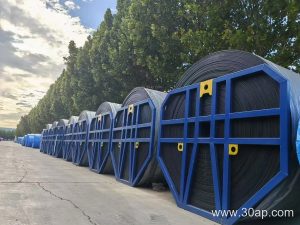
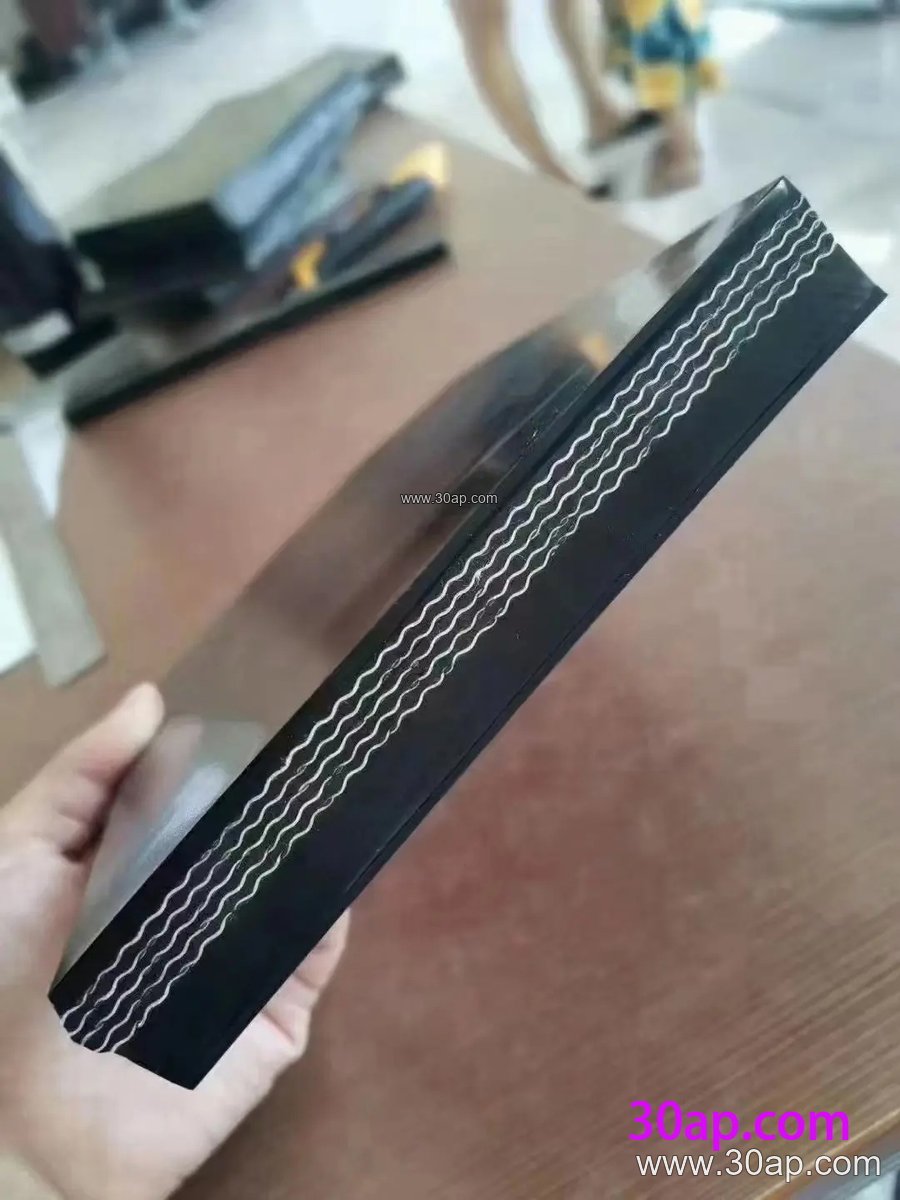
Most anti-static belts use a fabric core or steel cord carcass covered with conductive rubber. The carcass provides tensile strength, while the covers protect the core and provide the anti-static surface. Common carcass types include EP Conveyor Belt (polyester-nylon), NN Conveyor Belt (nylon-nylon), and Steel Cord Conveyor Belt for high-tension duties. A Multi-Ply Fabric Core Conveyor Belt with 2 to 6 plies is also common for medium-load conveyors.
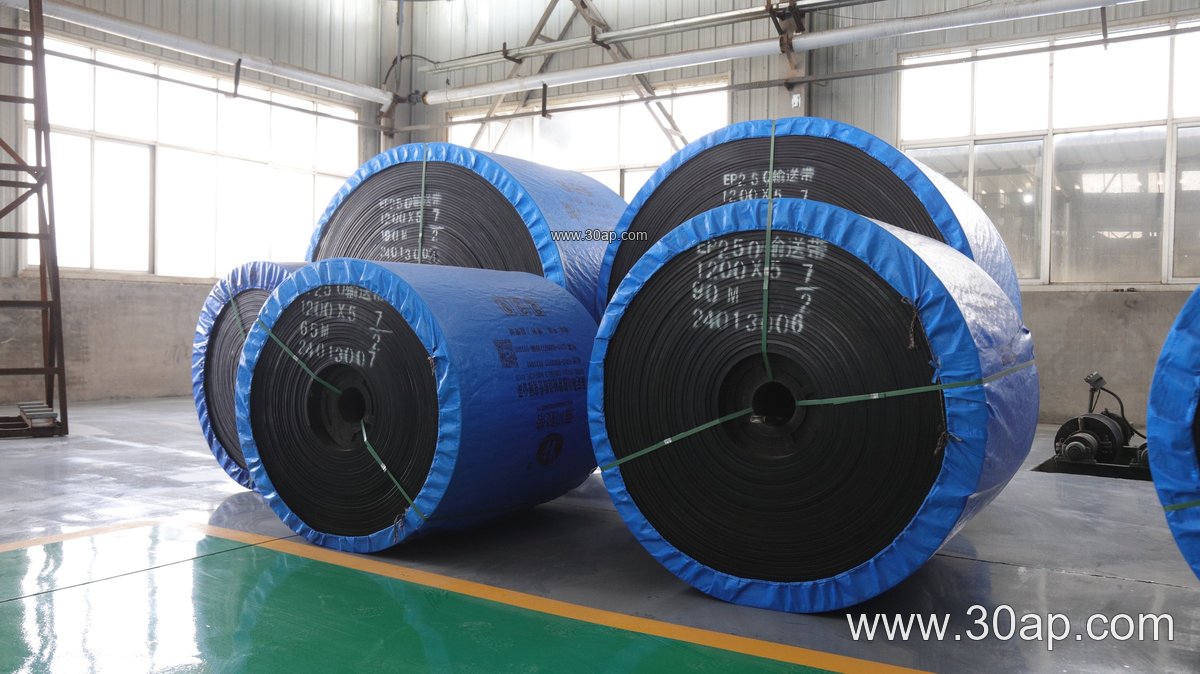
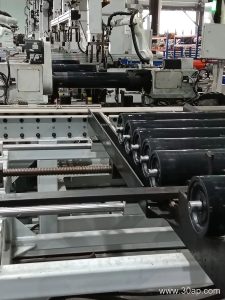
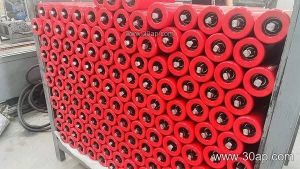
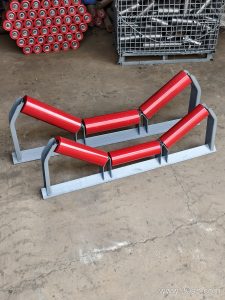
The belt runs over a conveyor pulley at the drive and tail ends, supported by idler rollers and fixed to the frame with conveyor brackets. The conductive compound must remain continuous across splices; otherwise, static can concentrate at joint edges.
Typical Construction Parameters
| Property | Common Range / Example | Notes |
|---|---|---|
| Carcass type | EP, NN, steel cord | Selected by tensile strength and load |
| Number of plies | 2 to 6 | Fabric core belts |
| Cover thickness | 3+1.5 mm, 4+2 mm, 5+2 mm, 6+2 mm | Top + bottom cover; heavier covers for abrasion |
| Belt width | B500, B650, B800, B1000, B1200, B1400, B1600 | Match to conveyor frame and material size |
| Tensile strength (EP) | EP200, EP315, EP400, EP500, EP630, EP800 | Higher grades for long or inclined conveyors |
These values are typical references; actual specifications are set by the conveyor design and should be confirmed with the belt manufacturer.
Where It Is Used
Anti-static belts are common in underground coal mining, where methane and coal dust require static control. They also appear in cement plants, power plant coal handling, sand and gravel plants, and fertilizer or chemical bulk handling. In these industries, the belt often works alongside a Mining Conveyor Belt or Flame Retardant Conveyor Belt specification. For high-abrasion duties such as iron ore or copper ore, an Abrasion Resistant Conveyor Belt compound may be combined with anti-static properties.
Other industries include recycling plants, port ship loading, and bulk material conveyor systems where dust and dry conditions promote static buildup. In food processing, a Food Grade Conveyor Belt with anti-static properties may be used, but the compound must meet food-contact requirements.
Buyer Checklist
- Verify the anti-static performance: Ask for surface resistance or resistance-to-ground test data from the supplier. Do not rely on the name alone.
- Match carcass and strength: Choose EP1000 or EP1250 for medium tension, or Steel Cord Conveyor Belt grades such as ST1000 or ST1600 for high tension. For lighter loads, an NN200 or NN300 belt may be sufficient.
- Check cover thickness: A 6+2 mm or 8+3 mm cover lasts longer in abrasive service, while 4+2 mm suits general bulk handling.
- Confirm belt width: Widths from 500 mm to 2000 mm are available; a 1000mm Conveyor Belt or 1200mm Conveyor Belt is common in mining and cement plants. The width must suit the pulley face and idler roller spacing.
- Consider splices: The splice must maintain the conductive path. Specify the splicing method with the belt supplier.
- Check environmental resistance: In cold climates, a Cold Resistant Conveyor Belt may be needed; in hot material handling, a Heat Resistant Conveyor Belt grade is relevant.
For more information on anti-static belting and related components such as conveyor pulleys, idler rollers, and conveyor brackets, visit example.com/anti-static-conveyor-belt.
Maintenance and Safety Notes
Keep the belt clean and free of excessive dust, because dust buildup can bridge the conductive path and reduce anti-static performance. Inspect splices and edges regularly for wear. Ensure the conveyor frame and pulleys are properly grounded according to site electrical rules. A worn cover that exposes the carcass may lose its anti-static properties, so replace or repair the belt when cover wear reaches the specified limit.
Anti-static belts are not automatically fireproof. If the conveyor operates in a hazardous atmosphere, combine the anti-static requirement with a Flame Retardant Conveyor Belt or Fire Resistant Conveyor Belt specification. For oil-contaminated environments, an Oil Resistant Conveyor Belt compound may be more suitable, but confirm that it also meets the anti-static requirement.