What a Galvanized Conveyor Bracket Does on the Line
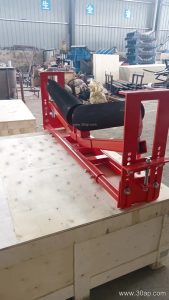
A galvanized conveyor bracket is the steel support that holds idler rollers in the correct position under or above a moving belt. It keeps the trough shape, carries the load between frames, and gives maintenance crews a defined mounting point. In a quarry, cement plant, or power plant coal yard, these brackets are often the first part to show wear because they sit close to dust, moisture, and impact. Hot-dip galvanizing adds a zinc layer that resists rust, so the bracket lasts longer between inspections than a painted part.
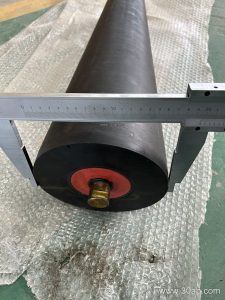
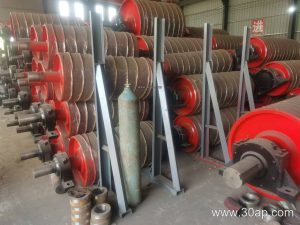
The bracket is not a pulley. It supports the rollers that in turn support the belt. Drive pulleys, tail pulleys, and bend pulleys each do a different job at the ends and curves of the conveyor, so they are never used as a substitute for a bracket. The same rule applies to idler types: a trough bracket, a return bracket, and a self-aligning bracket are different components and should be specified separately.
Construction and Common Forms
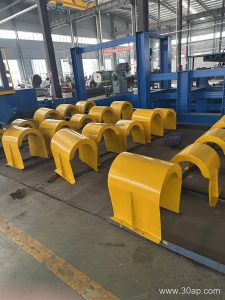
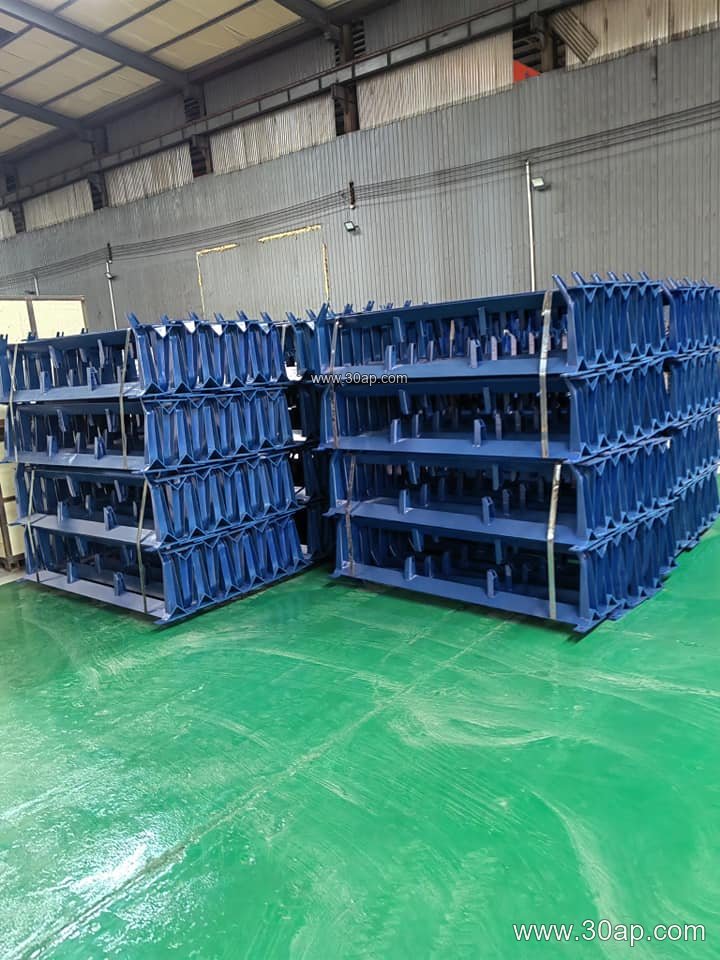
Most brackets are fabricated from angle steel, channel steel, or folded steel plate. The frame is cut, drilled, and welded, then cleaned and dipped in molten zinc. The zinc coating covers edges and welds, which matters in wet washing plants and coastal ports.
Common configurations include:
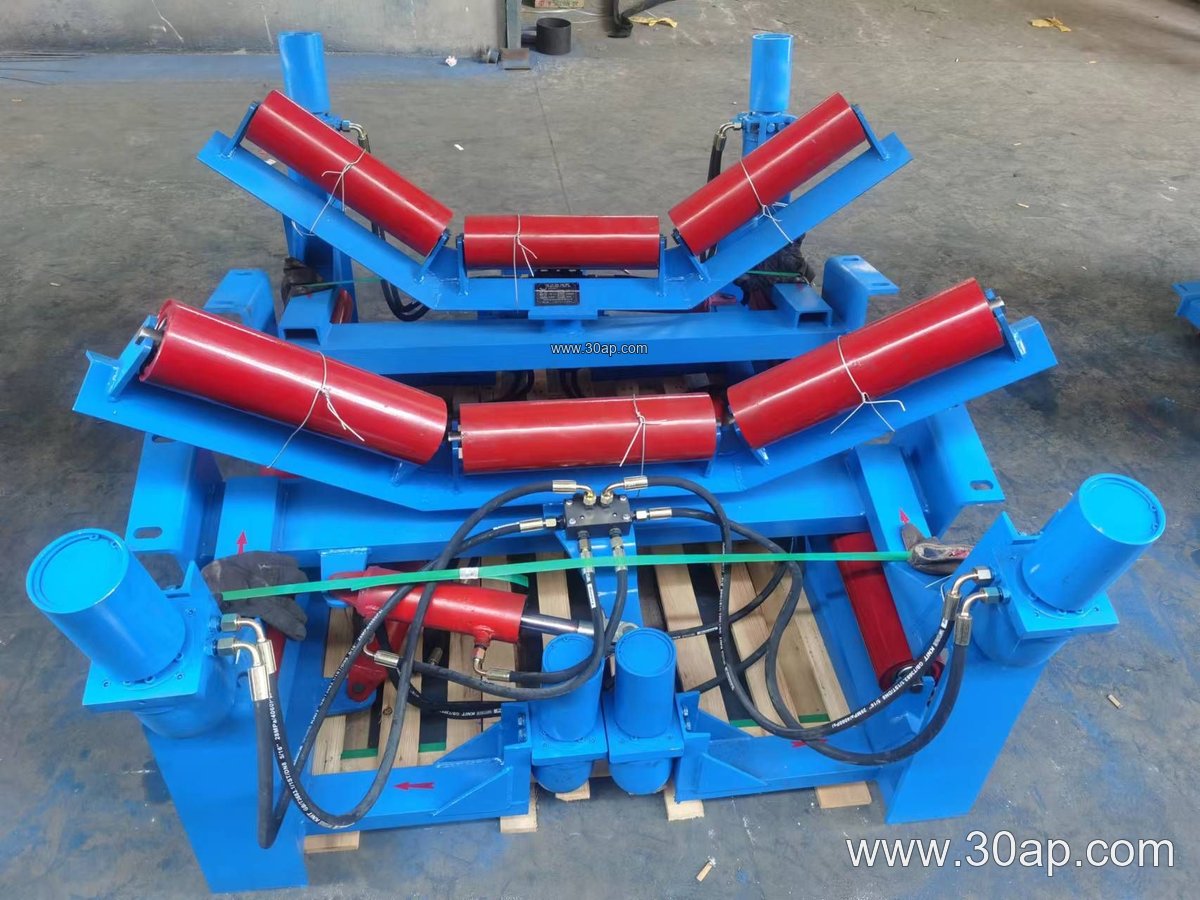
- Carrying side trough brackets that set the belt into a 20, 30, 35, or 45 degree trough
- Transition brackets near the head and tail that guide the belt from flat to troughed
- Return brackets and V-return brackets that support the empty belt
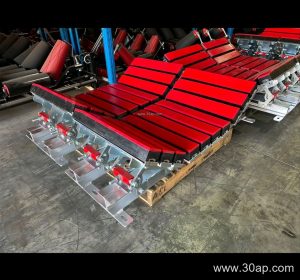
- Impact brackets under loading points, often paired with cushion rollers
- Self-aligning and forward-leaning brackets that help keep the belt centered
- Adjustable brackets that allow the trough angle to be changed on site
Mounting hole spacing and crossbeam length usually follow the belt width and trough angle, so they are confirmed at design stage rather than treated as fixed numbers.
Reference Dimensions and Matching
The table below shows typical reference combinations. These are examples, not fixed rules; one belt width can accept more than one roller diameter and more than one trough angle depending on load and belt stiffness.
| Belt width | Common trough angle | Common roller diameter | Typical bracket role |
|---|---|---|---|
| B500 | 20 or 30 degrees | Ø89 | Light carrying frame |
| B650 | 30 or 35 degrees | Ø89 or Ø108 | Carrying and return frame |
| B800 | 35 degrees | Ø108 | Trough bracket, transition bracket |
| B1000 | 35 or 45 degrees | Ø108 or Ø133 | Heavy carrying frame |
| B1200 | 35 or 45 degrees | Ø133 | Mining and port duty |
| B1400 | 35 or 45 degrees | Ø133 or Ø159 | Crusher and stockyard duty |
| B1600 | 35 or 45 degrees | Ø159 | High-tonnage carrying frame |
| B1800 | 35 or 45 degrees | Ø159 or Ø194 | Ore and coal handling |
| B2000 | 35 or 45 degrees | Ø194 | Bulk terminal service |
For a B1200 line carrying abrasive ore, a buyer might ask for a 45 degree trough bracket with Ø133 rollers, while a B800 cement line may run a 35 degree bracket with Ø108 rollers. Forward-leaning brackets are commonly set around 1.5 to 2 degrees to assist belt tracking.
Where These Brackets Are Used
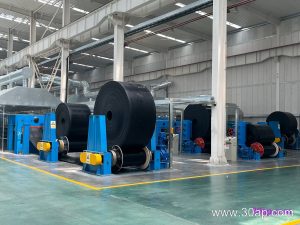
You will find galvanized brackets in a limestone quarry feeding a primary crusher, in a coal washing plant where spray water is present, and in a power plant coal handling gallery. They also appear on aggregate conveyors, sinter lines, fertilizer plants, and grain silos. In each case the bracket works with a conveyor belt, a set of idler rollers, and a conveyor pulley to keep material moving.
Selection should match the belt and the duty. A heavy-duty mining conveyor belt or a steel cord conveyor belt carries more tension and weight, so the frame needs a heavier section and a larger roller. A heat resistant conveyor belt near a kiln discharge may call for a bracket placed away from the hot zone, while an abrasion resistant conveyor belt on a rock conveyor benefits from impact brackets at the transfer point. Flame retardant conveyor belt and fire resistant conveyor belt grades are common in underground coal mining conveyor systems, where galvanized frames also resist corrosion from mine water.
At transfer points, a skirted conveyor belt or corrugated sidewall conveyor belt may need extra support, and a pipe conveyor belt uses a completely different frame layout. The bracket under discussion here is for conventional troughed belts, not for pipe or steep-angle systems.
Buyer Checklist
- Confirm belt width, trough angle, and roller diameter together, not one at a time
- Ask for the zinc coating method and thickness range, since hot-dip and painted finishes differ
- Check hole spacing against the existing conveyor frame before ordering
- Decide between fixed and adjustable brackets based on whether the trough angle may change
- Match bracket duty to the belt, whether it is an EP conveyor belt, NN conveyor belt, or fabric core conveyor belt
- Plan inspection access, because galvanized parts still need periodic checks at welds and bolt holes
For belt support components such as conveyor bracket, idler roller, and conveyor pulley, buyers can reach the supply team at gslconveyor.com for drawing-based confirmation. A second reference point is available at gslconveyor.com/conveyor-bracket for frame details.