What a Carbon Steel Conveyor Bracket Does
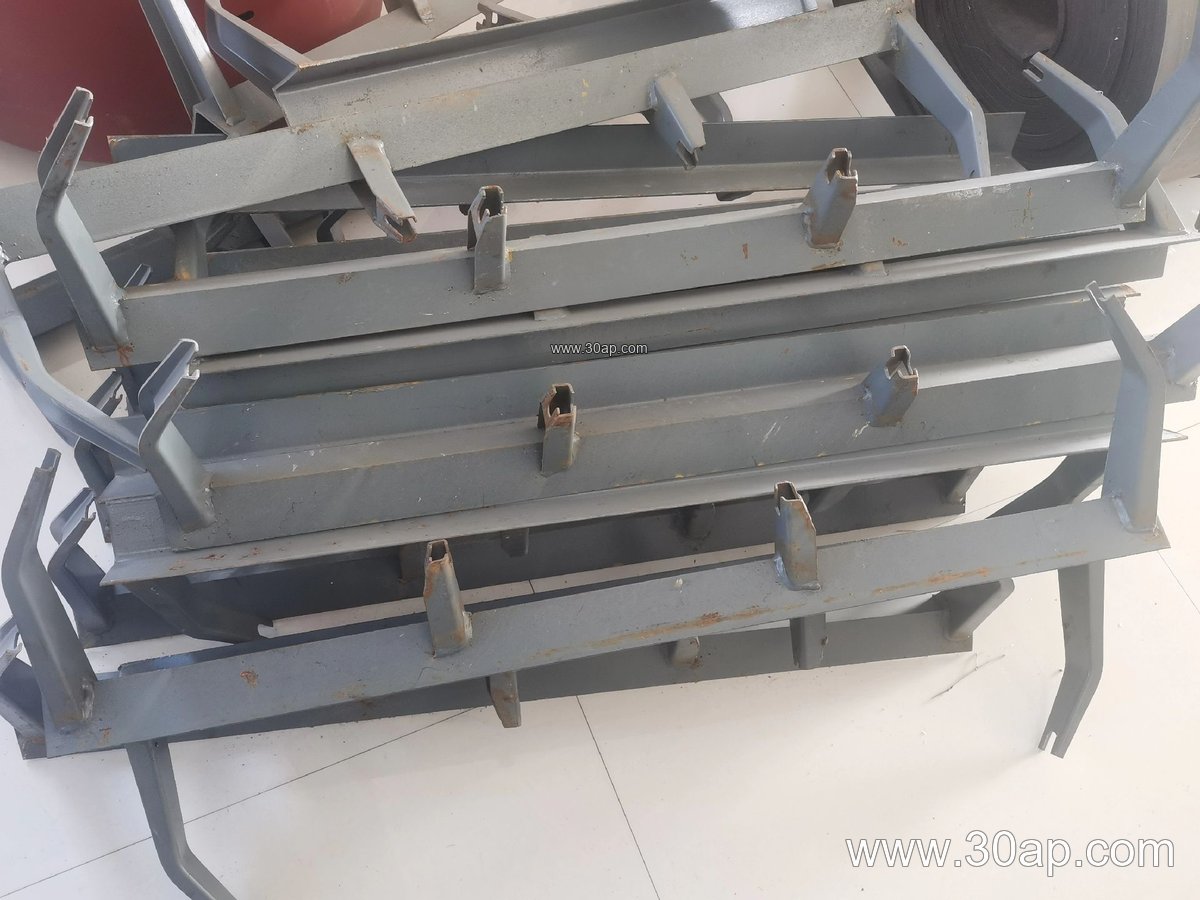
A carbon steel conveyor bracket is the structural interface between the conveyor frame and the rotating components that carry the belt. Often called a carbon steel conveyor support or bracket assembly, it holds idler rollers at the correct angle and spacing, keeps the belt tracking properly, and absorbs the loads transferred from bulk material. In a coal mining conveyor or a quarry conveyor line, these brackets are the quiet workhorses that determine how well the belt performs.
While the belt itself—whether a rubber conveyor belt, an EP conveyor belt, or a steel cord conveyor belt—gets most of the attention, the bracket directly affects belt life. Poorly aligned or weak brackets cause edge wear, mistracking, and premature idler failure. That is why specifying the right carbon steel conveyor bracket matters as much as choosing the belt.
How It Is Built
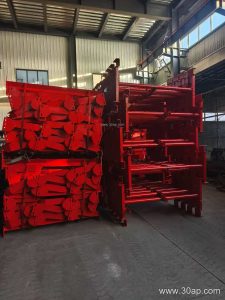
Most carbon steel conveyor brackets are fabricated from angle steel, channel steel, or folded steel plate. The material grade is typically a structural carbon steel chosen for weldability and strength. Fabrication involves cutting, punching or drilling mounting holes, bending, and welding. A quality bracket will have consistent hole spacing, square alignment, and a finish that resist corrosion—often painted or galvanized, though the exact treatment depends on the environment.
The bracket’s geometry is defined by the belt width, the trough angle, and the roller diameter it must carry. For example, a bracket for B800 belt at 35 degrees with Ø108 rollers will have different dimensions from one for B1200 at 45 degrees with Ø133 rollers. Installation hole spacing and crossbeam length are not fixed numbers; they are determined by the conveyor design.
Common Types and Where They Fit
Carbon steel conveyor brackets come in several forms, each serving a specific position on the conveyor:
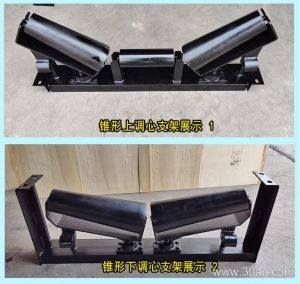
- Troughing bracket (carrying side): Supports three or more idlers to form the trough that holds material. Common trough angles are 20, 30, 35, and 45 degrees.
- Return bracket (flat or V-return): Supports the belt on the return run. V-return brackets help center the belt and shed material.
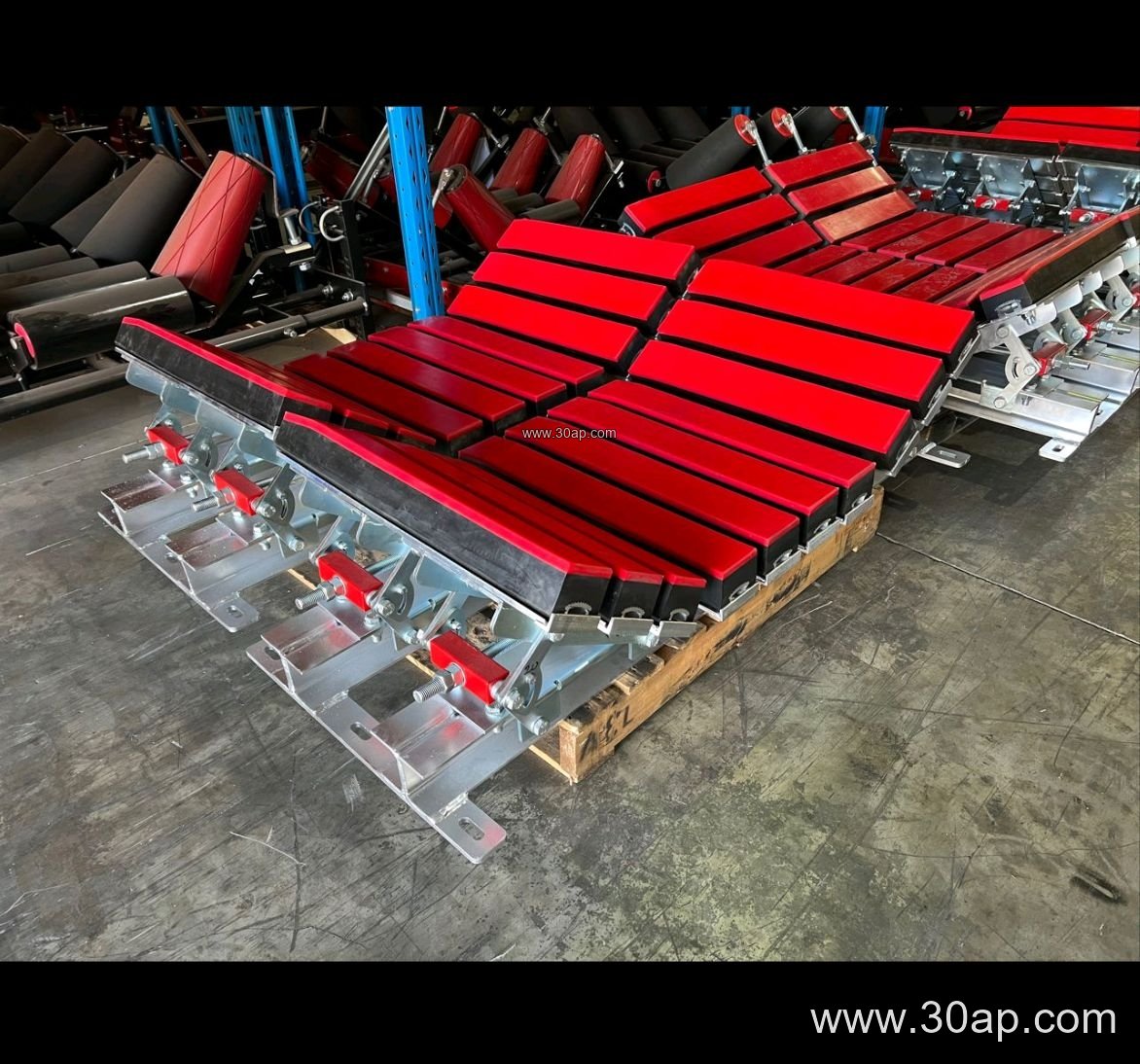
- Impact bracket: Positioned at loading points, often with rubber or spring cushions, to absorb shock from falling material.
- Transition bracket: Guides the belt from flat to troughed profile near pulleys.
- Self-aligning bracket: Includes a pivot to correct belt mistracking.
- Adjustable bracket: Allows the trough angle to be changed on site, useful when material characteristics vary.
Forward-leaning brackets, typically set at about 1.5 to 2 degrees, are also used to improve belt training. Each type is a distinct subtype; a return bracket is not a substitute for a troughing bracket, and a bend pulley bracket should not be confused with a carrying bracket.
Matching Brackets to Belt and Roller
Selection starts with the belt width and the roller diameter. The table below shows typical reference combinations; these are examples, not mandatory pairings.
| Belt Width | Typical Trough Angle | Common Roller Diameter | Example Bracket Use |
|---|---|---|---|
| B500 | 20–30° | Ø89 | Light-duty aggregate line |
| B650 | 30° | Ø89–Ø108 | Sand and gravel conveyor |
| B800 | 35° | Ø108 | Coal mining conveyor |
| B1000 | 35–45° | Ø108–Ø133 | Cement plant raw material |
| B1200 | 45° | Ø133 | Iron ore conveyor |
| B1400 | 35–45° | Ø133–Ø159 | Power plant coal handling |
| B1600 | 35–45° | Ø159 | Port ship loading |
| B1800 | 35–45° | Ø159–Ø194 | Heavy-duty mining conveyor |
| B2000 | 35–45° | Ø194 | Large bulk terminal |
These pairings are common in design practice, but a B1200 belt can be used with different trough angles and roller diameters depending on the load and belt type. The bracket must be ordered with the correct mounting hole pattern for the chosen idler roller and frame.
Where Carbon Steel Conveyor Brackets Are Used
You will find these brackets in almost any bulk handling operation. In a coal mining conveyor, they support the belt through transfer points and long hauls. In a cement plant, they carry clinker and raw meal on abrasion resistant conveyor belts. Aggregate operations rely on them for crusher conveyor and screen feed lines. Ports use them on ship loading conveyors where reliability is critical. The bracket material and coating should suit the environment—for example, a washdown area may need galvanized brackets, while a dry coal yard may use painted carbon steel.
Buyer Checklist
- Confirm belt width and trough angle required for your conveyor.
- Specify the idler roller diameter and the exact mounting hole spacing.
- Choose the bracket type by position: carrying, return, impact, transition, or self-aligning.
- Check material thickness and welding quality—thin brackets deflect under load.
- Consider the environment: corrosion protection, dust, and temperature.
- Ask for dimensional drawings to verify fit with your existing conveyor frame and conveyor pulley locations.
A well-chosen carbon steel conveyor bracket keeps the belt centered, extends roller life, and reduces maintenance downtime. Whether you run a small sand making plant or a large underground mining conveyor, the bracket is a small component with a big influence on system reliability.