What a Ceramic Lagged Pulley Does
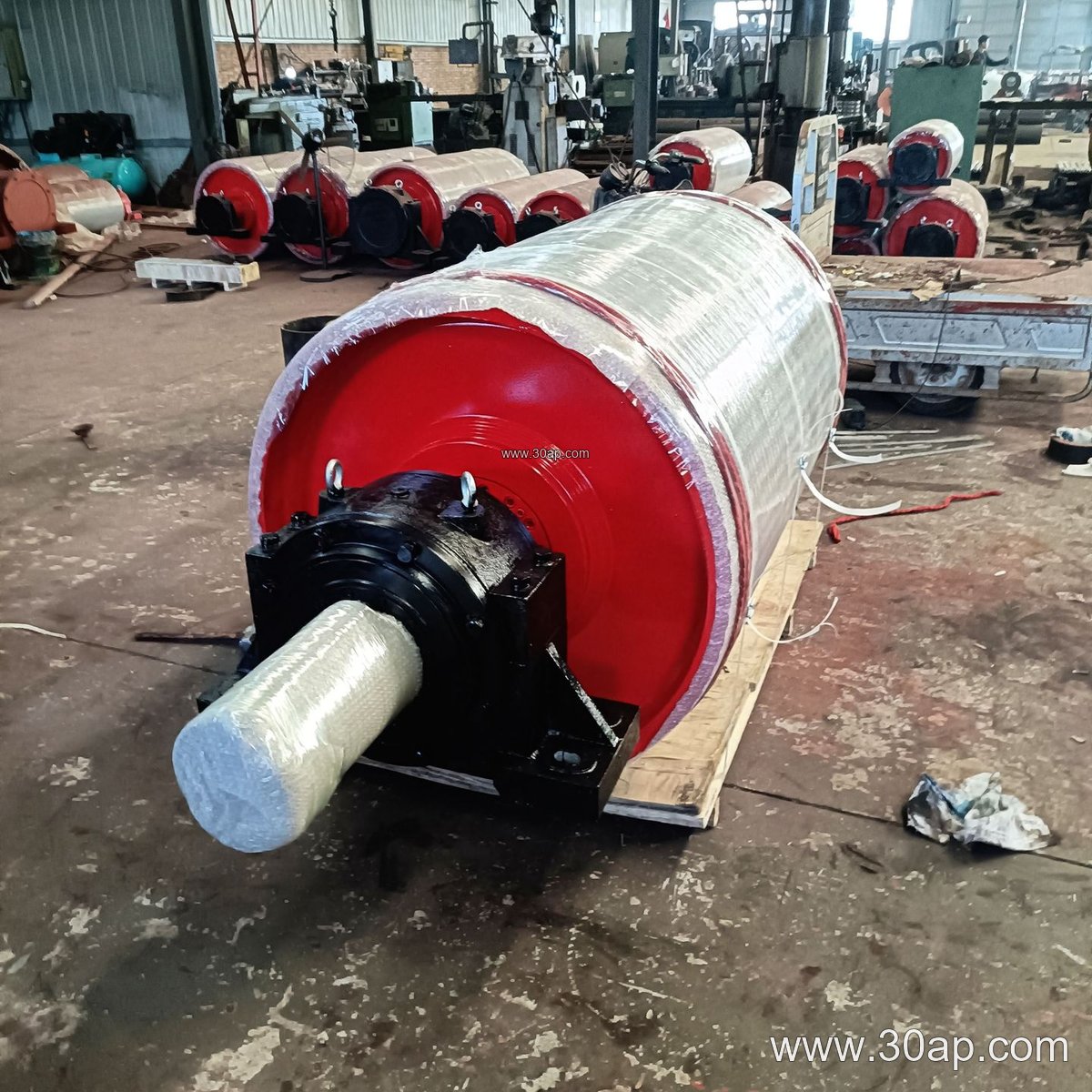
A wear-resistant ceramic lagged pulley is a conveyor pulley whose shell is covered with ceramic tiles set into a rubber or polymer backing. The ceramic layer gives the drum face a hard, gritty texture that grips the conveyor belt and resists the cutting and polishing action of abrasive bulk materials. In a quarry, a limestone mine, or a sand and aggregate line, fines and sharp stone dust work their way between belt and shell; a plain or rubber-covered face can glaze and slip over time, while ceramic lagging keeps a reliable friction coefficient much longer.
This is a conveyor pulley built for the dirty end of the process. It is often specified as the drive pulley, where torque transfer matters most, but it also appears at the tail position when belt tracking and slip are concerns. Note that drive, tail and bend pulleys serve different roles and are not interchangeable; a ceramic lagged drive pulley cannot simply be swapped into a bend position without checking wrap angle and belt tension.
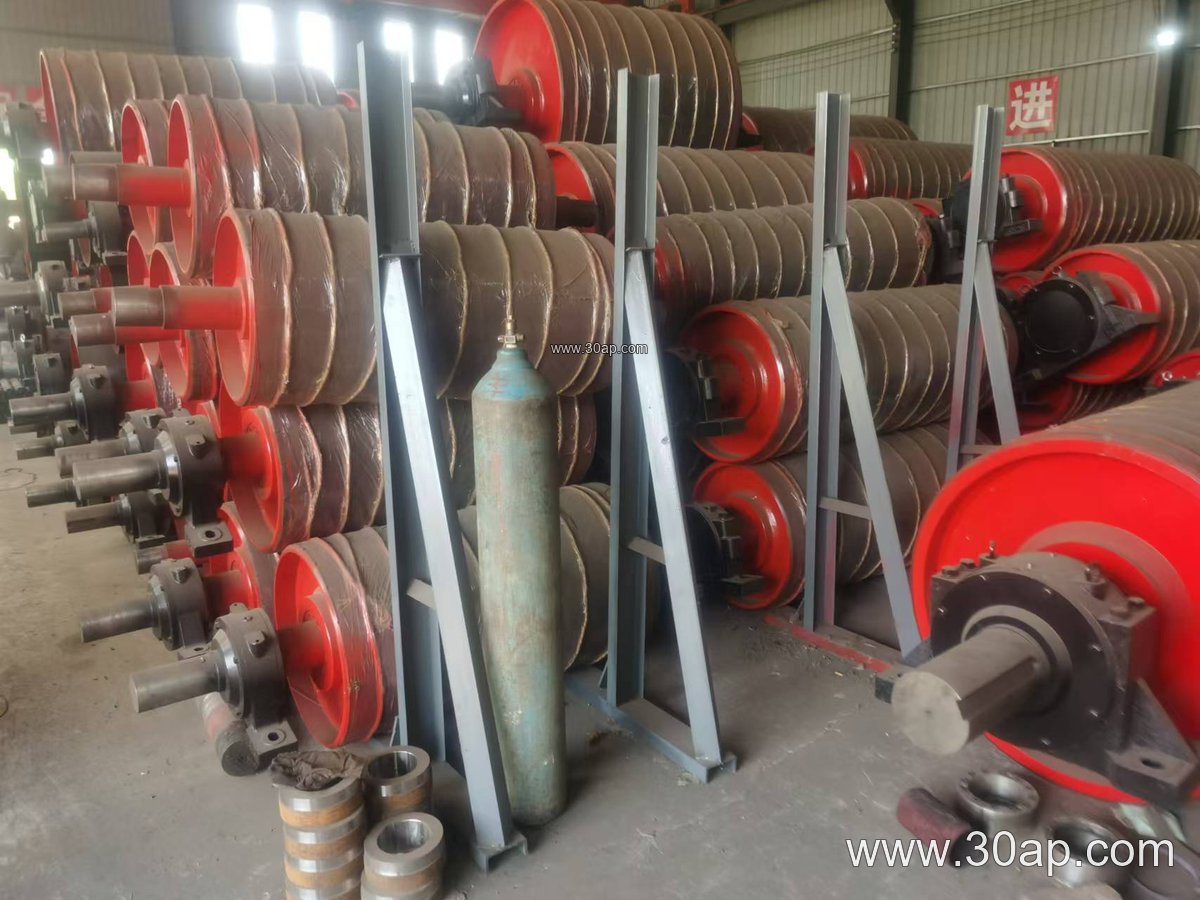
How the Ceramic Surface Is Built
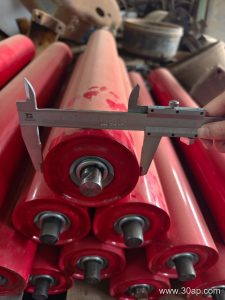
The construction starts with a steel shell and end discs welded to a shaft. The lagging is applied as ceramic tiles embedded in an elastomer layer, usually bonded and vulcanised to the shell. Common tile patterns leave small raised studs or a dimpled profile, which helps water and fine slurry escape instead of forming a slippery film. Lagging thickness is typically 8, 10, 12, 15 or 20 mm depending on duty. The ceramic itself is hard and chemically stable, so it also suits wet, slightly corrosive conditions found in wash plants and coal preparation.
- Steel shell with machined face
- Ceramic tiles in rubber or polymer matrix
- Bonded and vulcanised lagging, 8 to 20 mm typical
- Studded or dimpled surface for drainage and grip
Where It Fits in a Conveyor
Ceramic lagging earns its cost in applications where rubber alone wears too fast. In a copper or iron ore operation, the drive pulley may see heavy loads and constant grit. In a power plant coal handling system, damp coal dust can reduce friction on a smooth drum. In cement plants, clinker dust is hot and abrasive, so a heat tolerant bonding system may be needed alongside the ceramic. The same logic applies to a crusher discharge conveyor or a belt feeding a screening station in an aggregate plant.
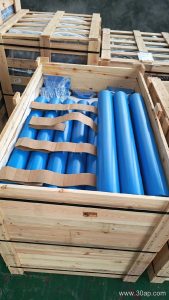
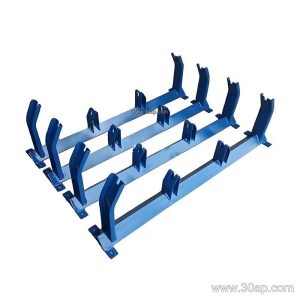
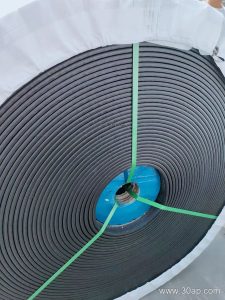
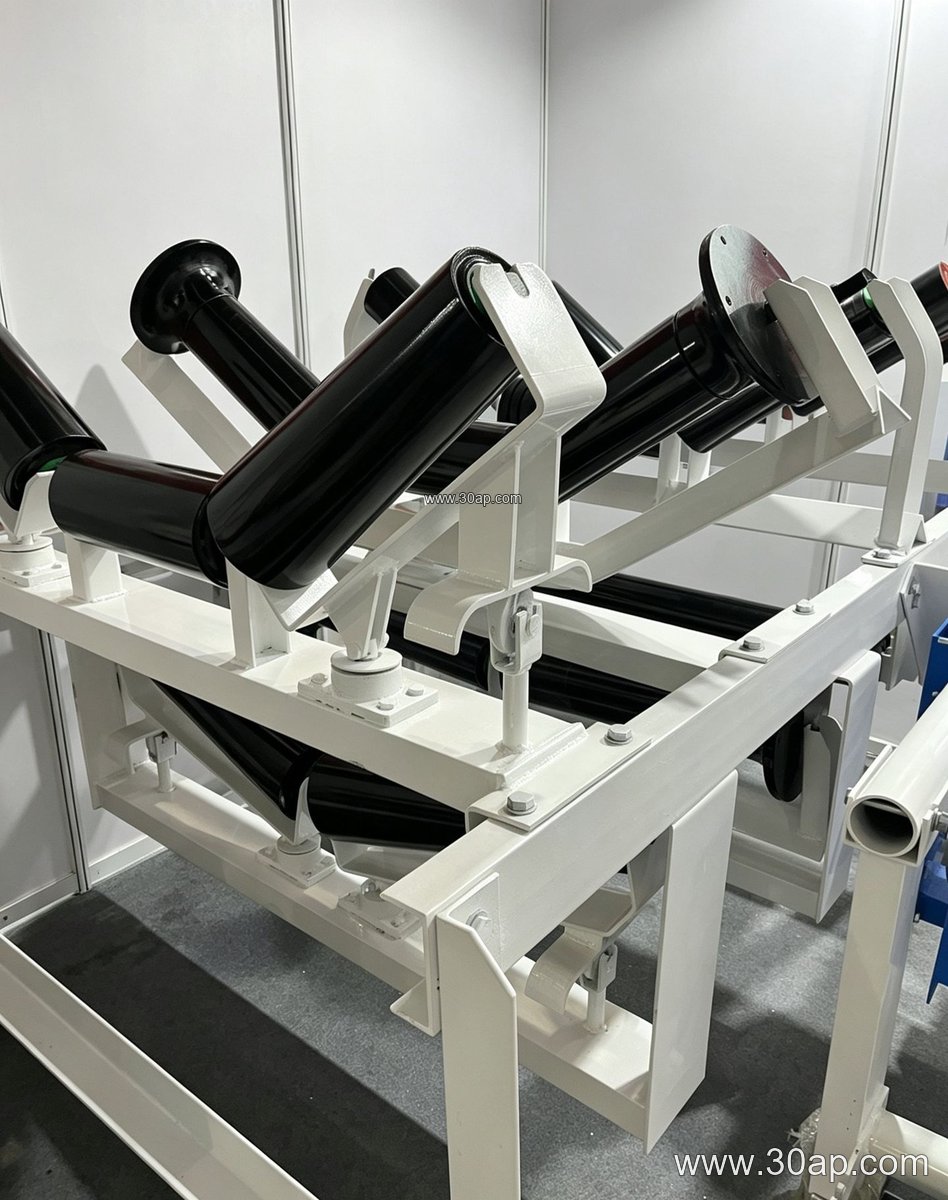
The pulley works together with the conveyor belt, the conveyor idler roller, and the supporting conveyor bracket. A rigid frame and well-aligned idlers keep the belt seated on the ceramic face; misalignment concentrates load on one edge and can chip tiles. Matching the pulley to the belt matters: a heavy-duty mining conveyor belt or a high abrasion resistant conveyor belt will handle the same abrasive load that makes ceramic lagging worthwhile, while a steel cord conveyor belt on a long overland run may need a larger diameter and a carefully specified shaft.
Sizes and Combinations
There is no single size that suits every conveyor. Pulley diameter is chosen from belt tension, wrap angle and shaft torque, and the face width is normally a little wider than the belt. The table below shows common reference combinations; treat them as starting points for discussion, not fixed rules.
| Belt width | Typical pulley face width | Example diameter |
|---|---|---|
| B400 | about 500 mm | Ø200 to Ø320 |
| B650 | about 750 mm | Ø315 to Ø500 |
| B800 | about 950 mm | Ø400 to Ø630 |
| B1000 | about 1150 mm | Ø500 to Ø800 |
| B1200 | about 1400 mm | Ø630 to Ø1000 |
| B1400 | about 1600 mm | Ø800 to Ø1250 |
| B1600 | about 1800 mm | Ø1000 to Ø1400 |
Shaft diameters commonly range from Ø50 to Ø200, but the correct value is calculated from torque and load, not taken from belt width alone. A B1200 × Ø1000 drive pulley on a primary crushing line and a B800 × Ø500 tail pulley on a smaller transfer are both realistic, yet they carry very different loads.
Buyer Checklist
Before ordering, confirm the pulley position, the belt width and type, the calculated shaft load, and the environment. Ask how the ceramic is bonded and whether the lagging is vulcanised or cold bonded, since this affects tile retention. Check the tile pattern for the material handled: a studded surface sheds water well, while a smoother pattern may suit dry, fine material. Confirm the shaft diameter from a torque calculation, verify the bearing and bracket interface, and review the belt specification alongside the pulley. A conveyor pulley is only as good as the belt and idlers around it, so keep the whole system in view.