What a Sand and Gravel Plant Conveyor Pulley Does
A sand and gravel plant conveyor pulley is the rotating drum that turns the belt loop and keeps it tracking through every stage of the process, from the primary crusher discharge to the final stockpile. In a typical aggregate line, these drums appear at the head, tail, take-up and bend positions, and each position asks something different of the hardware. A pulley that works well at the discharge end may be a poor choice at the tail, so matching the drum to its duty is the first decision a buyer faces.
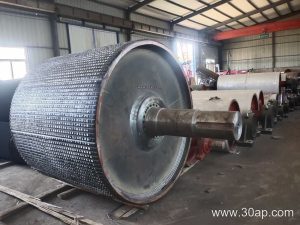
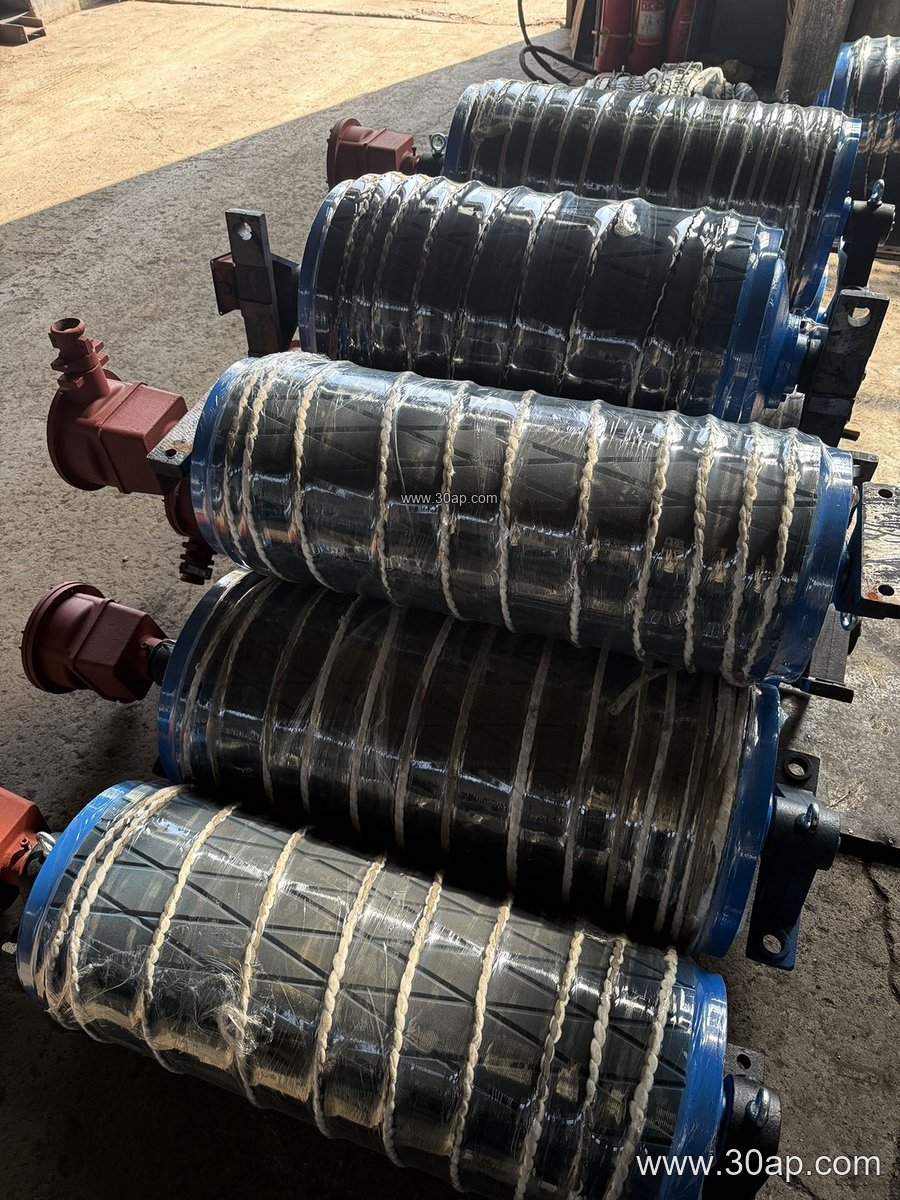
The drum itself is usually a welded steel shell fitted with shafts, hubs and bearing housings. The shell is machined to run true, then covered with a lagging selected for grip and wear. Belt tension, material load and drive torque all pass through this component, which is why the specification should follow the conveyor design rather than a catalogue page.
Drive, Tail and Bend Positions Are Not Interchangeable
At the head of a quarry conveyor, the drive pulley transmits power from the gearbox to the belt. It usually carries the heaviest lagging and the largest shaft because it handles full motor torque plus belt tension. A tail pulley sits at the loading end, often smaller in diameter, and may use a wing or self-cleaning form where sticky material falls from the belt.
Bend pulleys redirect the belt around curves in the structure and carry lower torque, but they still need adequate diameter to limit belt flex fatigue. Take-up pulleys work with the tensioning system and must allow smooth movement as the belt stretches. Calling all of these a conveyor pulley is correct, yet treating them as one specification is a common and expensive mistake.
Lagging and Surface Forms
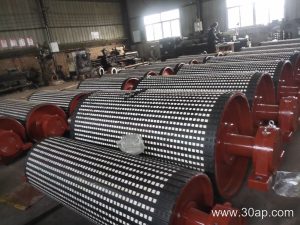
Surface choice depends on what the belt is carrying and whether slip is a risk. Plain shells suit some clean, low-tension runs, while rubber lagging improves grip on wet aggregate. Diamond and herringbone patterns help shed water and fines; ceramic lagging is chosen where abrasion is severe. Common lagging thicknesses are 8, 10, 12, 15 and 20 mm, applied by cold bonding or hot vulcanizing.
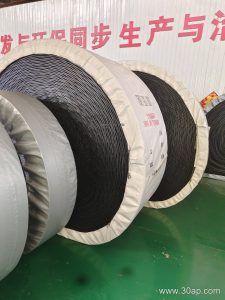
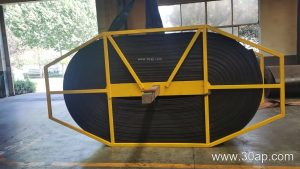
The belt side matters too. An abrasion resistant conveyor belt running over a smooth-faced bend pulley behaves differently from a heavy-duty mining conveyor belt on a lagged drive drum. In a stone crushing line, sharp crushed rock and constant moisture make grip and wear resistance the priorities.
Common Dimensions and How They Relate
Sizes are design values, not fixed pairings. Shell width normally exceeds belt width so the belt is fully supported, and diameter is set by torque, belt speed and the belt’s minimum pulley diameter requirement. The table below shows typical reference combinations; a B1200 belt, for example, may run on a Ø1000 drive pulley in one plant and a smaller bend drum elsewhere.
| Belt width | Typical shell width | Example diameter |
|---|---|---|
| B500 | about 600 mm | Ø250 to Ø400 |
| B650 | about 750 mm | Ø315 to Ø500 |
| B800 | about 950 mm | Ø400 to Ø630 |
| B1000 | about 1150 mm | Ø500 to Ø800 |
| B1200 | about 1400 mm | Ø630 to Ø1000 |
| B1400 | about 1600 mm | Ø800 to Ø1250 |
| B1600 | about 1800 mm | Ø1000 to Ø1400 |
Shaft diameters commonly range from Ø50 to Ø200 mm and are determined by torque and bearing load, not by belt width alone. A 1200mm wide conveyor belt does not automatically dictate a single shaft size.
Where These Drums Are Used
Beyond sand and gravel pits, the same hardware appears in limestone mines, iron ore operations, coal washing plants, cement works and power station coal handling. In a concrete batching plant or a tunnel spoil line, space is tight and bend pulleys often set the layout. Port bulk terminals and ship loading conveyors use large head drums with heavy lagging to handle high tonnage.
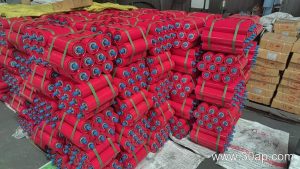
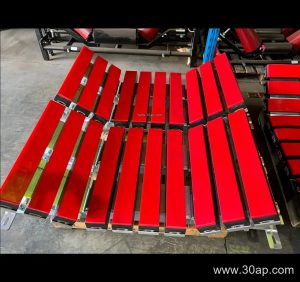
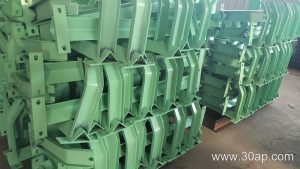
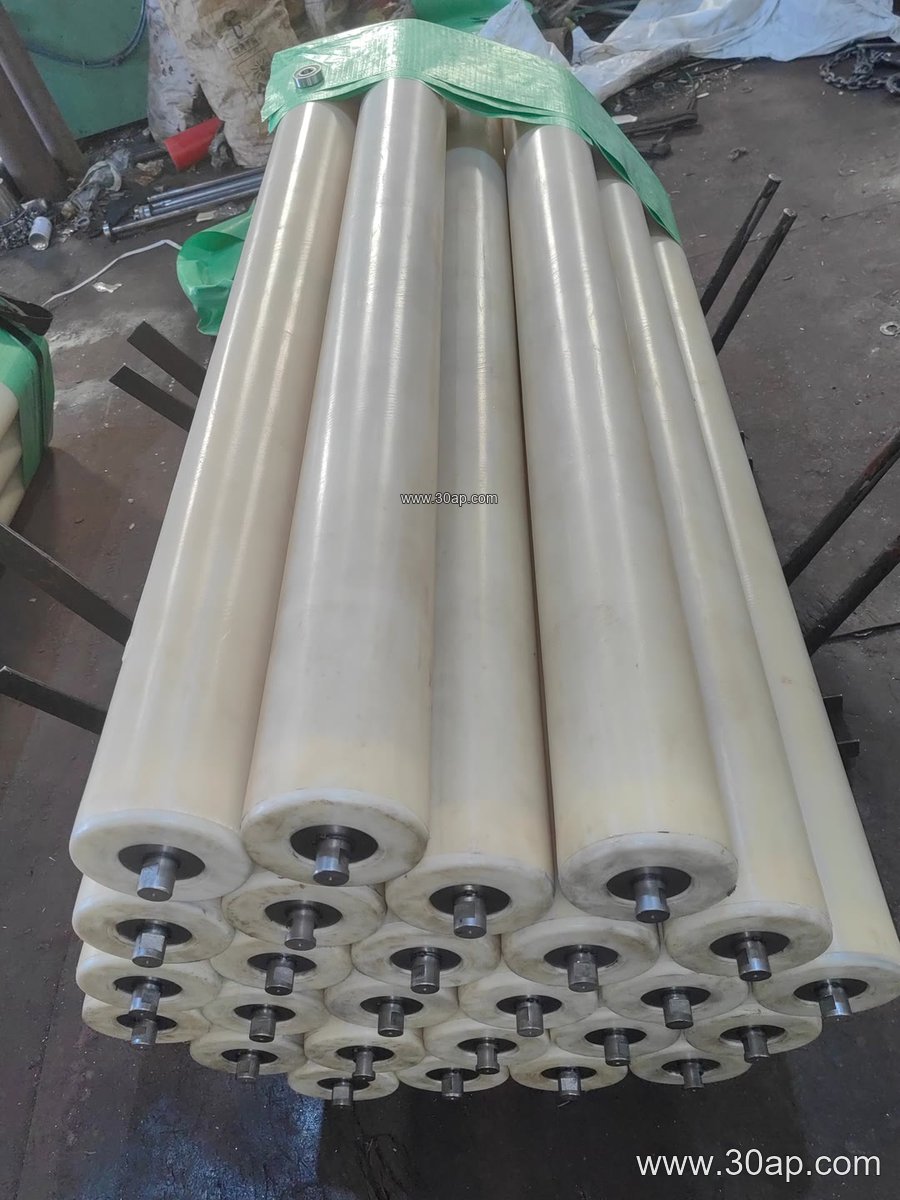
Whatever the site, the drum must work with its conveyor belt, idler roller sets and conveyor bracket arrangement. Misalignment at the brackets shows up quickly as belt wander and edge wear.
Buyer Checklist
- Confirm the position: drive, tail, take-up or bend, and state it clearly in the enquiry.
- Give belt width, belt type and belt speed, plus the minimum pulley diameter the belt maker allows.
- Specify lagging form and thickness, and whether hot vulcanized or cold bonded.
- Provide torque, radial load and shaft material so the shaft diameter can be calculated.
- Ask about balancing, bearing type and sealing for dusty aggregate conditions.
- Plan inspection: check lagging wear, shell runout and bearing temperature at each shutdown.
For related components, see the conveyor pulley range and matching conveyor belt options at our site. A well-specified drum keeps an aggregate line running quietly shift after shift.