What a Mining Belt Conveyor Pulley Does on a Heavy-Duty Line
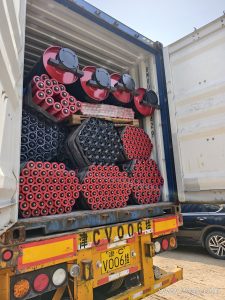
A mining belt conveyor pulley is the rotating drum that carries, drives, tensions, or redirects the belt on a bulk handling conveyor. In a quarry, coal preparation plant, cement works, or power station coal yard, the pulley is a structural component rather than an accessory: it transfers drive torque into the belt, holds belt tension, and sets the belt path. Buyers often search for a conveyor pulley by position, then confirm drum face width, diameter, shaft size, and lagging surface.
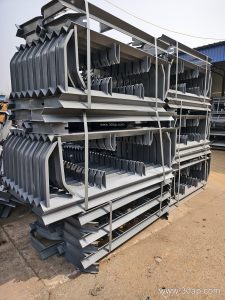
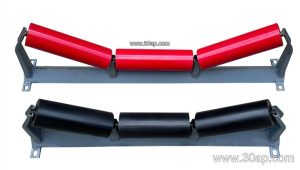
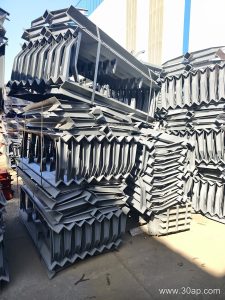
The article below covers the main construction points, common positions, surface options, and the questions worth settling before ordering. For a wider view of related components such as the conveyor belt, idler roller, and conveyor bracket, keep the whole conveyor layout in mind, because pulley duty depends on the belt and the load it carries.
Construction and Main Subtypes
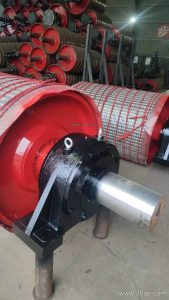
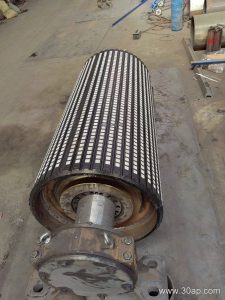
A typical drum has a cylindrical shell, two end discs or hubs, a shaft, bearing housings, and a lagging layer where required. Shell thickness, weld quality, and shaft diameter are determined by torque and radial load, not by belt width alone. Large units are often built with a welded shell and machined faces; smaller ones may use seamless tube.
Pulley subtypes are defined by their job, and they are not interchangeable:
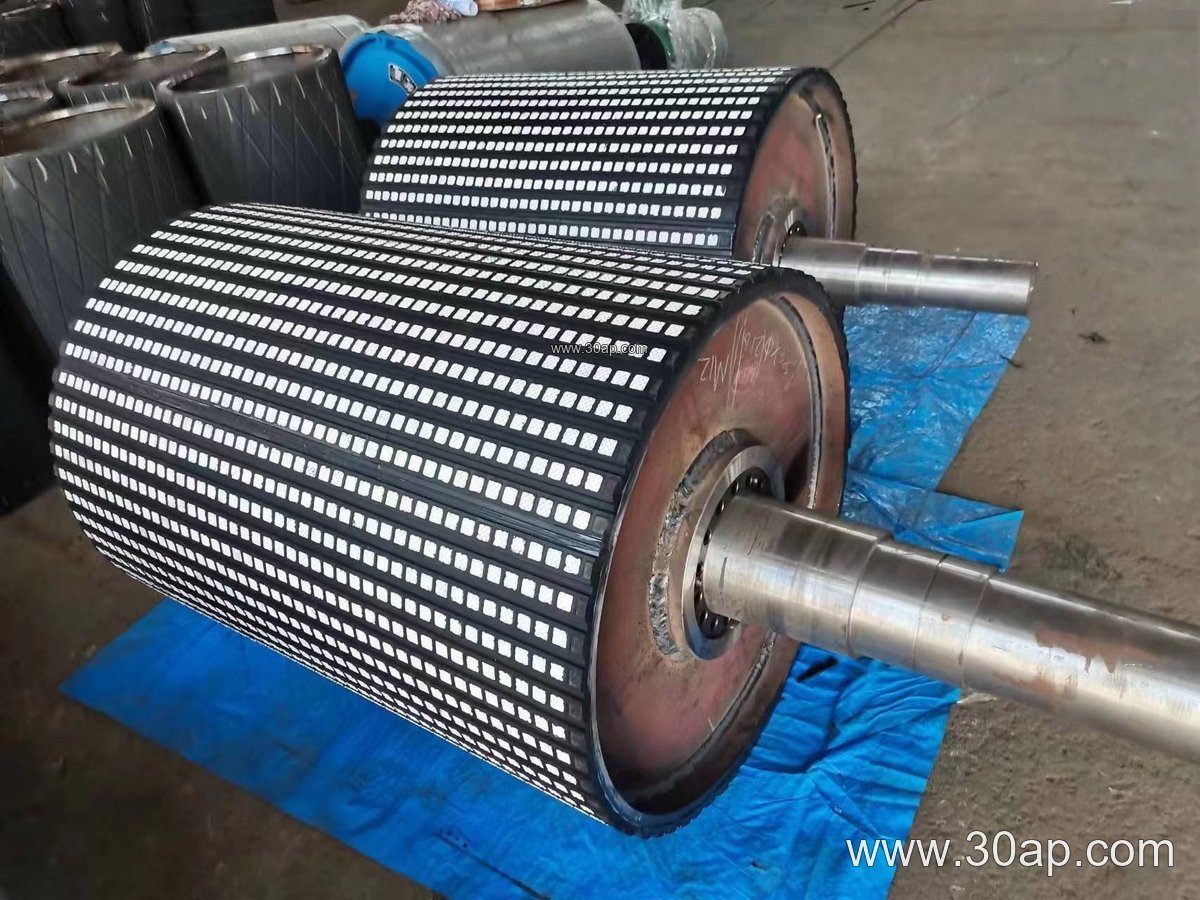
- Drive pulley (head pulley): the powered drum at the discharge end, usually the largest and most heavily lagged.
- Tail pulley: the return-end drum that guides and supports the belt.
- Bend pulley: a redirect drum used to change belt direction or increase wrap angle.
- Take-up pulley: a drum mounted on a tensioning carriage.
- Wing pulley: a self-cleaning drum with segmented wings, useful in sticky or wet service.
A drive drum and a tail drum may look similar in a drawing, but their lagging, shaft, and bearing selection follow different duties. When comparing, mention another type only for context, for example that a bend drum usually carries less torque than the drive drum at the same belt width.
Where These Pulleys Are Used
Quarries and aggregate plants use them on crusher feed and discharge lines, screen undersize belts, and stockpile conveyors. Coal handling and underground coal mining conveyors rely on flame retardant belt constructions such as PVG800S or Mining Flame Retardant Conveyor Belt, and the pulleys must match that duty with suitable lagging and bearing protection. Cement plants, lime kilns, and power plant coal yards use similar drums on long inclined belts.
On a typical stone crushing line, a head drum at the discharge, a tail drum at the feed, and one or two bend drums around a transfer tower make up the pulley set. The same layout appears in iron ore, copper ore, and gold mining conveyor systems, though wear rates and belt tensions differ.
Face Width, Diameter, and Shaft Size
Drum face width is usually a little wider than the belt. Common pairings include B800 with roughly 950 mm face, B1000 with about 1150 mm, and B1200 with about 1400 mm. Diameter is chosen from belt tension, wrap angle, and belt stiffness; a B1200 x Ø1000 drive drum and a B800 x Ø500 tail drum are both normal, but one belt width does not lock a single diameter. Shaft diameter is set by torque and load, so a Ø100 or Ø160 shaft may appear on the same belt width in different duty classes.
The table below lists reference values, not fixed combinations:
| Item | Common Reference Values |
|---|---|
| Belt width | B400, B500, B650, B800, B1000, B1200, B1400, B1600, B1800, B2000, B2200, B2400 |
| Drum diameter | Ø200, Ø250, Ø315, Ø400, Ø500, Ø630, Ø800, Ø1000, Ø1250, Ø1400, Ø1600, Ø1800 |
| Face width (approx.) | B400 ≈ 500 mm, B650 ≈ 750 mm, B1000 ≈ 1150 mm, B1400 ≈ 1600 mm, B1800 ≈ 2000 mm |
| Shaft diameter | Ø50, Ø60, Ø70, Ø80, Ø90, Ø100, Ø120, Ø140, Ø160, Ø180, Ø200 (by torque and load) |
| Lagging thickness | 8, 10, 12, 15, 20 mm |
Surface Options and Belt Interaction
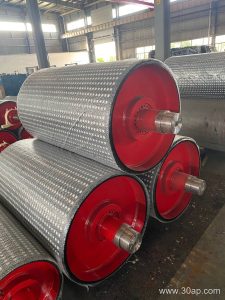
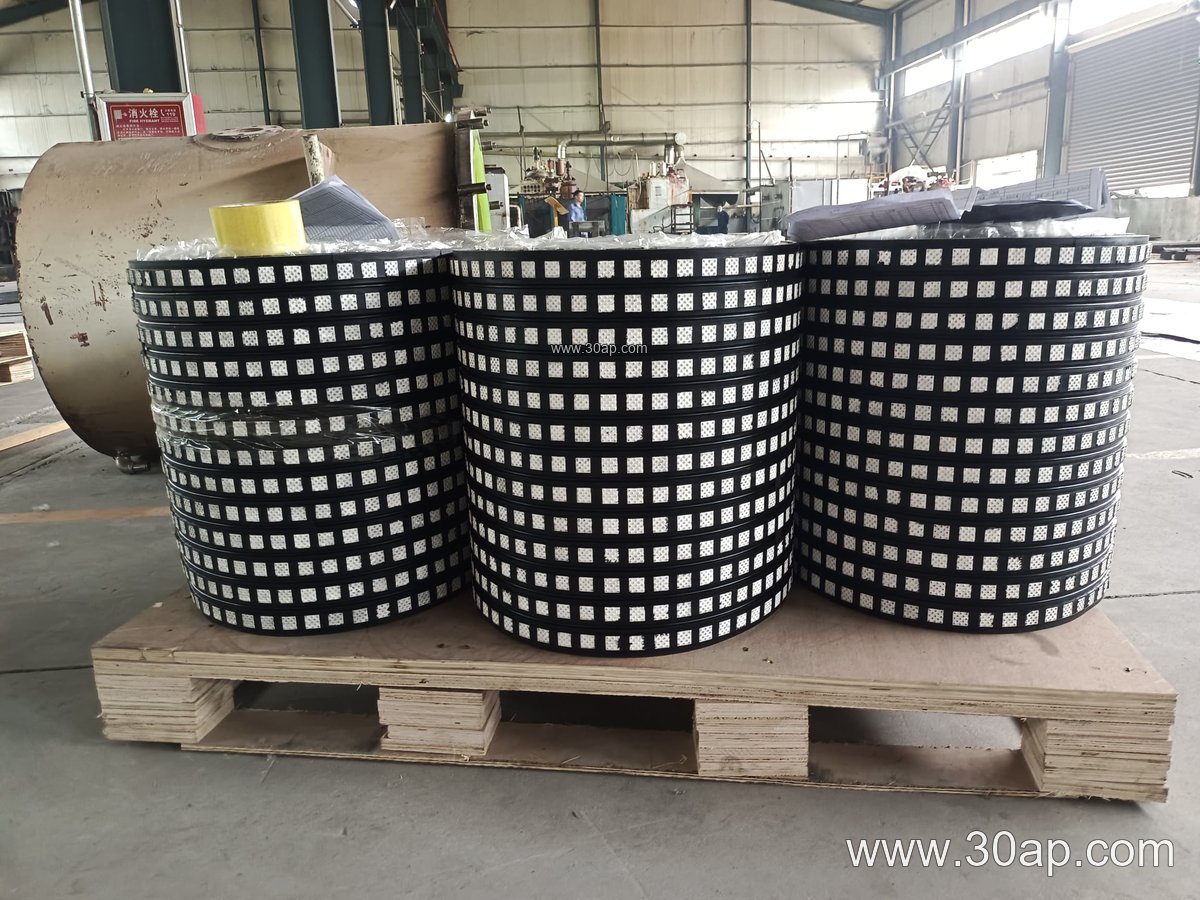
Lagging improves grip and protects the shell. Plain surface suits light duty and cleaning-friendly positions. Rubber lagging in cold-bonded or hot-vulcanized form is common on drive drums; diamond and herringbone patterns help shed water and fines. Ceramic lagging is chosen where slip and abrasive wear are severe. Thickness is often 8 to 15 mm, with 20 mm used on heavy drives.
The pulley must work with the belt it drives. A steel cord conveyor belt is stiffer and needs a larger diameter than a thin fabric core belt at similar tension. Abrasion Resistant Conveyor Belt and Heat Resistant Conveyor Belt grades may call for different lagging compounds, and an Oil Resistant Conveyor Belt in a recycling or workshop line needs lagging that tolerates oil. For sticky material, a wing pulley or a self-cleaning pattern reduces build-up.
Buyer Checklist
- Confirm the pulley position: drive, tail, bend, take-up, or snub.
- State belt width, belt type, and maximum operating tension.
- Give drum diameter and face width, or ask for a recommendation based on duty.
- Specify lagging type and thickness, plus the environment (wet, dusty, oily, hot).
- Confirm shaft diameter, bearing type, and mounting centers against the conveyor bracket.
- Check balance, runout, and access for maintenance before installation.
For a coal mining conveyor or a quarry line, matching the drum to the belt, idlers, and brackets at the design stage avoids later rework. A pulley that is correctly sized for torque and wrap angle will outlast one chosen by belt width alone.