What a Ceramic Lagged Pulley Does on a Conveyor
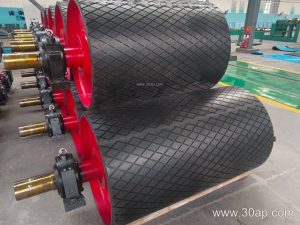
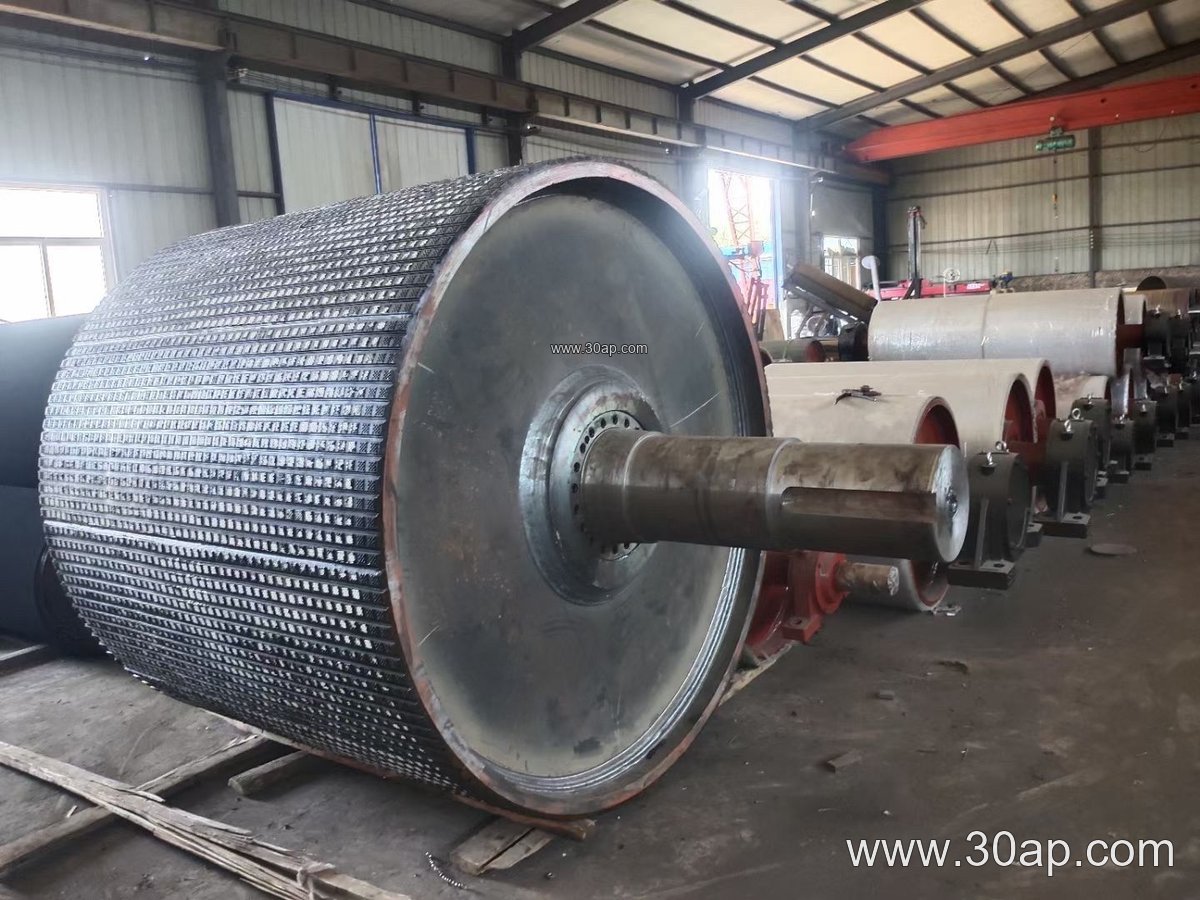
A ceramic lagged pulley is a conveyor pulley whose shell is covered with rubber or polymer lagging embedded with hard ceramic tiles. That surface is the reason the component exists. On a normal smooth shell, a wet or dusty belt can slip, and the pulley face wears thin where the belt keeps creeping. The ceramic inserts stand proud of the rubber matrix, bite into the belt cover, and raise the friction coefficient without relying on a soft rubber face that polishes away in a few months. In a quarry, a limestone mine, or a wet aggregate line, this is often the difference between steady drive traction and repeated belt tracking corrections.
The accurate equivalent name is ceramic lagging pulley, and both terms describe the same product. It is not the same thing as a drive pulley, a tail pulley, or a bend pulley; those names describe the position in the conveyor, while ceramic lagging describes the surface. A single unit can be a ceramic lagged drive pulley or a ceramic lagged bend pulley, and the duty differs accordingly.
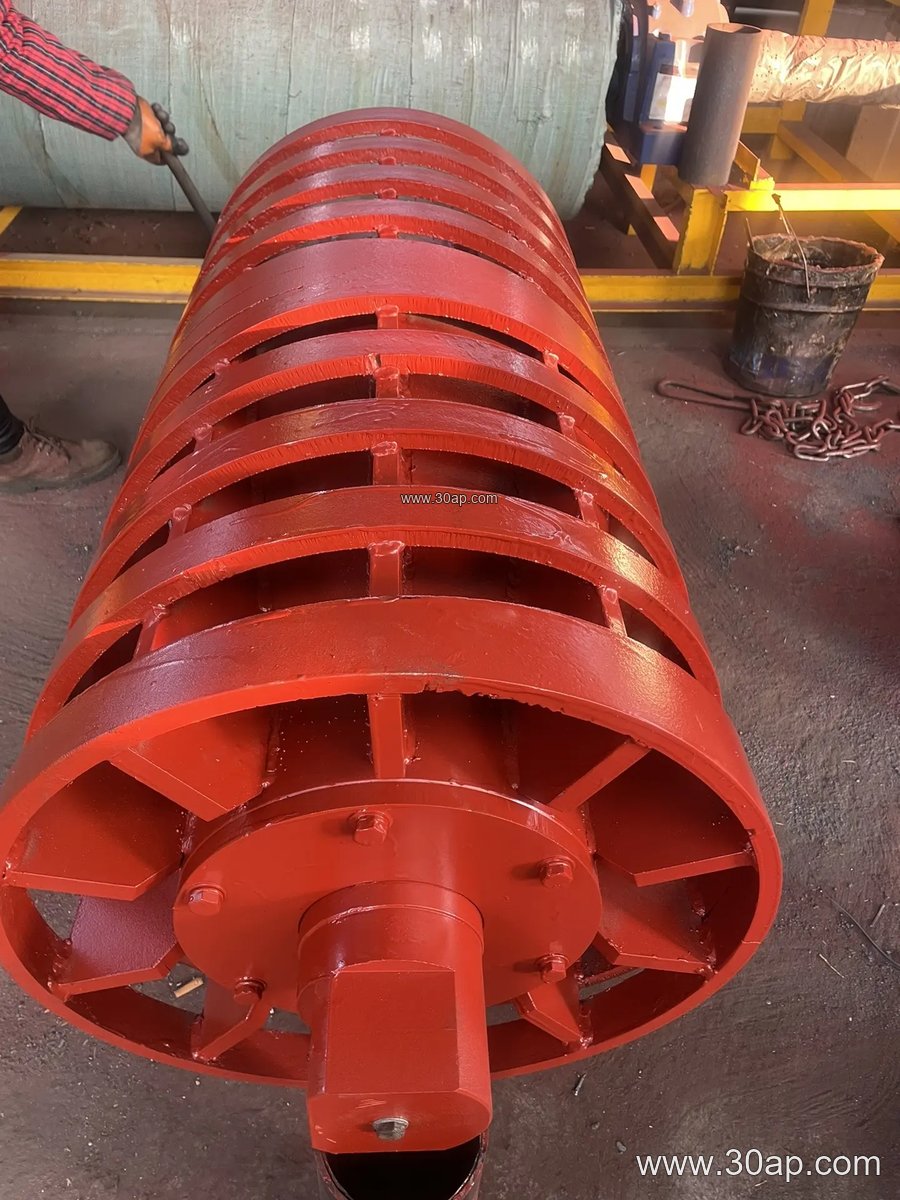
Construction and Surface Form
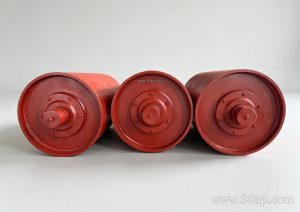
The body is a steel drum with welded end discs and a shaft, machined for balance. Lagging is applied either as a hot-vulcanized rubber sheet, a cold-bonded rubber strip, or a cast polymer layer, and ceramic tiles are set in a pattern during that process. Common tile shapes are rectangular blocks, interlocking hexagons, and small studs; grooves between tiles let water and fines escape instead of packing under the belt.
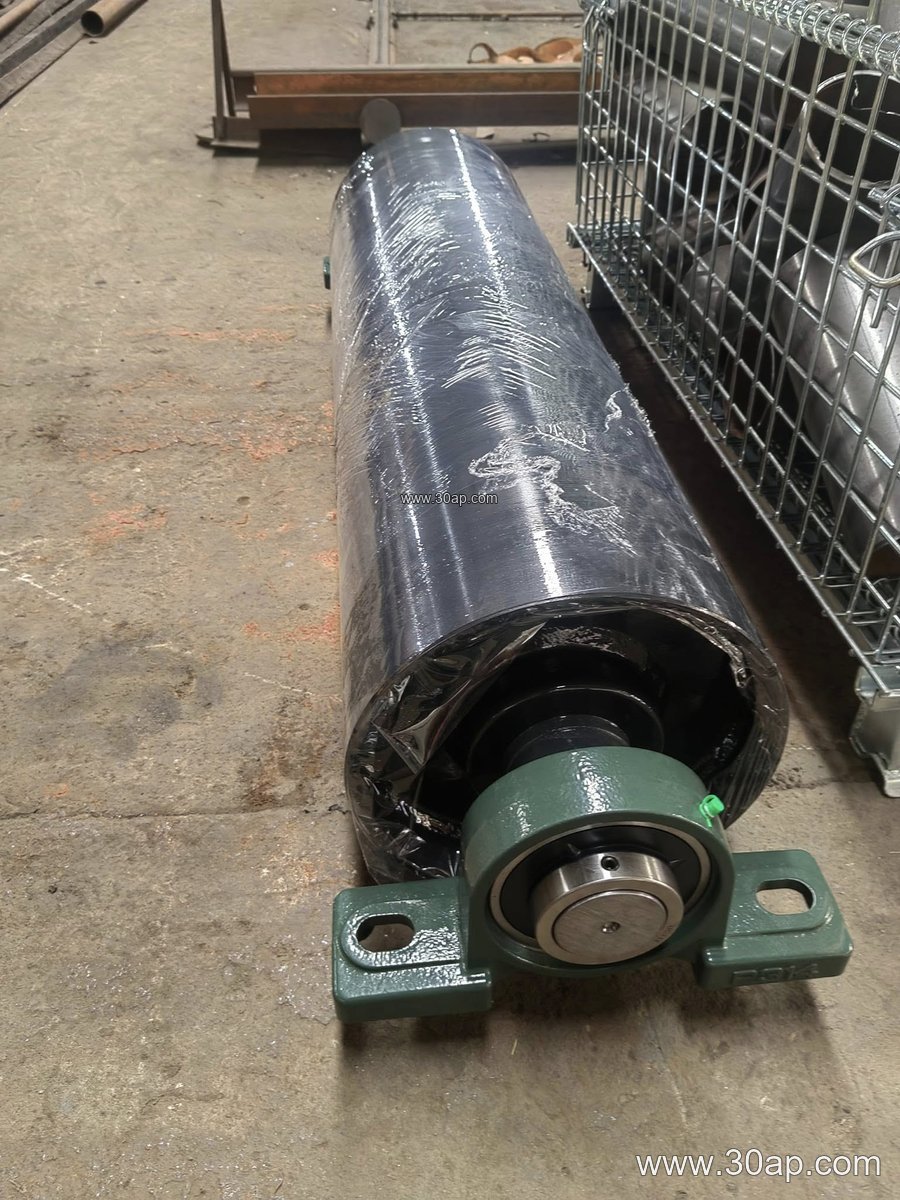
Typical lagging thicknesses are 8, 10, 12, 15, and 20 mm, chosen with belt tension and contact pressure in mind. The ceramic layer is usually thinner than the rubber beneath it, and the rubber provides the cushion that keeps the tiles from cracking under point loads. A shaft is not picked from belt width alone; it is sized from torque, radial load, and bearing life. Common shaft diameters include Ø50, Ø60, Ø70, Ø80, Ø90, Ø100, Ø120, Ø140, Ø160, Ø180, and Ø200 mm, but each project is calculated rather than assumed.
| Reference item | Common range | Note |
|---|---|---|
| Belt width | B400 to B2400 | Selected by conveyor capacity |
| Pulley diameter | Ø200 to Ø1800 | Matched to belt thickness and tension |
| Shell face width | About belt width +100 to 200 mm | B800 about 950 mm, B1200 about 1400 mm |
| Lagging thickness | 8, 10, 12, 15, 20 mm | Thicker where slip is severe |
| Surface form | Plain, diamond, chevron, ceramic | Ceramic chosen for abrasion and wet grip |
Combinations such as B800 × Ø500 or B1400 × Ø800 appear in real layouts, but no belt width is locked to a single diameter. A B1200 conveyor may use Ø630 in one transfer and Ø1000 at the head, depending on wrap angle and belt rating.
Where the Ceramic Surface Pays Off
The strongest case is a drive position handling abrasive bulk material with moisture present. Coal handling at a power plant, wet ore at an iron ore or copper ore terminal, and crusher discharge in a stone crushing line all punish a rubber-only face. When the belt is an abrasion resistant conveyor belt or a heavy-duty mining conveyor belt with a hard cover, ceramic studs still find grip, and the pulley shell resists the polishing wear that dulls plain lagging.
Bend and snub positions benefit too, because a ceramic lagged bend pulley keeps the belt from drifting where wrap angle is small. In a cement plant clinker line, a ceramic lagged tail pulley reduces material build-up between shell and belt when the return side is damp. For underground coal mining conveyor belts, flame retardant grades of lagging and belt must be specified together, and the ceramic pattern is chosen to avoid trapping coal fines.
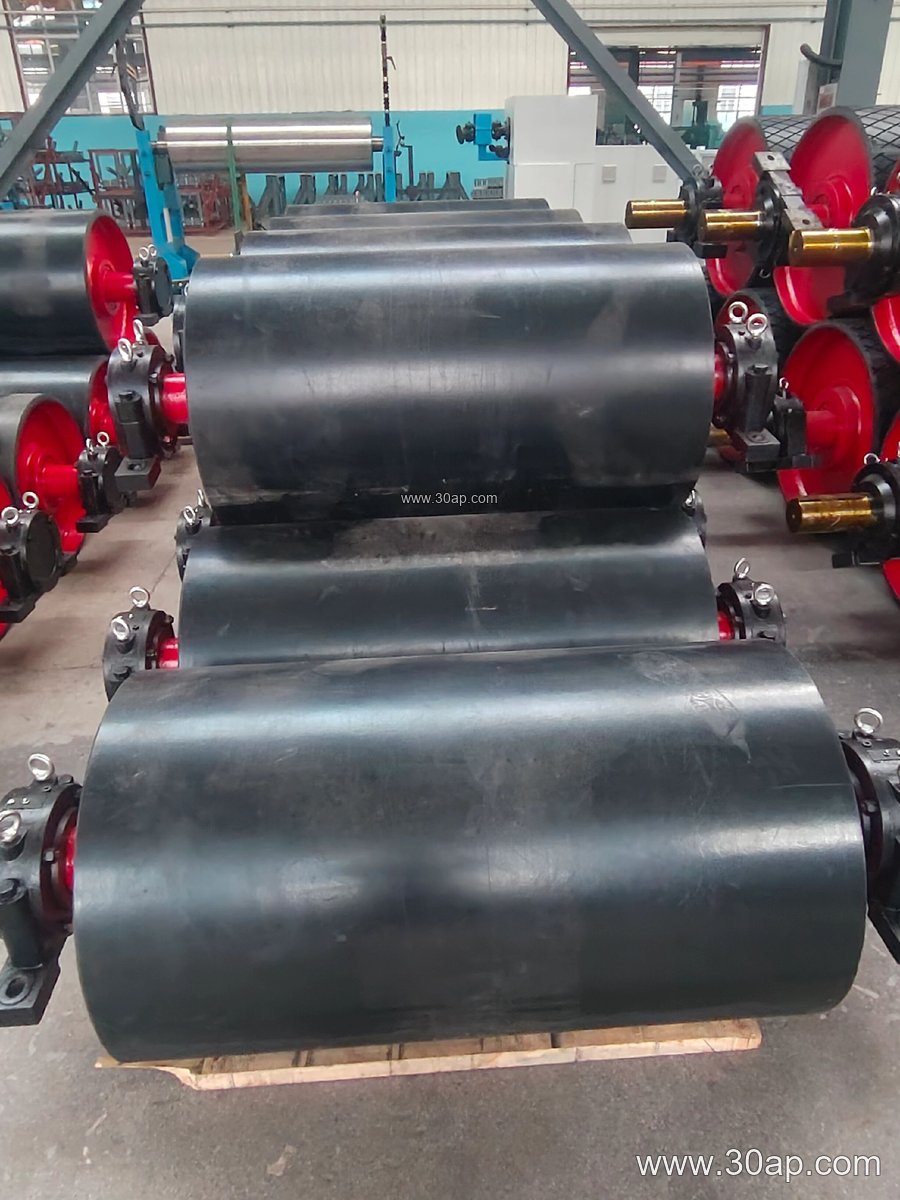
Ceramic lagging is not a universal answer. On a small B500 package line with a food grade conveyor belt, a smooth or lightly rubberized face is cleaner and gentler. Where a pipe conveyor belt or a corrugated sidewall belt runs, the pulley face must suit the belt edge and profile, and ceramic studs may be unnecessary or even harmful to a soft cover.
Buyer Checklist Before Ordering
- Confirm the position: drive, tail, bend, take-up, or snub. Each has a different wrap angle and load direction.
- State belt width and belt type, for example an EP conveyor belt or a steel cord conveyor belt, so the shell face width and diameter can be matched.
- Give the lagging thickness and tile pattern you need, and ask how tiles are bonded and how edges are sealed.
- Provide shaft diameter, bearing centers, and keyway details from the conveyor drawing, not from a width table.
- Check balance class, runout, and the condition of the conveyor bracket and idler roller alignment, since a good pulley cannot correct a crooked frame.
- For hazardous locations, confirm that lagging and belt share the required flame retardant or anti-static behavior.
Maintenance is mostly inspection. Look for missing tiles, undercut rubber at the tile edges, and polished zones that signal slip. A ceramic lagged pulley that is re-lagged on time protects the belt cover and keeps the drive current stable. For matching conveyor components such as conveyor belt, idler roller, and conveyor pulley assemblies, keep the pulley drawing and the belt specification on the same revision sheet so the ceramic face, shell width, and shaft size stay consistent through the life of the conveyor.