What a Ceramic Lagged Drive Pulley Does
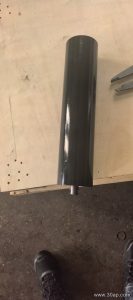
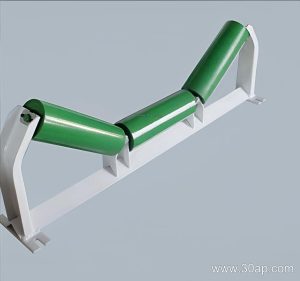
A ceramic lagged drive pulley is the head-end pulley that transmits motion to the conveyor belt, and its ceramic lagging is what keeps that transmission reliable when the belt is wet, dusty or oily. In a quarry, a limestone mine or a sand and aggregate line, the drive pulley often works in conditions where rubber alone would slip. The ceramic tiles embedded in the lagging bite into the belt cover and raise the friction coefficient, so the pulley can deliver torque without excessive belt tension. That matters most on inclined conveyors and on long overland lines where every extra newton of tension is paid for in belt strength, idler roller load and structural cost.
It is worth being precise about names. This is a drive pulley, also called a head pulley or, when it discharges material, a head or discharge pulley. A tail pulley and a bend pulley are different components in the same conveyor and are not interchangeable with it. The ceramic lagging is a surface treatment applied to the drive pulley shell, not a separate product category.
How the Ceramic Lagging Is Built
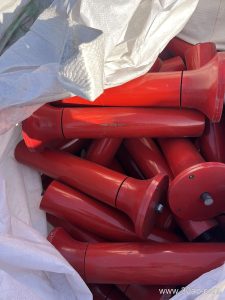
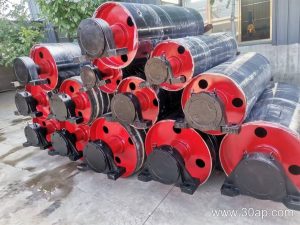
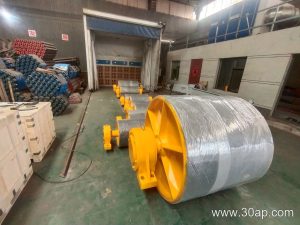
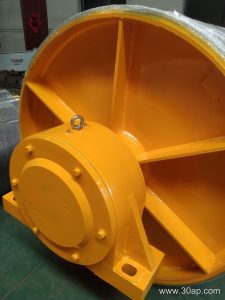
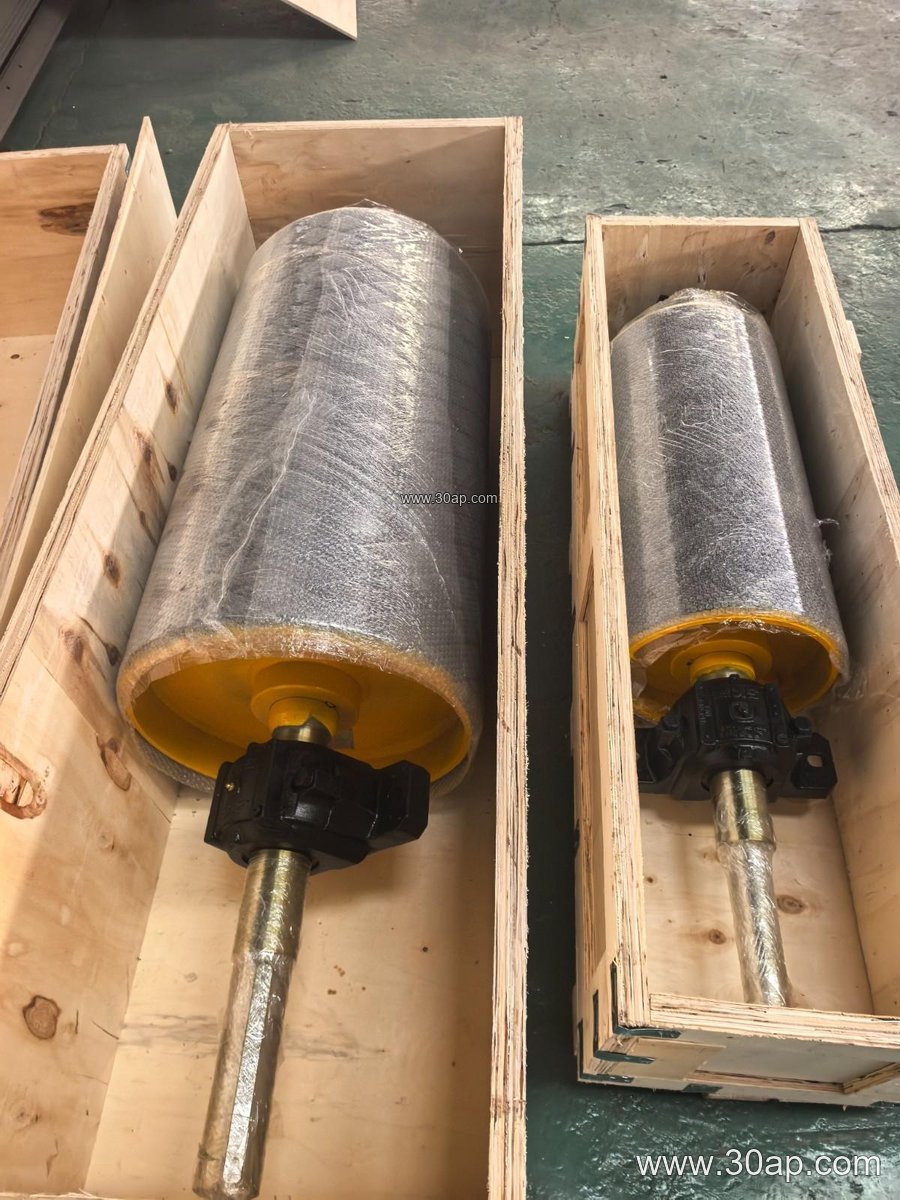
The pulley body is usually a welded steel shell with dished or flat end plates, a shaft, and bearing housings mounted on a sturdy frame. The lagging is applied in one of two common ways. In the first, ceramic tiles are bonded into a rubber sheet that is then vulcanized or cold-bonded to the shell. In the second, tiles are set directly into a rubber or polymer matrix on the pulley surface. Tiles are typically small blocks with raised studs or a textured pattern, arranged in rows or a diamond layout so that water and fines are squeezed out from under the belt instead of being trapped.
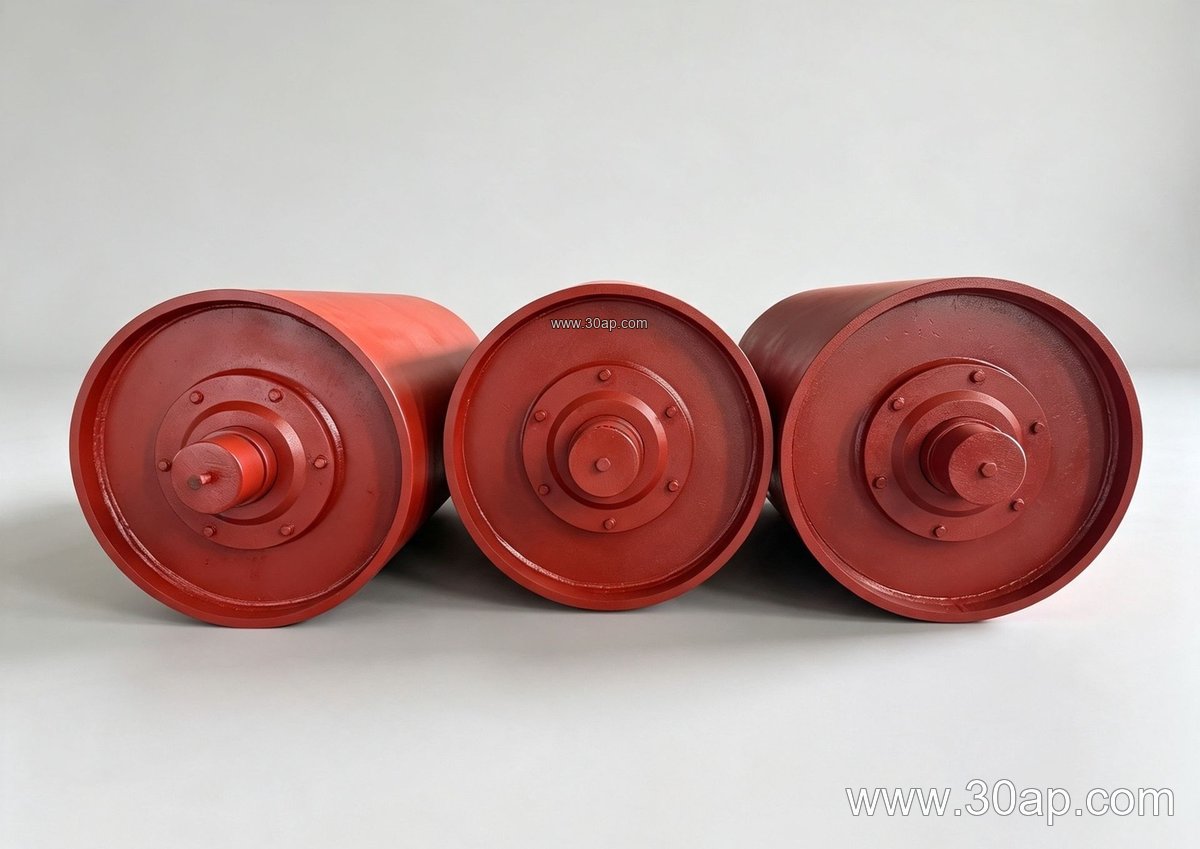
The rubber layer between and beneath the tiles provides shock absorption, while the ceramic provides wear resistance and grip. Common lagging thicknesses are 8, 10, 12, 15 and 20 mm, with thicker layers used on larger diameters and heavier duty. Tile size, pattern and coverage ratio vary by supplier and by the duty the pulley is expected to handle.
Sizes and Dimensional Coordination
Ceramic lagged drive pulleys are made across a wide range of belt widths and diameters. The pulley face width is normally a little wider than the belt so the belt is fully supported. Typical reference combinations are shown below; these are common practice figures, not universal rules, and final dimensions are set by the conveyor designer.
| Belt width | Typical pulley face width | Example diameter range |
|---|---|---|
| B400 | about 500 mm | Ø200 to Ø400 |
| B500 | about 600 mm | Ø250 to Ø500 |
| B650 | about 750 mm | Ø315 to Ø630 |
| B800 | about 950 mm | Ø400 to Ø800 |
| B1000 | about 1150 mm | Ø500 to Ø1000 |
| B1200 | about 1400 mm | Ø630 to Ø1250 |
| B1400 | about 1600 mm | Ø800 to Ø1400 |
| B1600 | about 1800 mm | Ø1000 to Ø1600 |
| B1800 | about 2000 mm | Ø1250 to Ø1800 |
| B2000 | about 2200 mm | Ø1400 to Ø1800 |
Shaft diameter is determined by torque and bearing load, not by belt width alone, so a B1200 pulley might use a Ø160 shaft in one installation and a larger one in another. Common shaft sizes run from Ø50 up to Ø200 and beyond. A practical example is a B1200 × Ø1000 drive pulley on a primary crushed-stone conveyor, or a B800 × Ø500 unit on a short transfer. The pairing must be checked against belt speed, wrap angle and starting torque.
Where It Fits in the Plant
These pulleys are common in crushing and screening plants, cement works handling clinker and raw meal, power station coal handling, iron ore and copper ore concentrators, and port bulk terminals. They also appear in fertilizer and grain silo installations where cleanliness and slip control both matter. On a conveyor carrying a heavy-duty mining conveyor belt or a high abrasion resistant conveyor belt, the ceramic surface protects the pulley from the same abrasive material that wears the belt cover. In underground coal mining, a flame retardant conveyor belt and fire resistant conveyor belt are used together with antistatic components, and the lagging material should be compatible with that environment.
Buyer Checklist
- Confirm the pulley role: drive or head end, not tail or bend.
- Check belt width, pulley diameter and face width as a set, not separately.
- Specify lagging thickness and tile pattern for the actual material and moisture level.
- Provide belt speed, motor power, wrap angle and starting conditions so shaft and bearing loads can be calculated.
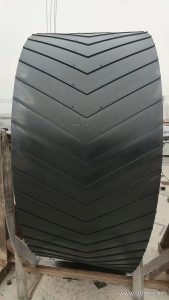
- Confirm belt cover compatibility, especially with chevron conveyor belt or corrugated sidewall conveyor belt profiles.
- Agree on balancing grade, bearing type and lubrication before order.
Installation and Maintenance Notes
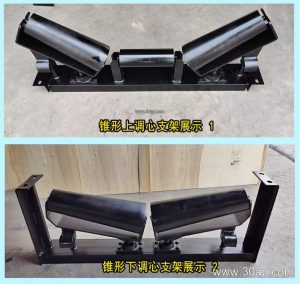
Alignment is critical. Ceramic lagging gives high grip, but a misaligned pulley will still train the belt badly, so check the conveyor bracket, frame squareness and pulley level before tensioning. Keep the lagging clean; compacted fines in the tile pattern reduce grip. Inspect tiles periodically for cracks or loss, because a missing tile changes the contact pattern and can lead to belt tracking problems. Replace worn lagging before it reaches the shell.
For matching conveyor components, browse our conveyor pulley and conveyor belt ranges at www.beltconveyorsolution.com, including EP conveyor belt and steel cord conveyor belt options for heavy-duty lines.