What a Non-Standard Conveyor Bracket Really Is
A non-standard conveyor bracket is a support component made to match a conveyor line that does not fit the usual catalog pattern. Instead of a stock idler frame, the bracket is built around the actual belt width, trough angle, roller diameter and mounting position on the machine. In a quarry, a coal preparation plant or a cement kiln feed line, the structure around the belt often changes from one section to the next, and a custom bracket keeps the idlers, belt and frame working as one unit.
This component is sometimes called a custom conveyor idler support or a made-to-order bracket frame. It is not a drive pulley, a tail pulley or a bend pulley, and it should never be used as a substitute for those parts. The bracket carries the idlers that shape and guide the belt, while the pulleys handle power transmission and direction change.
How the Bracket Is Built
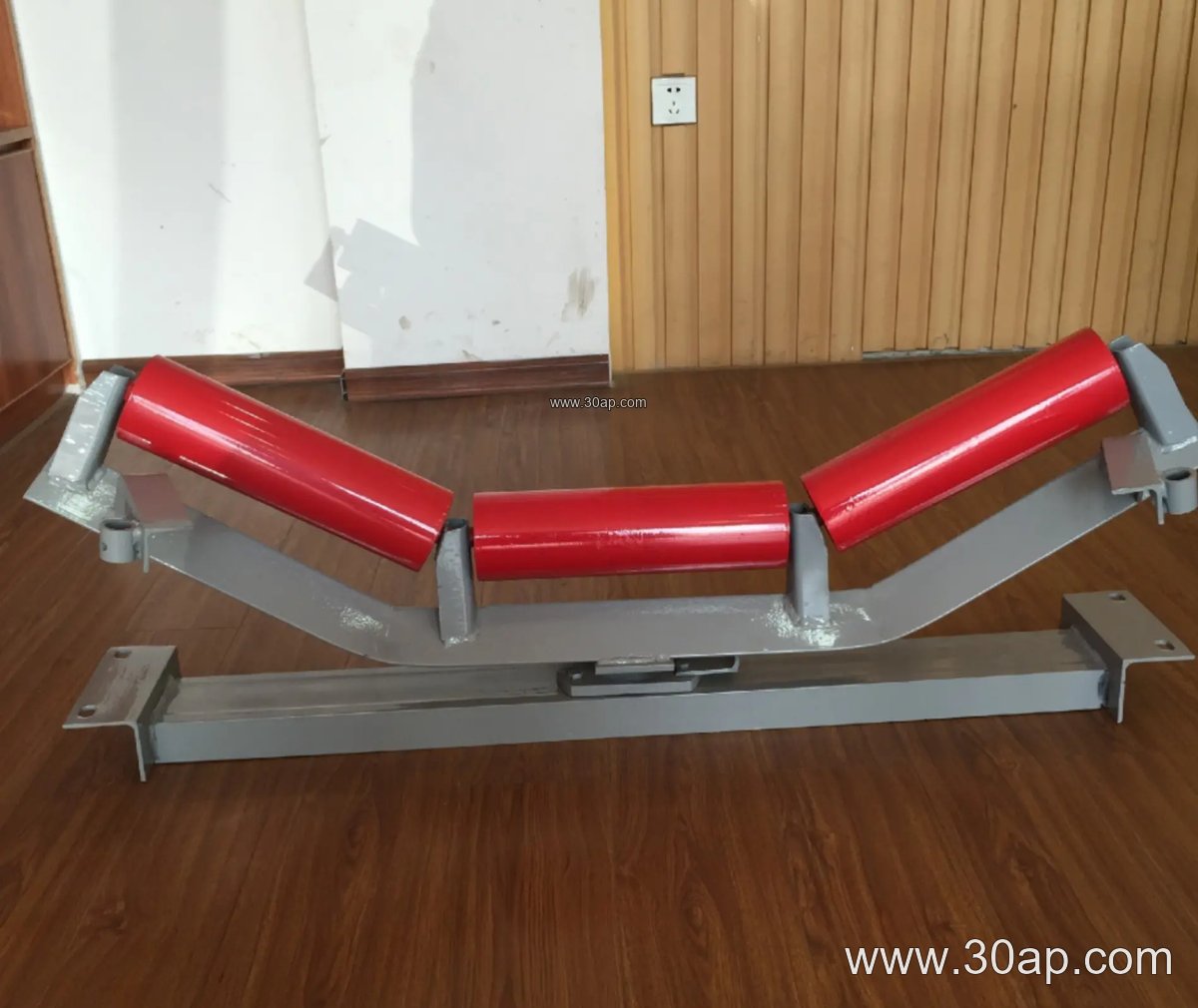
Most custom brackets are fabricated from angle steel, channel steel or folded steel plate. The fabricator checks the hole spacing, crossbeam length and overall height against the real conveyor, because these dimensions change with belt width and trough angle. A bracket for a B800 line at 35 degrees is not the same as one for a B1200 line at 45 degrees, even when both use the same roller size.
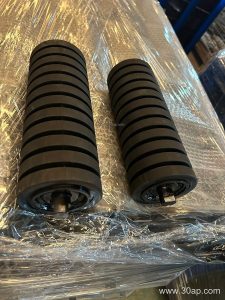
Common roller diameters include Ø89, Ø108, Ø133, Ø159 and Ø194. Trough angles are usually 20, 30, 35 or 45 degrees, and an adjustable bracket can move between these angles during installation. Forward-leaning idler positions are often about 1.5 to 2 degrees. These figures are reference values, not fixed rules, and the final geometry is set by the conveyor design.
| Bracket feature | Typical range | Notes |
|---|---|---|
| Belt width | B500 to B2200 | Crossbeam length follows the belt width |
| Trough angle | 20, 30, 35, 45 degrees | Adjustable types cover several angles |
| Roller diameter | Ø89 to Ø194 | Matched to load and belt speed |
| Material | Angle steel, channel steel, folded plate | Coating chosen for the site conditions |
Where Custom Brackets Fit on the Line
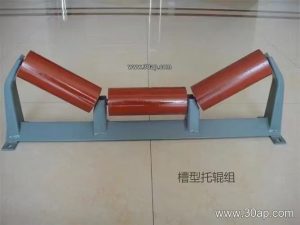
The most common positions are the carrying side, the return side and the transition zone near a pulley. A trough bracket holds three idlers in a trough shape under a loaded belt. A return bracket supports the belt on its way back, and a V-return bracket helps center it. Transition brackets sit between the last trough station and the pulley, where the belt changes from a trough to a flat profile.
In a limestone mine or a sand and gravel plant, a custom bracket is often needed where the conveyor meets a crusher or a transfer chute and the frame height is restricted. In a power plant coal yard, the same idea applies where the belt runs close to a wall or a walkway. A bracket that fits the space avoids cutting and re-welding standard frames on site.
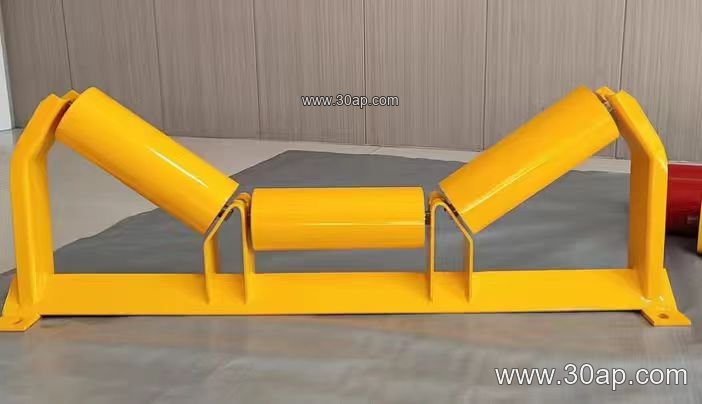
Pairing the Bracket With the Belt and Idlers
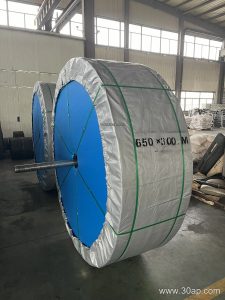
The bracket only works well when it matches the belt and the idlers. A heavy-duty mining conveyor belt or a steel cord conveyor belt needs a stiff frame and properly sized rollers, while a lighter fabric core belt may run on a simpler support. Abrasion resistant conveyor belt used in a quarry or an iron ore line puts more load on the idlers, so the bracket must hold them firmly and keep the trough angle stable.
In a cement plant, a heat resistant conveyor belt may run near a hot clinker area, and the bracket material and coating should suit that environment. In a coal preparation plant, a flame retardant conveyor belt is common, and the bracket must not create sharp edges that could damage the cover. For steep sections, a chevron conveyor belt or a corrugated sidewall conveyor belt changes the clearance around the idlers, so the bracket height and hole positions need checking before production.
Useful related parts include the conveyor pulley, the idler roller and the conveyor bracket itself. Matching these parts as a set is more reliable than treating each one separately.
What Buyers Should Confirm Before Ordering
- Belt width and the actual trough angle used on the line.
- Roller diameter and the idler spacing at that station.
- Mounting hole spacing and crossbeam length, measured on site.
- Whether a fixed or adjustable bracket suits the installation.
- Material and surface treatment for dust, moisture or heat.
- Clearance to chutes, walkways and the pulley.
A buyer should ask for a drawing that shows hole positions and overall dimensions, then compare it with the conveyor frame. A non-standard conveyor bracket is a small part, but a wrong hole spacing can stop a whole transfer line. Checking the belt, the idlers and the frame together at the ordering stage saves time during installation.