What a Ceramic Lagged Pulley Is
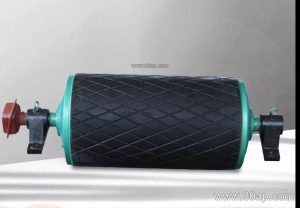
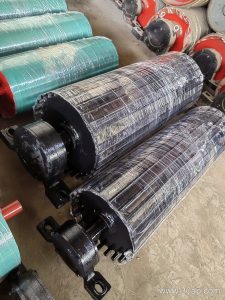
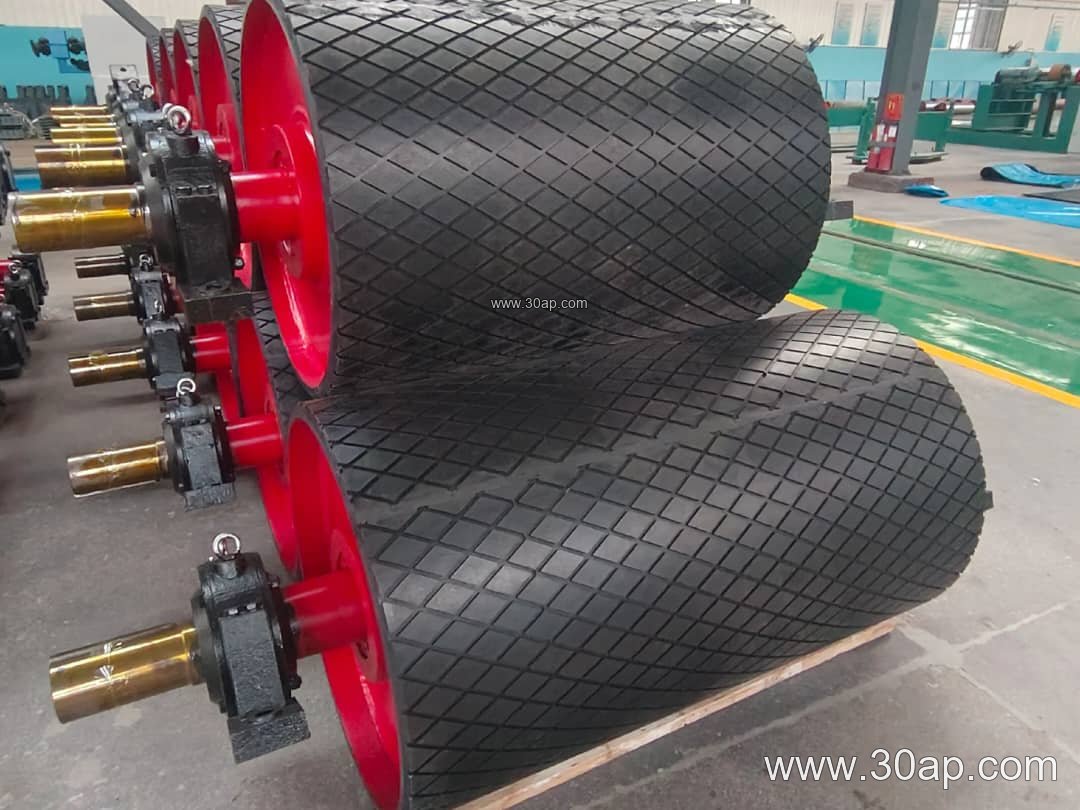
A ceramic lagged pulley is a conveyor pulley whose shell is covered with embedded ceramic tiles set into a rubber or polymer backing. The ceramic pieces sit proud of the backing surface and create a hard, abrasive-resistant grip layer that transfers drive torque to the conveyor belt with less slip than a plain steel shell. In bulk handling circuits, this pulley is often specified where the belt is wet, dusty, or carrying sharp material that would quickly polish a smooth drum face.
The product is also described accurately as a ceramic rubber lagged drum or ceramic tile lagged pulley. Those names refer to the same item; the ceramic tile surface is the defining feature, not the position on the conveyor.
How the Ceramic Surface Is Built
The shell is usually a rolled steel cylinder with welded end discs and a machined face. A bonding layer of rubber, typically 8 to 20 mm thick, is applied and vulcanized or cold-bonded to the shell. Ceramic tiles with a raised pattern, often hexagonal or rectangular with small studs, are pressed into the uncured rubber and become mechanically locked after curing. The result is a surface where hard ceramic islands take the abrasion while the rubber between them flexes and sheds fines.
Key construction points a buyer should check:
- Tile thickness and protrusion height above the rubber
- Bonding method, hot vulcanized versus cold bonded
- Rubber hardness and thickness under the tiles
- Shell wall thickness and end disc welding quality
- Balance grade and runout after lagging
Where It Fits on the Conveyor
Ceramic lagging is most often used on the drive pulley, where grip directly affects starting and running slip. It also appears on tail pulleys in wet or muddy conditions, and on bend or snub positions where belt wrap is limited. It is not a substitute for a drive pulley when used as a tail pulley, and the reverse is also true; position determines the load case and the lagging choice.
Typical service environments include limestone quarries, iron ore and copper ore plants, coal washing circuits, cement clinker lines, power plant coal handling, and port bulk terminals. In these places, a heavy-duty mining conveyor belt carrying abrasive rock can wear a plain drum face quickly, so the ceramic surface pays back through longer intervals between relagging.
Matching Lagging to the Belt and Duty
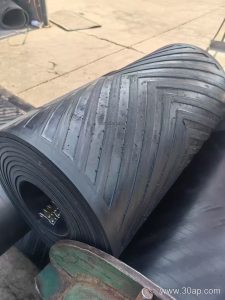
Lagging choice should follow the belt type and the material being carried. A steel cord conveyor belt or a high-tension EP conveyor belt needs reliable friction at the drive, especially during starts. An abrasion resistant conveyor belt carrying crushed stone benefits from a ceramic face on the tail, while a heat resistant conveyor belt or fire resistant conveyor belt application may call for a different rubber compound under the tiles. For chevron conveyor belt or corrugated sidewall conveyor belt runs, check that the raised belt profile does not interfere with the pulley face.
| Common reference | Typical range |
|---|---|
| Belt width | B500, B650, B800, B1000, B1200, B1400, B1600, B1800 |
| Pulley diameter | Ø250, Ø315, Ø400, Ø500, Ø630, Ø800, Ø1000, Ø1250 |
| Lagging thickness | 8, 10, 12, 15, 20 mm |
| Shaft diameter | Ø60, Ø80, Ø100, Ø120, Ø140, Ø160, Ø180 |
Face width is normally wider than the belt; for example, a B800 belt often runs on a pulley face around 950 mm, and a B1200 belt on about 1400 mm. Diameter is not fixed by belt width alone: a B800 unit might be built as B800 × Ø500 for a tail position, while a B1200 drive could be B1200 × Ø1000 depending on torque and wrap angle. Shaft size follows calculated torque and bearing load, not a simple rule from belt width.
Buyer Checklist Before Ordering
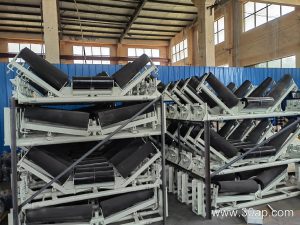
Confirm the pulley position, the belt width and type, the required diameter range, the shaft diameter from the drive design, the lagging thickness, and whether the ceramic surface should be flat or patterned. Ask how the tiles are bonded and whether the supplier can supply matching conveyor brackets and idler roller frames for the same conveyor. A ceramic lagged pulley is a wear part, so the maintenance plan should include periodic inspection of tile loss and rubber undercut. Replacing a few missing tiles early is cheaper than relagging the whole shell.
For plants running a fabric core conveyor belt, multi-ply fabric core conveyor belt, or an endless conveyor belt, the ceramic face also helps reduce belt tracking drift caused by slip. Where dust is explosive or the belt carries coal, combine the lagging choice with a flame retardant conveyor belt and anti-static conveyor belt specification, and keep the pulley surface free of built-up fines.