What a Stone Conveyor Idler Does on a Crushing Line
On a quarry or aggregate conveyor, the stone conveyor idler is the rotating support that carries the belt and the load between the head and tail. It looks simple, but it decides how smoothly a crusher discharge belt tracks, how much power the drive pulls, and how often maintenance crews return to the same spot. In a stone crushing circuit, the material is sharp, heavy, and often unevenly fed, so the idler roller must tolerate impact, grit, and continuous motion without seizing.
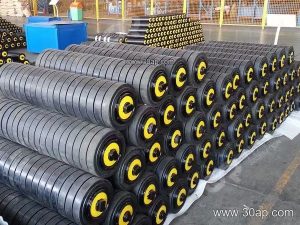
The same component is also called a conveyor idler roller or belt carrying roller. The name changes by region, but the function does not: a steel tube, a shaft, bearing housings, and a sealing system that keeps stone dust away from the bearing. When a belt is 800mm wide or 1000mm wide, the idler set underneath is usually built as a three-roll troughing arrangement so the belt forms a stable channel for the stone.
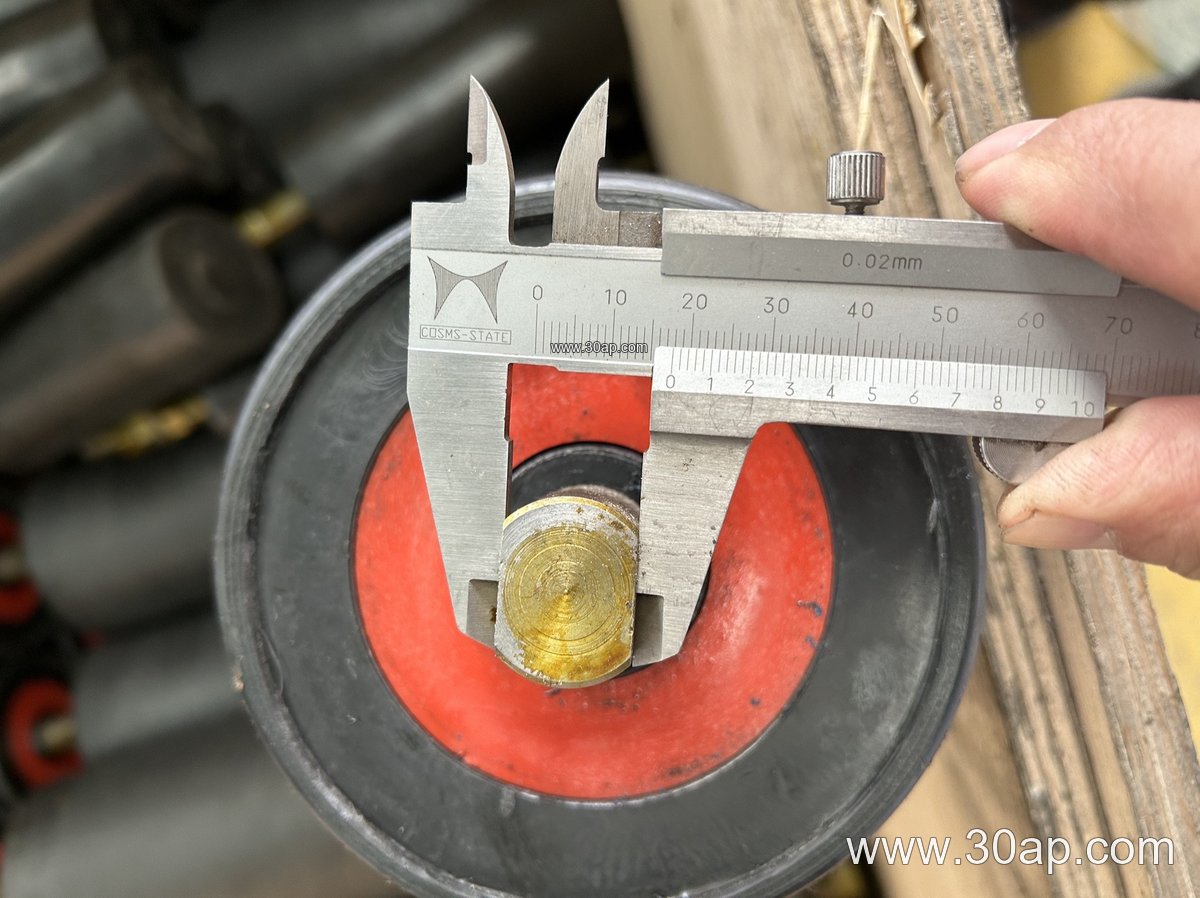
Construction Details That Matter in Stone Duty
A typical stone conveyor idler uses a steel tube with machined ends, a through shaft, and deep-groove ball bearings. Common bearing sizes include 6204, 6205, 6305, 6306, 6308, and 6310, matched to the roll diameter and load rather than to one fixed rule. Roll diameters such as Ø89, Ø108, Ø127, Ø133, Ø159, and Ø178 appear across aggregate and mining conveyors; the final choice depends on belt width, speed, and the drop height at the loading point.
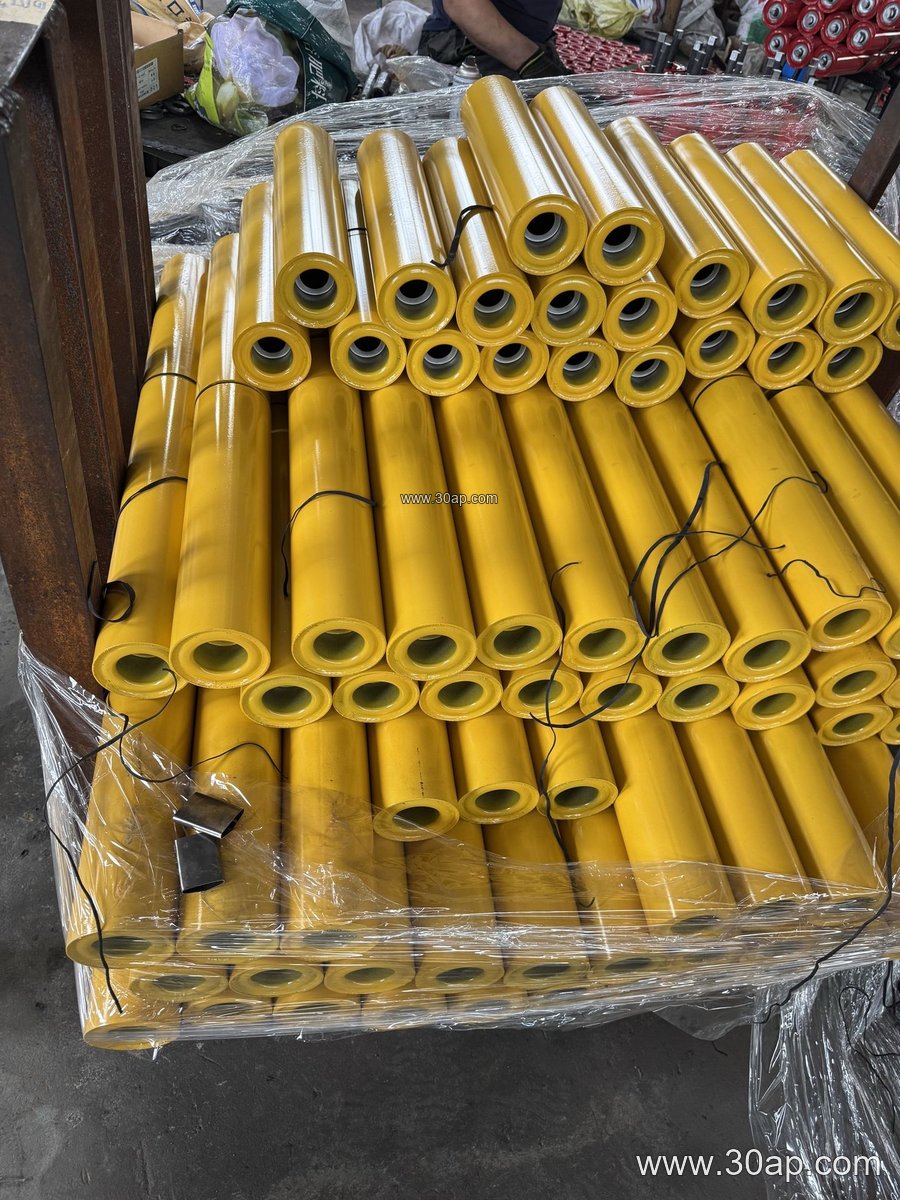
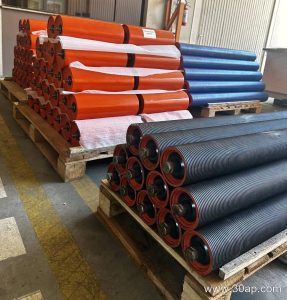
Sealing is where cheap and durable idlers separate. Labyrinth seals, felt seals, and multi-stage dust guards are common. In a stone crushing plant, fine dust is abrasive, so a seal that works on a clean grain line may fail quickly. The roll surface also matters: plain steel is standard, while rubber rings are used at transfer points to absorb impact, and ceramic or nylon covers may be selected where build-up or wear is a concern.
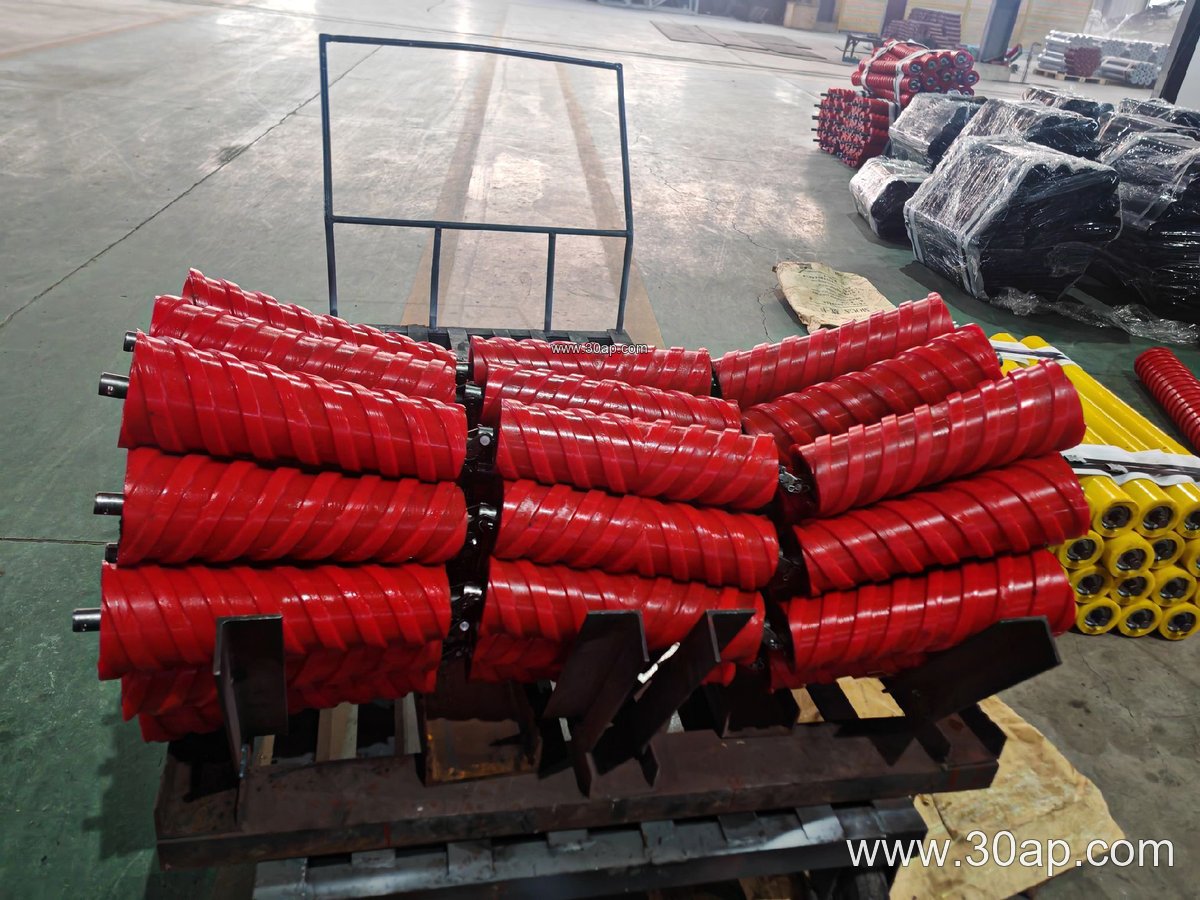
Where Stone Conveyor Idlers Sit on the Machine
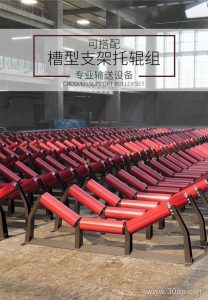
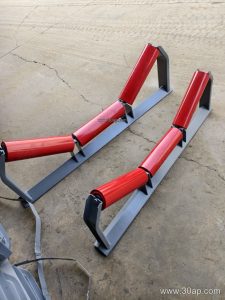
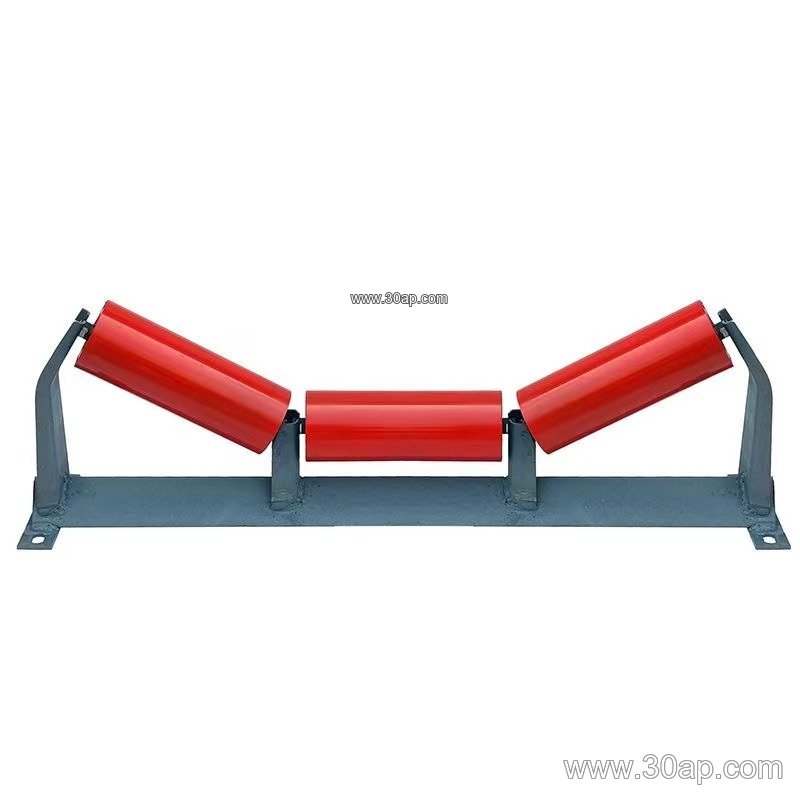
Carrying idlers run on the loaded side, usually in three-roll trough sets with a 20, 30, 35, or 45 degree trough angle. A 35 degree trough is common on aggregate belts because it centers the stone without over-compressing the belt edges. Return idlers support the empty side; flat return rolls or V-return sets are both seen. At the crusher discharge, impact idlers or rubber-ring impact rolls protect the belt from large lumps. Transition idlers near the head and tail gradually change the belt shape and reduce edge stress.
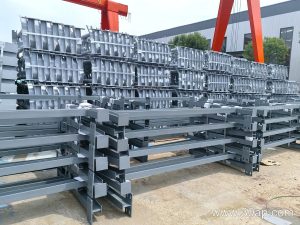
Alignment is a separate job. Friction self-aligning idlers and tapered aligning rolls are used on long quarry conveyors where the belt tends to wander. These are not a substitute for proper pulley alignment, but they help on curves and uneven loading. The conveyor bracket and frame must hold every idler at the correct height so the belt line stays true from the primary crusher to the screen deck.
Matching Idler Size to Belt Width and Load
Roll length follows belt width, trough angle, and roll arrangement. As a reference, three-roll trough sets often use a center roll around 200 mm for B500, 250 mm for B650, 315 mm for B800, 380 mm for B1000, 465 mm for B1200, 530 mm for B1400, 600 mm for B1600, and 670 mm for B1800. These are common examples, not fixed pairings; side rolls and center rolls can differ, and the design engineer confirms the final dimensions.
Belt width alone does not dictate shaft diameter. A 1200mm wide conveyor belt may use a heavier idler frame than a 650mm belt, but the shaft size is set by load, span, and speed. Buyers should ask for the idler’s working load, bearing type, seal design, and roll wall thickness rather than assuming a size from the belt width.
Buyer Checklist for Quarry and Plant Applications
- Confirm the trough angle and roll arrangement: two-roll, three-roll, or single-roll.
- Check the sealing system for stone dust and water washdown.
- Match bearing size to the actual load and duty cycle, not to a catalog habit.
- Specify impact idlers at transfer points and transition idlers near pulleys.
- Verify bracket dimensions and frame spacing before ordering a full set.
On a cement plant belt or a power plant coal line, the same idler logic applies, but the environment shifts the priority toward dust sealing or heat resistance. A stone conveyor idler is a small part of the total conveyor, yet it sets the tone for belt life, energy draw, and downtime. For more on matching belts, idlers, and pulleys, visit beltconveyorparts.com and review the conveyor idler roller range alongside conveyor belt options such as abrasion resistant conveyor belt and EP conveyor belt constructions.