What a Take-Up Device Pulley Does
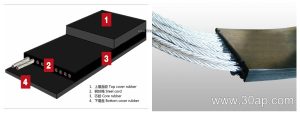
A take-up device pulley is the rotating component that carries the belt at the tensioning station of a conveyor. Its job is not to drive the belt but to hold it under controlled tension while the take-up mechanism, whether a gravity tower, a screw carriage or a hydraulic cylinder, moves the pulley along its travel. In a coal preparation plant or a quarry aggregate line, this movement keeps the belt from sagging between the head and tail and compensates for stretch in a fabric core conveyor belt or the slight elongation of a steel cord conveyor belt under load.
Because the pulley slides or swings with the carriage, it is often called a tension pulley or take-up pulley. The take-up device pulley is a distinct subtype: it is neither a drive pulley nor a tail pulley, and it should not be confused with a bend pulley that only changes belt direction.
How the Pulley Is Built
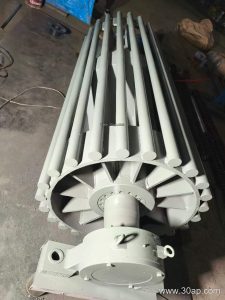
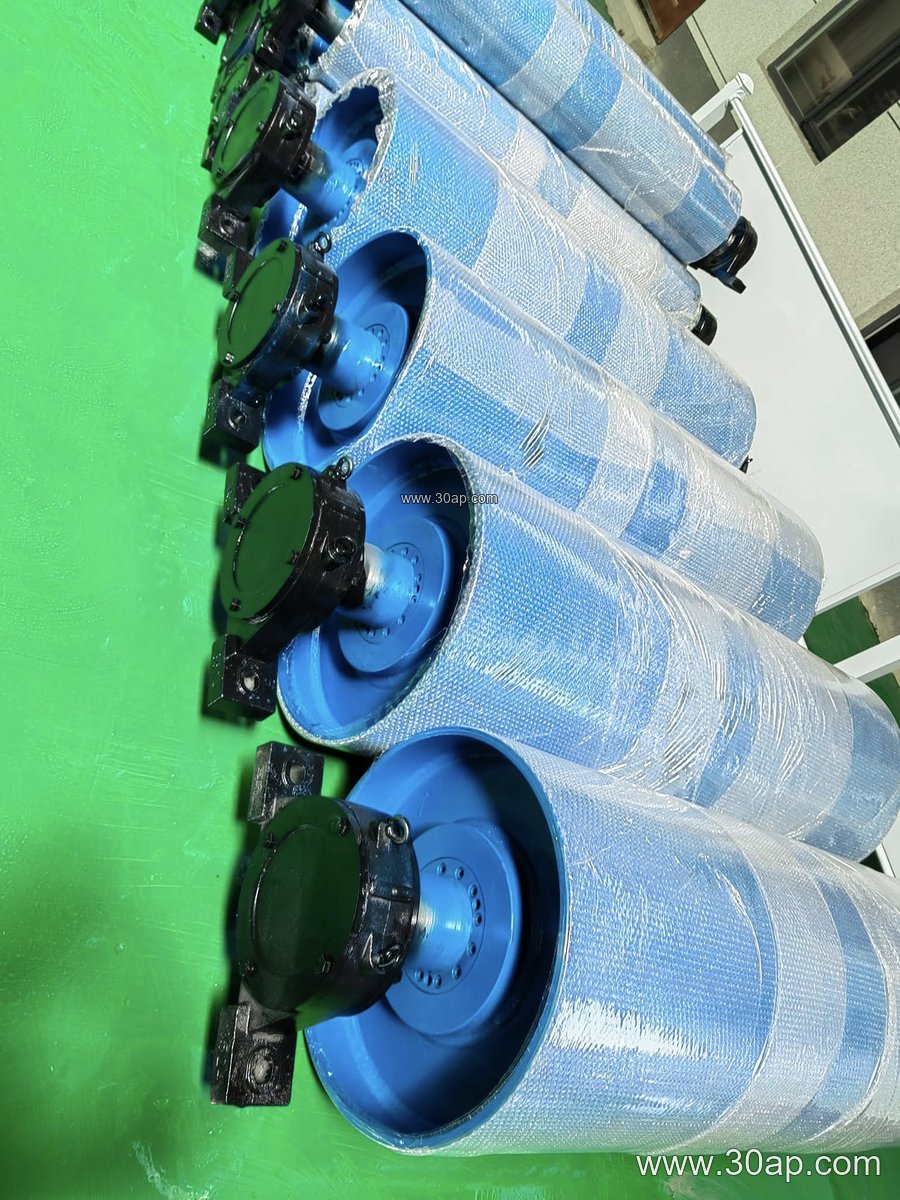
The assembly usually consists of a cylindrical shell, two end discs, a shaft, hub plates and bearing housings. The shell may be machined from seamless tube or rolled and welded, and the shaft is sized by torque and bearing load rather than by belt width alone. Common shaft diameters include Ø80, Ø100, Ø120 and Ø140, but the final value is set by the conveyor designer.
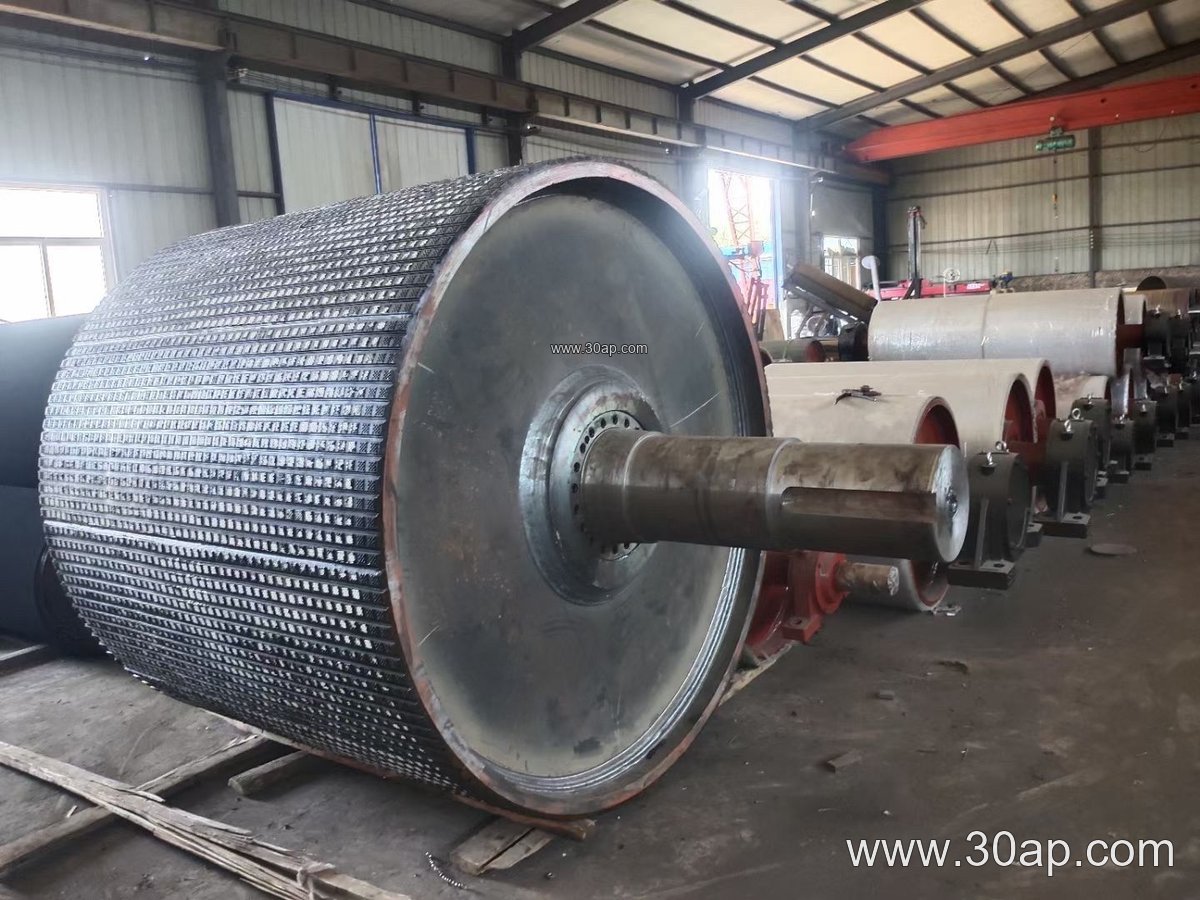
Surface finish matters at the tensioning station, since the belt wraps the pulley under high tension and any slip can polish or damage the cover. Plain finish is common, while rubber lagging with a thickness of 8, 10 or 12 mm improves grip and protects the shell. Diamond or herringbone grooving helps shed water and fine dust in washdown areas.
| Parameter | Typical Range |
|---|---|
| Belt width | B650 to B1800 |
| Pulley diameter | Ø315 to Ø1250 |
| Shell face width | About 150 mm wider than the belt |
| Lagging | Plain, 8 to 15 mm rubber, grooved |
| Bearing type | Self-aligning ball or spherical roller |
Where It Appears in the Plant
In a limestone mine or cement plant, a take-up device pulley is often installed near the tail end on a horizontal gravity carriage. In an underground coal mining conveyor, the same component may sit on a vertical screw take-up inside a confined drift, which makes compact bearing housings and easy greasing important. Port bulk terminals handling iron ore or copper ore concentrate tend to use long travel carriages so the pulley can absorb large tension swings when a heavy-duty mining conveyor belt starts under load.
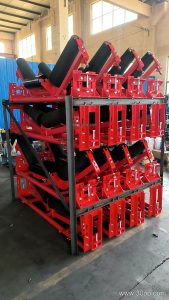
The pulley also appears in power plant coal handling, sand and gravel plants, and tunnel mucking lines. In each case the surrounding equipment includes the conveyor pulley set, idler roller groups and conveyor bracket frames, and the tensioning pulley must align with all of them.
Selection Points for Buyers
- Confirm the actual belt width and the required shell face width, since face width is normally greater than belt width.
- State the tension range and travel distance so the shaft and bearings can be sized correctly.
- Choose lagging according to the environment: plain for clean dry service, rubber for grip, grooved for wet or dusty duty.
- Check that the bearing housing fits the take-up carriage and that lubrication access is reachable.
- Match the pulley diameter to the belt’s minimum bend radius, not to a fixed rule linking one belt width to one diameter.
A tension pulley works alongside an abrasion resistant conveyor belt in a crusher circuit, or a flame retardant conveyor belt in a coal mine, and the belt cover grade should be considered when specifying lagging hardness. Buying a take-up device pulley is therefore a dialogue between the belt specification and the tensioning layout, not a catalogue lookup.
Installation and Upkeep
Alignment is the first priority. The pulley axis should be parallel to the adjacent rollers, and the carriage should travel freely without binding. Bearings should be greased at the interval recommended for the duty, and lagging should be inspected for cuts, glazing or separation from the shell. A worn lagging surface on a take-up device pulley can allow the belt to creep, which shows up as edge wear and tracking drift. Replacing lagging before the shell is scored is usually cheaper than replacing the whole assembly.
Keep spare bearing seals on hand in dusty plants such as a stone crushing line or a fertilizer granulation building, and check shaft keyways for fretting during each shutdown. Treated as a wear part rather than a permanent fixture, the pulley will give long, quiet service.