What a Motor-Driven Pulley Is
A motor-driven pulley, often simply called a motorized pulley or drum motor, is a conveyor pulley that contains its own electric motor and gear reducer inside the drum shell. Instead of an external drive unit connected through a coupling and gearbox, the power train is sealed within the pulley body, so the drum itself turns and drives the conveyor belt. This integrated design makes the motor-driven pulley a compact alternative to a conventional head pulley with a separate drive station, and it is increasingly common on bulk handling lines where space at the head end is limited.
In practice, the product is a conveyor pulley first and a drive unit second. Its shell, shaft, bearings and lagging still follow the same mechanical logic as any other drum, but the internal motor adds heat, torque and maintenance considerations that a plain drive pulley does not have. Buyers should treat it as one assembly rather than a pulley plus a motor bought separately.
How the Unit Is Built
Inside the shell, a stator and rotor are mounted around a fixed shaft, and a planetary or helical gear stage reduces motor speed to the required belt speed. The shell rotates on bearings at each end, and the reaction torque is absorbed by a torque arm or by the shaft mounting, not by the belt. Sealing is critical: dust, water and fines must not reach the windings or the gear oil, especially in a quarry, a coal preparation plant or a cement clinker line.
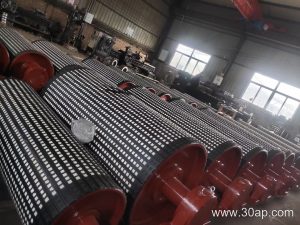
Outside, the drum carries lagging to raise friction between shell and belt. Common surface forms include plain, cast rubber, cold-bonded rubber, hot-vulcanized rubber, diamond grooving and ceramic lagging, with cover thicknesses such as 8, 10, 12, 15 or 20 mm chosen by duty. The shell width is normally a little wider than the belt, for example about 1150 mm for a B1000 belt or about 1400 mm for a B1200 belt, but these are typical references rather than fixed rules.
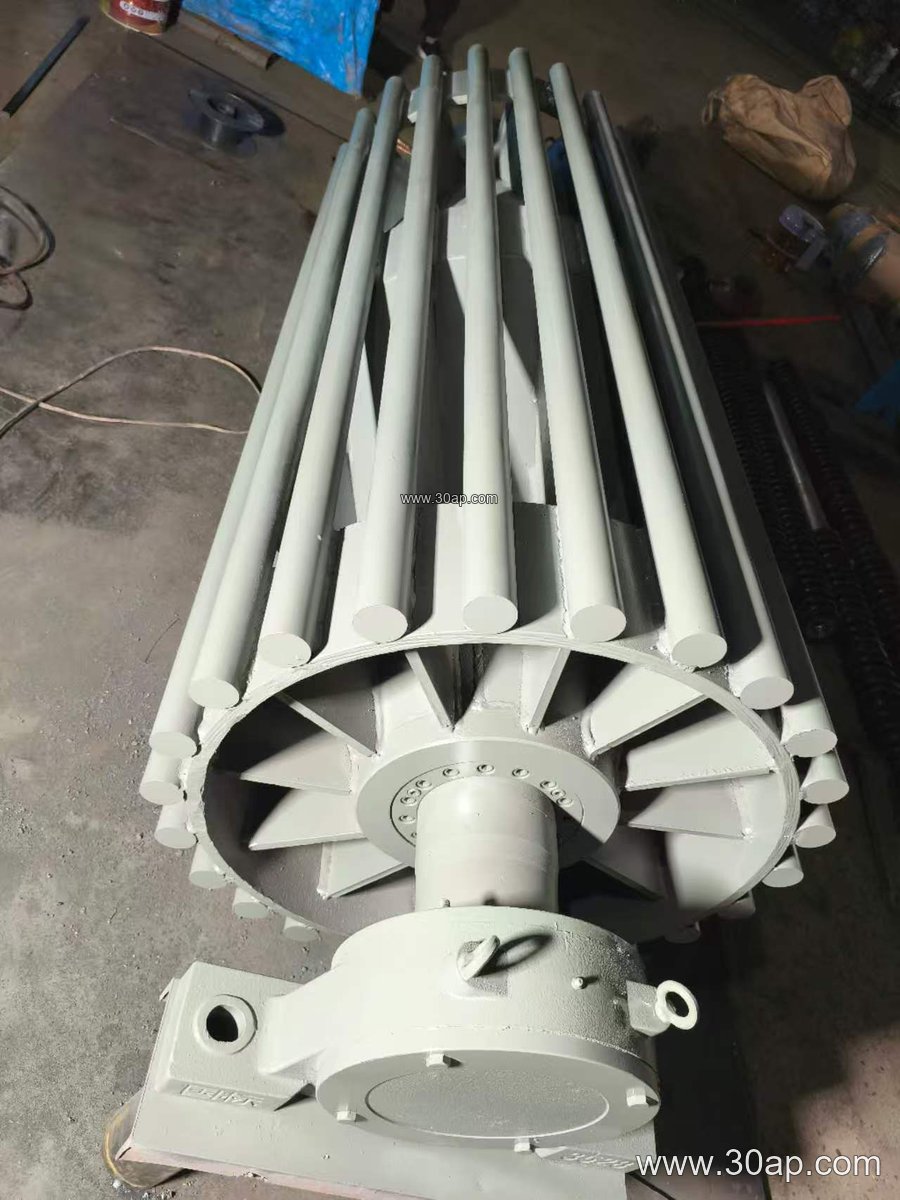
Where It Fits on the Conveyor
A motor-driven pulley usually sits at the head or discharge position, where it pulls the loaded belt and throws material into the next stage. In a stone crushing line it may drive the discharge belt after the crusher; in a power plant coal yard it may run a short transfer conveyor; in a port bulk terminal it may serve a ship loading or stockyard belt. It can also appear at a tail position on short reversible conveyors, although the drive pulley remains the primary role.
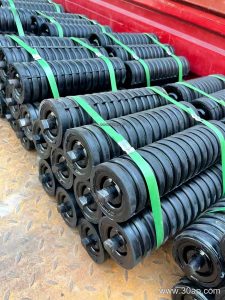
It should not be confused with other drum positions. A tail pulley guides and tensions the return side, a bend pulley changes belt direction, and a snub pulley increases wrap angle. Those are separate components with their own loads and lagging needs, and none of them can be swapped for a motor-driven pulley without redesigning the drive.
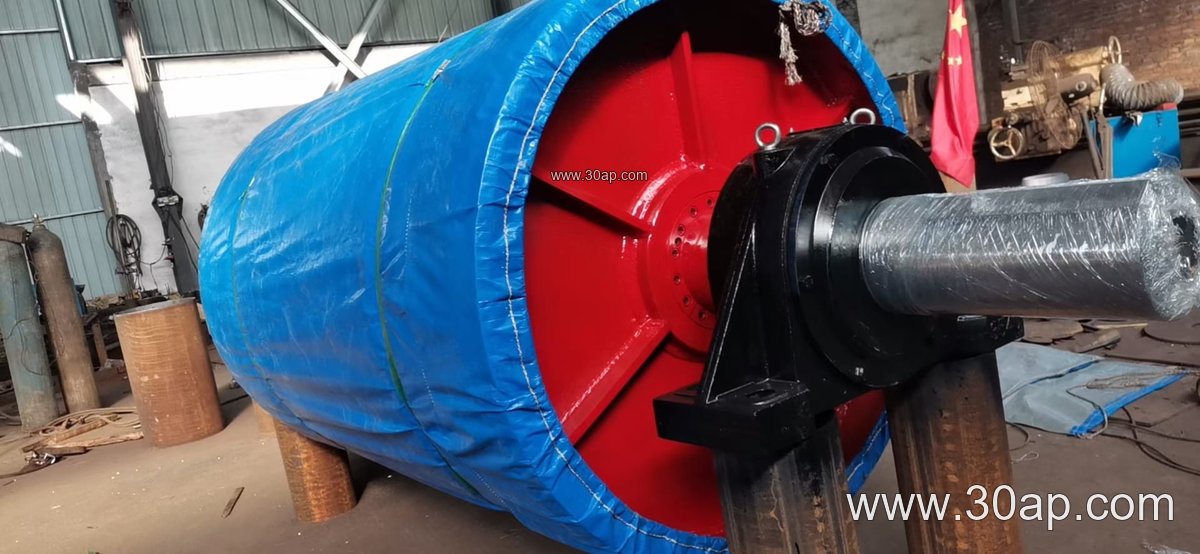
Matching Belt and Pulley
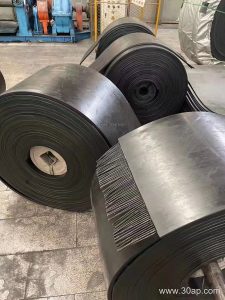
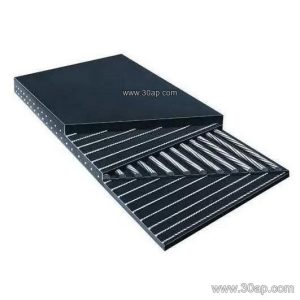
Belt construction affects the choice of drum diameter and lagging. A heavy-duty mining conveyor belt running coarse ore needs more wrap and better grip than a smooth fabric core belt on a light transfer. On a coal mining conveyor belt with flame retardant requirements, the lagging and the pulley finish should suit the same environment. Where a steel cord conveyor belt is used, drum diameter is usually larger to limit bending stress in the cords, while an EP conveyor belt or NN conveyor belt can often run on a smaller drum.
Typical combinations include B800 x Ø500, B1200 x Ø1000 and B1400 x Ø800, but diameter is set by belt tension, cord or fabric type, wrap angle and torque, not by belt width alone. Shaft diameter is likewise calculated from torque and bearing load; common shaft sizes range from Ø50 to Ø200, yet no belt width fixes one shaft size.
What Buyers Should Check
- Required belt pull and speed, so the internal motor and gear ratio are sized correctly.
- Duty cycle and starts per hour, since frequent starting raises motor heating.
- Environmental rating: dust, washdown, humidity and ambient temperature.
- Lagging type and thickness matched to the conveyed material and belt cover.
- Mounting interface, torque arm and available space at the head end.
- Service access for oil checks and bearing inspection without removing the whole drum.
For a plant handling abrasive rock or clinker, an abrasion resistant conveyor belt and a well-lagged drum work together to reduce slip and wear. In cold climates, a cold resistant conveyor belt may be paired with a pulley whose sealing and lubricant suit low temperatures. Buyers comparing a motor-driven pulley with a conventional drive should weigh installation space against maintenance access, because internal components are harder to inspect but the external drive train is eliminated.
Finally, confirm that the drum is specified as a complete unit with its motor, gearbox, lagging and mounting details on one datasheet. A clear drawing and a defined belt width, drum diameter and lagging specification prevent costly mismatches at installation.