What a Conveyor Trough Idler Does on the Line
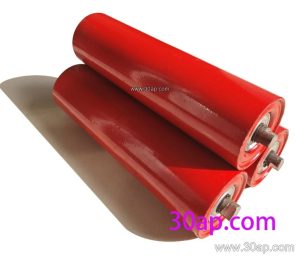
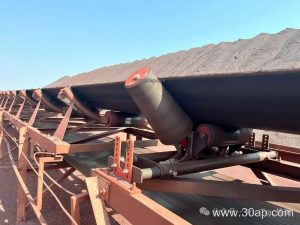
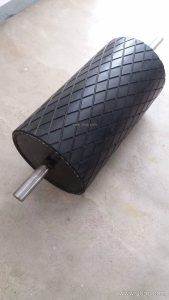
A conveyor trough idler is the carrying idler assembly that gives a loaded conveyor belt its troughed shape. Instead of letting the belt run flat, two or three rollers are set at an angle so the belt forms a shallow channel that holds material in the middle. That simple geometry keeps coal, clinker, crushed stone, or ore from spilling off the edges and helps the belt track straighter under load. On a typical bulk line, the troughing idlers sit on the carrying side, spaced along the frame, while return idlers support the empty belt underneath. The trough idler is not a drive component; it works together with the conveyor pulley at the head and tail to keep the belt moving smoothly.
How the Assembly Is Built
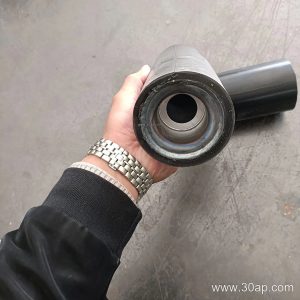
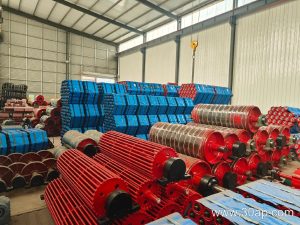
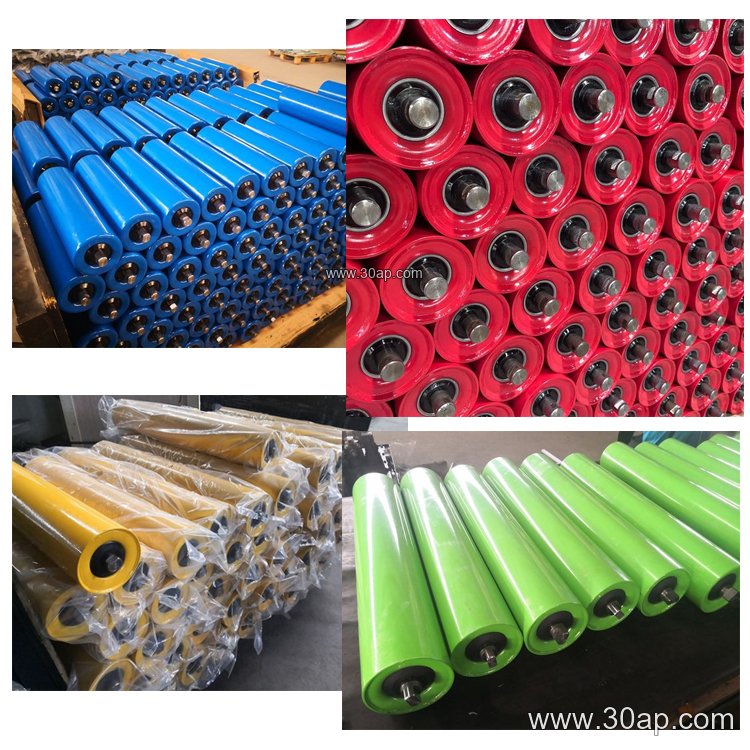
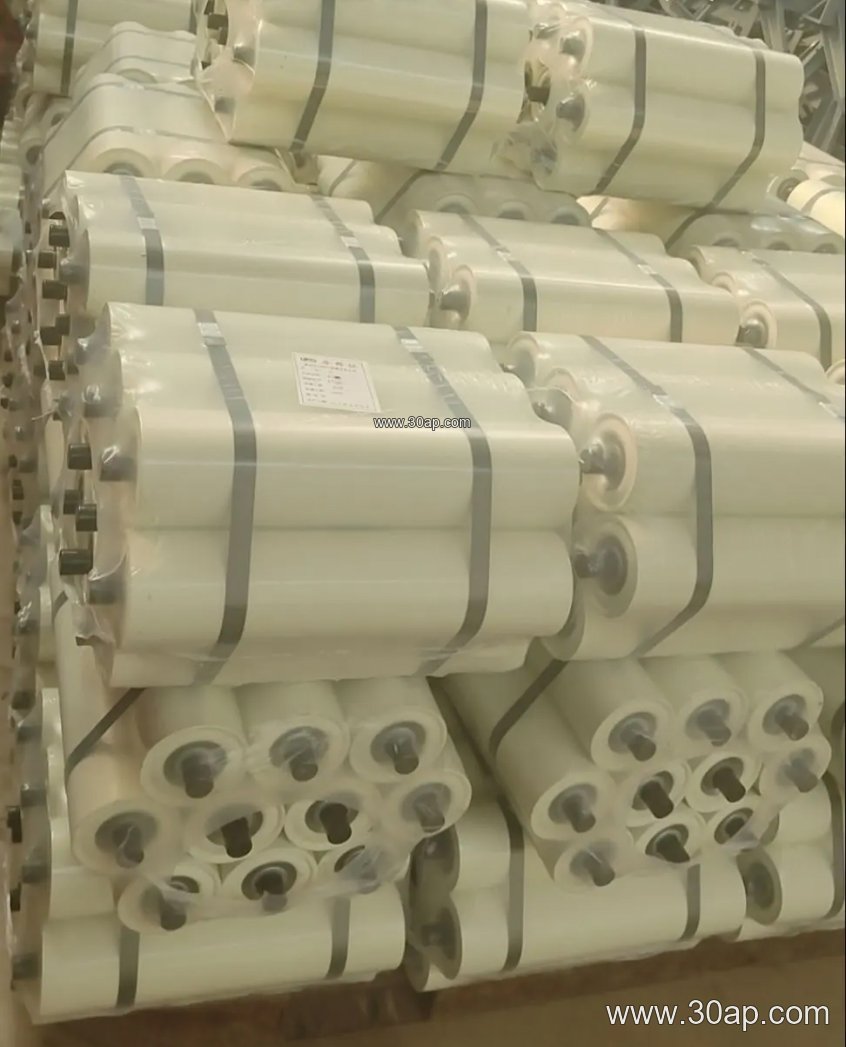
Most troughing sets are built from steel tubes fitted with sealed bearings, a shaft, and end caps, then mounted in a conveyor bracket or frame. The roller shell may be plain steel, nylon-coated, ceramic-covered, or fitted with rubber rings for impact absorption. Common bearing sizes include 6204, 6205, 6305, 6306, 6308, and 6310, matched to the roller diameter and load rather than to belt width alone. Roller diameters commonly run from about Ø63 to Ø219, and the choice depends on belt speed, load, and the frame design.
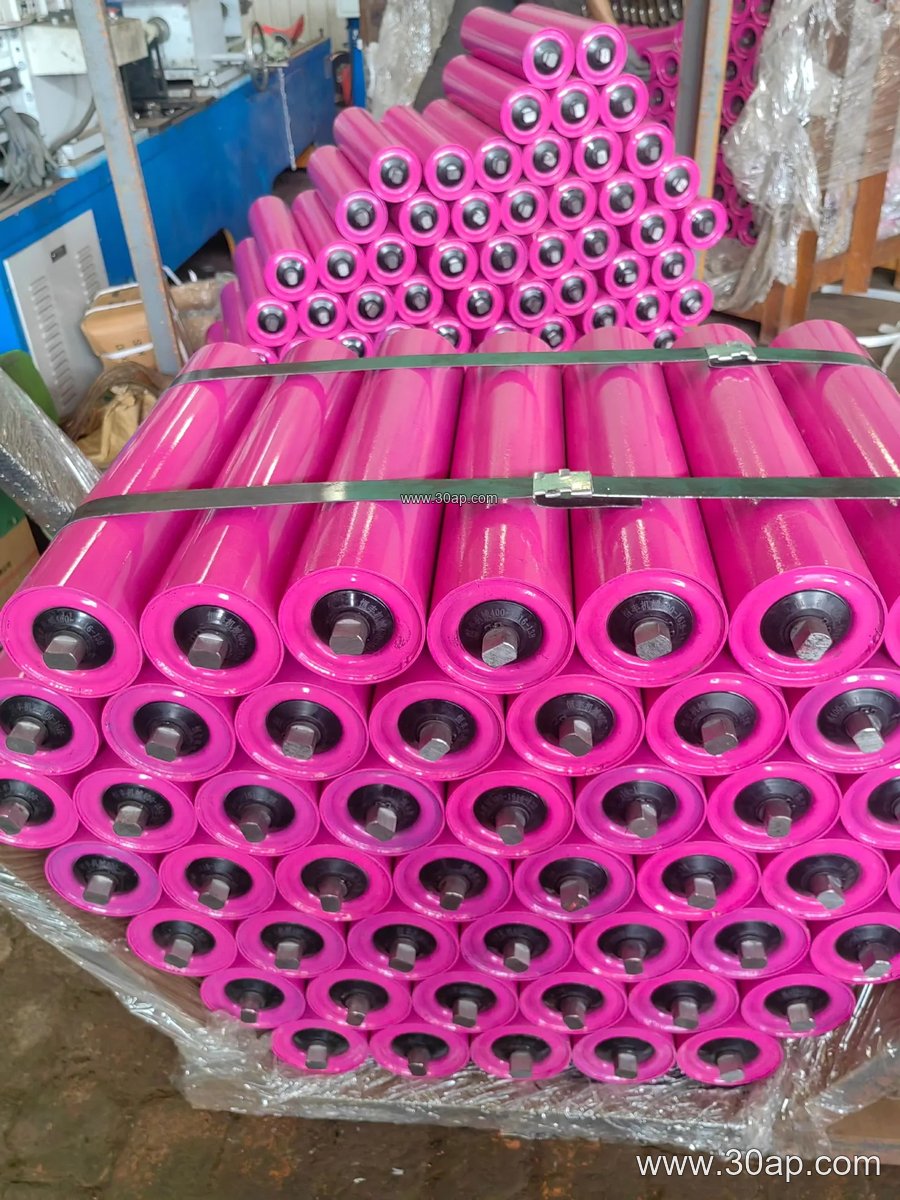
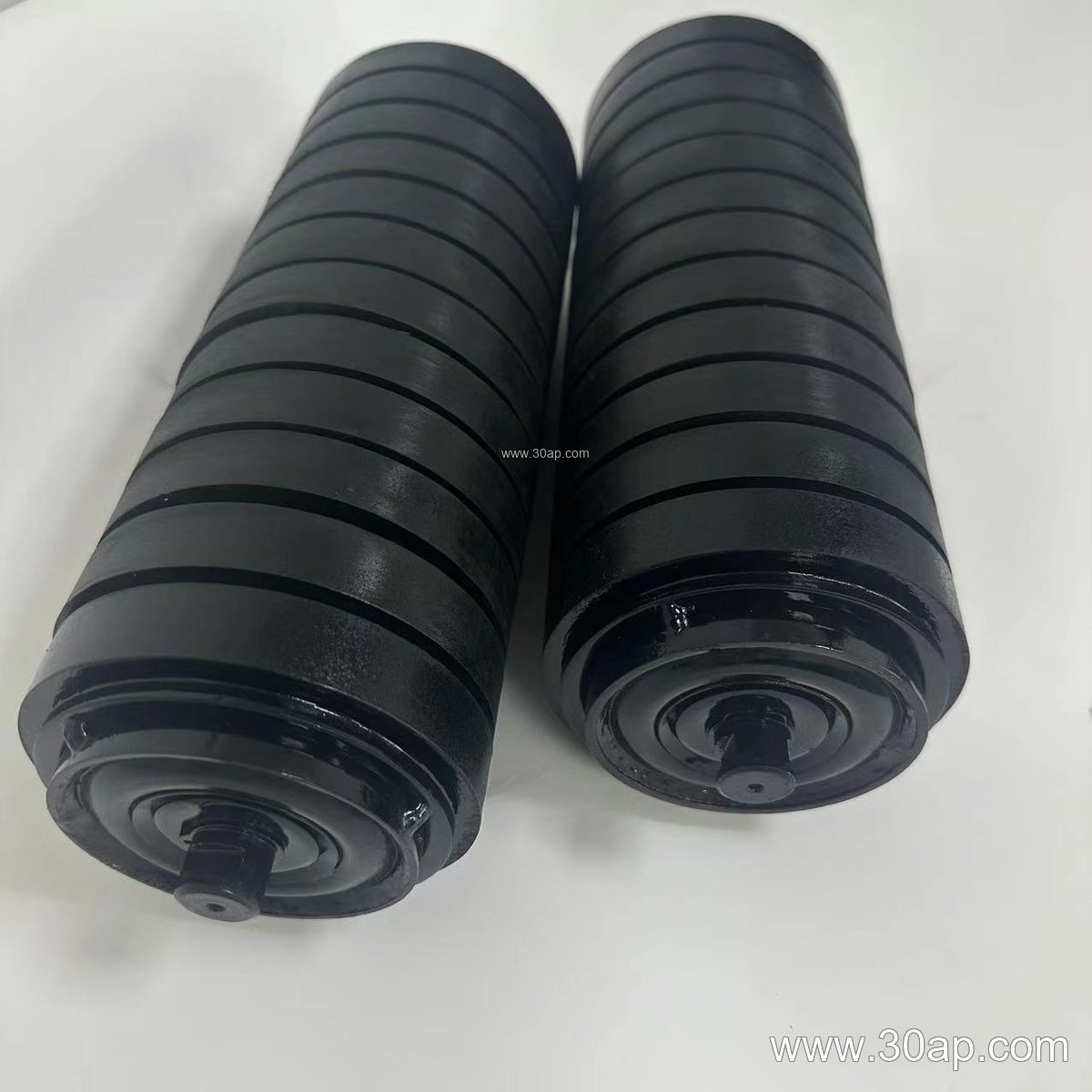
The trough angle is a key part of the build. Common angles are 20, 30, 35, and 45 degrees. A steeper angle holds more material but raises the load on the side rollers, so the angle should match the material’s angle of repose and the belt’s ability to trough. Some carrying sets are inclined slightly forward, often around 1.5 to 2 degrees, to help center the belt.
Typical Arrangements and Roller Lengths
Troughing sets are usually supplied as single-roller, two-roller, or three-roller arrangements. Three-roller sets are the most common on wide belts in quarries and power plant coal handling. Roller length changes with belt width, trough angle, and set type, so the figures below are common examples rather than fixed matches.
| Belt width | Typical roller length, three-roller set |
|---|---|
| B500 | about 200 mm |
| B650 | about 250 mm |
| B800 | about 315 mm |
| B1000 | about 380 mm |
| B1200 | about 465 mm |
| B1400 | about 530 mm |
| B1600 | about 600 mm |
| B1800 | about 670 mm |
| B2000 | about 750 mm |
Side rollers and center rollers can differ in length, and a two-roller set will not follow the same pattern. The belt width does not set the pulley diameter or the shaft diameter by itself; those come from the conveyor design and the loads involved.
Where Trough Idlers Are Used
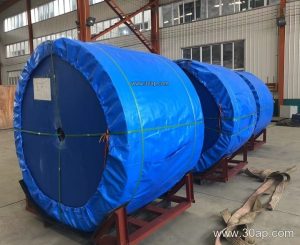
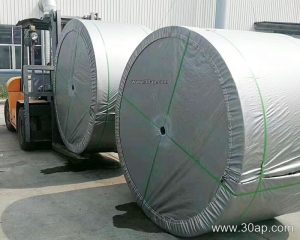
These carrying idlers appear wherever a belt handles loose bulk material. In a limestone quarry or sand and gravel line, they support crusher feed and screened aggregate. In a coal preparation plant or a power station coal yard, they carry ROM coal and sized product, often alongside a flame retardant conveyor belt for safety. Cement plants use them on clinker and raw meal lines, where heat resistant conveyor belt grades may be needed near hot zones. Iron ore and copper ore operations rely on heavy-duty troughing sets under abrasive loads, sometimes paired with a steel cord conveyor belt on long overland runs. Port terminals and ship loading systems also use them on high-capacity belts, and tunnel spoil lines use them in confined, dusty conditions.
Selecting the Right Troughing Set
Buyers should start with the belt width, the material being carried, and the expected tonnage per hour. From there, the trough angle, roller diameter, bearing class, and roller surface follow. Abrasive rock may call for thicker shells or ceramic coverage, while a transfer point with lump impact may suit rubber-ring impact idlers instead of standard troughing rollers. Dusty or wet conditions put more demand on seals. The frame and conveyor bracket must match the roller shaft and fixing centers, and the idler spacing should follow the belt sag and load rather than a single rule.
- Confirm belt width and trough angle before ordering rollers.
- Match bearing and shaft to the actual load, not to belt width alone.
- Check seal type for dust, water, and washdown.
- Keep spare rollers in the common diameters used on the line.
Maintenance Notes
Seized or worn trough idlers show up as belt wander, spilled material, and noisy operation. Checking roller rotation, shell wear, and seal condition during routine inspections prevents bigger problems. Replacing a worn roller with the correct diameter and length keeps the trough profile intact, and checking the conveyor bracket for looseness avoids misalignment. Trough idlers are a small part of the line, but their condition affects belt life, power draw, and how clean the transfer points stay. For more on matching rollers with belting and pulleys, see conveyor trough idler and related belt guidance.