What a Tail Pulley Assembly Does
A tail pulley assembly is the return-end group of a belt conveyor, mounted opposite the drive. It carries the conveyor belt as it turns back toward the carrying run, and in many designs it also provides belt tension. Because it sits at the loading end on typical installations, the assembly has to cope with dust, fines, and occasional spillage from the chute above. In a quarry or a sand and gravel line, a well-built tail pulley assembly keeps the belt tracking straight before it ever reaches the first idler roller. On a port bulk terminal handling wide belts, the same group may be larger and heavier, but the working principle stays the same.
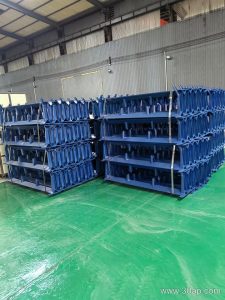
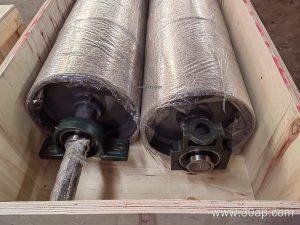
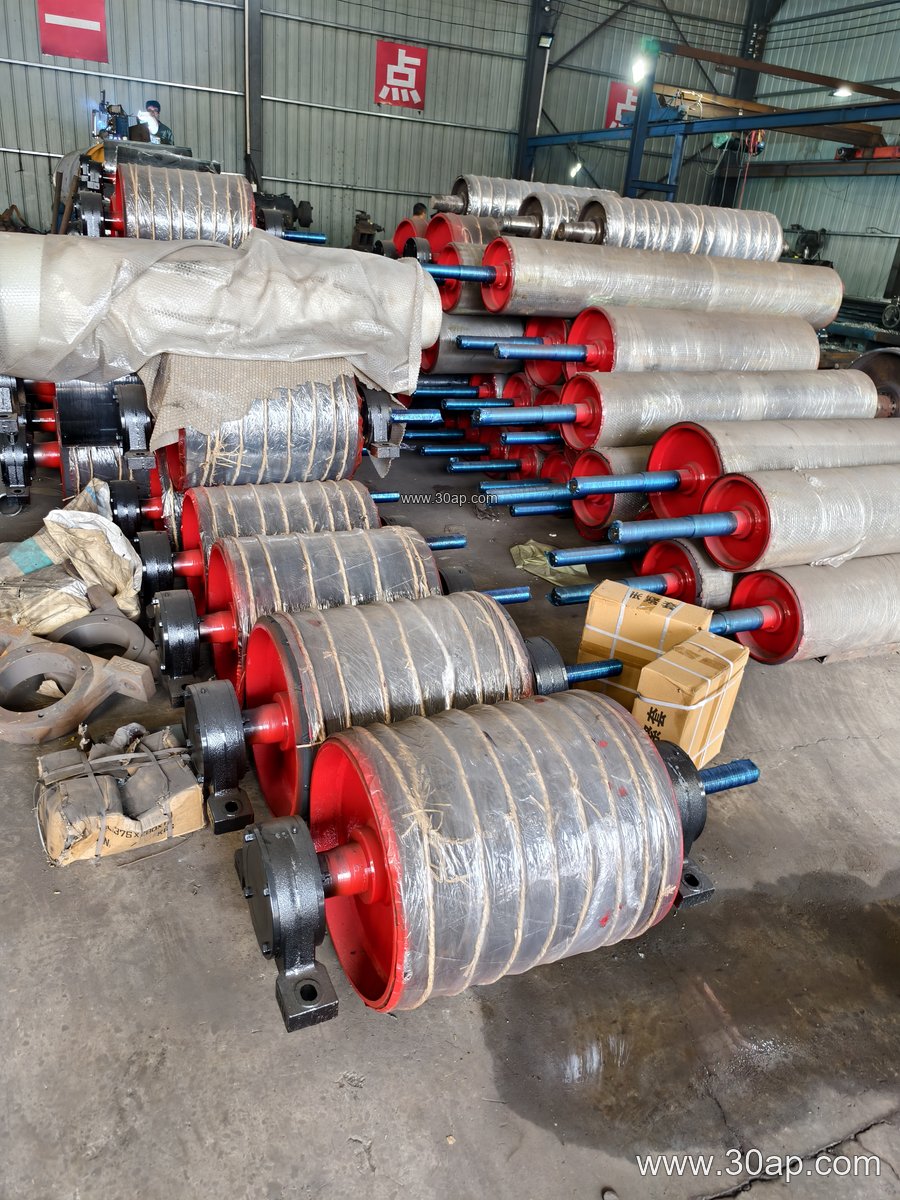
The assembly is not just a bare pulley. It normally includes the pulley shell, shaft, hubs, bearings and bearing housings, plus a take-up frame or slide base where tensioning is required. A conveyor bracket at each side connects the unit to the conveyor structure. Some layouts add a scraper or plough to keep the shell clean, and a guard over the rotating parts.
How the Assembly Is Built
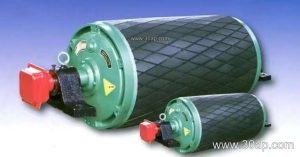
The core is a welded steel drum with dished or flat end plates and a through shaft. Shaft ends usually run in self-aligning spherical roller bearings mounted in cast or fabricated housings. Bearing seals matter at this end of the conveyor, since dust from a crusher or a cement clinker transfer point finds its way into anything that is not protected.
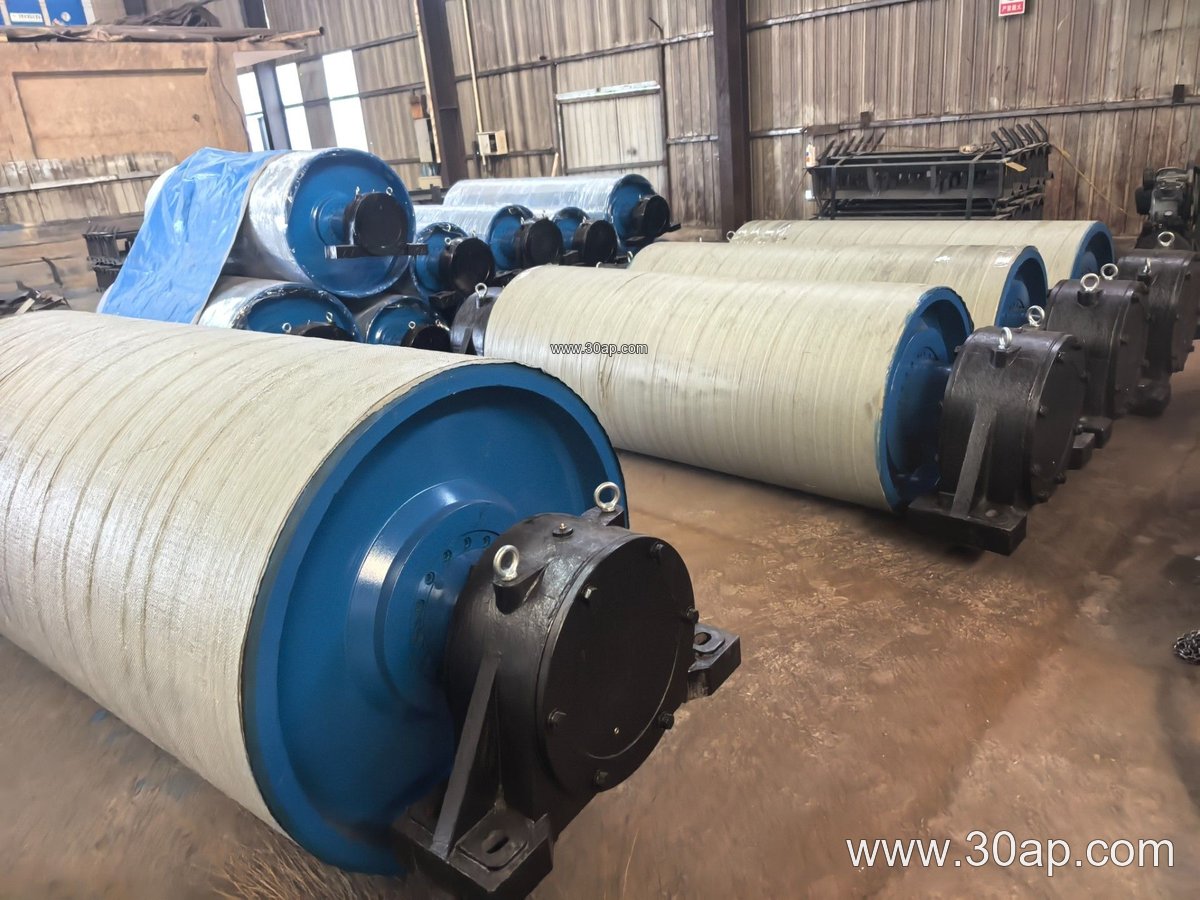
Shell surfaces vary with duty. A plain machined face suits dry, clean material, while lagging improves grip and sheds fines. Common surface choices include:
- Plain finish for light, non-abrasive service
- Cold-bonded rubber lagging for general bulk handling
- Hot-vulcanized rubber for higher grip and longer life
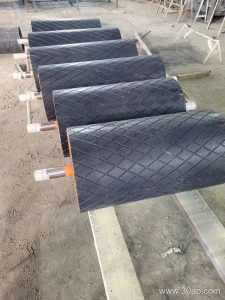
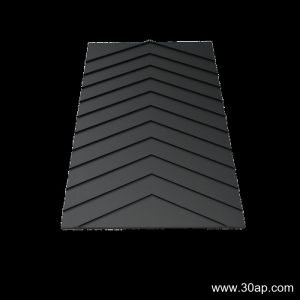
- Diamond or herringbone grooving to help water and fines escape
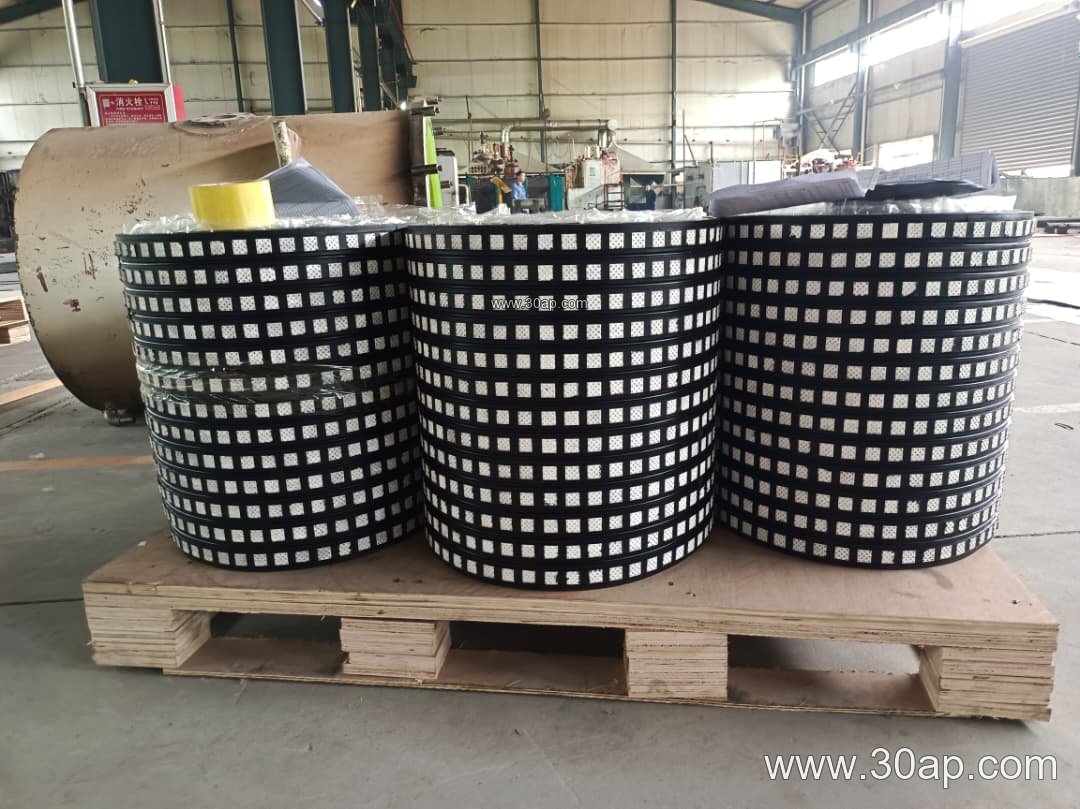
- Ceramic tiles for severe abrasion in iron ore or hard rock duty
Lagging thickness is often 8, 10, 12, 15, or 20 mm, selected against the load and the belt cover. The pulley face width is normally a little wider than the belt, for example about 750 mm of face for a B650 belt, 1150 mm for B1000, or 1400 mm for B1200. These are usual proportions, not fixed rules, and the final geometry is set by the conveyor designer.
Shaft diameter is chosen from torque and bearing load, not from belt width alone. Typical shaft sizes run from Ø50 up to Ø200 on larger units, and two conveyors with the same belt width can legitimately use different shafts depending on tension and wrap angle.
Where It Fits in the Plant
In a coal washing plant, the tail pulley assembly often works with a flame retardant conveyor belt and sits in a wet, gritty environment where sealing and drainage both matter. In a power plant coal yard, the same group may be part of a long inclined conveyor fitted with an EP conveyor belt or a steel cord conveyor belt on the main trunk line. Aggregate operations feeding a crusher usually pair it with a heavy-duty abrasion resistant conveyor belt, and the tail end sees the impact of unscreened rock.
Because it is a return-end pulley, it should not be confused with a drive pulley at the head or a bend pulley used purely to change belt direction. Those positions carry different loads and often different lagging. A bend pulley may be plain and lightly loaded, while the tail unit may carry take-up force plus the tension of the whole return run.
Specification Details Buyers Should Confirm
When requesting a tail pulley assembly, give the belt width, pulley diameter, shaft size, bearing type, lagging style, and take-up arrangement. A typical data set looks like this:
| Item | Example value |
|---|---|
| Belt width | B800, B1200, B1400 |
| Pulley diameter | Ø400, Ø500, Ø630, Ø800 |
| Face width | About 950 mm for B800, 1400 mm for B1200 |
| Shaft diameter | Ø80, Ø100, Ø120, Ø140 |
| Lagging | Plain, 10 mm rubber, diamond grooved, ceramic |
| Bearing housing | Split or solid, with dust seals |
Confirm the take-up travel and the mounting bracket dimensions as well, since a replacement unit must line up with existing conveyor brackets and the belt centerline. Ask for the balancing grade and runout tolerance if the conveyor runs at speed.
Maintenance Notes
Check bearing temperature and grease condition on a regular route. Inspect lagging for wear or missing tiles, and look for material buildup on the shell, which can cause belt misalignment. Keep the take-up slides clean so tension can be adjusted freely. On a quarry conveyor handling abrasive rock, tail pulley lagging often wears faster than the head, so planning a spare set of lagging is sensible.
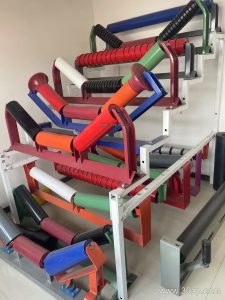
For matching belts and components, many plants source conveyor belt, idler roller, and pulley parts from the same supplier to keep interface dimensions consistent. Whatever the industry, a correctly specified tail pulley assembly protects the belt and keeps the return run stable.