What a Belt Conveyor Idler Frame Does on the Line
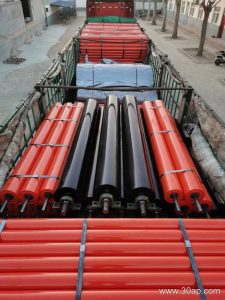
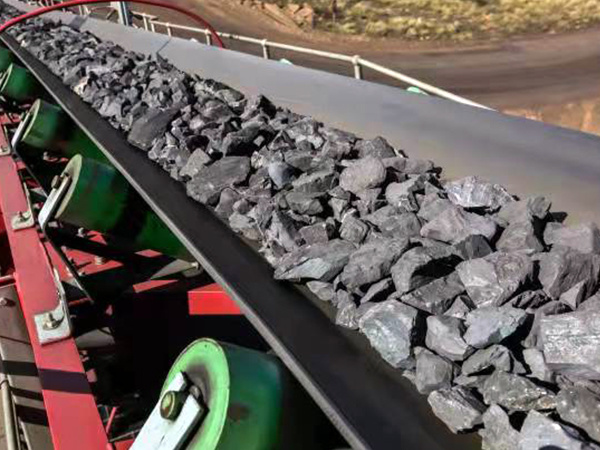
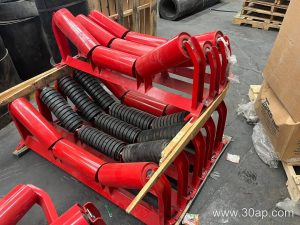
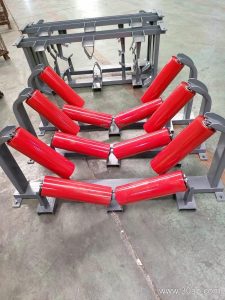
A belt conveyor idler frame is the steel structure that holds the idler rollers in position under the conveyor belt. It sets the trough angle, keeps the rolls square to the belt path, and transfers the load from the material and the belt into the conveyor stringer. Whether the line moves limestone at a quarry, coal at a power plant, clinker in a cement works, or ore at an iron mine, the frame is what turns a loose set of rollers into a working troughing station.
The frame is not a glamorous component, but it decides how well the belt tracks, how long the idler roller bearings last, and how easily maintenance crews can replace a seized roll. For that reason, buyers who treat it as a simple bracket often pay for it later in belt edge damage and spillage.
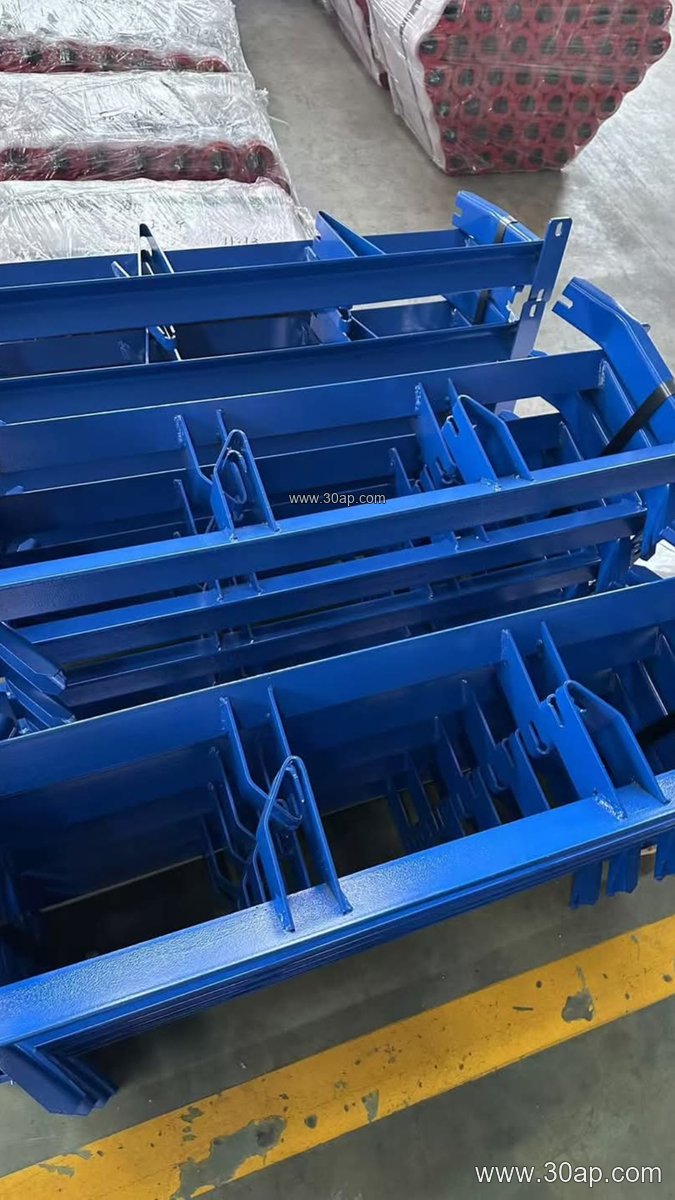
Construction and Common Forms
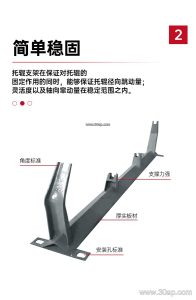
Most frames are fabricated from angle steel, channel steel, or folded steel plate, then drilled or punched for the idler shaft ends. A typical troughing frame carries two or three rolls and is built as a fixed assembly or as an adjustable one. Fixed frames are welded or bolted to a single trough angle, while adjustable frames let the maintenance team change the trough angle within a range to suit the material and belt load.
Common variants include:
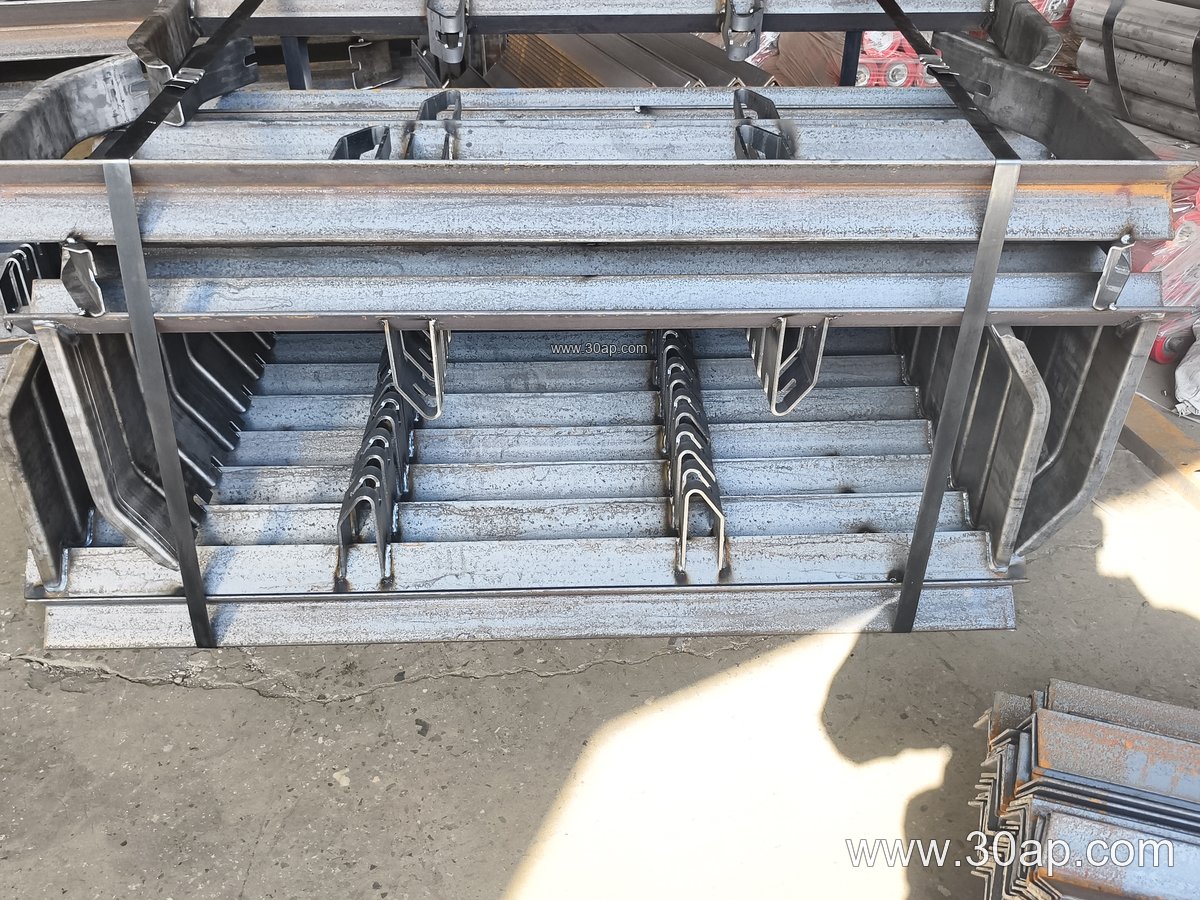
- Carrying side troughing frames, including transition frames near the head and tail
- Return side frames, flat or V-shaped, supporting the empty belt
- Impact frames under loading points, usually fitted with impact idlers
- Self-aligning frames that help correct belt wander
- Forward-leaning frames, often set at about 1.5 to 2 degrees, to assist tracking
- Suspended frames hung from the structure above the belt
Materials are chosen for the duty. A frame in a wash plant or a fertilizer shed may need a galvanized or coated finish, while a heavy-duty mining conveyor frame in an underground coal mining conveyor line is usually built from thicker section steel.
Sizes, Angles and Roll Diameters
Frame dimensions follow the belt width, the chosen trough angle, and the roll diameter. Belt widths from B500 up to B2200 appear in conveyor design, and trough angles of 20, 30, 35 and 45 degrees are common. Roll diameters such as Ø89, Ø108, Ø133, Ø159 and Ø194 are matched to the belt width, load, and speed by the conveyor designer, not by a single fixed rule. A B800 frame at 35 degrees with Ø108 rolls is a normal light-to-medium arrangement, while a B1200 frame at 45 degrees with Ø133 rolls suits a heavier duty. Neither combination is compulsory.
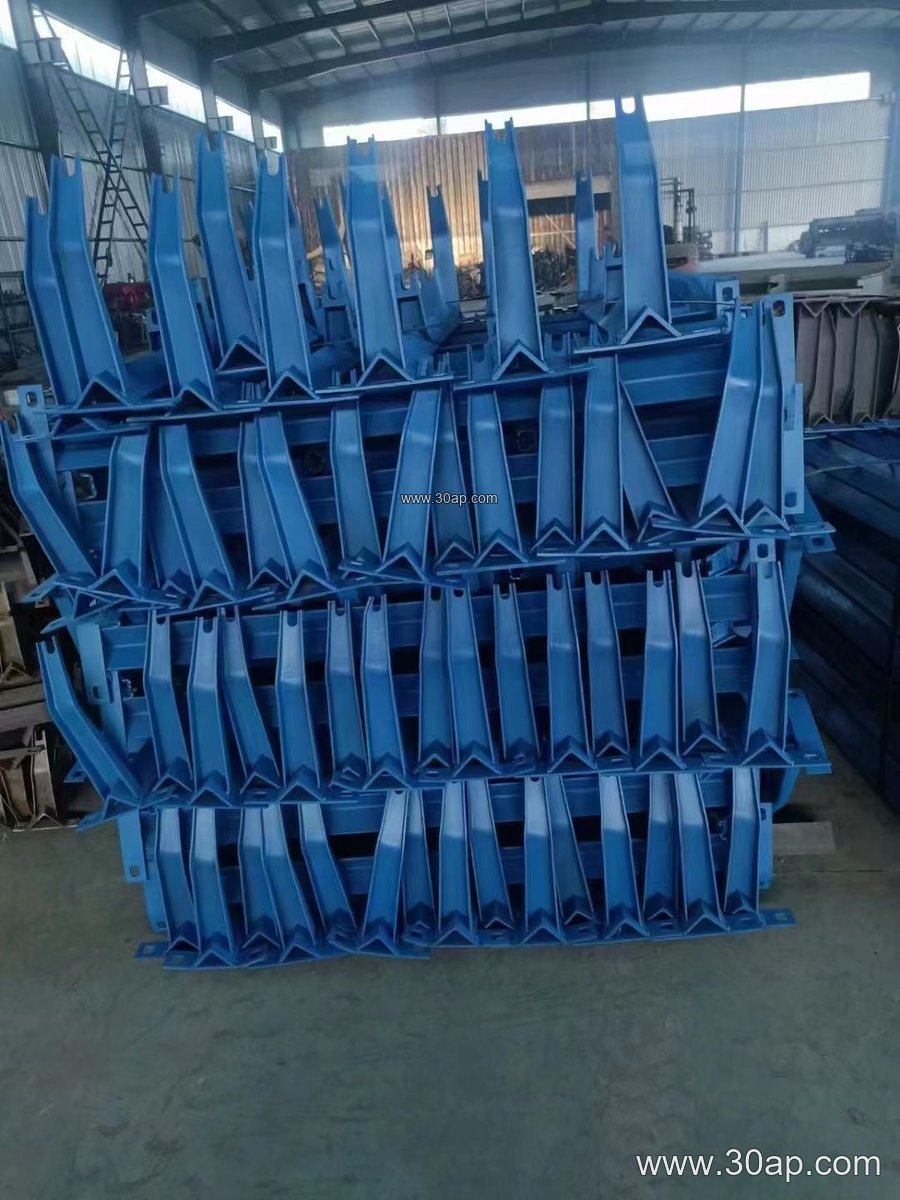
Installation hole spacing and beam length change with belt width and trough angle, so these should be confirmed against the conveyor drawing rather than assumed. The table below gives reference ranges only.
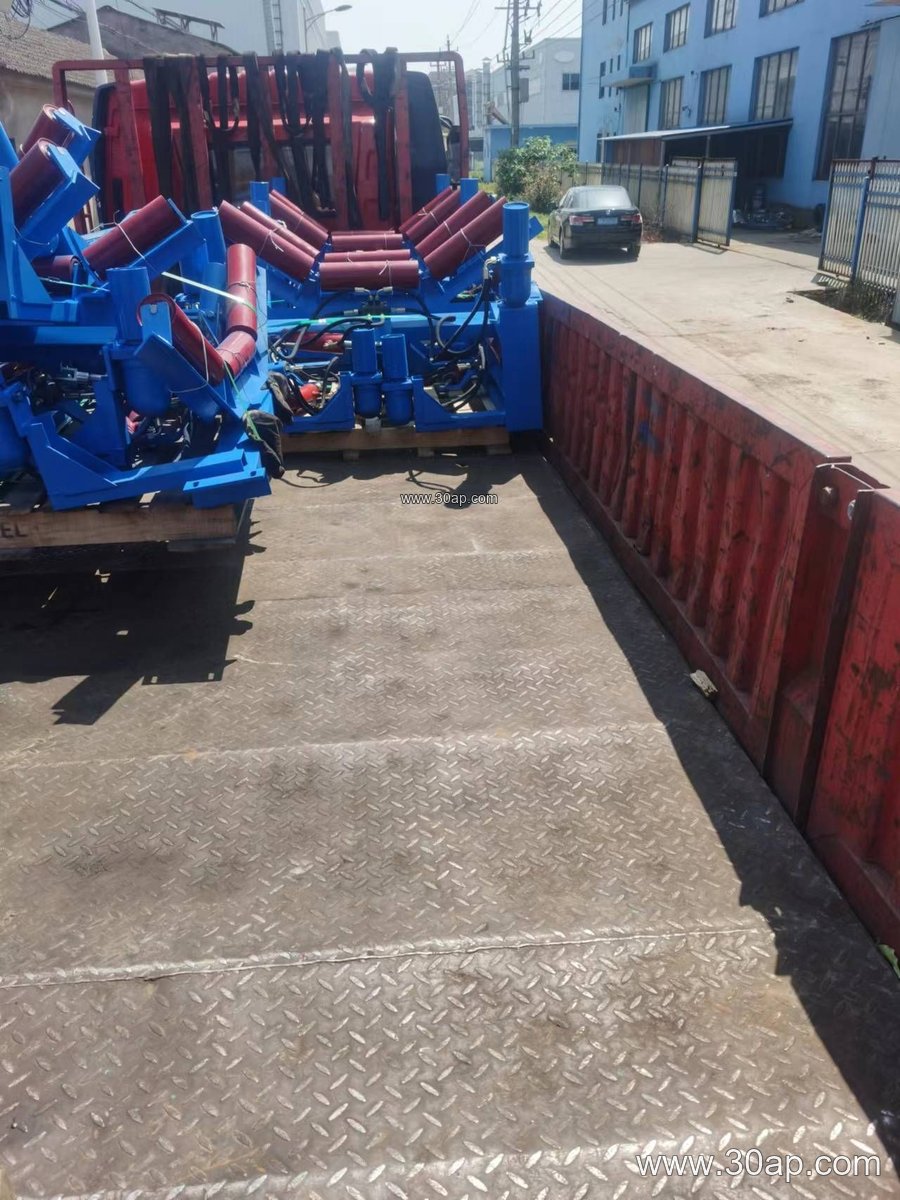
Reference Data for Frame Selection
| Parameter | Typical Range | Note |
|---|---|---|
| Belt width | B500 to B2200 | Match to conveyor design |
| Trough angle | 20, 30, 35, 45 degrees | Adjustable frames cover a range |
| Idler diameter | Ø89, Ø108, Ø133, Ø159, Ø194 | Set by load and speed |
| Material | Angle, channel, folded plate | Finish depends on environment |
| Forward lean | about 1.5 to 2 degrees | Tracking aid, not universal |
Where It Fits in the Plant
In a sand and gravel line, carrying frames sit every few meters along the slope, with transition frames easing the belt from flat to troughed near the head pulley. In a cement plant, impact frames protect the belt at the clinker transfer point, often working with a heat resistant conveyor belt or an abrasion resistant conveyor belt. At a port ship loader, wide frames under a 1200mm or 1500mm belt must stay square to keep the belt centered during slewing.
The frame also interacts with the rest of the hardware. A misaligned frame will wear the edge of an EP conveyor belt or a steel cord conveyor belt quickly, and no amount of idler quality will compensate. On the return side, a V-shaped frame paired with a training idler helps keep a long overland belt from drifting. For details on matching frames with rollers and belts, see conveyor idler frame and conveyor bracket references used by many plant engineers.
What Buyers Should Check Before Ordering
First, confirm the belt width, trough angle, roll diameter and roll spacing from the conveyor drawing. Second, decide between fixed and adjustable frames; adjustable types cost more but simplify tuning when material changes. Third, check the mounting hole pattern against the existing stringer so the frame bolts on without drilling. Fourth, review the finish and steel thickness for the site: a wash plant, a fertilizer store, and an underground mine each put different demands on the structure.
Finally, order frames together with the idler roller set and the conveyor pulley data so the whole station is consistent. A frame that is a few millimeters out of square can shorten roller life noticeably. Buyers comparing suppliers should ask for drawings, not just a model list, and should treat published sizes as reference values to be confirmed for their own conveyor. More background on related components is available at conveyor pulley and idler roller pages.