What an Anti-Sticking Idler Does
An anti-sticking idler is a carrying or return roller built to keep material from clinging to its shell. In a plant handling wet sand, clay-laden ore, or damp coal, ordinary rollers can pick up a sleeve of fines that hardens into an uneven lump. That buildup changes the roll diameter, throws the belt line out of true, and gradually wears the conveyor belt from underneath. The anti-sticking idler addresses this by combining a non-stick roll surface with a profile that sheds tacky material before it can compact.
Because buildup is a belt-side problem, the roller works together with the belt cover, the chute loading point, and the skirt rubber. A clean-running roller cannot compensate for a badly loaded belt, but it does reduce the chance that sticky fines become a permanent layer.
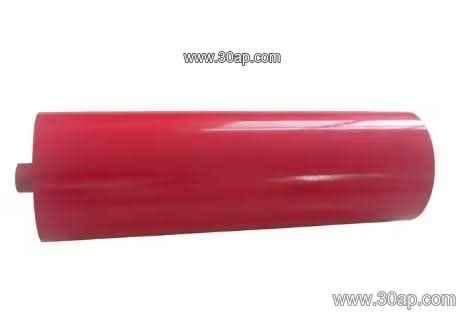
Construction and Surface Options
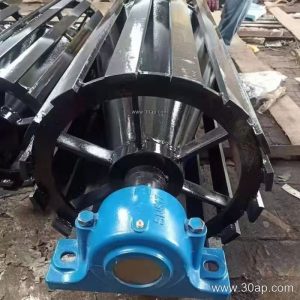
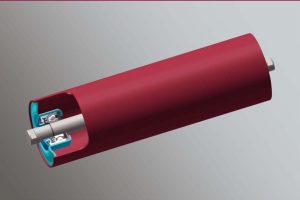
The core is usually a steel tube with welded end discs and a through shaft, fitted with sealed bearings. What sets this roller apart is the shell: rubber-covered, nylon-sleeved, or ceramic-faced rolls are common choices when wet or adhesive material is present. Some designs use a spiral or segmented profile so that any material that does stick is carried around and broken off rather than pressed flat.
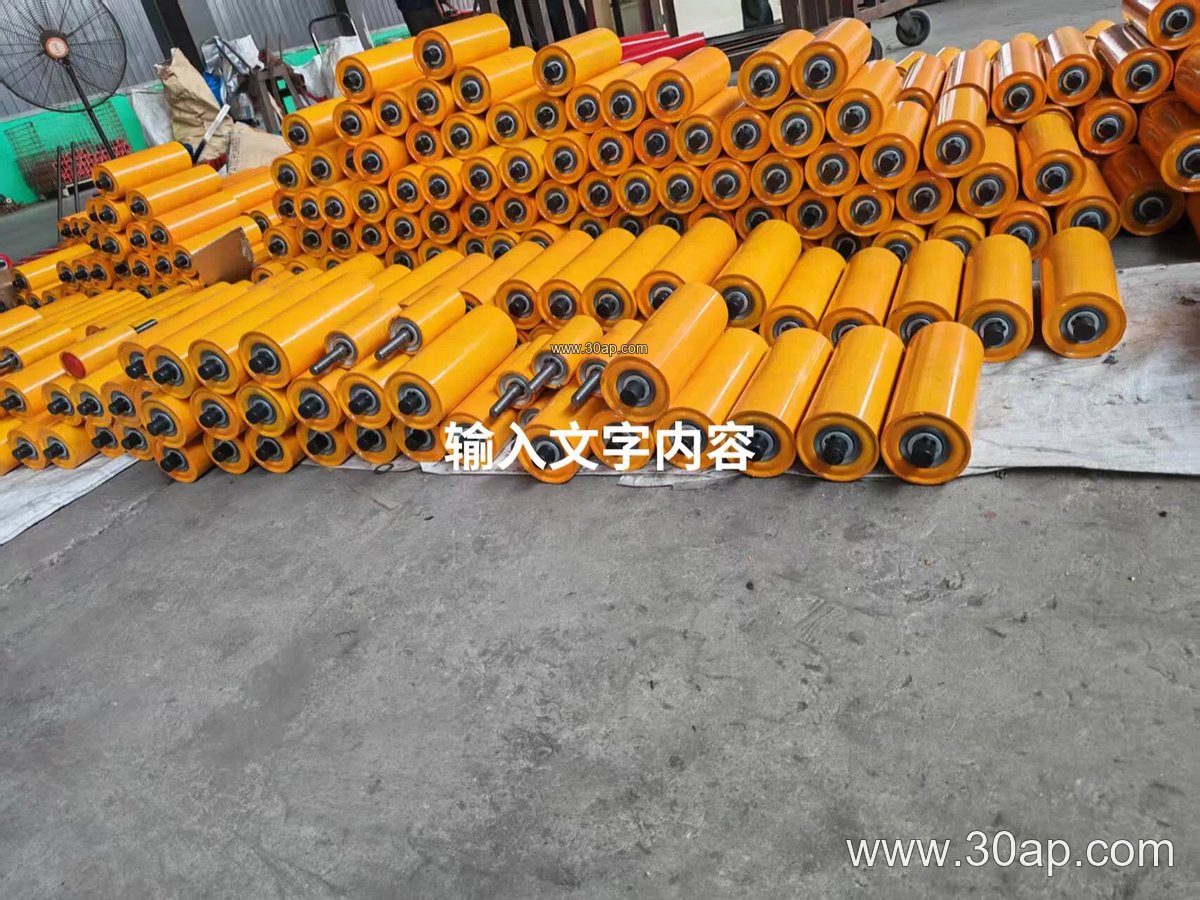
Sealing matters as much as the surface. Fine damp dust that reaches the bearing will shorten life quickly, so multi-labyrinth seals and greased-for-life bearing housings are typical. The table below shows representative reference values only; final selection follows the conveyor design.
| Item | Common reference range |
|---|---|
| Roller diameter | Ø89, Ø102, Ø108, Ø127, Ø133, Ø159 mm |
| Belt width | B500, B650, B800, B1000, B1200, B1400 mm |
| Trough angle | 20, 30, 35, 45 degrees |
| Roll surface | Steel tube, nylon, rubber ring, ceramic |
| Bearing | 6204, 6205, 6305, 6306, 6308 |
Roll length depends on belt width, trough angle, and whether the station is a single-roll, two-roll, or three-roll trough set. For a three-roll trough station, a B800 belt often uses a roll length near 315 mm and a B1200 belt near 465 mm, but side rolls and center rolls can differ, and these are examples rather than fixed pairings.
Where Sticky Material Shows Up
The obvious home for this roller is a sand and gravel line after a wet washing stage, where damp aggregate coats everything it touches. A second common setting is a coal preparation plant, where fine coal with high moisture content builds on return rolls and eventually drags on the belt. Cement plants handling damp raw meal and fertilizer plants working with hygroscopic product face similar conditions.
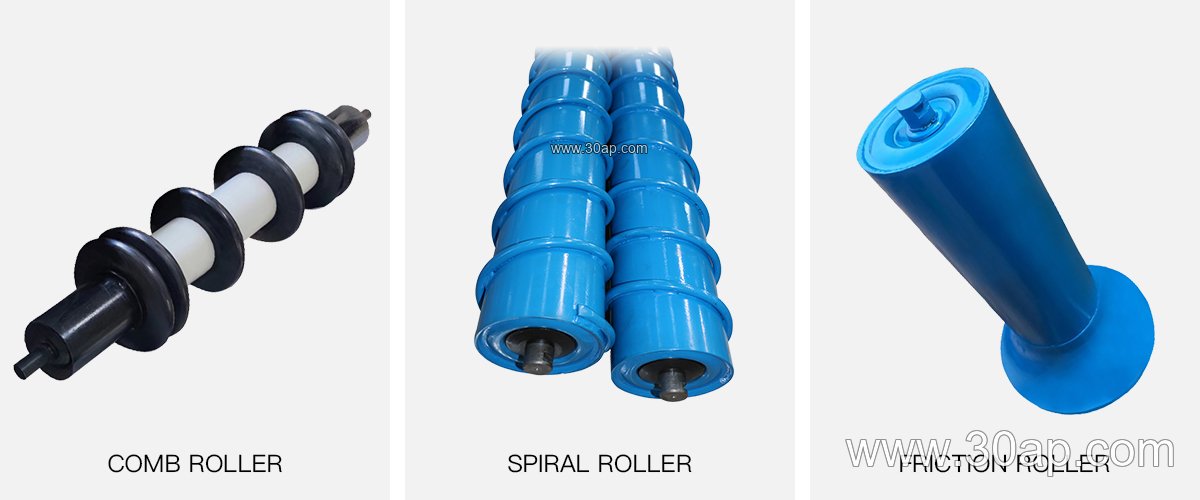
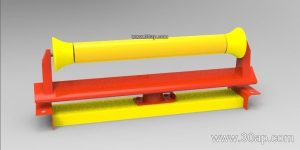
In these circuits the anti-sticking idler is most often used on the return side, where there is no material load to scrape the shell clean. Carrying-side positions at the loading zone may use a rubber-ring impact roller instead, since shock absorption rather than release is the priority there. Both belong to the same family of conveyor idler roller hardware and are chosen for different duties.
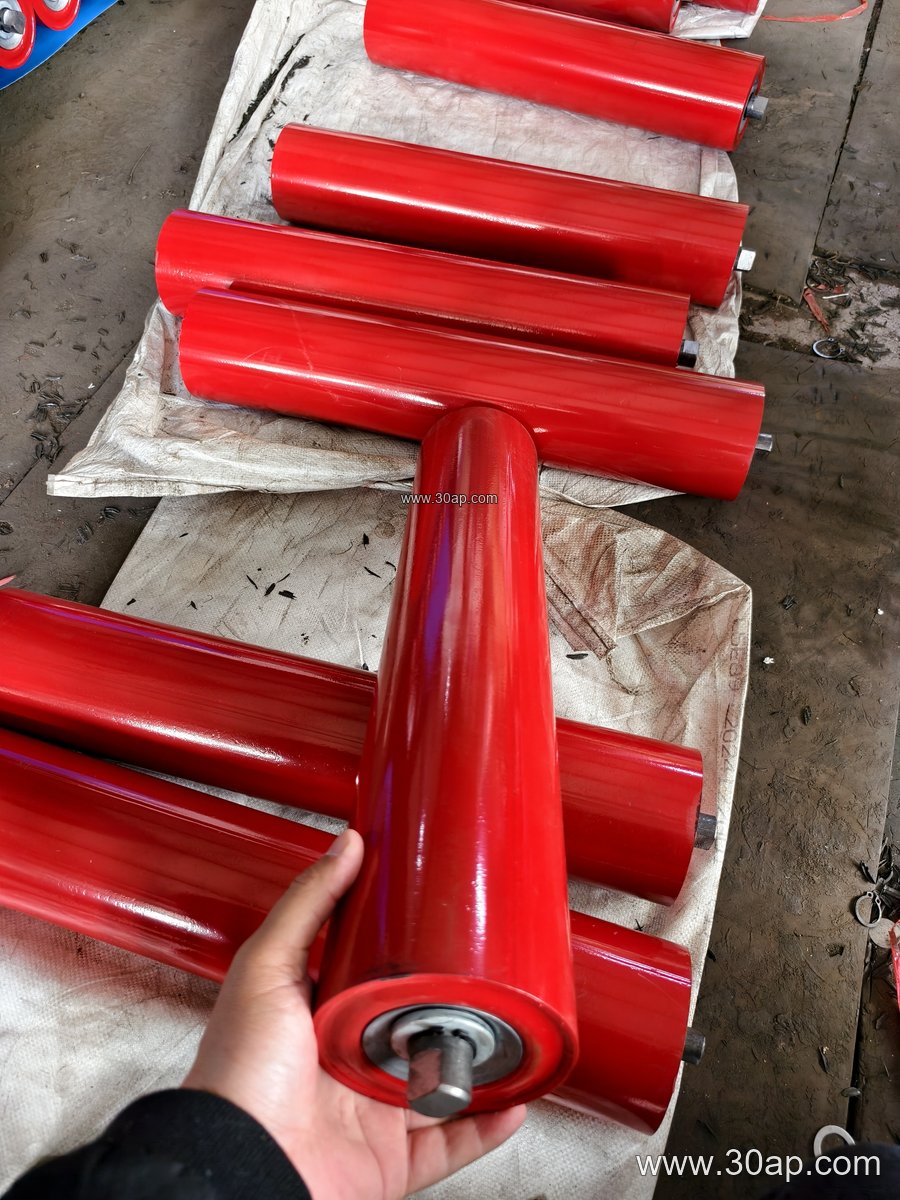
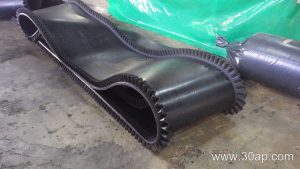
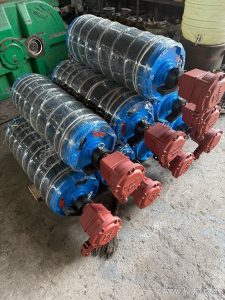
Where a conveyor pulley at the discharge end is fitted with a scraper, the return rollers downstream still do the daily work of keeping the belt clean. Matching a well-chosen roller set with an abrasion resistant conveyor belt and a properly tensioned skirt will usually outperform any single component upgrade.
Selection Points for Buyers
- Confirm the actual moisture and clay content of the material, not just the material name. Sticky behavior varies widely within one commodity.
- Check the belt speed and load; a roller that releases well at low speed may behave differently on a fast line.
- Ask for the seal arrangement and bearing size, since these determine service life in dusty conditions.
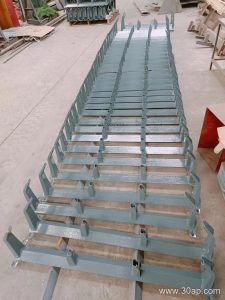
- Verify the shaft diameter and bracket spacing against the existing conveyor bracket and frame, so the roller drops in without modification.
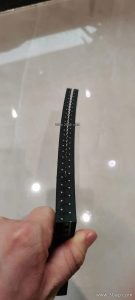
- Consider the belt cover grade. A smooth rubber cover releases damp fines better than a heavily textured one in some applications.
Installation is straightforward: align the station square to the belt, keep rollers free of paint and burrs, and check that the roll turns by hand before tensioning. During operation, inspect for a polished ring of material on the shell; that ring is the early sign that buildup has started and the roller should be cleaned or reviewed.
For plants running several conveyors, keeping a small stock of the sizes used on the return side reduces downtime. A roller that releases material well also reduces spillage at transfer points, which in turn lowers cleanup labor and the risk of belt misalignment. Used as part of a balanced conveyor design, the anti-sticking idler is a small component with a clear effect on belt life and housekeeping in wet, tacky bulk handling.