What a Conveyor Idler Bracket Does
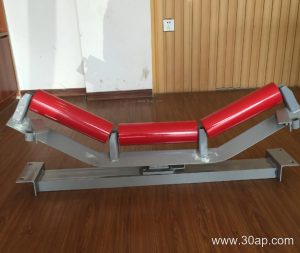
A conveyor idler bracket is the steel support that holds idler rollers in the right position under the conveyor belt. It keeps the rollers at the correct height, spacing and trough angle so the belt runs smoothly instead of sagging or rubbing. On a quarry conveyor or a coal mining conveyor, this small frame often decides whether the belt tracks well or wanders off line.
The bracket also carries load. Every tonne of ore, aggregate or cement clinker passes over the rollers, and the bracket transfers that force into the conveyor stringer. A well-made bracket keeps the roller shaft square to the belt and spreads the load evenly along the structure.
How the Bracket Is Built
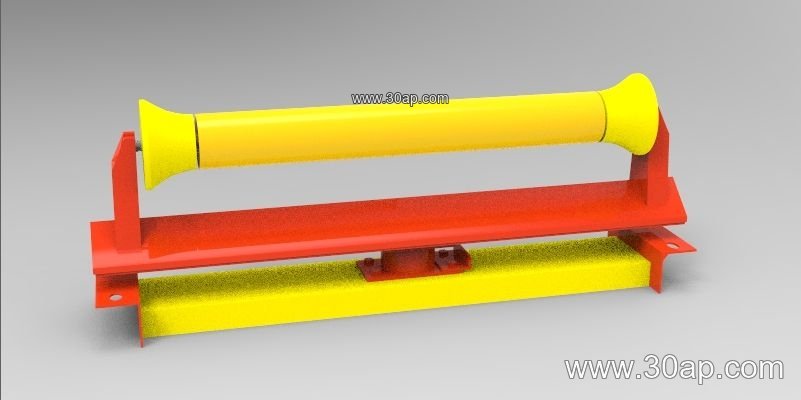
Most brackets are fabricated from angle steel, channel steel or folded steel plate. The frame is drilled or slotted so the idler roller shaft can be fixed with pins, bolts or hooks. Slotted holes allow small position changes during installation and alignment.
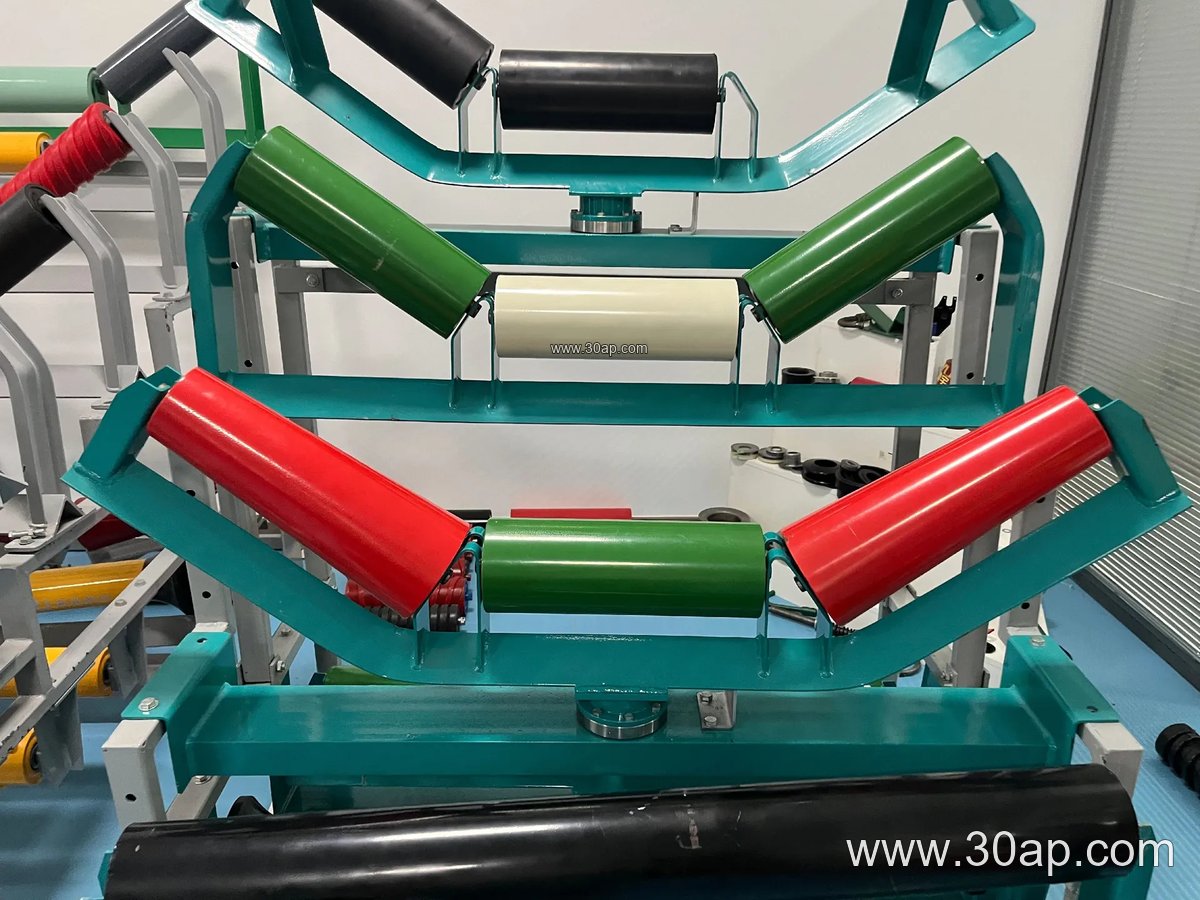
Common forms include:
- Troughing brackets that support three rollers at a set trough angle
- Transition brackets used near a conveyor pulley where the belt changes shape
- Return brackets and V-return brackets that carry the empty belt
- Impact brackets placed under loading points to absorb shock
- Self-aligning brackets that help correct belt drift
- Adjustable brackets that allow the trough angle to be changed
Surface finish matters in wet or dusty plants. A painted or galvanized frame resists corrosion better in a wash plant or a port terminal handling damp bulk material.
Matching Brackets to Belt Width and Roller Diameter
Bracket length and mounting hole spacing follow the belt width and the chosen trough angle. A B650 frame with 30 degrees and Ø89 rollers is a very different part from a B1400 frame with 45 degrees and Ø133 rollers. Neither combination is a universal rule; the correct set depends on the conveyor design, belt load and transition distance.
| Belt width | Typical trough angle | Common roller diameter |
|---|---|---|
| B500 to B800 | 20 to 35 degrees | Ø89 to Ø108 |
| B1000 to B1400 | 30 to 45 degrees | Ø108 to Ø159 |
| B1600 to B2000 | 35 to 45 degrees | Ø133 to Ø194 |
These values are reference ranges, not fixed pairings. A wide belt can run with a modest angle in some layouts, and a narrow belt may need a deep trough for high capacity. Hole pitch and crossbeam length should always be confirmed against the actual stringer drawing.
Where These Frames Are Used
You will find idler brackets in almost every bulk handling line. In a limestone mine or crushing and screening circuit, troughing brackets support the belt that carries run-of-mine rock to the crusher. In a power plant coal yard, they hold rollers on long transfer conveyors where steady alignment reduces spillage. Cement plants use them on clinker and raw meal lines, and fertilizer or grain silo operations rely on clean, well-aligned frames to protect the belt edge.
The bracket works together with the conveyor belt itself. A heavy-duty mining conveyor belt or an abrasion resistant conveyor belt may be stiff and thick, so the transition brackets near the tail pulley must allow enough distance for the belt to close into a trough without cracking. Where a steel cord conveyor belt is used on a long overland route, bracket alignment becomes even more critical because the belt has little tolerance for uneven roller contact.
Fixed or Adjustable
Fixed brackets are simple and rigid, which suits stable, well-designed conveyors. Adjustable brackets let maintenance staff change the trough angle or correct roller contact after the belt has been loaded. They are useful on conveyors that handle mixed materials or where belt training is difficult. A slight forward tilt of about 1.5 to 2 degrees is sometimes built into brackets to help keep the belt centered.
For more on matching frames with rollers and belts, see conveyor idler bracket and related conveyor components on our site.
Buyer Checklist
- Confirm belt width, trough angle and roller diameter before ordering
- Check mounting hole spacing against the existing stringer
- Choose material and finish for the site conditions
- Decide between fixed and adjustable frames based on maintenance needs
- Ask how the bracket handles impact at loading points
A conveyor idler bracket is a low-cost part with a large effect on belt life. Getting the frame, roller and belt working as one system keeps downtime low in any mine, plant or terminal.