What an Industrial Conveyor Pulley Does on a Bulk Handling Line
An industrial conveyor pulley is the rotating drum that transmits motion to the belt and sets its path. On a quarry conveyor or a cement plant clinker line, the pulley is the point where drive force enters the belt and where direction changes are made. The drum turns with the conveyor belt, and friction between the lagged shell and the belt cover carries the load. Because the pulley sits at the heart of the tension path, its diameter, shell width, shaft size and surface treatment all influence belt life and starting reliability.
Drive, tail and bend pulleys are distinct positions with different duties, and they are not interchangeable. Drive pulleys, sometimes called head or discharge pulleys, deliver torque. Tail pulleys return the belt at the loading end. Bend and take-up pulleys redirect the belt and maintain tension around the loop.
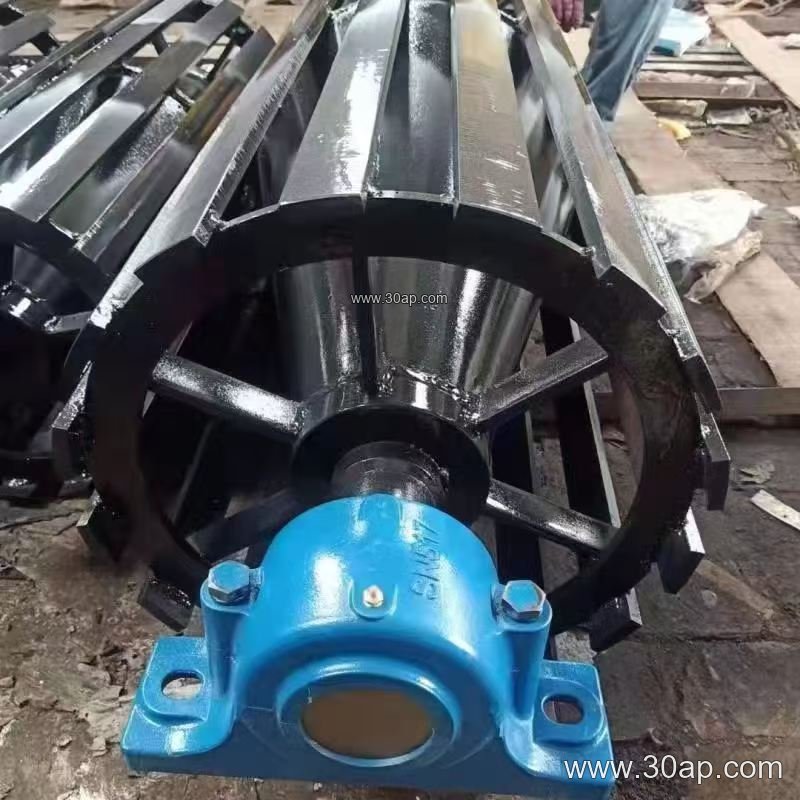
Construction Details That Matter
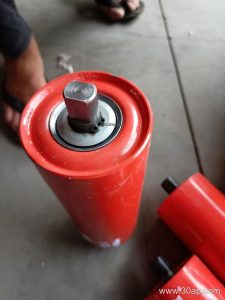
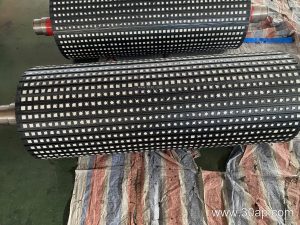
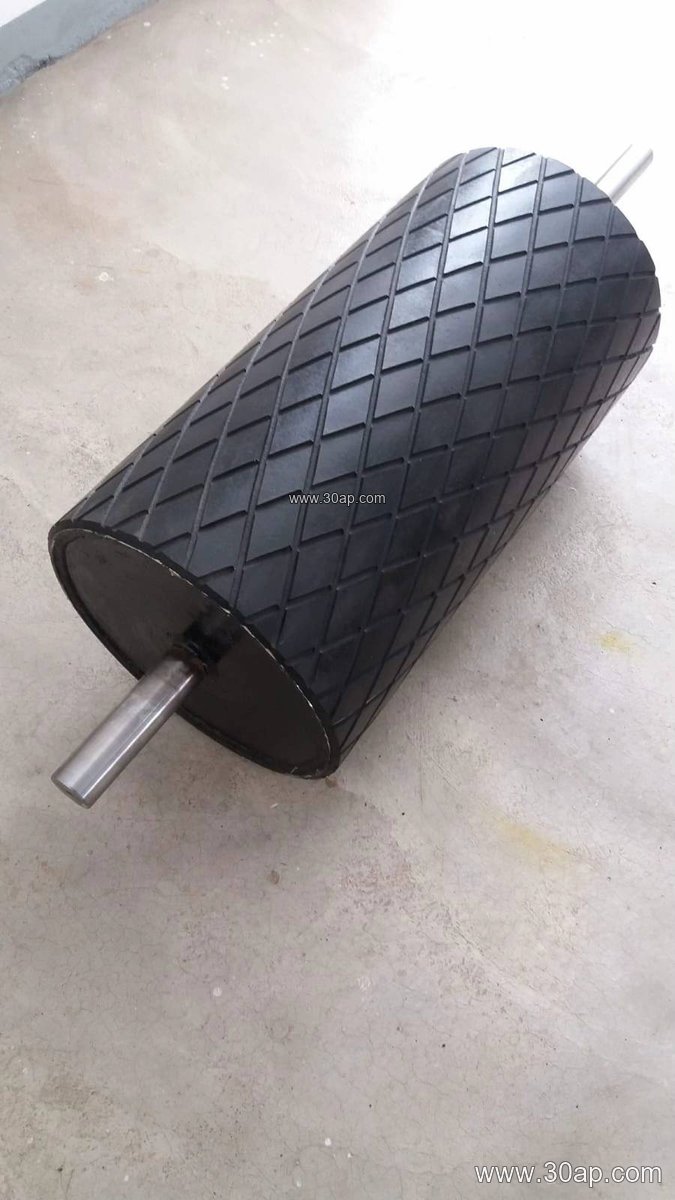
A typical drum is built from a rolled steel shell, two end discs, a hub and a through shaft. The shell is machined for balance and then covered with rubber, ceramic or plain steel depending on grip requirements. Common surface forms include plain face, hot vulcanized rubber, cold bonded rubber, diamond grooving, herringbone grooving and ceramic tiles. Lagging thickness is often 8, 10, 12, 15 or 20 mm, selected with the belt cover and the wet or dusty conditions in mind. A heavy-duty mining conveyor belt with a thick abrasion resistant cover usually pairs with a lagged drive drum, while a light aggregate conveyor may run a plain face.
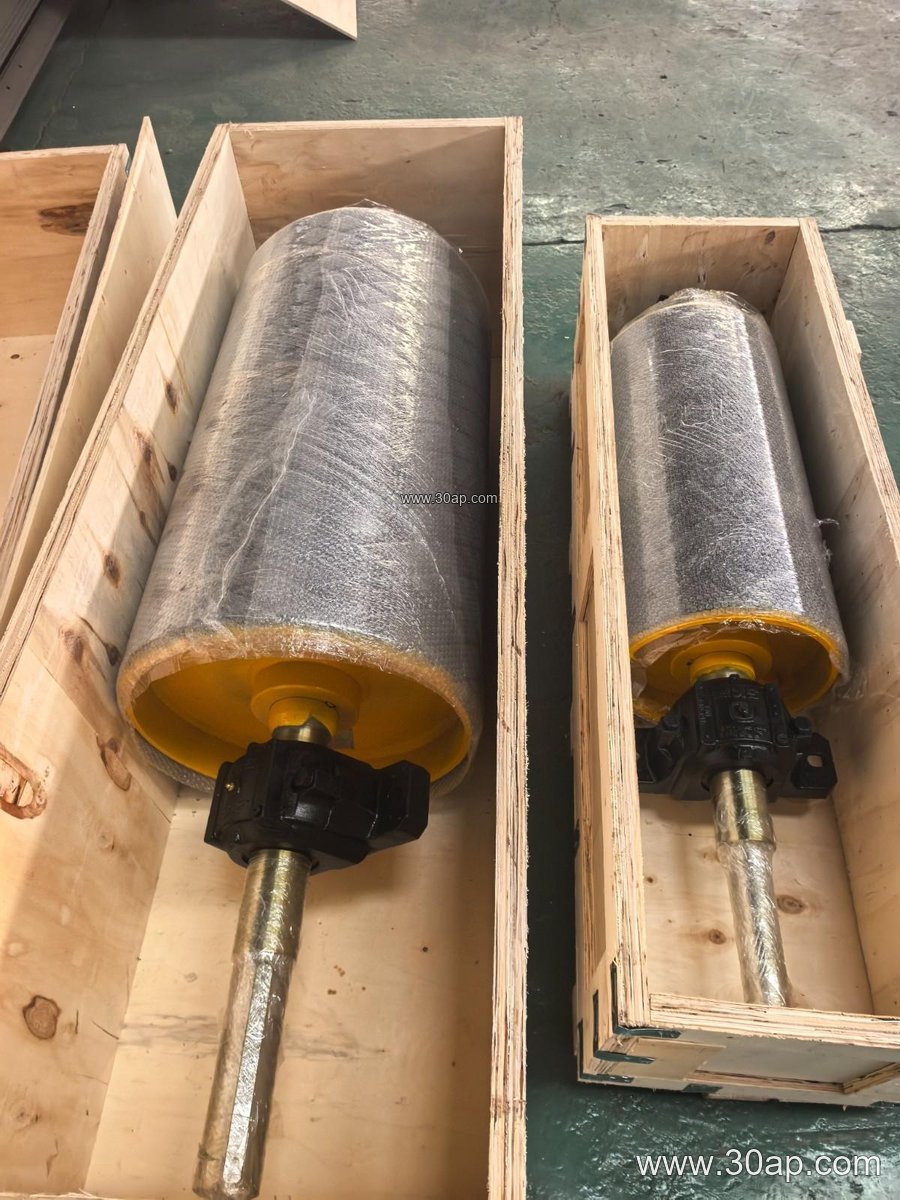
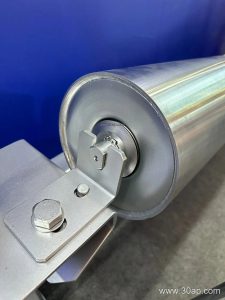
The shaft is sized by torque and radial load, not by belt width alone. Shaft diameters such as Ø80, Ø100, Ø120, Ø140 and Ø160 appear across many installations, but the final value follows the drive calculation. Bearing selection, locking assemblies and keyways follow the same logic. A conveyor bracket or pillow block bearing must sit on a rigid frame so the pulley stays square to the belt centerline.
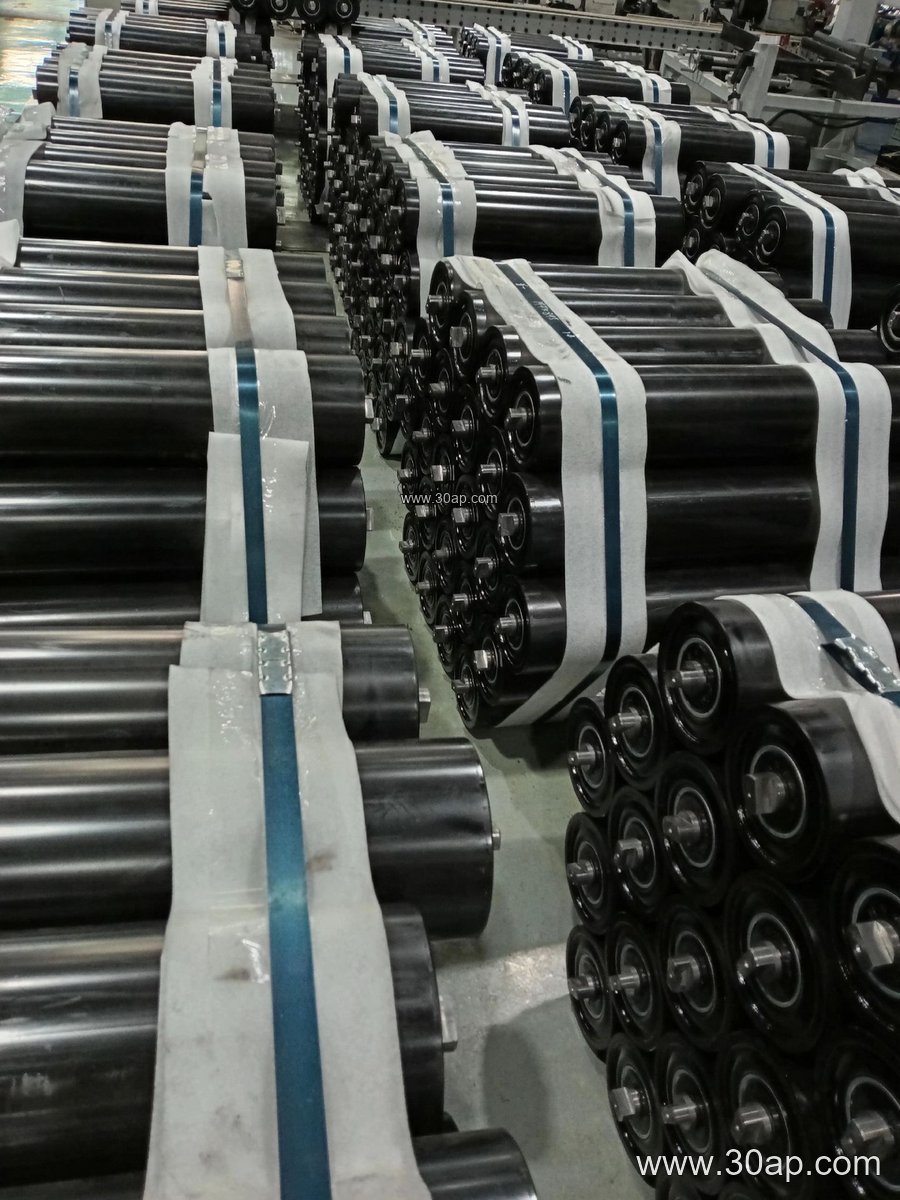
Matching Pulley Size to Belt Width
The shell face is normally wider than the belt so the belt stays supported during slight misalignment. Reference combinations such as B800 × Ø500, B1200 × Ø1000 and B1400 × Ø800 are common in design discussions, but no belt width locks a pulley to one diameter. A long overland conveyor may use a larger drum to reduce belt bending stress, while a short transfer point can use a smaller one. The table below shows typical face widths against belt widths for orientation only.
| Belt width | Typical pulley face width | Common diameter range |
|---|---|---|
| B500 | about 600 mm | Ø250 to Ø400 |
| B650 | about 750 mm | Ø315 to Ø500 |
| B800 | about 950 mm | Ø400 to Ø630 |
| B1000 | about 1150 mm | Ø500 to Ø800 |
| B1200 | about 1400 mm | Ø630 to Ø1000 |
| B1400 | about 1600 mm | Ø800 to Ø1250 |
| B1600 | about 1800 mm | Ø1000 to Ø1400 |
| B1800 | about 2000 mm | Ø1250 to Ø1600 |
These figures are reference data, not universal specifications. Final dimensions are set by the conveyor design.
Applications Across Heavy Industry
In an aggregate quarry, a primary crusher conveyor often uses a large head pulley with diamond lagging to hold grip on a wet, gritty belt. In a cement plant, clinker handling favors heat tolerant covers and robust lagging because the material arrives warm and abrasive. Power plant coal yards and port bulk terminals rely on consistent pulley alignment to keep a long conveyor belt centered at high tonnage. Underground coal mining places a premium on flame retardant conveyor belt grades, and the pulley bearing seals must keep fine dust out of the housing.
Different belt constructions load the drum differently. A steel cord conveyor belt is stiff and needs a generous drum diameter, while a multi-ply fabric core or EP conveyor belt tolerates a tighter bend. A chevron conveyor belt or corrugated sidewall belt may require a plain face rather than grooved lagging so the cleats and ribs do not catch. When specifying, state the belt type, the material carried and the duty cycle so the drum and lagging can be matched.
Buyer Checklist Before Ordering
- Confirm the pulley position: drive, tail, bend, take-up or snub.
- Give belt width, belt type and belt thickness, not just the drum size.
- Specify lagging form and thickness, for example 12 mm diamond rubber.
- Provide shaft diameter, bearing centers and any keyway or locking assembly details.
- Describe the environment: dust, water, heat, oil or corrosive splash.
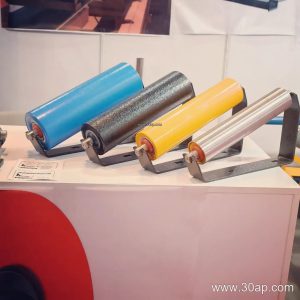
- Check that the conveyor bracket and idler roller frame share the same centerline.
For help matching an industrial conveyor pulley to your belt and layout, visit baodinghuayue.com and review the drum, roller and belt options together. Correct selection keeps the belt tracking true and reduces unplanned stops.