What a Heavy-Duty Welded Pulley Is
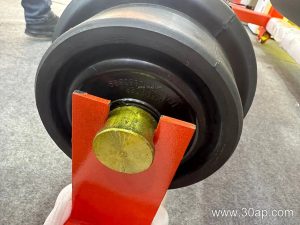
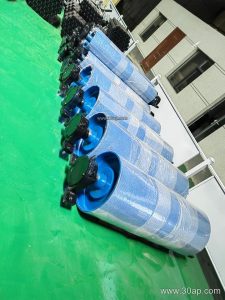
A heavy-duty welded pulley is a conveyor pulley whose shell, end discs, and hub assembly are joined by welding to form a robust, torsion-resistant drum. It carries the conveyor belt at the head, tail, or tensioning point of a bulk handling line, and it is built for plants where shock loads and continuous duty are normal rather than exceptional. In a limestone quarry or a cement plant clinker line, this welded conveyor pulley often replaces lighter fabricated drums because the welded structure tolerates higher radial loads and repeated start-stop cycles.
The same product is also described accurately as a welded conveyor drum or welded belt pulley. These are equivalent names for the same item. Drive pulleys, tail pulleys, and bend pulleys are distinct positions on a conveyor and are not interchangeable, so the position should always be confirmed before an order is placed.
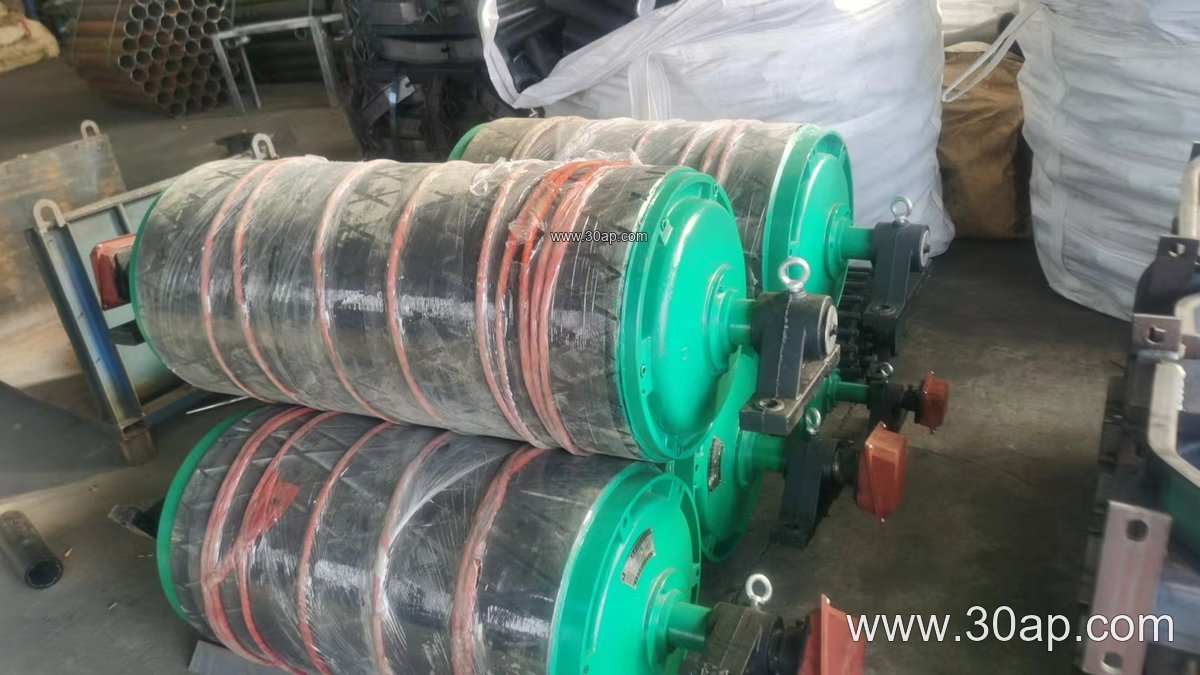
How the Welded Construction Is Assembled
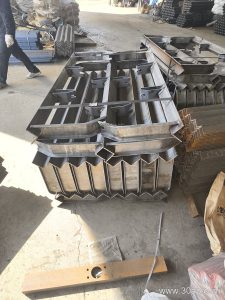
The shell is usually rolled from steel plate, machined at the ends, and welded to dished or flat end discs. A through shaft or stub shafts are fitted into machined hubs, and the welds are sequenced to limit distortion. After welding, the shell is turned so the belt runs on a true cylindrical surface, and the journals are finished to suit the bearing housings and conveyor bracket arrangement.
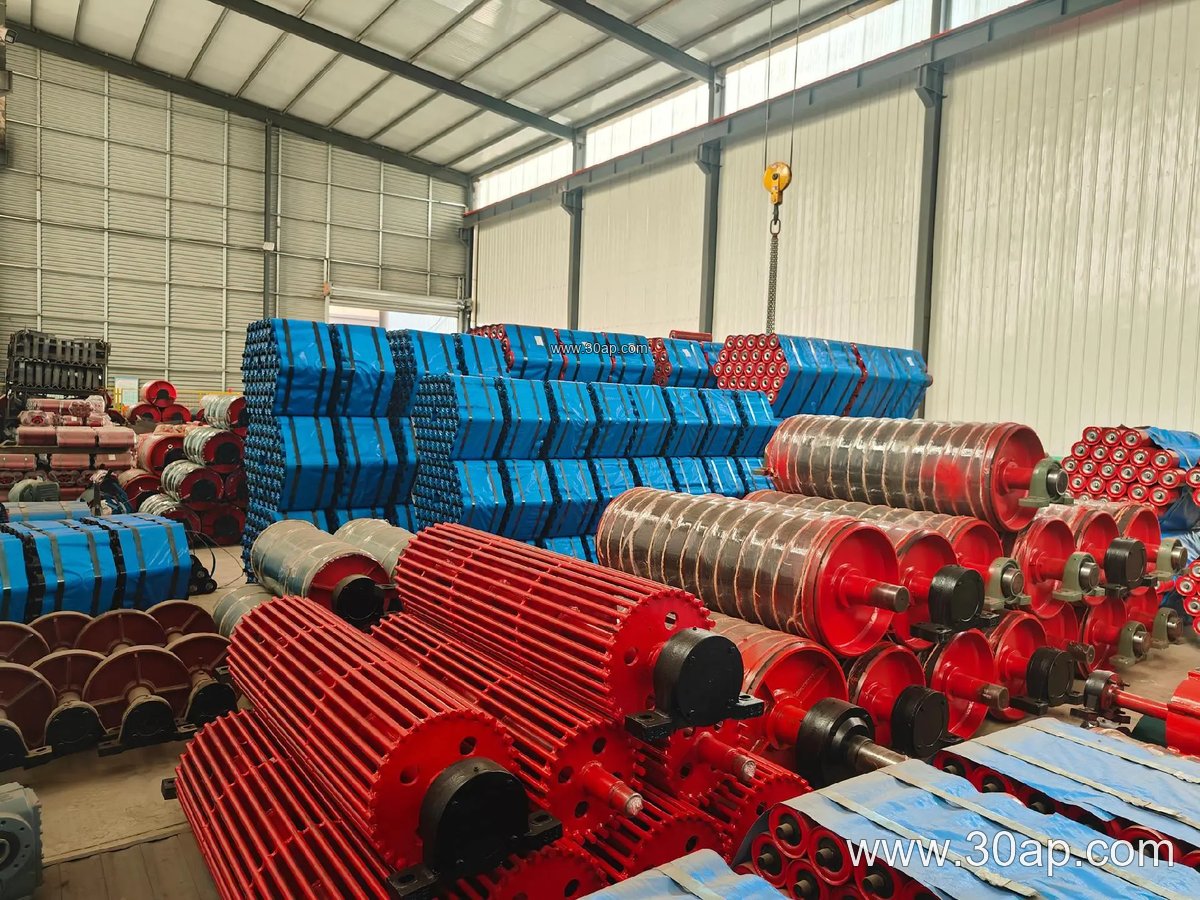
- Rolled steel shell with machined face
- Welded end discs and hub assembly
- Through shaft or stub shaft options
- Plain, lagged, or ceramic-faced surface
- Bearing housings matched to the conveyor bracket
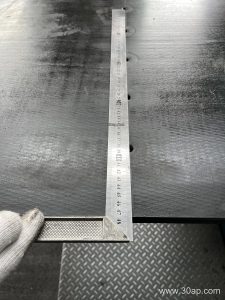
Surface treatment matters as much as the weld. Plain finish suits clean, dry duties; rubber lagging improves grip on a drive pulley; ceramic lagging is chosen where abrasive dust and wet conditions shorten belt life. Lagging thickness is commonly 8, 10, 12, 15, or 20 mm, selected by duty rather than by habit.
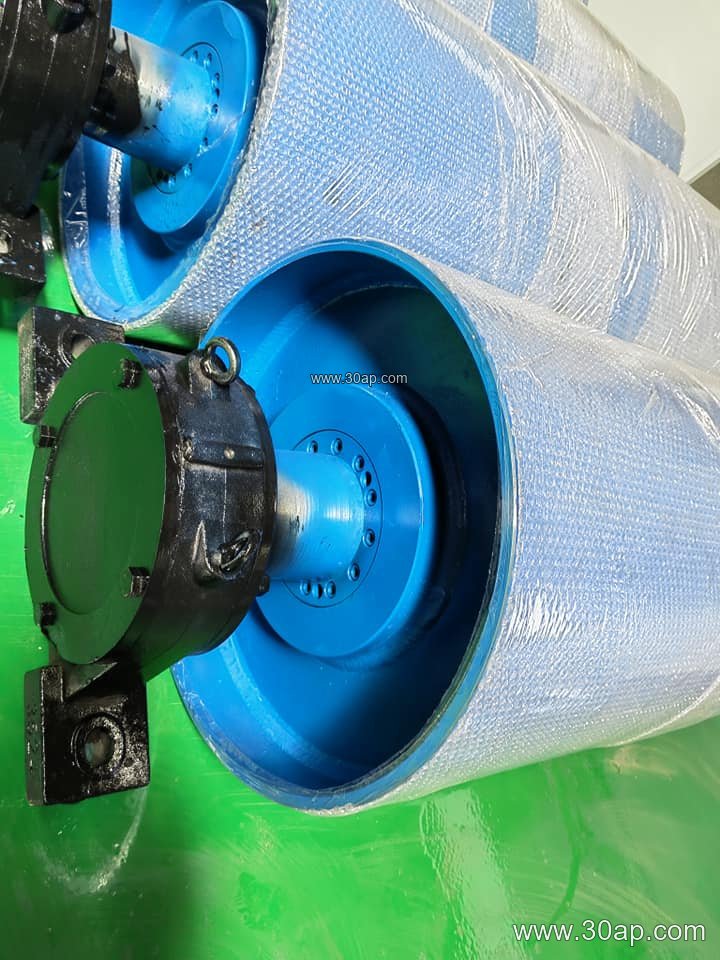
Where the Welded Drum Fits in a Conveyor
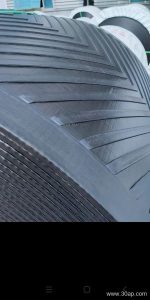
In a coal handling system at a power plant, a heavy-duty welded pulley is often the head or drive drum, pulling a flame retardant conveyor belt or a steel cord conveyor belt through the discharge. At the tail end, a welded tail drum supports the belt as it loads, while tensioning and bend positions use smaller welded drums to route the belt. A quarry conveyor belt or an aggregate conveyor belt running from a crusher will usually see high impact and grit, so the pulley face and the idler roller set should be reviewed together.
In an underground coal mining conveyor belt system, flame retardant and anti-static properties belong mainly to the belt, while the welded pulley contributes mechanical reliability. In a port bulk terminal, large welded drums handle wide belts and heavy tensions. The table below gives common reference combinations; these are reference data, not fixed pairings, and final sizing follows the actual belt tension and shaft load.
| Belt width | Typical pulley face width | Common diameter range | Typical shaft diameter range |
|---|---|---|---|
| B400 | about 500 mm | Ø200 to Ø400 | Ø50 to Ø80 |
| B650 | about 750 mm | Ø250 to Ø500 | Ø60 to Ø100 |
| B800 | about 950 mm | Ø315 to Ø630 | Ø70 to Ø120 |
| B1000 | about 1150 mm | Ø400 to Ø800 | Ø80 to Ø140 |
| B1200 | about 1400 mm | Ø500 to Ø1000 | Ø90 to Ø160 |
| B1400 | about 1600 mm | Ø630 to Ø1250 | Ø100 to Ø180 |
| B1600 | about 1800 mm | Ø800 to Ø1400 | Ø120 to Ø200 |
| B1800 | about 2000 mm | Ø1000 to Ø1600 | Ø140 to Ø200 |
A combination such as B800 × Ø500 or B1200 × Ø1000 is common in practice, but no single belt width dictates one diameter, and shaft size must be calculated from torque and bearing load.
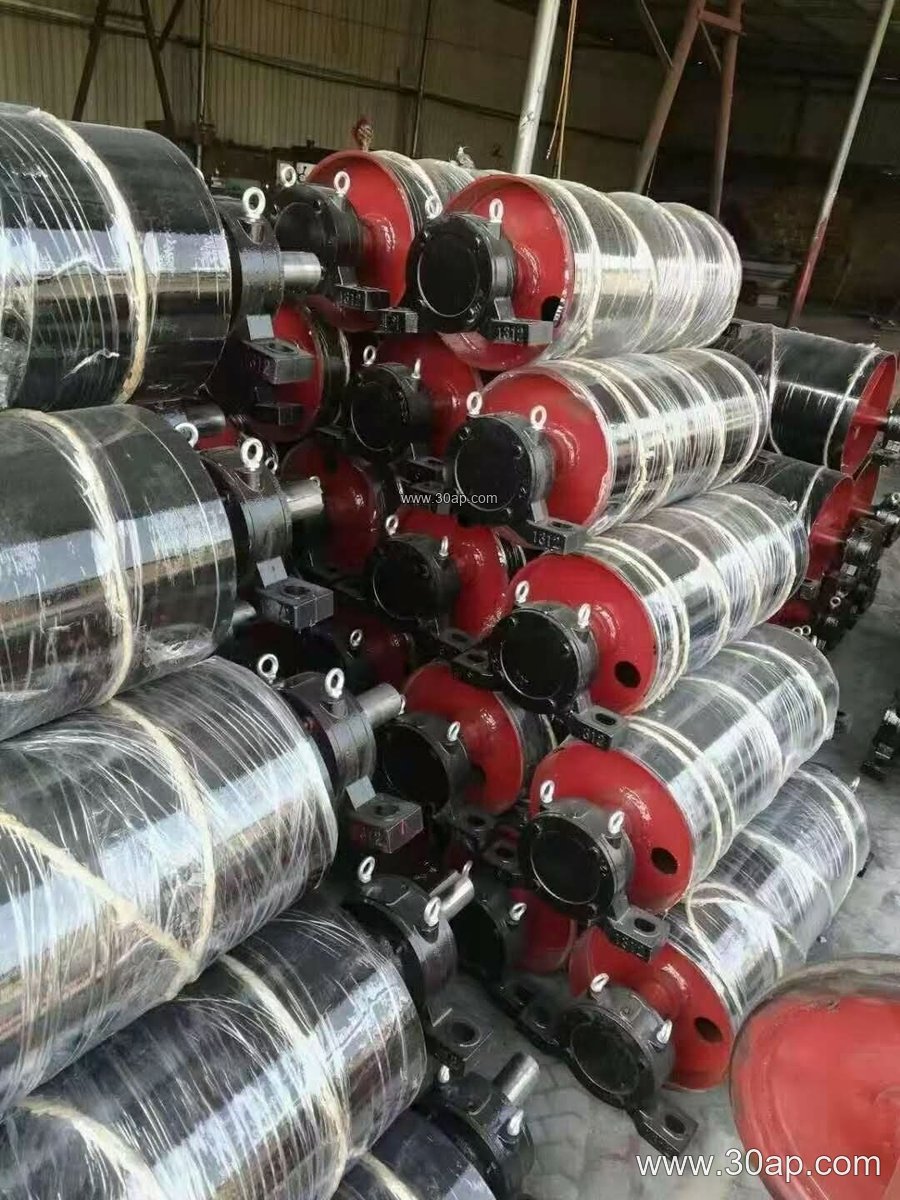
Selection Points for Buyers
Start with the belt line data: belt width, belt type, working tension, speed, and the position of the drum. A high strength conveyor belt running at high tension needs a larger shaft and heavier hubs than a light fabric core conveyor belt on the same width. Confirm the lagging type and thickness, the bearing type, and the mounting dimensions that must match the existing conveyor bracket. Ask for the weld inspection method and the dynamic balance grade if the drum will run at speed.
For abrasive duties such as iron ore or copper ore, pair the pulley with an abrasion resistant conveyor belt and check that the lagging matches the grit level. For hot clinker, a heat resistant conveyor belt belongs on the same line, but the pulley still needs bearing clearance for thermal growth. In a sand making plant or stone crushing circuit, a crusher conveyor belt and impact resistant conveyor belt work with welded drums that can absorb surge loads. Whatever the site, keep the drum, the conveyor pulley alignment, and the conveyor belt tracking in one maintenance plan.