What a Trough Idler Bracket Set Does
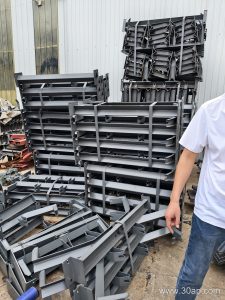
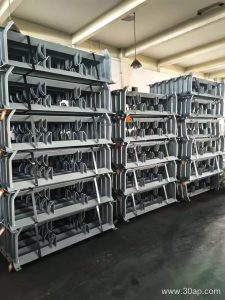
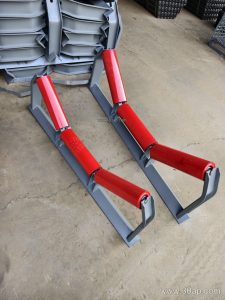
A trough idler bracket set is the structural frame that holds the three (or sometimes five) idler rollers in a troughed profile under the carrying side of a conveyor belt. It is not a roller and not a pulley; it is the mounting hardware that positions the idlers at the correct trough angle so the belt forms a stable channel for bulk material. In a typical arrangement, the set includes a center bracket and two side brackets, or a single welded frame with slotted or bolted positions for each idler. Buyers often call it a troughing idler frame, and the two terms refer to the same assembly.
This bracket set is distinct from a return bracket or a transition bracket, which serve different positions along the conveyor. The trough set is specifically the carrying-side support. It is used in quarry lines, coal handling plants, cement kilns, power station coal yards, and aggregate crushing circuits where a rubber conveyor belt or EP conveyor belt runs loaded.
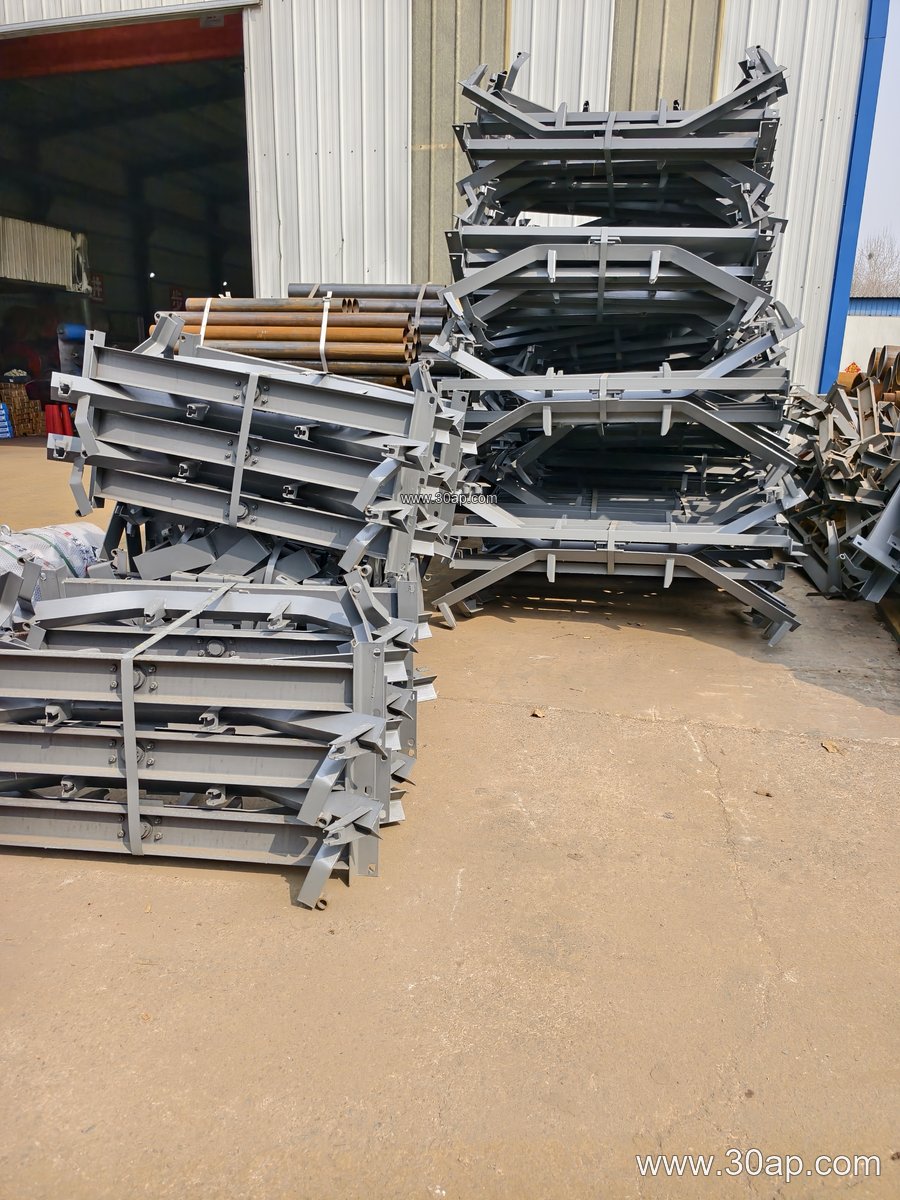
Construction and Materials
Most trough idler bracket sets are fabricated from angle steel, channel steel, or folded steel plate. The material thickness and the welding pattern are chosen to suit the belt width and the load. A common finish is painted or galvanized, though the working environment often decides the coating. In a coal mining conveyor belt system, for example, the bracket may be specified with a heavier section to resist vibration and impact from lump coal.
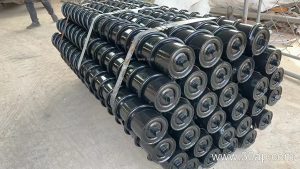
The bracket set usually includes mounting holes or slots for the idler shafts, and the side brackets are angled to create the trough. The angle is fixed on a standard set, while an adjustable bracket set allows the trough angle to be changed within a range. A front-tilted version, often around 1.5 to 2 degrees, is used to help center the belt and reduce misalignment. The set does not include the idlers themselves, so the buyer must match the bracket to the chosen idler roller diameter and shaft ends.
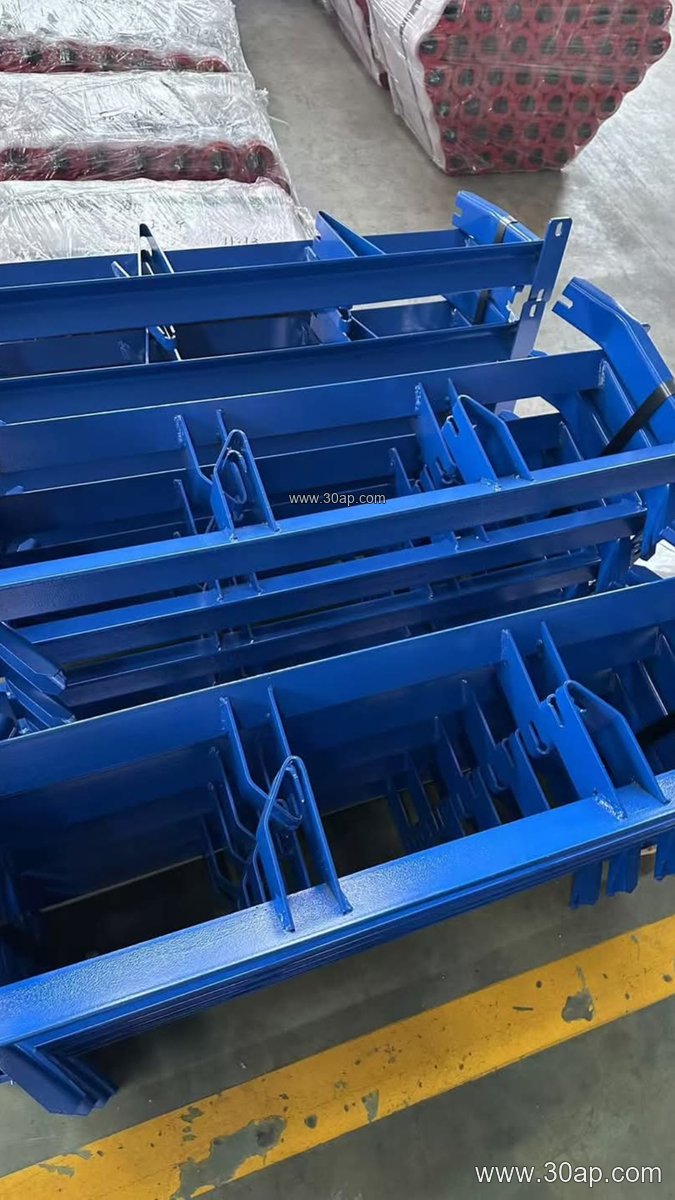
Matching Belt Width, Trough Angle, and Roller Diameter
There is no single bracket size for every conveyor. A B800 belt may run at 30 or 35 degrees with a Ø108 idler, while a B1200 system may use 45 degrees and a Ø133 roller. The table below shows common reference combinations; these are examples, not fixed rules, and the final choice depends on the conveyor design, material lump size, and belt tension.
| Belt Width | Trough Angle | Common Idler Diameter | Typical Bracket Form |
|---|---|---|---|
| B500 | 20–30° | Ø89 | Fixed three-roller frame |
| B650 | 30° | Ø89–Ø108 | Fixed or adjustable |
| B800 | 30–35° | Ø108 | Fixed, front-tilt option |
| B1000 | 35° | Ø108–Ø133 | Fixed or adjustable |
| B1200 | 35–45° | Ø133 | Heavy-duty fixed |
| B1400 | 35–45° | Ø133–Ø159 | Heavy-duty fixed |
| B1600 | 45° | Ø159 | Heavy-duty fixed |
| B1800 | 45° | Ø159–Ø194 | Heavy-duty fixed |
| B2000 | 45° | Ø194 | Heavy-duty fixed |
The mounting hole spacing and crossbeam length change with belt width and trough angle, so they are not universal. A bracket set for a 1200mm wide conveyor belt will not fit a 650mm frame. The buyer should confirm the idler shaft diameter and the bracket slot dimensions before ordering.
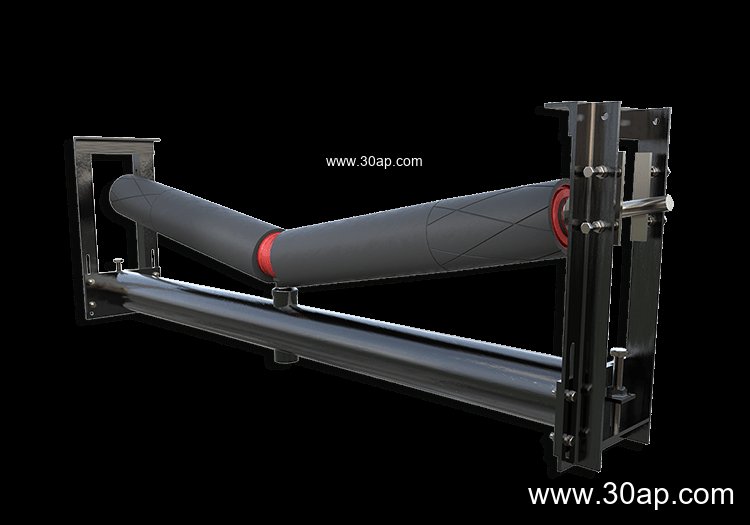
Where the Bracket Set Fits in the Conveyor
The trough idler bracket set is bolted to the conveyor stringer or frame at regular intervals along the carrying run. It works together with the conveyor belt, the idler rollers, and the conveyor pulley at the drive and tail ends. In a cement plant or a power plant coal yard, the bracket set supports an abrasion resistant conveyor belt or a flame retardant conveyor belt carrying clinker, limestone, or coal. In a sand and gravel line, it may hold idlers under a crusher conveyor belt or an aggregate conveyor belt.
The set is not used at the drive pulley or the tail pulley; those positions use different support structures. It is also not a substitute for a transition bracket where the belt changes from troughed to flat near a pulley. A correct installation keeps the belt supported and reduces spillage, belt edge damage, and idler misalignment.
Buyer Checklist
- Confirm the belt width and the required trough angle; adjustable brackets allow a range, fixed brackets do not.
- Match the idler diameter and shaft end type to the bracket slots.
- Check the frame material and finish against the site conditions, especially in coal mining conveyor belt or underground mining conveyor belt service.
- Ask for the mounting hole spacing and crossbeam length, since these vary with belt width.
- For heavy-duty mining conveyor belt or steel cord conveyor belt installations, specify a reinforced bracket set.
For more information on compatible conveyor components, visit our site for conveyor belt, idler roller, and conveyor bracket references at www.example.com/conveyor-bracket. A well-matched trough bracket set keeps the belt profile stable and extends the service life of the idlers and the belt itself.