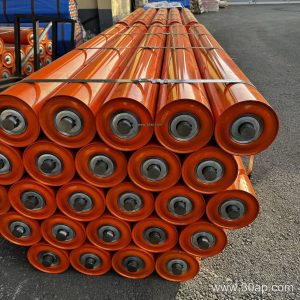
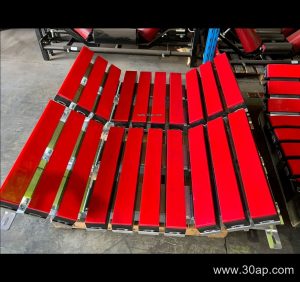
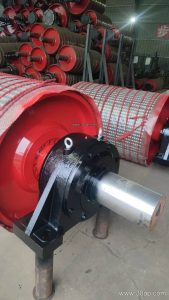
What a Heavy-Duty Steel Conveyor Bracket Does on a Conveyor Line
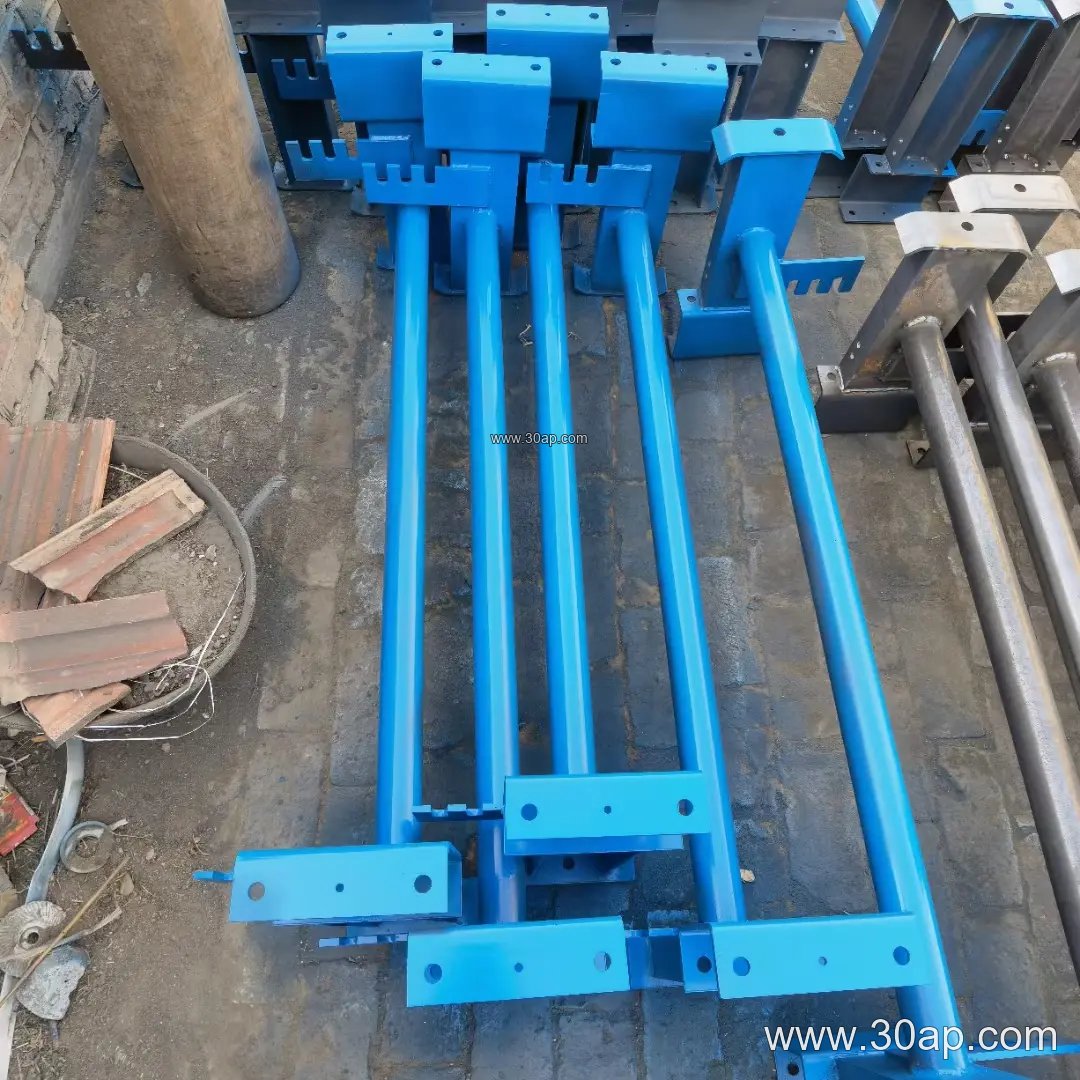
A Heavy-Duty Steel Conveyor Bracket is the support structure that holds the idler roller assembly at the correct position and trough angle along a conveyor frame. It carries the weight of the conveyor belt, the material load, and the dynamic forces of start-up and impact. In a quarry, a coal preparation plant, or a cement plant, this steel bracket is often the part that decides whether the idler line stays aligned after years of vibration and dust.
The bracket is not a single universal item. Trough brackets, return brackets, transition brackets, self-aligning brackets, and impact brackets each sit at a different point in the conveyor and do a different job. Choosing the right subtype for each position matters as much as the steel thickness.
How the Bracket Is Built
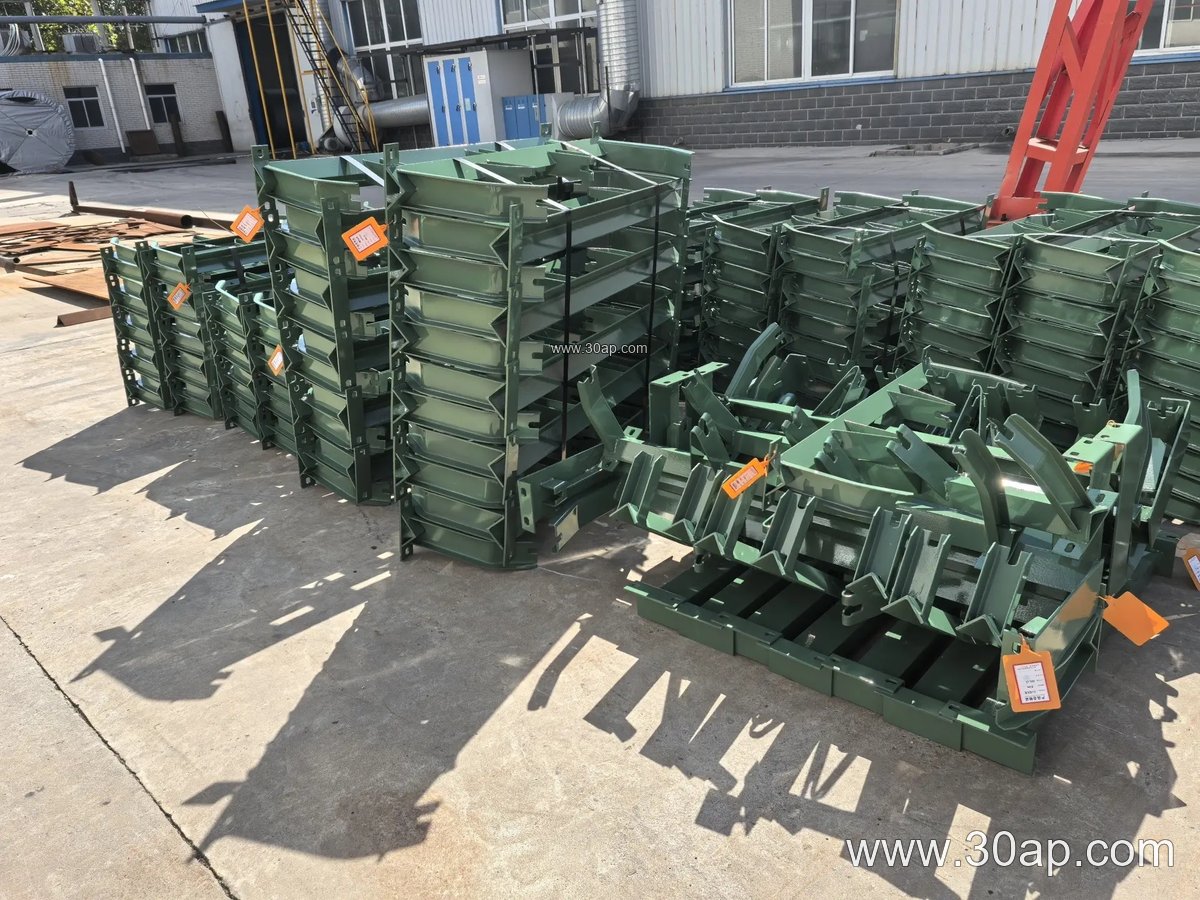
Most heavy-duty steel conveyor brackets are fabricated from angle steel, channel steel, or bent steel plate. The bending and welding must keep the mounting faces flat, because a twisted bracket will tilt the idler roller and cause belt tracking problems. Common construction details include:
- Slotted or drilled mounting holes so the bracket can be adjusted during alignment
- Reinforced gussets at the welded joints for impact and fatigue resistance
- Hot-dip galvanized or painted finish for humid or dusty service conditions
- Replaceable wear pads or rubber cushions on impact brackets
The bracket geometry follows the belt width and the required trough angle. Hole spacing and crossbeam length vary with the design, so a bracket for one belt width is not a drop-in fit for another.
Common Reference Ranges
The values below are typical reference points, not fixed rules. Actual bracket dimensions should be confirmed against the conveyor design drawing.
| Parameter | Common Range | Notes |
|---|---|---|
| Belt width | B500 to B2200 | Bracket length and hole spacing change with width |
| Trough angle | 20, 30, 35, 45 degrees | Adjustable brackets cover several angles |
| Idler diameter | Ø89, Ø108, Ø133, Ø159, Ø194 | Matched to load and belt speed |
| Material | Angle steel, channel steel, bent plate | Thickness by load calculation |
| Bracket type | Trough, return, transition, self-aligning, impact, adjustable | Selected by position on the line |
A bracket described as B800, 35 degrees, Ø108 is a common combination for medium-duty aggregate lines, while B1200, 45 degrees, Ø133 often appears on higher-capacity primary crushing circuits. These are examples, not mandatory pairings.
Where It Is Used
Heavy-duty brackets show up wherever abrasive bulk material moves continuously. In a limestone mine or crushing and screening plant, impact brackets under the crusher discharge absorb falling rock. In a coal handling system at a power plant, flame retardant conveyor belt runs over trough brackets that must resist coal dust and occasional spillage. In a cement plant, the same bracket family supports idler rollers under clinker and raw meal. Port terminals and steel plants also rely on them for ship loading and sinter transport.
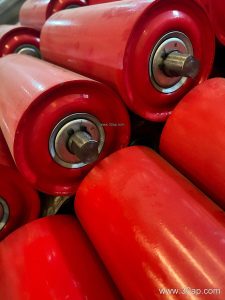
The bracket works together with the conveyor belt, idler roller, and conveyor pulley. A misaligned bracket puts extra load on the pulley bearings and shortens belt life, so the support structure deserves the same attention as the belt itself.
Selection and Maintenance Tips for Buyers
Start with the belt width and the required trough angle, then confirm the idler diameter and the mounting hole pattern against the existing frame. For replacement work, measure the old bracket rather than assuming a standard size. Fixed brackets cost less and are simple to install; adjustable brackets allow fine tuning of the trough angle and are useful where belt loading changes.
On the maintenance side, check bracket bolts after the first weeks of operation and again after seasonal temperature swings. Look for bent crossbeams, worn mounting holes, and corrosion at weld seams. Replacing a deformed bracket early prevents the idler roller from sitting at a wrong angle and creating belt edge wear. For high-abrasion duties, pair robust brackets with an abrasion resistant conveyor belt and quality rollers to get the longest service interval.
Whether the line handles iron ore, sand and gravel, or grain, the heavy-duty steel conveyor bracket is a small component with a large influence on conveyor reliability.