What a Drive Pulley Does
The drive pulley is the powered drum at the head of a belt conveyor. It grips the inside of the belt and pulls the loaded strand forward, while the return strand comes back underneath. Everything downstream, from the belt itself to every idler roller, moves because this one component transmits torque into the system. In a quarry, a cement plant or a power plant coal yard, the drive pulley is usually the largest and most heavily built drum on the machine.
It is not the same as a tail pulley at the far end or a bend pulley that changes belt direction. Those are unpowered and serve different duties. Confusing the three leads to wrong spare parts and poor tensioning decisions.
Construction and Surface Options
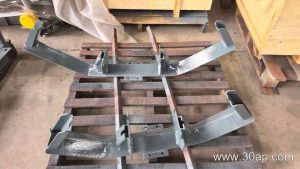
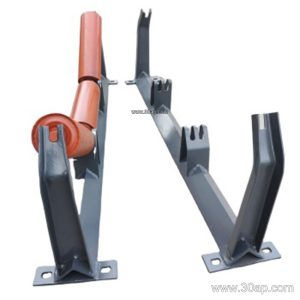
A typical unit combines a steel shell, welded end discs, a shaft and bearing housings mounted on a conveyor bracket or frame. The shell is machined for balance, then covered with a lagging chosen for grip and wear life. Common surface forms include plain, cast rubber, cold-bonded rubber, hot-vulcanized rubber, diamond lagging, herringbone lagging and ceramic lagging.
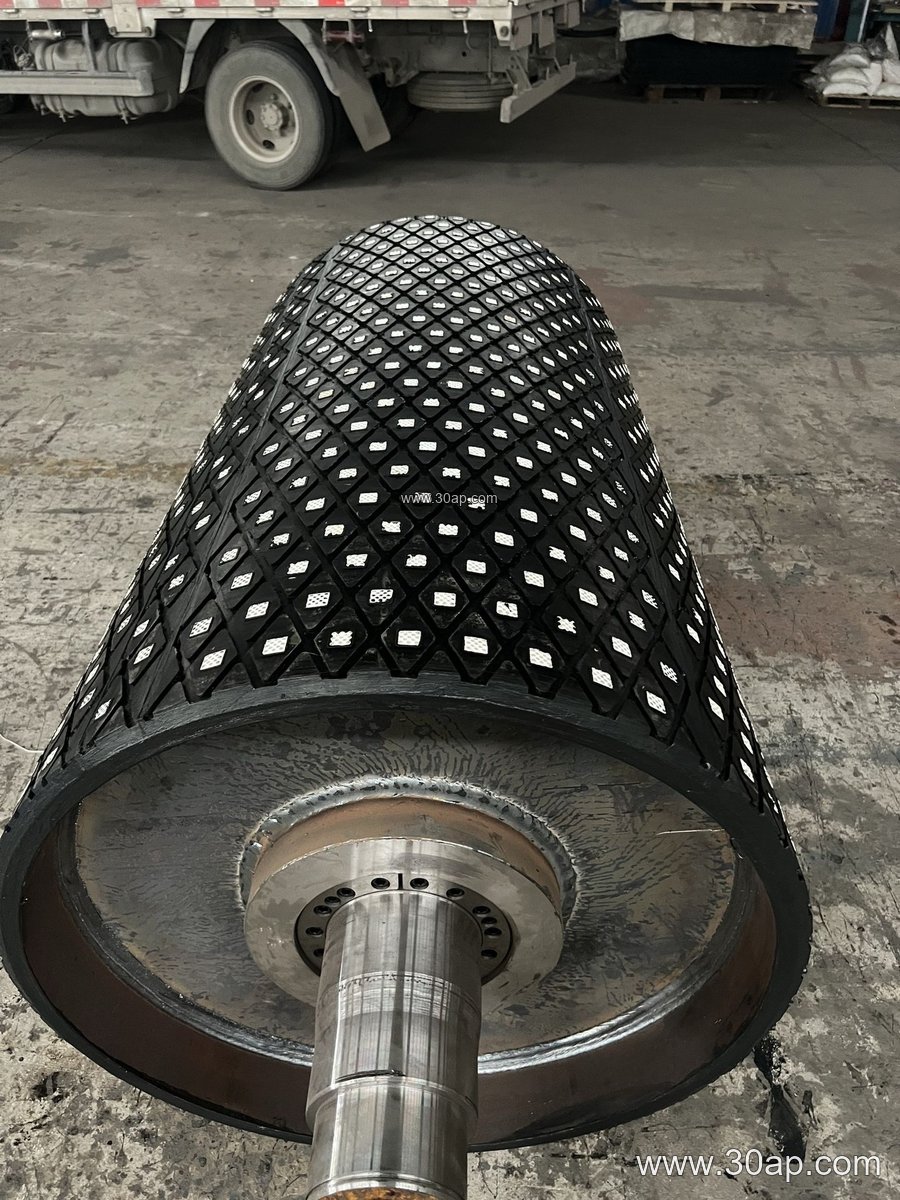
Lagging thickness is often 8, 10, 12, 15 or 20 mm. The choice depends on whether the conveyor handles wet, oily or abrasive material. A high abrasion resistant conveyor belt running in a stone crushing line usually pairs well with a thicker rubber lagging, while a coal mining conveyor belt in a wash plant may need a grooved pattern to shed water. Ceramic tiles suit very abrasive iron ore or copper ore duties but cost more.
Matching Belt Width and Drum Diameter
Buyers often ask for a diameter that matches their belt. In practice the two are related through belt tension, wrap angle and belt construction, not through a single fixed rule. A B800 belt may run on a Ø500 drum in a short aggregate line, while the same width on a long overland conveyor might use Ø630 or Ø800 to reduce bending stress in the carcass.
Shell face width is normally a little wider than the belt. Reference values are often B400 around 500 mm, B650 around 750 mm, B800 around 950 mm, B1000 around 1150 mm, B1200 around 1400 mm and B1400 around 1600 mm. Shaft diameter is set by torque and bearing load, so a Ø100 shaft on one B1000 drive and a Ø120 shaft on another is normal. Common shaft sizes range from Ø50 up to Ø200.
| Belt width | Typical shell face | Example diameter range | Common lagging |
|---|---|---|---|
| B500 | about 600 mm | Ø250 to Ø400 | 8 to 10 mm rubber |
| B650 | about 750 mm | Ø315 to Ø500 | 10 mm diamond |
| B800 | about 950 mm | Ø400 to Ø630 | 10 to 12 mm rubber |
| B1000 | about 1150 mm | Ø500 to Ø800 | 12 to 15 mm rubber |
| B1200 | about 1400 mm | Ø630 to Ø1000 | 15 mm herringbone |
| B1400 | about 1600 mm | Ø800 to Ø1250 | 15 to 20 mm ceramic |
These figures are reference data, not a fixed pairing. The drive pulley should be sized with the belt manufacturer’s minimum pulley diameter for the carcass, whether that is an EP conveyor belt, an NN conveyor belt or a steel cord conveyor belt.
Where It Is Used
You will find this drum in limestone mines feeding a crusher, in sinter plants moving hot material, in port ship loading systems and in tunnel spoil removal. It also appears in fertiliser and grain silo conveyors where a food grade conveyor belt or an oil resistant conveyor belt may be running. In underground coal mining, a flame retardant conveyor belt and a PVG800S belt demand a drum with carefully specified lagging and anti-static properties.
What Buyers Should Check
- Confirm the actual duty: head drive, dual drive or an electric drum alternative.
- State belt type and tension so the shell and shaft can be checked.
- Choose lagging by material condition, not by habit.
- Ask for balance grade, bearing type and shaft material.
- Keep spare lagging and bearings for critical drives.
For more on matching drums with rubber conveyor belt, EP conveyor belt and conveyor pulley options, contact the supplier with your duty details, and remember that a drive pulley is never a substitute for a tail or bend pulley.