What a 650mm Conveyor Belt Is
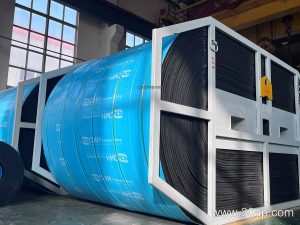
A 650mm conveyor belt is a fabric- or steel-reinforced rubber belt with a nominal width of 650 millimetres, commonly written as B650 in specifications and drawings. It sits in the light-to-medium width range: wide enough to carry crushed stone, coal, clinker or sand at a useful rate, yet narrow enough to run on compact frames in tunnels, transfer towers and mobile plants. Buyers often call it a 650 mm wide conveyor belt or simply a B650 belt, and those equivalents describe the same product.
Width alone does not define a belt. Two belts at 650mm can differ completely in carcass, cover grade and tensile strength, which is why the specification should always be read as a package.
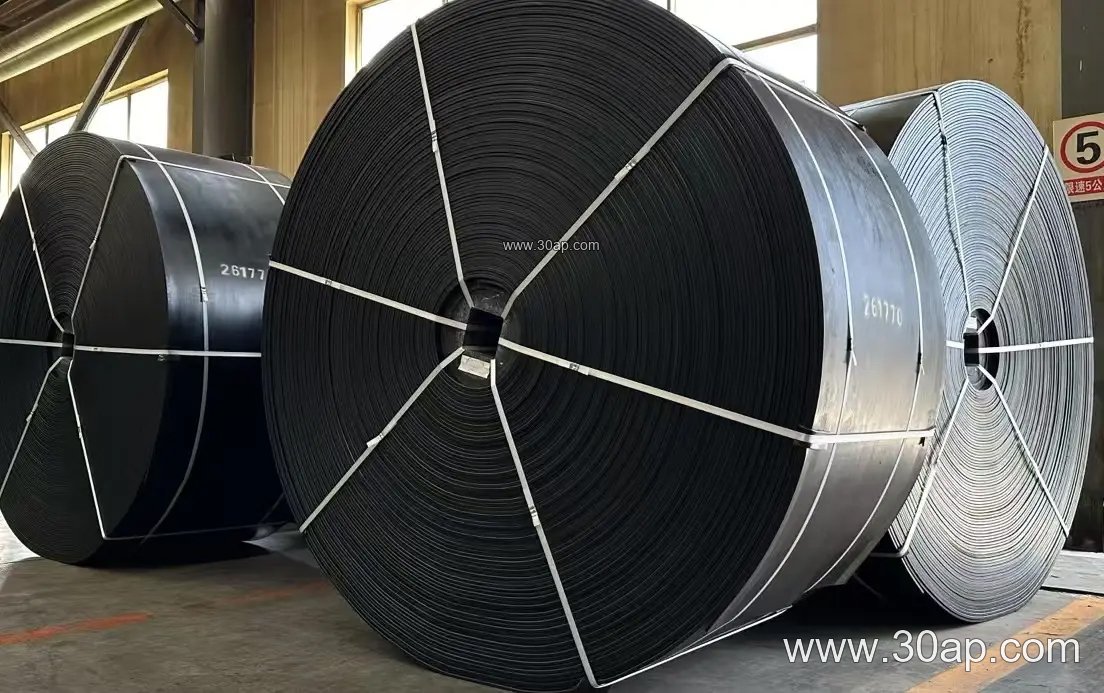
How the Belt Is Built
A typical construction pairs a fabric core with rubber covers on both faces. The carcass may be EP fabric (polyester warp, nylon weft), NN fabric (nylon warp and weft), or multiple plies of either. Steel cord carcasses are more often associated with higher tensions, but a compact steel cord design can still appear on short, heavy-duty runs where impact resistance matters.
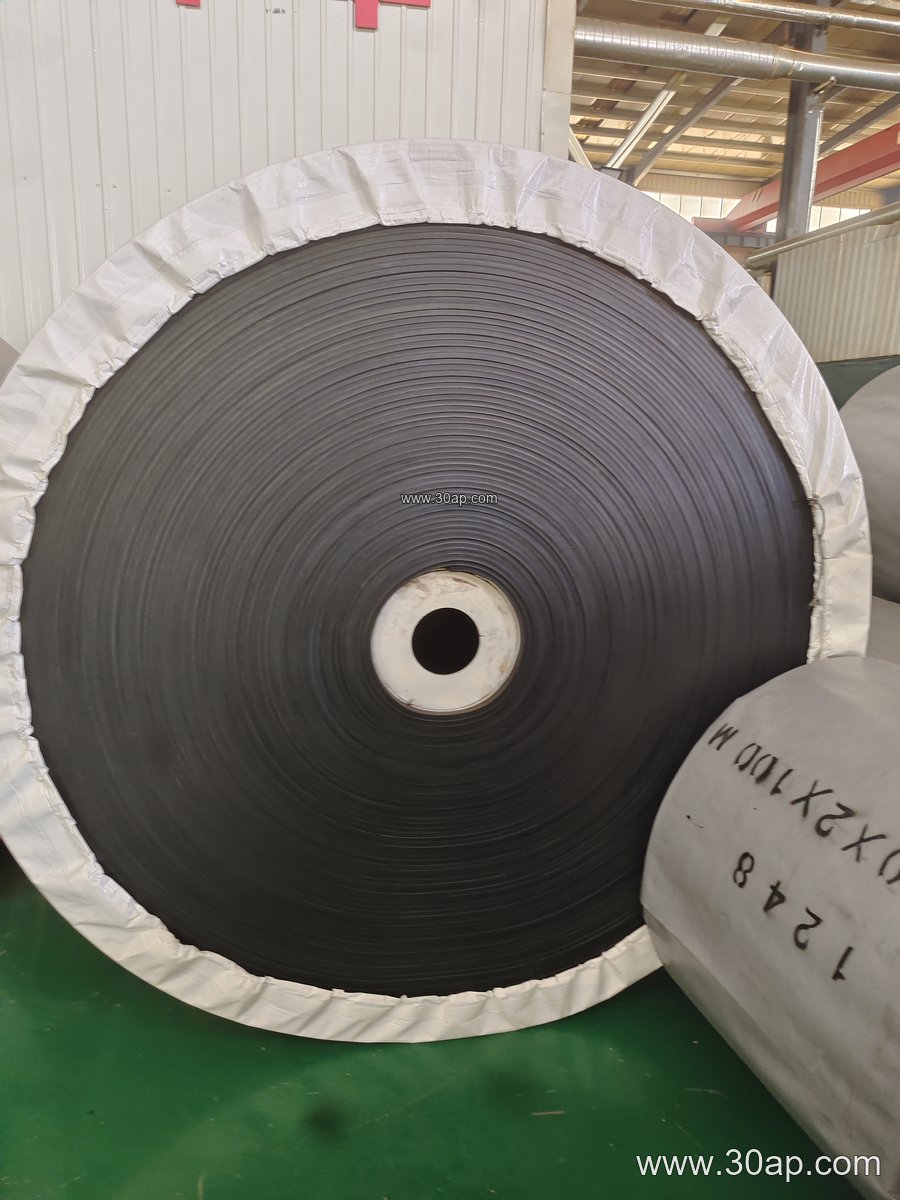
Common cover thickness combinations include 3+1.5 mm, 4+2 mm, 5+2 mm, 6+2 mm and 8+3 mm, with the first figure being the carrying-side cover. Carcass ply counts usually range from two to six layers. Nominal strength grades for EP belts include EP200, EP315, EP400, EP500, EP630, EP800 and EP1000, while NN belts follow a similar ladder such as NN100, NN200, NN300 and NN400. These are reference values; the final selection should follow the conveyor design.
| Parameter | Common Reference Range |
|---|---|
| Belt width | 650 mm (B650) |
| Carcass type | EP, NN, multi-ply fabric, steel cord |
| Ply count | 2 to 6 layers |
| Strength grade | EP200 to EP1000; NN100 to NN400 |
| Cover thickness | 3+1.5, 4+2, 5+2, 6+2, 8+3 mm |
| Surface options | smooth, chevron, skirted, corrugated sidewall |
Where 650mm Belts Fit in the Field
In a quarry or sand and gravel plant, a 650mm belt is a natural choice for secondary and tertiary lines, screen feed and stockpile conveyors. In cement works it may handle limestone, gypsum or clinker on short inclined runs. Power plants use it for coal and ash handling, while coal mines and underground roadways often specify a flame retardant conveyor belt or a PVG conveyor belt for safety reasons. Ports and ship loading systems sometimes use this width for sampling or trimming lines rather than main trunk conveyors.
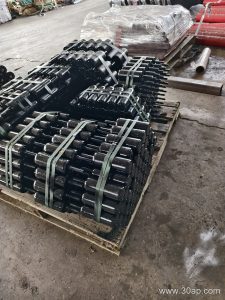
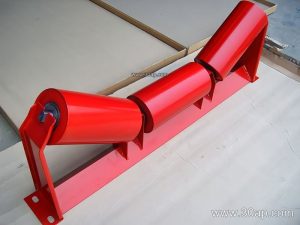
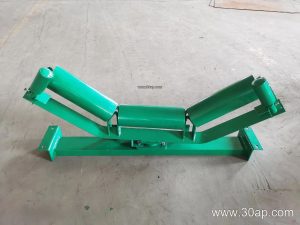
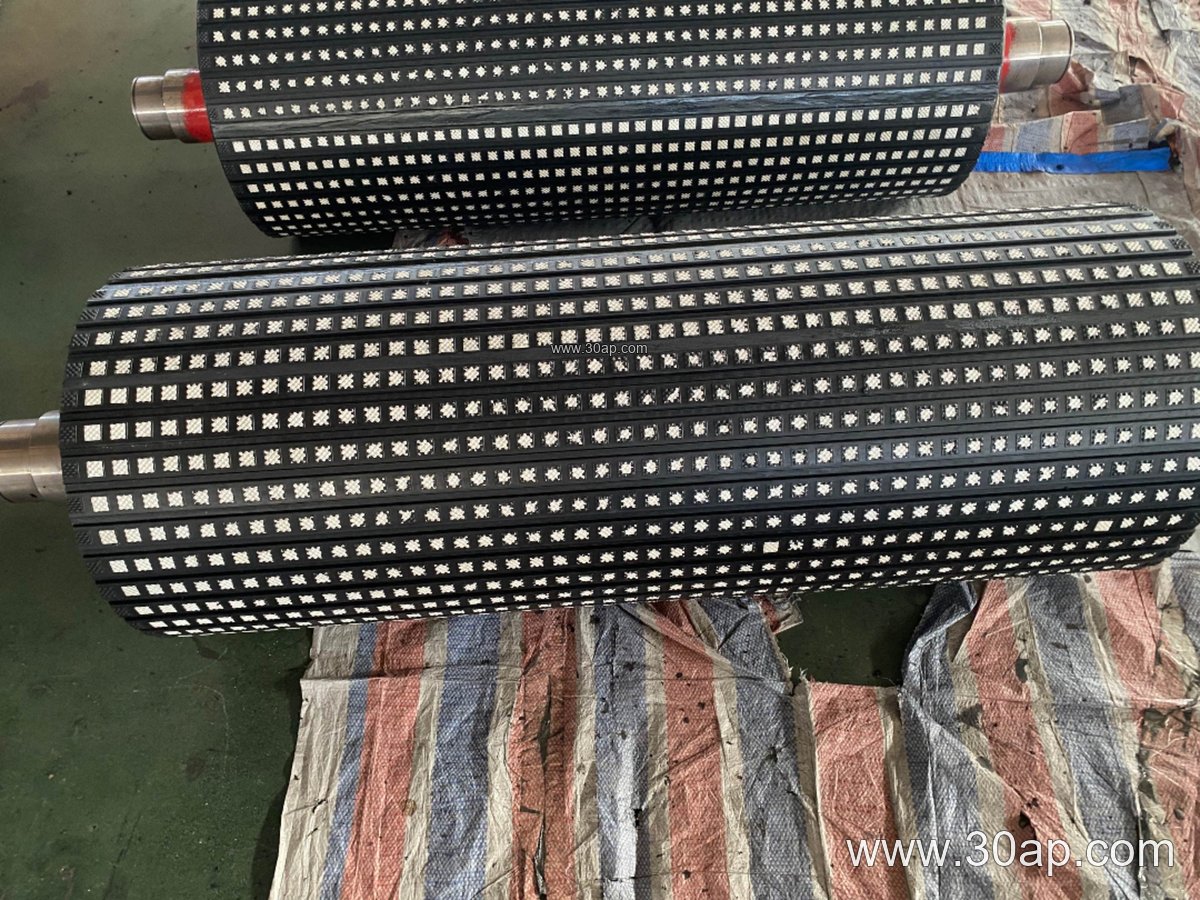
Because the belt is narrow, it pairs well with compact pulleys, close-spaced idler roller sets and light conveyor brackets. Drive pulley, tail pulley and bend pulley diameters are set by the conveyor designer from tension, wrap angle and shaft load, so no single pulley size can be assumed from the belt width alone.
Cover Grades and Surface Forms
The working environment usually decides the cover compound. A hard rock quarry may call for an abrasion resistant conveyor belt or a high abrasion resistant conveyor belt. Cement and clinker lines often need a heat resistant conveyor belt, and asphalt or foundry work may push toward a high temperature conveyor belt. Cold climates favour a cold resistant conveyor belt; oily scrap and recycled material favour an oil resistant conveyor belt; chemical plants may ask for an acid resistant or chemical resistant conveyor belt. Underground coal duty commonly requires a flame retardant conveyor belt and an anti-static conveyor belt, sometimes combined in one compound.
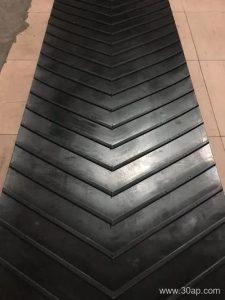
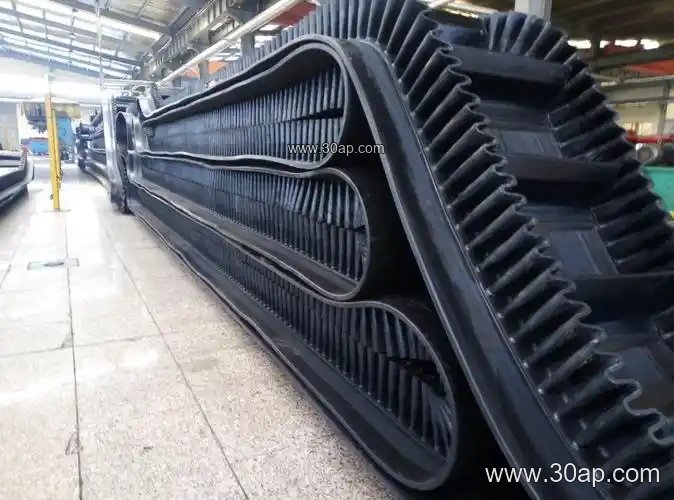
Surface form is a separate decision. A smooth belt suits flat or gently inclined runs. A chevron conveyor belt improves grip on inclines, while a corrugated sidewall conveyor belt or skirted conveyor belt contains material on steep or space-limited routes. An endless conveyor belt, spliced at the factory, reduces joint risk on critical drives.
Selection and Maintenance Notes
- Confirm the duty: tonnage per hour, lump size, incline angle and loading impact.
- Match the carcass grade to the calculated belt tension, not to habit.
- Check troughability, since a 650mm belt must flex cleanly through three-roll idler sets.
- Keep the conveyor pulley lagging, belt cleaner and skirt rubber in good condition to protect the cover.
- Align idler roller frames and conveyor brackets during installation to avoid edge damage.
- Track wear at the edges and at the splice; small 650mm belts lose capacity quickly once edges fray.
For a coal mining conveyor belt or an underground coal mining conveyor belt, verify that the flame retardant and anti-static properties are declared for the actual compound supplied, not only for a generic family. For a crusher conveyor belt or rock conveyor belt, impact idlers under the loading point protect both carcass and cover.
Buyer Checklist
Ask for a data sheet that states width, carcass type, ply count, strength grade, cover thickness, cover grade and splice method. Compare quotes on that basis rather than on width alone, because a 650mm belt ordered for a cement plant and one ordered for a gold mining conveyor may share a dimension but little else. Samples, edge cut quality and roll length tolerance are worth reviewing before a full order. More technical notes on belt, idler and pulley matching are available at conveyorbeltingpro.com, and related component guidance can be found under keywords such as conveyor pulley and idler roller.