What a Rubber Lagged Pulley Does on a Conveyor
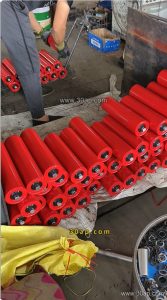
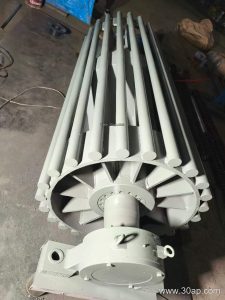
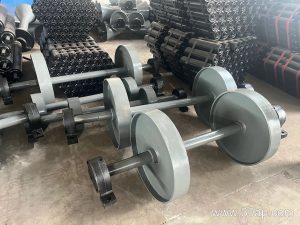
A rubber lagged pulley is a conveyor drum whose shell is covered with a rubber layer to raise friction between the drum and the belt. That extra grip matters most at the drive pulley, where torque has to pass from the shaft into the moving belt without slip. It also helps at tail and bend positions by limiting material build-up on the shell face. In a quarry, a coal washing plant or a cement clinker line, the same basic component appears under different names, but the working principle stays the same: a steel shell, a shaft, bearing housings, and a vulcanized or bonded rubber cover.
How the Rubber Cover Is Built
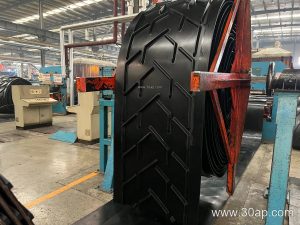
The cover is usually applied in one of two ways. Hot vulcanized rubber is cured onto a prepared shell under heat and pressure, giving a strong bond and a dense, uniform surface. Cold bonded rubber uses an adhesive system and is often chosen for field repair or for pulleys that cannot be removed easily. Plain (flat) lagging suits general duty. Diamond pattern lagging improves water and fines shedding, while herringbone pattern helps center the belt on reversing conveyors. Ceramic lagging, which combines rubber with embedded tiles, is used where abrasion is severe and slip risk is high.
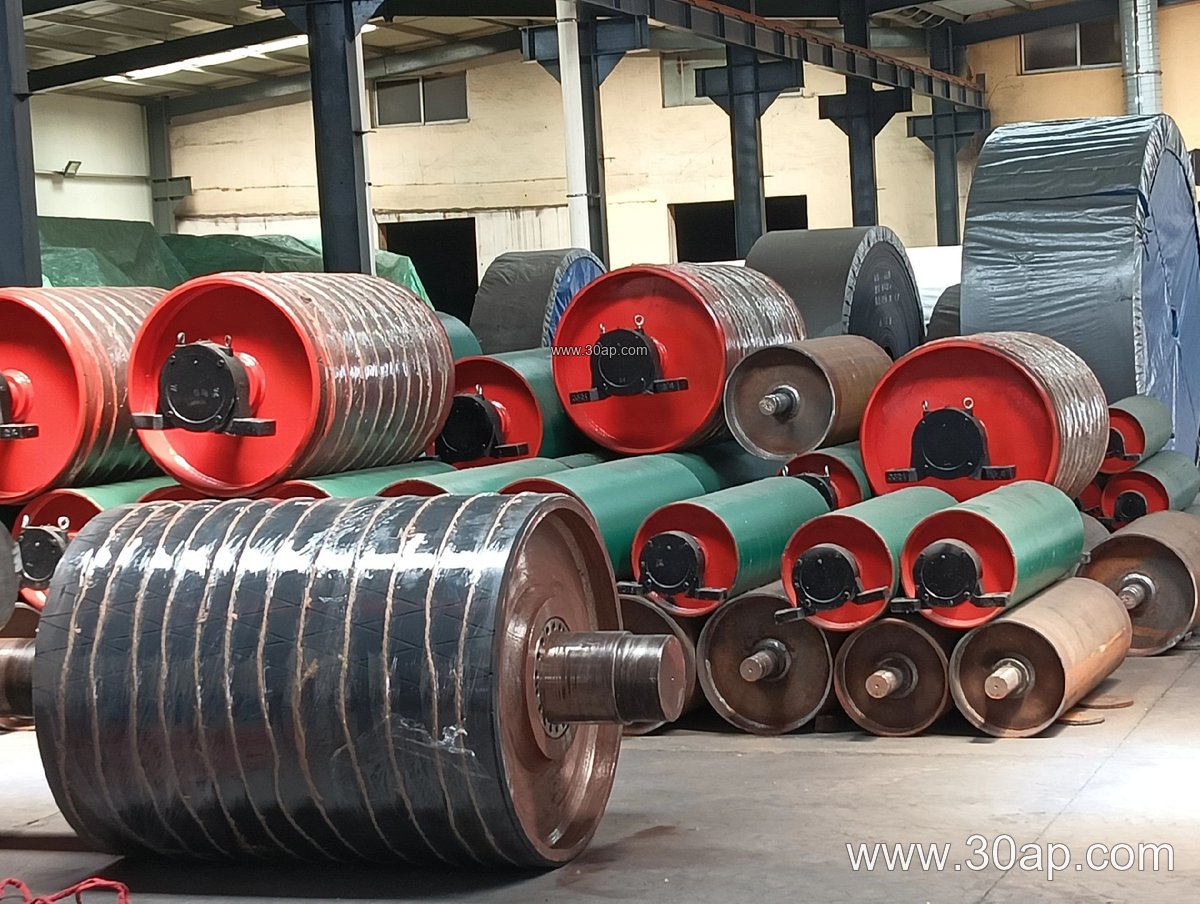
Cover thickness is commonly 8, 10, 12, 15 or 20 mm, selected with the duty rather than picked at random. A thin cover on a small bend pulley may be adequate, while a heavy drive drum on an ore conveyor may need a thicker, harder compound. Rubber hardness, tensile strength and abrasion loss all affect service life, so the compound grade deserves as much attention as the thickness.
Where the Component Fits
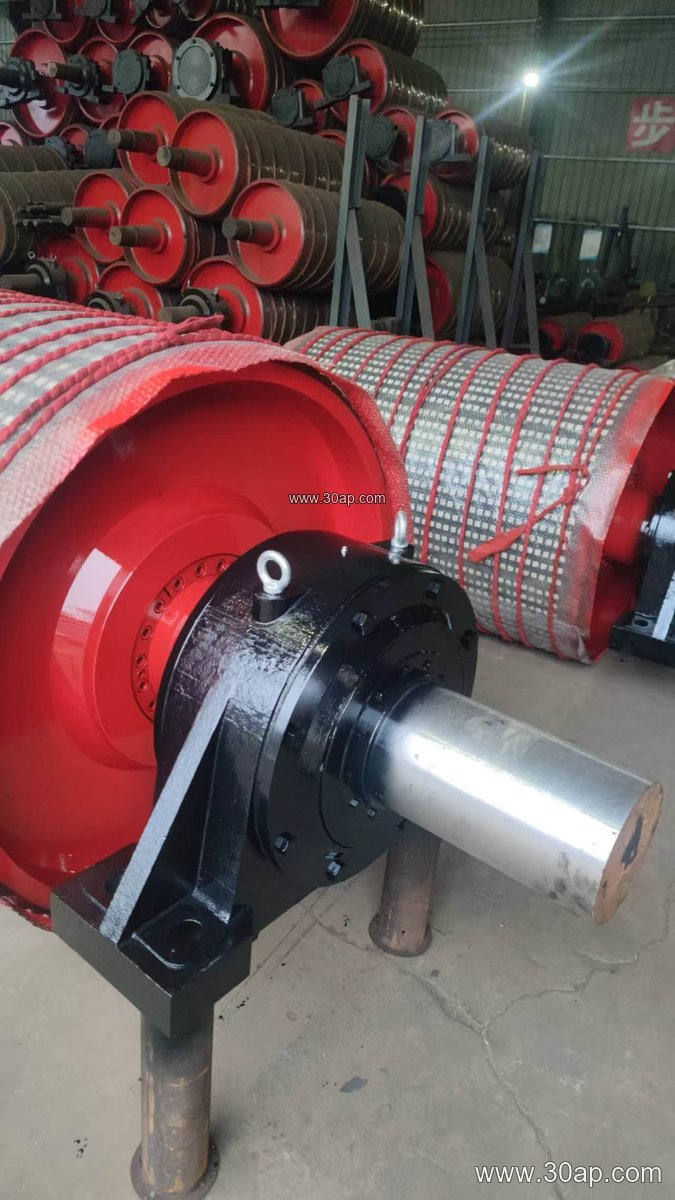
Drive pulleys, tail pulleys and bend pulleys are not interchangeable names. A drive pulley transmits power and is usually the most heavily lagged. A tail pulley turns the belt at the loading end and may carry a lighter cover. A bend pulley changes belt direction and often uses a thinner lagging. A tension pulley takes up slack, and a snub pulley increases wrap angle around the drive drum. Each position loads the rubber differently, so the specification should follow the position on the conveyor.
Typical service environments include aggregate crushing and screening lines, iron ore and copper ore handling, power plant coal conveying, port bulk terminals, steel plant sinter lines and concrete batching plants. In dusty or wet conditions, a patterned cover often outperforms a plain one because it pushes water and fine particles out of the contact zone.
Matching Belt Width and Drum Diameter
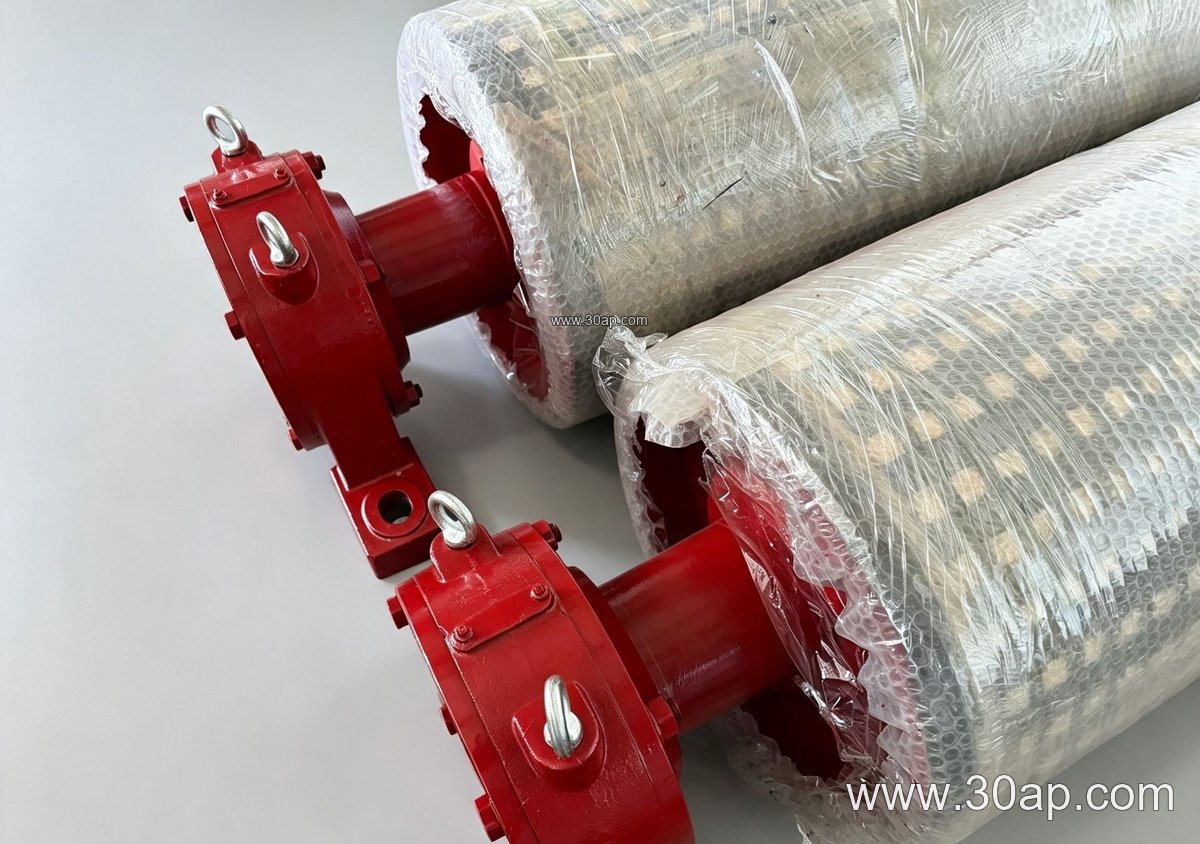
Belt width and pulley diameter are related through the belt construction, the wrap angle and the tension, not through a fixed rule. A wider belt does not automatically mean a larger drum diameter, and a given belt width can work with several diameters depending on the conveyor design. The face width of the drum is normally a little wider than the belt, as the table below indicates.
- B400 belt: face width about 500 mm
- B500 belt: face width about 600 mm
- B650 belt: face width about 750 mm
- B800 belt: face width about 950 mm
- B1000 belt: face width about 1150 mm
- B1200 belt: face width about 1400 mm
- B1400 belt: face width about 1600 mm
- B1600 belt: face width about 1800 mm
Common diameter references include Ø200, Ø250, Ø315, Ø400, Ø500, Ø630, Ø800, Ø1000, Ø1250 and Ø1400. Combinations such as B800 x Ø500, B1200 x Ø1000 or B1400 x Ø800 are seen in practice, but each is a design choice rather than a fixed pairing. Shaft diameter is determined by torque and bearing load; common values range from Ø50 to Ø200, and it should never be derived from belt width alone.
Working With the Belt and the Rest of the System
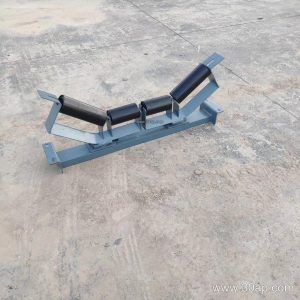
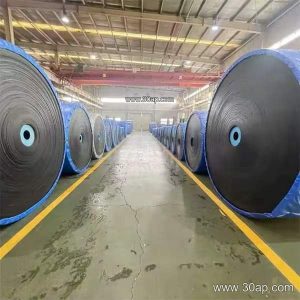
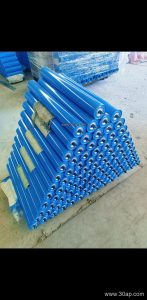
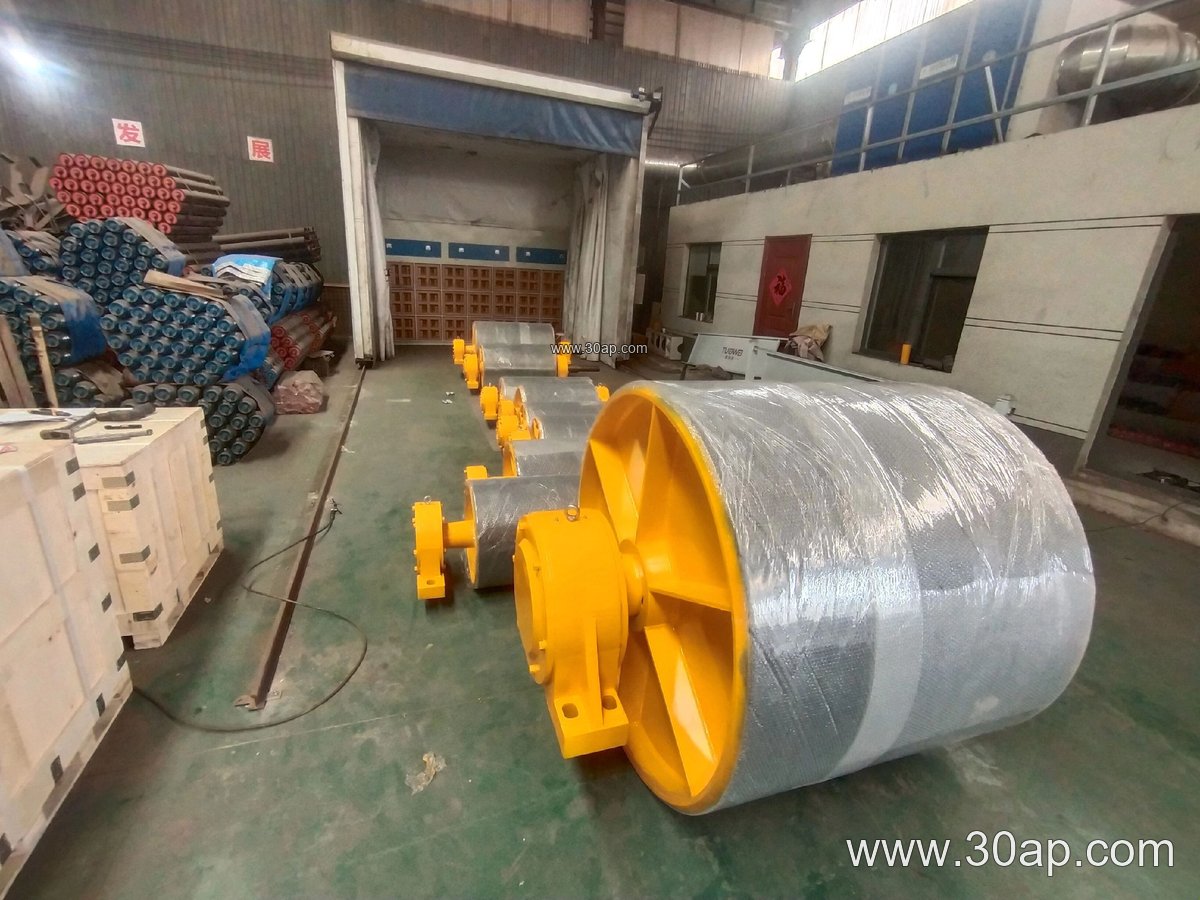
The pulley only performs well when the belt, idler roller and frame work together. A rubber lagged pulley paired with a heavy-duty mining conveyor belt, an abrasion resistant conveyor belt or a flame retardant conveyor belt must be checked for compatible friction and tension. On a long overland route using steel cord conveyor belt or EP conveyor belt, drive traction and belt stretch both influence how much lagging is needed. In coal mining, underground mining and port applications, the same drum may sit near a skirted conveyor belt loading point, where spillage raises the risk of slip.
Alignment also matters. A misaligned drum wears its cover unevenly, and a belt that wanders will polish one side of the rubber. Checking conveyor brackets, bearing seats and take-up travel during installation prevents many premature failures.
Buyer Checklist
Before ordering, confirm the position on the conveyor, the belt width, the drum diameter and face width, the shaft size, the lagging pattern and thickness, and the rubber compound grade. Ask whether the cover is hot vulcanized or cold bonded, and how the drum will be balanced. For high-abrasion service such as a crusher conveyor belt line or a sinter plant, state the material and conditions clearly so the supplier can recommend a suitable surface. For more on drums, belts and idlers, see chinabeltconveyor.com rubber lagged pulley and chinabeltconveyor.com conveyor pulley.