What Conveyor Bracket Fabrication Covers
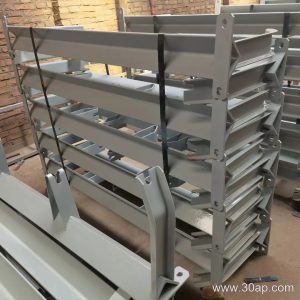
Conveyor bracket fabrication is the process of cutting, bending, drilling and welding steel into the support frames that hold idler rollers and carry the belt along a conveyor line. In practice, the work covers the familiar idler bracket set: the troughing bracket on the carrying side, the transition bracket near the pulleys, the return bracket underneath, and the self-aligning or training bracket where belt wander is a concern. Each piece is a fabricated steel assembly, not a simple off-the-shelf fitting, which is why fabrication quality directly affects how evenly a conveyor belt runs.
For a cement plant or a power plant coal yard, these frames are usually produced in batches matched to a specific conveyor section, with hole spacing and crossbeam length set by the belt width and trough angle rather than by a single universal standard.
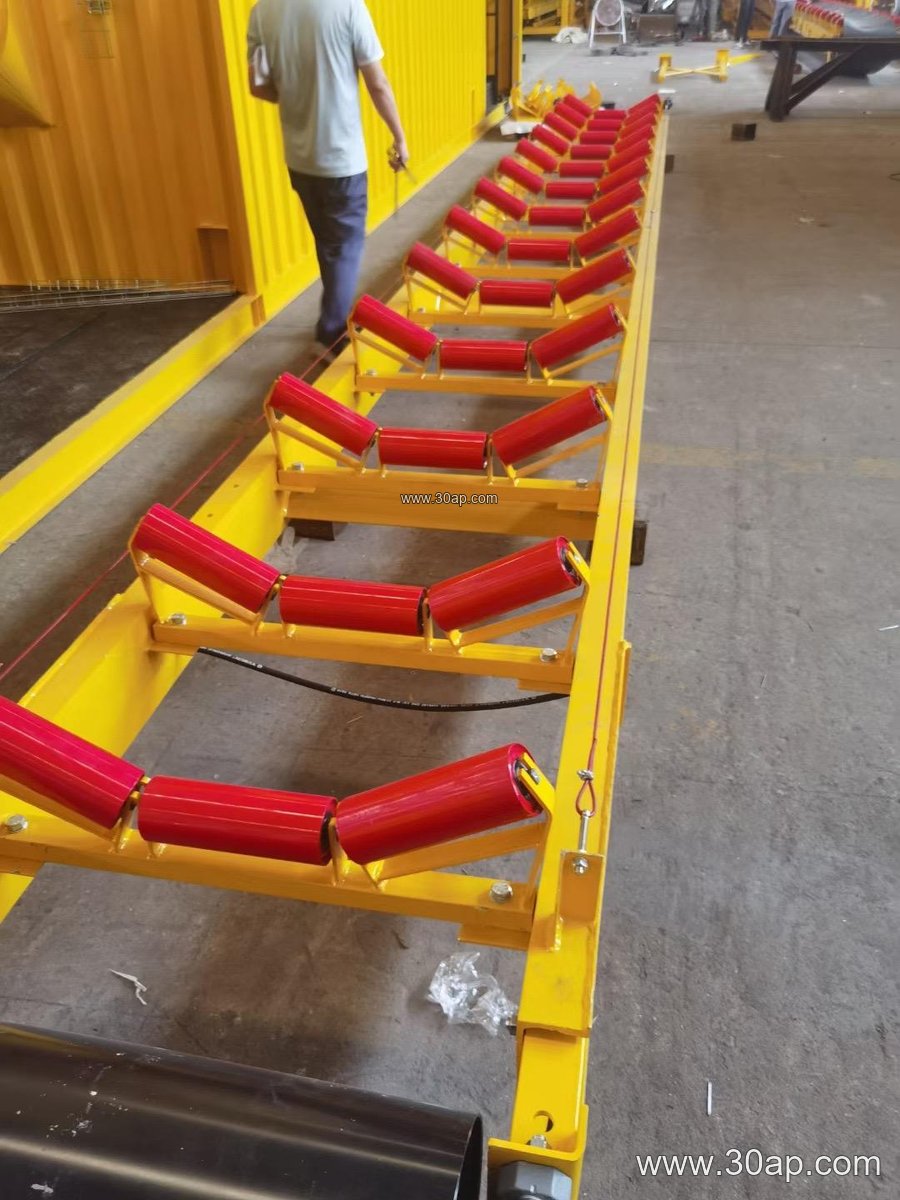
How the Frames Are Built
Fabrication typically starts with angle steel, channel steel or folded steel plate. The sequence is straightforward but needs discipline:
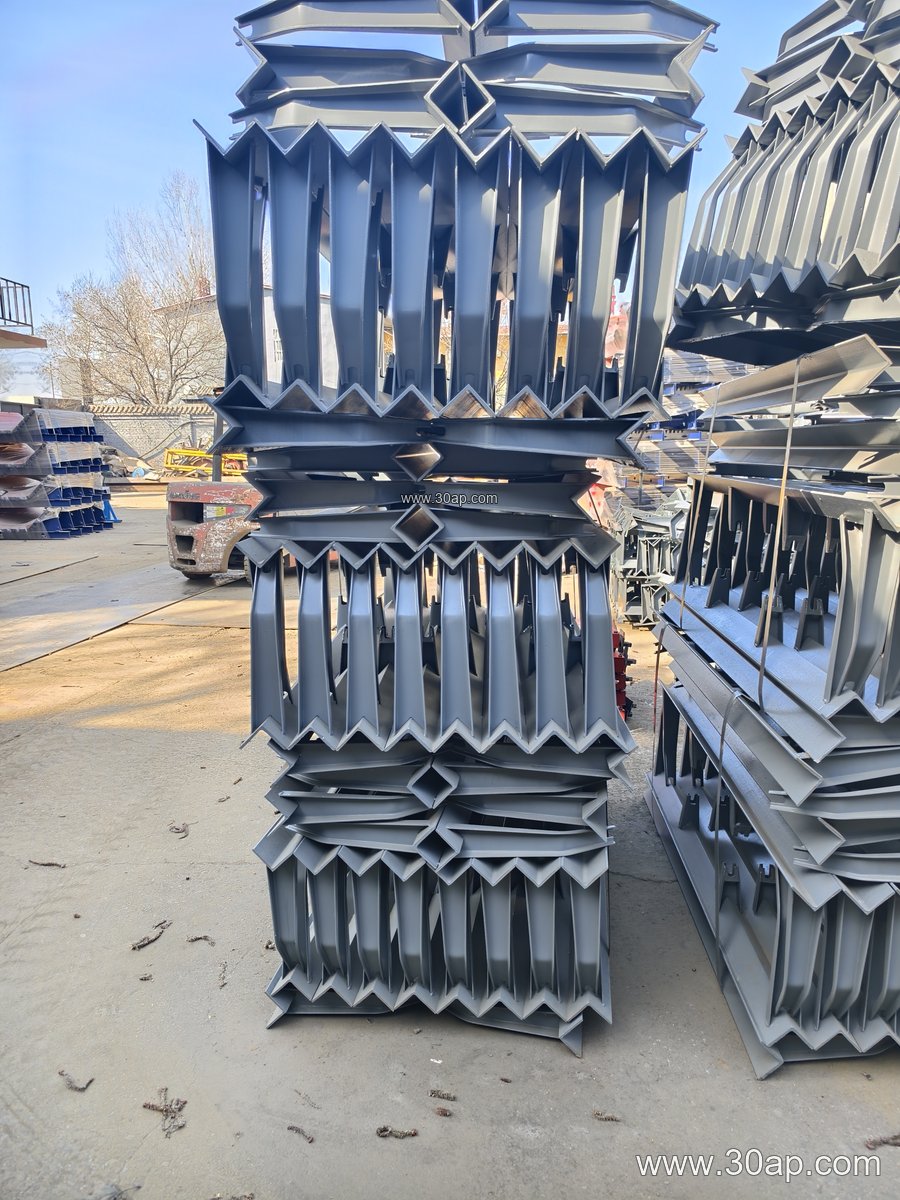
- Cutting members to length according to the approved drawing for each belt width and trough angle.
- Punching or drilling mounting holes so that idler roller shafts sit at the correct height and spacing.
- Bending the trough wings to the required angle, often 20, 30, 35 or 45 degrees.
- Welding the bracket to the crossbeam, then checking squareness and hole alignment before surface treatment.
Adjustable designs add slotted holes or pivoting arms so the trough angle can be changed on site. Fixed brackets are simpler and stiffer, and are common where the belt line profile is already settled. A slight forward tilt of about 1.5 to 2 degrees is sometimes built into carrying brackets to help centre the belt, but this is a design choice, not a rule for every frame.
Where These Brackets Are Used
Fabricated brackets appear wherever a belt conveyor needs stable roller support. In a limestone quarry, heavy troughing brackets under a crusher conveyor absorb impact and keep the belt profile consistent. In a coal washing plant, return brackets and V-return frames guide the belt on its lower run. Port ship loaders and steel plant sinter lines also rely on accurately drilled brackets so that idler rollers line up and the belt tracks without edge damage.
Because the bracket is the interface between the structure and the roller, small fabrication errors show up quickly as belt misalignment, uneven wear or vibration. That is why bracket work is usually treated as part of the conveyor’s mechanical accuracy, alongside pulley alignment.
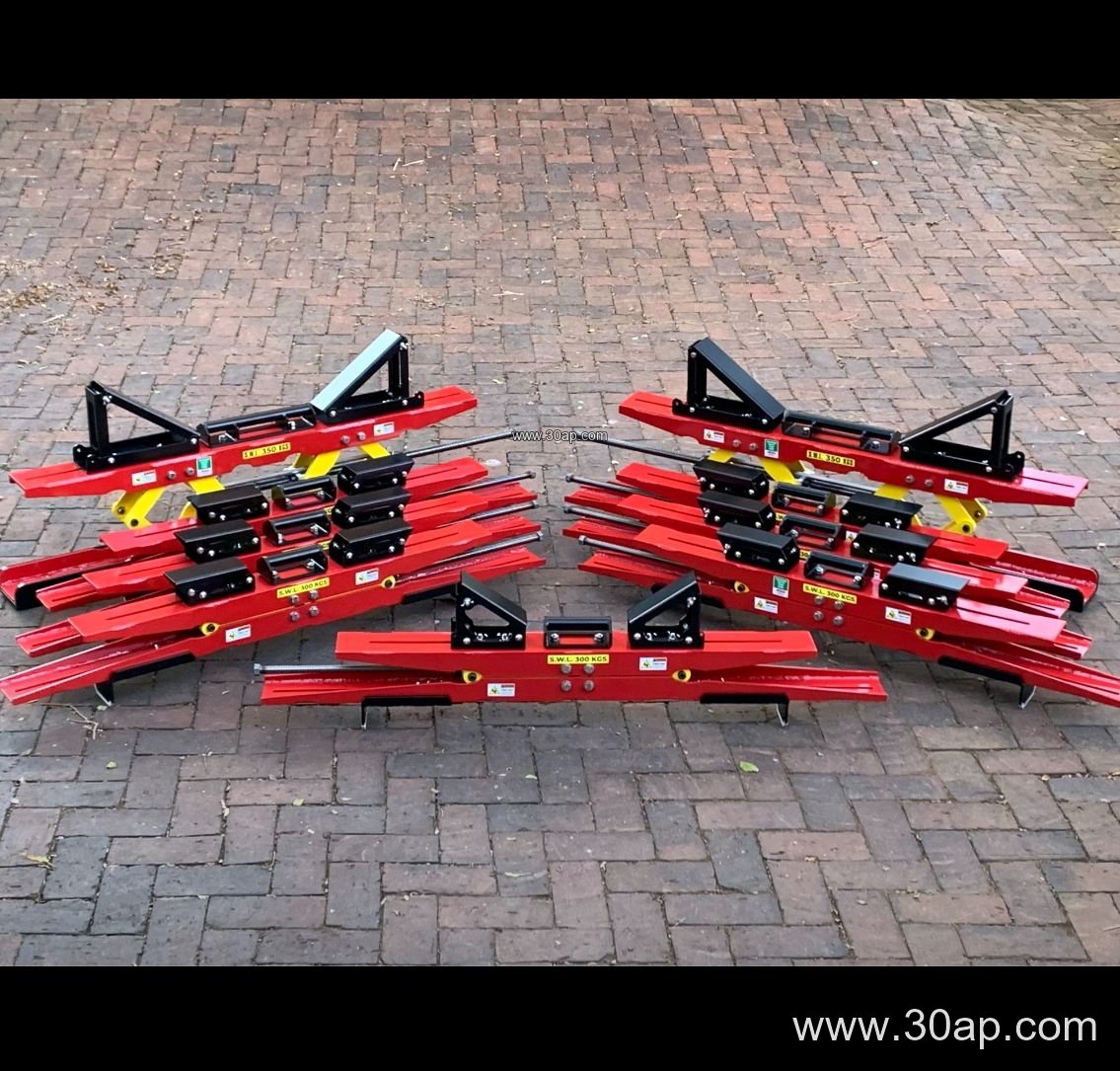
Matching Brackets to Belt Width and Roller Diameter
There is no fixed one-to-one relationship between belt width, trough angle and roller diameter. A B800 frame at 35 degrees may use Ø108 rollers, while a B1200 line at 45 degrees often runs Ø133 rollers; a B650 conveyor at 30 degrees might use Ø89. The table below shows typical reference combinations, not mandatory pairings.
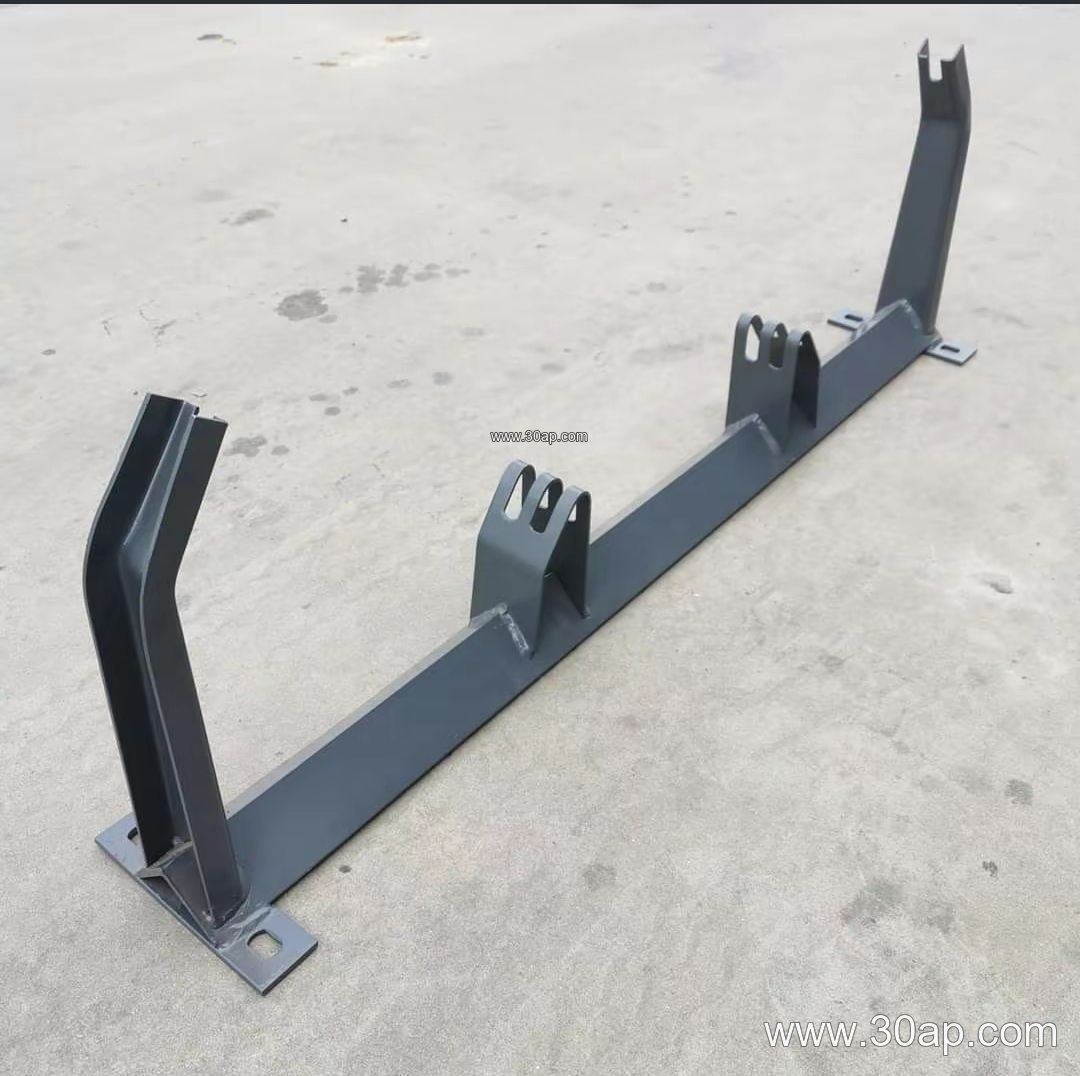
| Belt width | Common trough angle | Typical roller diameter | Bracket note |
|---|---|---|---|
| B500 | 20-30 degrees | Ø89 | Light section, folded plate |
| B650 | 30 degrees | Ø89-Ø108 | Angle steel frame |
| B800 | 35 degrees | Ø108 | Standard troughing bracket |
| B1000 | 35-45 degrees | Ø108-Ø133 | Channel crossbeam |
| B1200 | 35-45 degrees | Ø133 | Reinforced weld joints |
| B1400-B1600 | 35-45 degrees | Ø133-Ø159 | Heavy-duty fabrication |
| B1800-B2000 | 35-45 degrees | Ø159-Ø194 | Large span, checked for deflection |
Installation hole spacing and crossbeam length change with belt width and trough angle, so these should always be confirmed from the drawing rather than assumed. When a conveyor carries an EP conveyor belt or a steel cord conveyor belt at high tension, the bracket still only supports the rollers, but the frame stiffness matters more because roller misalignment under load accelerates belt wear.
What Buyers Should Confirm Before Ordering
A clear fabrication brief saves rework. Buyers should confirm the belt width, the required trough angle, the roller diameter and the mounting hole pattern, plus whether the bracket is fixed or adjustable. It also helps to state the environment: a wash plant, a fertilizer store or a food grade line may call for different surface treatment or material selection. For abrasive duties such as iron ore or quarry stone, thicker members and better weld quality are worth discussing.
Finally, ask for a dimensional check report or sample inspection before mass production. Fabricated conveyor brackets are simple parts, but consistent hole position and wing angle are what keep a conveyor belt, idler roller and pulley system working together quietly over years of service.