What a Spiral Idler Does on a Conveyor
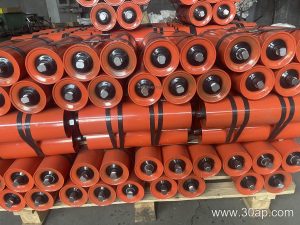
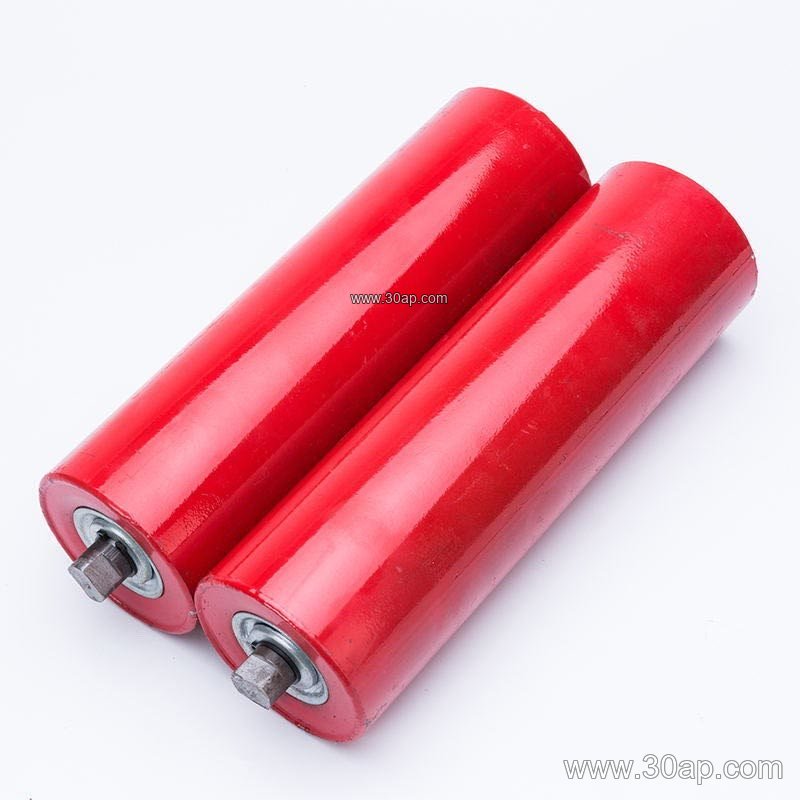
A spiral idler is a return-side roller that uses a helical steel wrap around its shell instead of a plain cylindrical surface. This spiral form is also called a helical return roller. It is not a troughing idler, a buffer idler, or a self-aligning idler, and it is not a drive, tail, or bend pulley. Its main job is to support the empty side of the belt while helping to shed carried-back material and reduce build-up on the roller face. In dusty circuits such as a quarry conveyor belt line, a cement plant, or a power plant coal handling system, that self-cleaning action can be useful where fines tend to cling to plain return rollers.
Construction and Common Materials
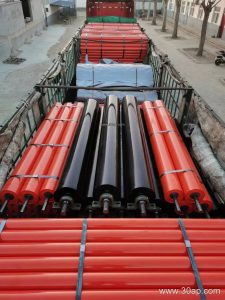
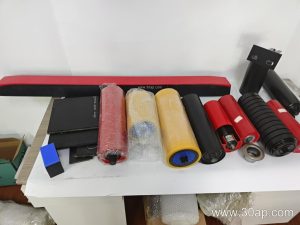
The spiral wrap is usually formed from steel strip and welded to the roller shell. The shell itself may be a steel tube, and the end caps house the bearing seats. Bearing sizes commonly seen in idler production include 6204, 6205, 6305, 6306, 6308, and 6310, matched to the roller diameter and load rather than to one fixed rule. Roller diameters for return idlers are often Ø89, Ø102, Ø108, Ø127, Ø133, Ø159, and larger sizes such as Ø178 or Ø194 for heavy-duty mining conveyor belt duties. The roller length follows belt width, frame design, and return idler arrangement. Surface treatment may be painted steel, but the spiral profile is the defining feature, not a rubber disc or ceramic tile covering.
Where the Spiral Idler Fits
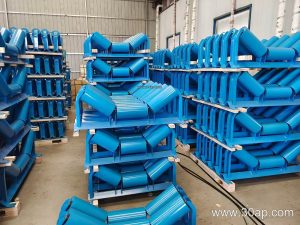
This idler is normally installed on the return run, where the belt is empty and the roller contacts the bottom cover. It can be used in a three-roller flat return set or as a single return roller depending on the conveyor bracket and frame. It is not a substitute for a bend pulley at a transfer point, nor for a tail pulley at the loading end. In a stone crushing plant or an aggregate conveyor belt line, a spiral return roller may be placed at intervals to keep the return strand cleaner. In an underground coal mining conveyor belt system, flame retardant conveyor belt and anti-static conveyor belt requirements may apply to the belt, while the idler selection should follow the mine’s engineering specification. The same principle applies in a port ship loading conveyor or a steel plant conveyor belt circuit, where spillage and dust are routine.
Selection Notes for Buyers
Buyers should confirm the belt width, the return frame dimensions, the shaft end type, and the bearing series before ordering. Spiral idlers are available for common belt widths such as B500, B650, B800, B1000, B1200, B1400, B1600, and B1800, but the roller length is not fixed by belt width alone. A B1000 conveyor belt may use different return roller lengths depending on the bracket and frame. The table below shows common reference ranges, not fixed combinations.
| Reference Item | Common Range |
|---|---|
| Roller diameter | Ø89, Ø102, Ø108, Ø127, Ø133, Ø159, Ø178, Ø194 |
| Bearing series | 6204, 6205, 6305, 6306, 6308, 6310 |
| Belt width reference | B500 to B1800 and wider by design |
| Return arrangement | Single roller or flat return set |
For abrasive bulk material, the belt may be an abrasion resistant conveyor belt or a heavy-duty mining conveyor belt, and the return idler should match the duty. In high-temperature areas, a heat resistant conveyor belt may be needed, but the spiral idler itself is generally selected for mechanical fit and bearing protection. In food or clean applications, a food grade conveyor belt may be used, yet the spiral idler is less common where hygiene surfaces are critical.
Maintenance and Related Components
Check the spiral idler for wobble, seized bearings, and material wrapped around the helix. A worn or bent spiral can damage the bottom cover of an EP conveyor belt, NN conveyor belt, or steel cord conveyor belt. Keep the return strand tracking straight, and inspect the conveyor bracket and frame for alignment. Spiral idlers work alongside troughing idlers, impact idlers, and self-aligning idlers, but each type has its own place. For a complete conveyor, the conveyor pulley, conveyor belt, and idler roller selection should be reviewed together rather than as isolated parts.