What a Heavy-Duty Belt Conveyor Idler Is
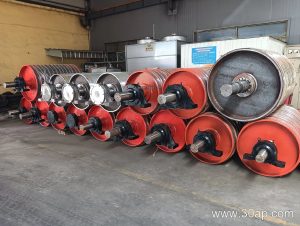
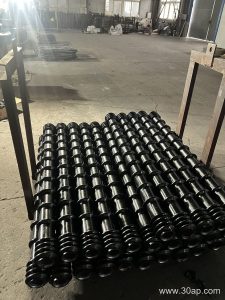
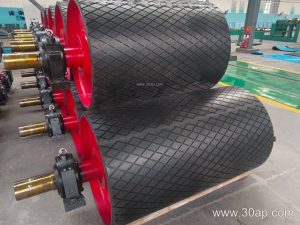
A heavy-duty belt conveyor idler is the rotating support that carries a loaded conveyor belt along the carrying side or returns it on the bottom run. In a quarry, limestone mine, or iron ore plant, the idler roller must survive impact, grit, and continuous load without seizing. The heavy-duty version uses thicker wall tubing, larger shaft ends, and sealed bearings to hold alignment where standard idlers would wear quickly. It is not the same as a conveyor pulley; drive, tail, and bend pulleys transmit or redirect belt tension, while the idler simply supports the belt and material.
Where the Load Goes
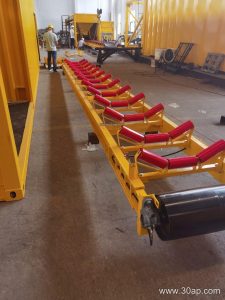
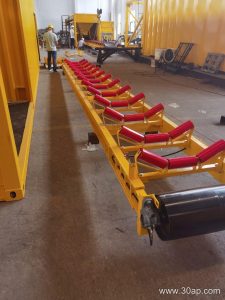
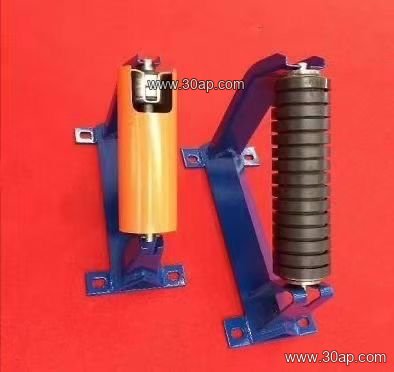
On the carrying run, a three-roll troughing set forms the belt into a trough so bulk material stays centered. A heavy-duty belt conveyor idler in this position often uses a 30 or 35 degree trough angle, with the side rolls inclined to match the belt width. On the return run, a flat or V-return idler keeps the belt from sagging. When a crusher discharge drops rock onto the belt, impact idlers with rubber rings absorb the shock before the load reaches standard troughing idlers.
Construction Details That Matter
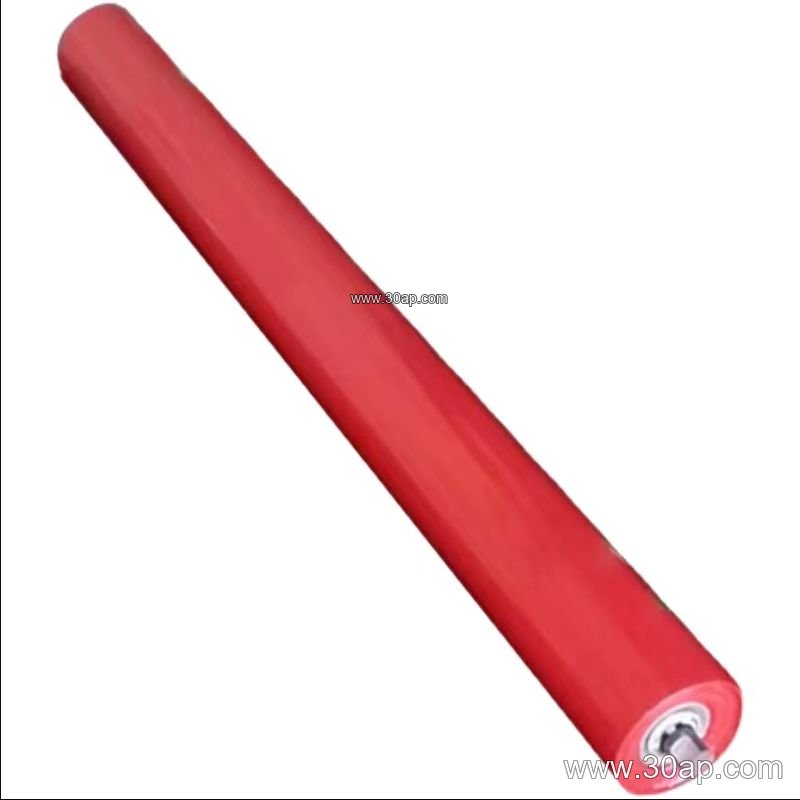
The shell is usually steel tube, though nylon or ceramic covers appear where sticky material or fine abrasion is a problem. Bearing housings are pressed into the tube ends and fitted with labyrinth seals or contact seals to keep dust out. Common bearing numbers include 6204, 6205, 6305, 6306, 6308, and 6310, but a given roller diameter can use more than one bearing size depending on load rating and shaft design. Shaft ends are machined flat to sit in the conveyor bracket without turning.
The roller length is not fixed by belt width alone. A three-roll troughing set on a B800 belt often uses side rollers around 315 mm long, while B1200 may call for roughly 465 mm; the center roll and side rolls can differ. These are reference examples, not universal matches. A buyer should confirm the trough angle, roll diameter, and bracket spacing for each conveyor section.
Common Sizes and Configurations
Heavy-duty idlers are available in several roll diameters and belt width ranges. The table below shows typical reference values, not a supply promise.
| Parameter | Common reference values |
|---|---|
| Roll diameter | Ø89, Ø102, Ø108, Ø127, Ø133, Ø159, Ø178, Ø194, Ø219 |
| Belt width | B500, B650, B800, B1000, B1200, B1400, B1600, B1800, B2000 |
| Trough angle | 20°, 30°, 35°, 45° |
| Roll surface | Steel tube, nylon, ceramic, rubber ring |
| Bearing examples | 6204, 6205, 6305, 6306, 6308, 6310 |
For a B1000 conveyor, a 35 degree three-roll set with Ø127 or Ø133 rolls is common in aggregate service; a B1600 conveyor in a power plant coal yard may use Ø159 or Ø178 rolls with heavier shafts. A 45 degree trough is sometimes chosen for high capacity, but it increases belt edge tension and should be checked against the belt specification.
Where Heavy-Duty Idlers Are Used
In a limestone quarry or aggregate line, dust and sharp rock edges wear standard idlers quickly, so heavy-duty rollers are placed at transfer points and along the main incline. In a coal washing plant or underground coal mining conveyor, flame retardant conveyor belt and anti-static properties matter, and the idler seals must resist fine coal dust. Cement plants use them under clinker and raw meal belts where heat and abrasion combine. Iron ore and copper ore plants favor thick-shell idlers because the ore is dense and the belt runs at high tension.
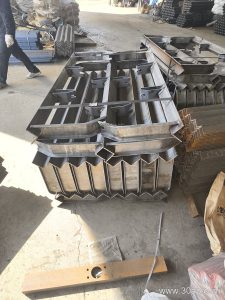
The idler works with the conveyor belt, conveyor pulley, and conveyor bracket as a system. A misaligned bracket or a worn pulley can shorten idler life even if the roller itself is heavy-duty. For sticky material, a spiral or rubber-disc idler may reduce buildup, while a training idler helps keep the belt centered on long runs.
Buyer Checklist
- Match roll diameter to belt speed and load; larger rolls turn slower and last longer in abrasive service.
- Confirm trough angle and roll length against the actual belt width and existing brackets.
- Check seal type for dust, water, or washdown conditions.
- Ask for bearing number and shaft end dimensions, not just the roller outside diameter.
- For coal or underground use, verify flame retardant and anti-static requirements with the belt supplier.
- Consider impact idlers at crusher discharge and V-return idlers on the return run.
A heavy-duty belt conveyor idler is a wear part, not a one-size component. The right choice depends on the conveyor layout, material, and maintenance access. Buyers who compare roll diameter, bearing, seal, and bracket fit will get longer service than those who order by belt width alone. For related components such as the conveyor belt, conveyor pulley, and idler roller assembly, keep the same dimensional check across the whole conveyor line.