What a Striped Lagged Pulley Does
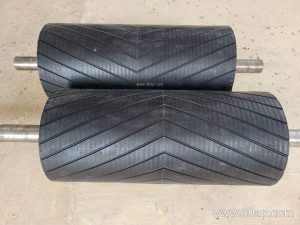
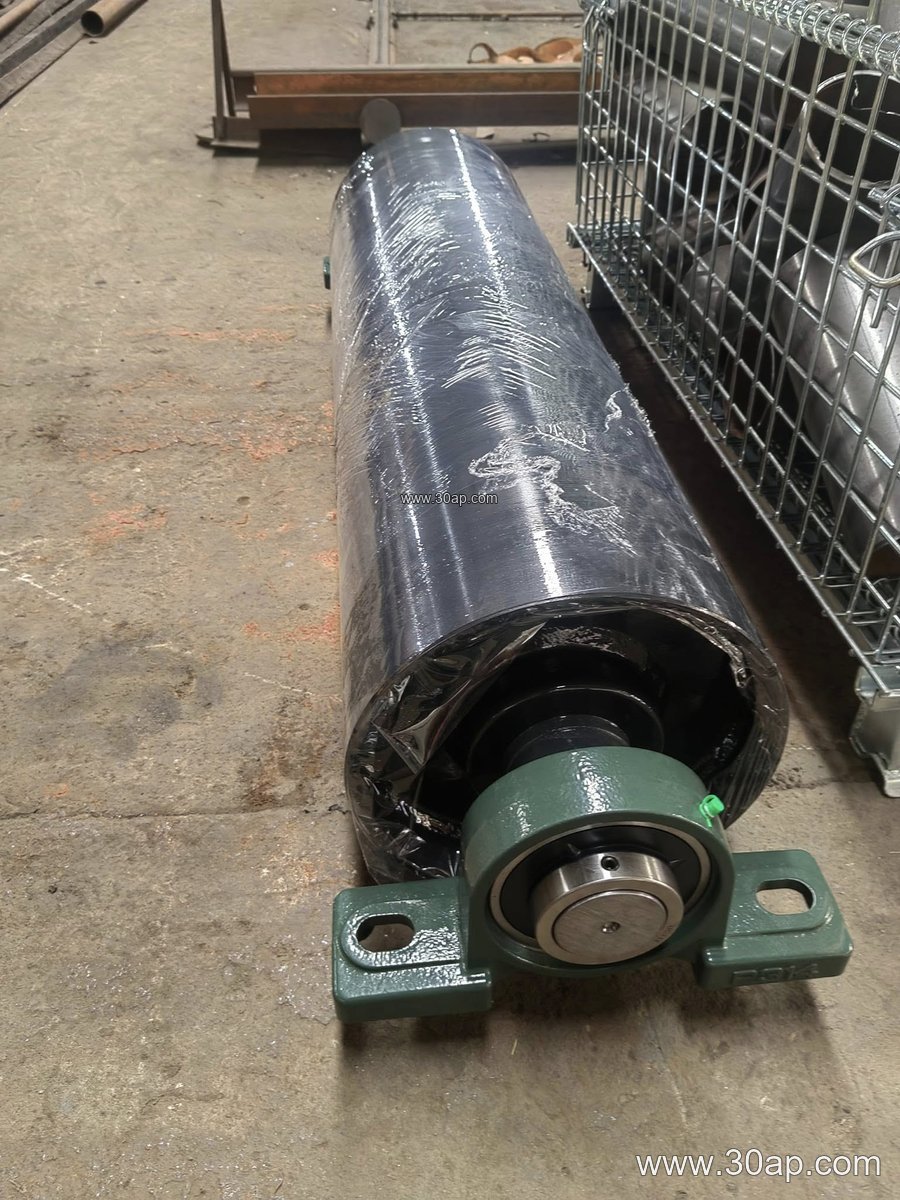
A striped lagged pulley is a conveyor pulley whose shell carries a rubber lagging with a striped, grooved pattern on the surface. The stripes are usually cut or molded diagonally or in a chevron-like arrangement, and their job is to channel water, dust and fine slurry away from the contact zone while raising friction between the pulley and the belt. In a wet or muddy transfer point, that drainage effect can matter as much as the extra grip itself. The same product is also called a grooved lagged pulley or a striped rubber lagged drum, and those names refer to one and the same component, not to a different pulley family.
This is not a drive, tail or bend pulley by definition. A striped lagged pulley can serve as a drive pulley, a tail pulley or a snub pulley, because the stripe pattern is a surface treatment rather than a position in the conveyor. When a page or a quotation names it, the position should be stated separately so the buyer knows what is being supplied.
How the Stripes Are Built
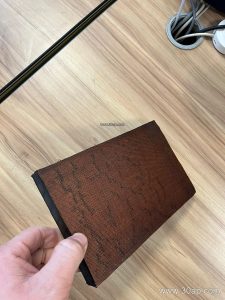
The base is a welded steel shell with shaft, hubs and end discs, machined so the lagging sits true. Rubber is then applied in one of the common ways: hot vulcanized sheet bonded under heat and pressure, cold bonded rubber, or cast rubber molded directly onto the shell with the stripe profile already in place. Thickness commonly ranges from 8 mm to 20 mm, with 10 mm and 12 mm often seen on medium-duty drums and 15 mm or 20 mm on heavier work.
The stripe geometry is what separates this product from a plain lagged pulley. Grooves give water somewhere to go, and the raised ribs maintain contact pressure on the belt. On a long overland line carrying a wet Rubber Conveyor Belt, that combination helps limit slip without over-tensioning. The pattern must be cut cleanly; ragged edges at the groove shoulders are where rubber starts to tear.
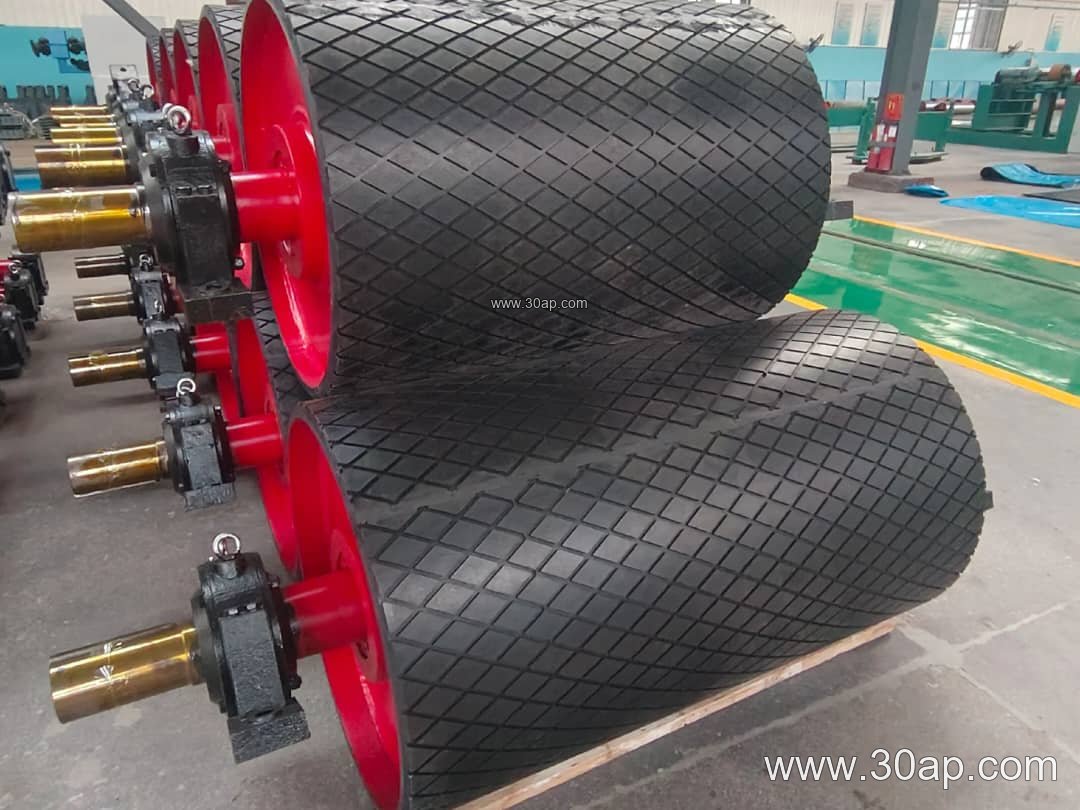
Common surface and build options
- Hot vulcanized striped rubber, usually the most durable bond
- Cold bonded striped sheet for repair or lower-cost replacement
- Cast striped lagging molded to the shell
- Plain lagging where drainage is not needed, useful as a comparison
Where It Fits in the Plant
Two settings where the striped version earns its place are washing and screening plants in a sand and gravel operation, and coal preparation plants where belts run damp. In both, water carried on the belt reaches the pulley face. A smooth lagging can hydroplane; the grooves break the film and let the belt keep traction. The same logic applies at a port handling bulk material in open air, or at a tunnel spoil line where fines and seepage are constant.
The pulley does not work alone. Belt tension, the condition of each idler roller, and the alignment of the conveyor bracket all affect whether the lagging grips evenly. A worn troughing idler or a misaligned frame can load one edge of the drum and wear the stripes on that side first. Matching the pulley to an EP Conveyor Belt or a steel cord belt is mostly a question of belt tension and available wrap angle, not of belt width alone.
Sizes and Combinations Buyers Ask About
Diameters commonly run from Ø200 up to Ø1000 and beyond on large drives, and shell widths are normally a little wider than the belt. Typical pairings include B800 × Ø500, B1200 × Ø1000 and B1400 × Ø800. These are reference combinations, not fixed rules: a given belt width can be matched with more than one drum diameter depending on tension and wrap angle. Shaft diameter is set by torque and load, typically somewhere between Ø50 and Ø200, and should never be chosen from belt width alone.
| Belt width | Typical shell width | Example diameter | Common lagging thickness |
|---|---|---|---|
| B500 | about 600 mm | Ø315 / Ø400 | 8-12 mm |
| B800 | about 950 mm | Ø500 / Ø630 | 10-15 mm |
| B1000 | about 1150 mm | Ø630 / Ø800 | 10-15 mm |
| B1200 | about 1400 mm | Ø800 / Ø1000 | 12-20 mm |
| B1400 | about 1600 mm | Ø800 / Ø1000 | 12-20 mm |
| B1800 | about 2000 mm | Ø1000 / Ø1250 | 15-20 mm |
On a heavy-duty mining conveyor or a long cement plant clinker line, a striped drum is often specified at the head position where the belt is dirtiest. At a crusher conveyor discharge the same drum may see sharp rock dust, so the rubber compound should be abrasion resistant rather than merely soft.
What to Check Before Ordering
Start with the duty: belt tension, wrap angle, belt speed and the amount of water or fines present. Then confirm the shell width against the actual belt, the shaft diameter against the drive torque, and the lagging thickness against the wear expected. Ask how the stripes are produced and whether the groove depth is uniform, since shallow or clogged grooves lose the drainage benefit. Check bearing selection and the mounting interface with the conveyor frame, and confirm that the pulley can be balanced for the intended speed.
Finally, plan maintenance. Striped lagging wears at the rib edges, so periodic inspection for groove depth, glazing and loose edges is worthwhile. Re-lagging a pulley is often cheaper than replacing the whole drum, provided the shell and shaft are still sound. Buyers who record the original specification, including diameter, face width, lagging type and shaft size, make that repair decision much simpler later.