What a Rubber Spiral Idler Does
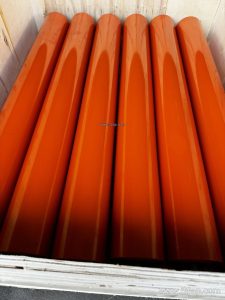
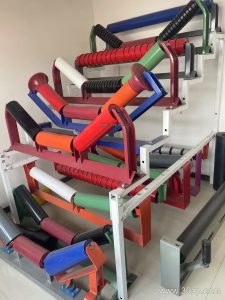
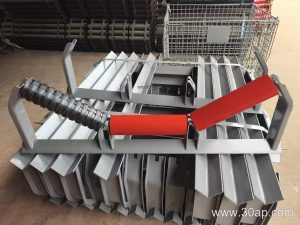
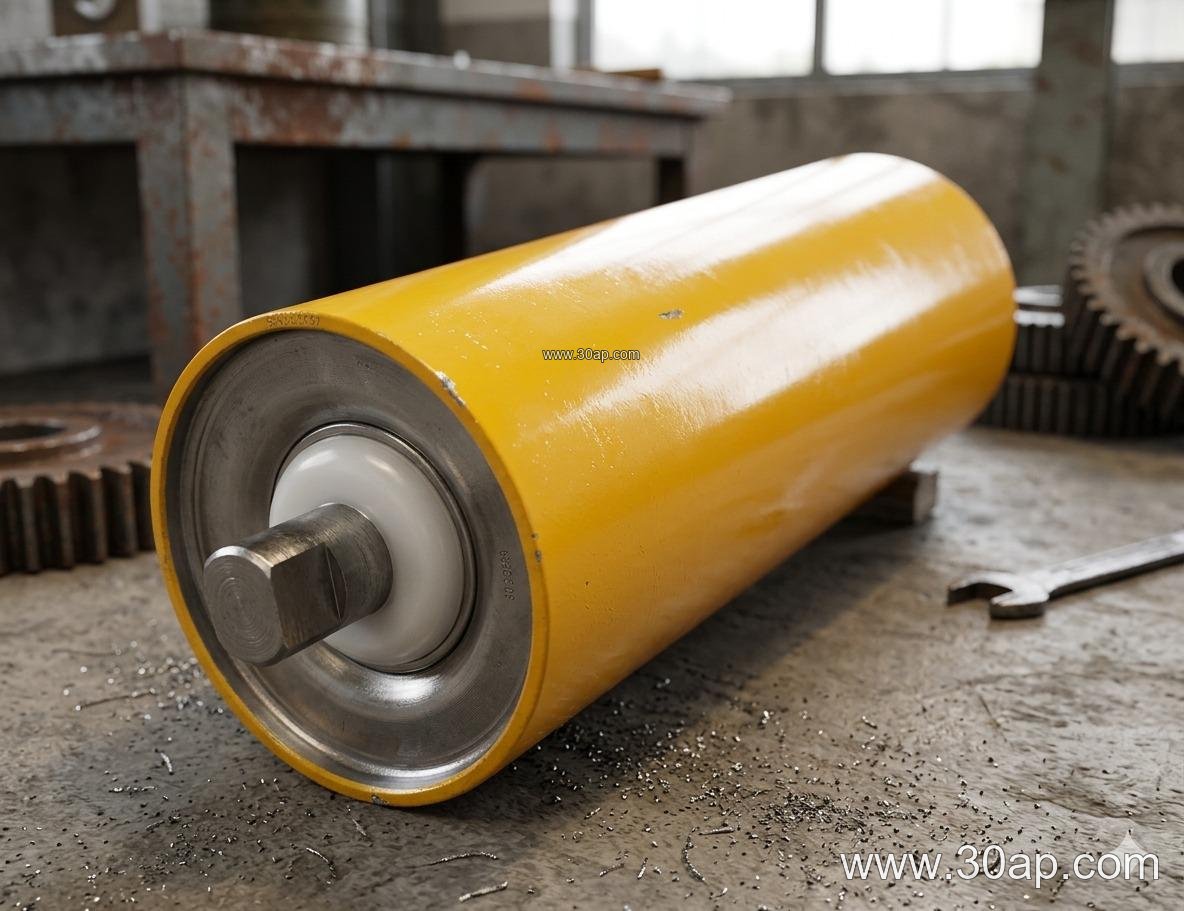
A rubber spiral idler is a returning-side roller wrapped with a helical rubber rib. It sits under the carrying run of a conveyor belt, usually on the return strand, and supports the belt while the spiral profile continuously scrapes and guides it. In a quarry, a cement plant or a coal handling line, this roller is often chosen where sticky material clings to the belt and builds up on plain steel rollers. The spiral rubber pushes fines and moisture aside as the belt moves, so the return side stays cleaner and tracking stays more predictable.
The same product is also called a rubber helix return roller or a spiral rubber return idler. These are equivalent names for the same item, not different equipment. A rubber spiral idler is not a substitute for a drive pulley, a tail pulley or a bend pulley; those are conveyor pulleys that transmit power or change belt direction, and they serve a completely different function.
Construction and Working Principle
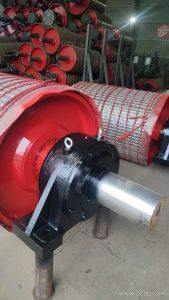
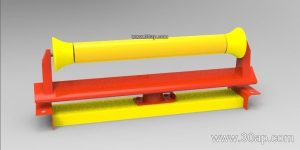
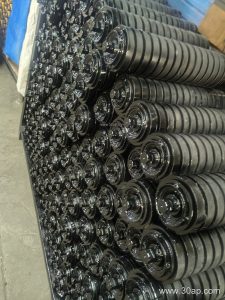
The body is typically a steel tube fitted with a shaft, sealed bearing housings and a rubber spiral sleeve. The rubber rib winds around the shell in a continuous helix, and the direction of the helix is normally arranged so the spiral pushes material outward toward the belt edges as the roller turns. Common shell diameters include Ø89, Ø108, Ø127, Ø133 and Ø159 mm, while larger sizes such as Ø178, Ø194 and Ø219 mm appear on heavier belts. Bearing selection follows the load and shaft design — 6205, 6305, 6306 and 6308 are frequent choices — and no single bearing size is tied to one roller diameter.
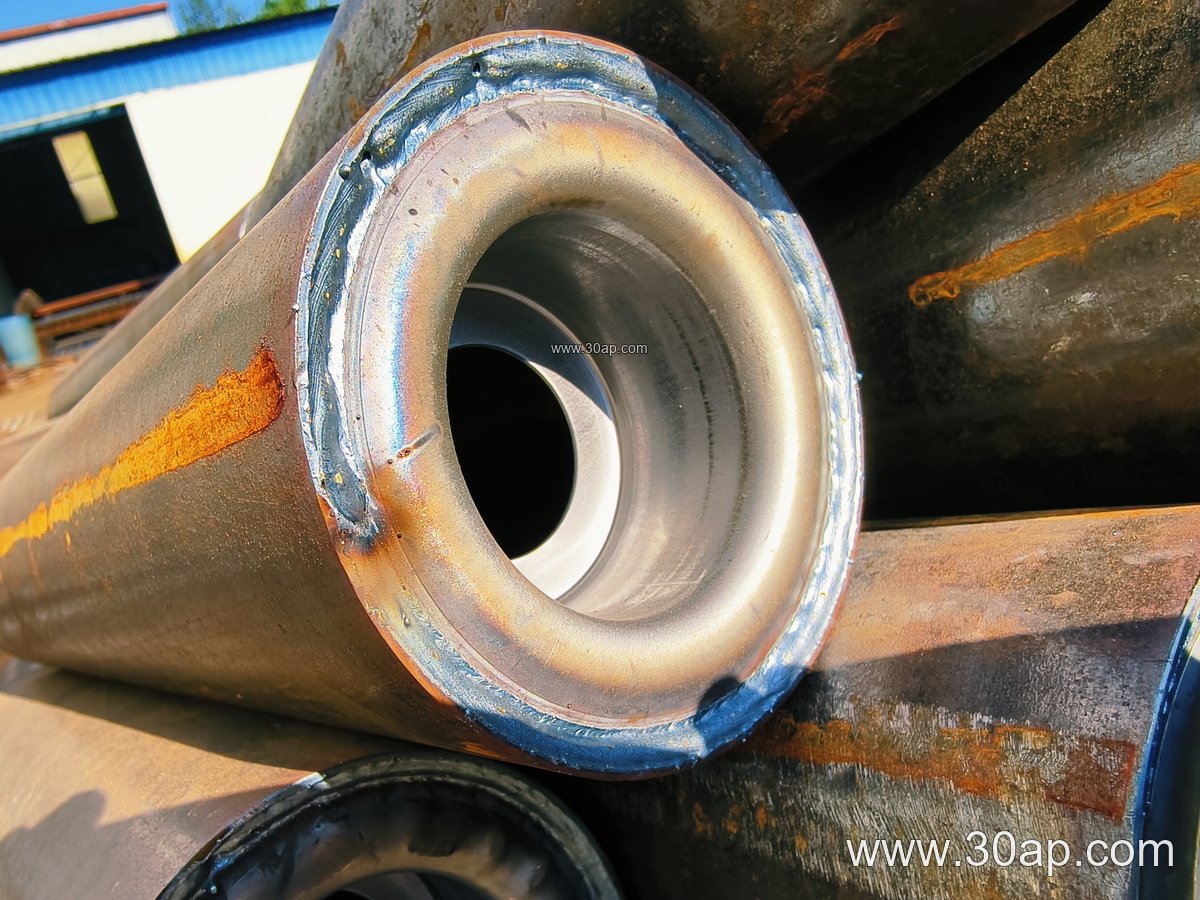
Roller length changes with belt width and with the return idler arrangement. For a flat return position, a 650 mm belt might use a roller around 600 mm long, an 800 mm belt around 750 mm, and a 1000 mm belt around 900 mm; these are typical examples, not fixed rules. Where a V-return or two-roller return set is used, the individual roller lengths differ again. Buyers should confirm shaft diameter, bearing type, fixing centres and the conveyor bracket dimensions rather than assuming them from belt width alone.
Where It Fits in a Conveying Line
Rubber spiral idlers are common on the return run of troughed conveyors in sand and gravel plants, limestone mines, iron ore and copper ore handling, wash coal plants, power station coal yards and port bulk terminals. They are especially useful beneath a rubber conveyor belt carrying damp aggregate, clay-rich ore or cement raw material, where carryback drops onto the return strand. In a crushing and screening circuit, they help keep the return side clear so the belt does not train off line.
They are often used alongside impact idlers at the load point, troughing idlers on the carrying side and self-aligning idlers where belt wander is a concern. On long overland lines with an EP conveyor belt or a steel cord conveyor belt, spiral return rollers reduce manual cleaning on the return strand. In dusty or wet conditions, a flame retardant conveyor belt or an abrasion resistant conveyor belt may be paired with them, but the idler itself is selected for its cleaning action and load capacity.
Selection Points for Buyers
Before ordering, match the roller to the belt width, the return idler configuration and the material being handled. A sticky, wet product benefits most from the spiral profile; a dry, free-flowing bulk material may be served perfectly well by a plain return roller. Check the following:
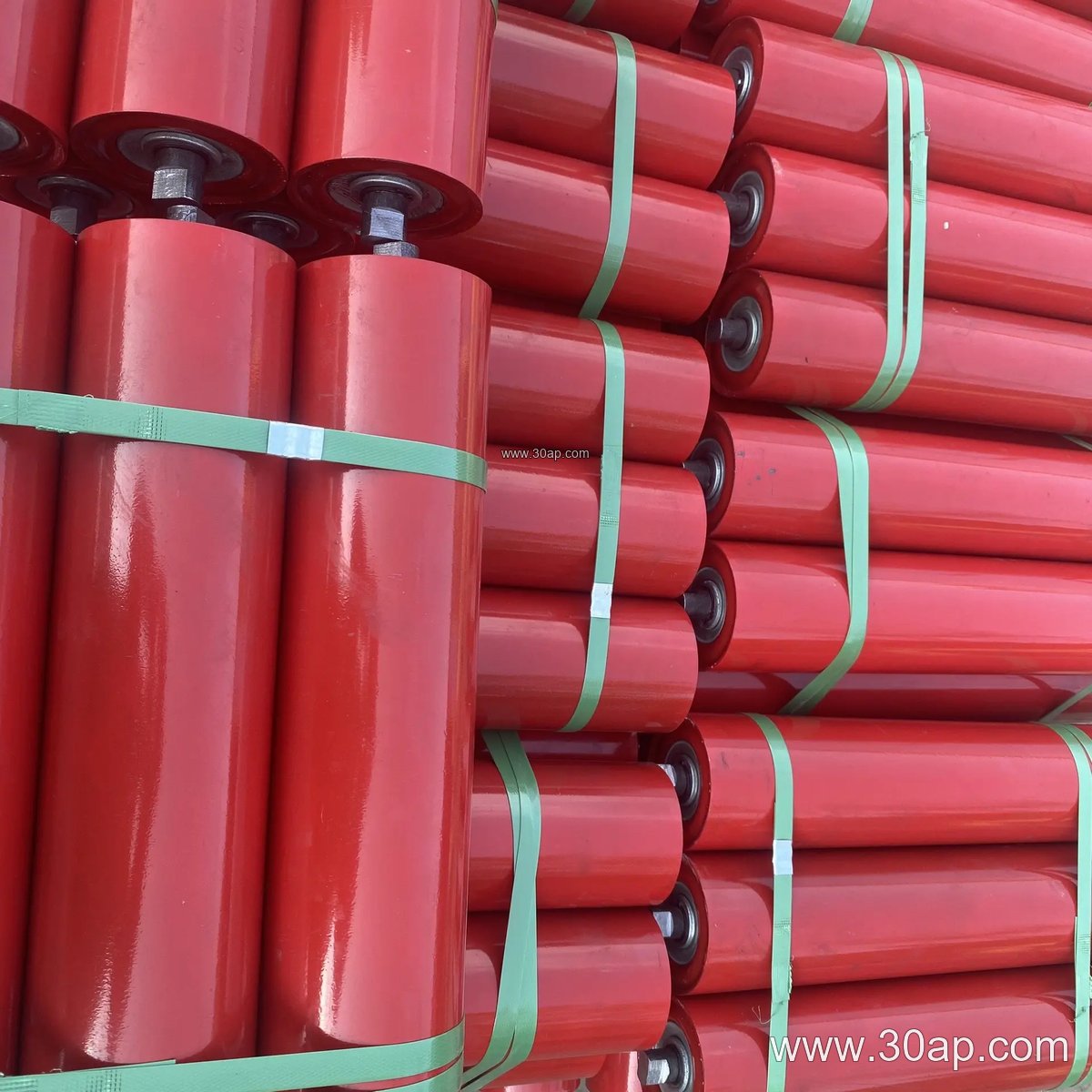
- Shell diameter and roller length that suit the belt width and return frame.
- Shaft diameter, bearing number and sealing arrangement for the dust level on site.
- Rubber hardness and rib height for the abrasiveness of the load.
- Spiral direction, so the helix moves material toward the belt edge.
- Mounting dimensions that match the existing conveyor bracket.
A common example is a 1200 mm wide conveyor belt running at a cement plant, where a Ø133 mm rubber spiral idler with a 6308 bearing and a roller length near 1150 mm may be specified. On a 1400 mm belt in an iron ore yard, a Ø159 mm shell might be preferred. These values illustrate typical practice only; final dimensions are confirmed by the conveyor designer.
Maintenance and Installation Notes
Install the roller square to the belt centreline and at the correct height so the belt rests lightly on the spiral. Misalignment causes edge wear and premature bearing failure. Check for rubber rib wear, cuts and hardening during routine inspections, and confirm that the roller turns freely by hand. Sealed bearings generally need no greasing, but relubricatable versions should follow the plant schedule. Keep the return strand free of spilled material, since a buried roller cannot self-clean.
Rubber spiral idlers work best as part of a balanced conveyor design. Pair them with properly selected conveyor pulleys, sturdy conveyor brackets and a belt suited to the duty — whether that is an EP conveyor belt, an NN conveyor belt, a heat resistant conveyor belt for clinker or a fire resistant conveyor belt for underground coal mining. For more on idlers, pulleys and conveyor belts, visit www.example.com/conveyor-idler and www.example.com/conveyor-belt to compare options before specifying.